Introduction
Lebanese kofta, also spelled kafta, is a spiced ground meat dish that forms one of the cornerstones of Levantine home cooking. Made by combining minced meat with onion, parsley, and a signature blend of warm spices, kofta is shaped into logs or patties and cooked over a grill, under a broiler, or baked in the oven alongside vegetables. Its defining trait isn’t a single ingredient but a balance: the meat carries the fat and structure, the onion and parsley add moisture and freshness, and the spice mix ties everything together with notes of cinnamon, allspice, and black pepper.
Quick Summary
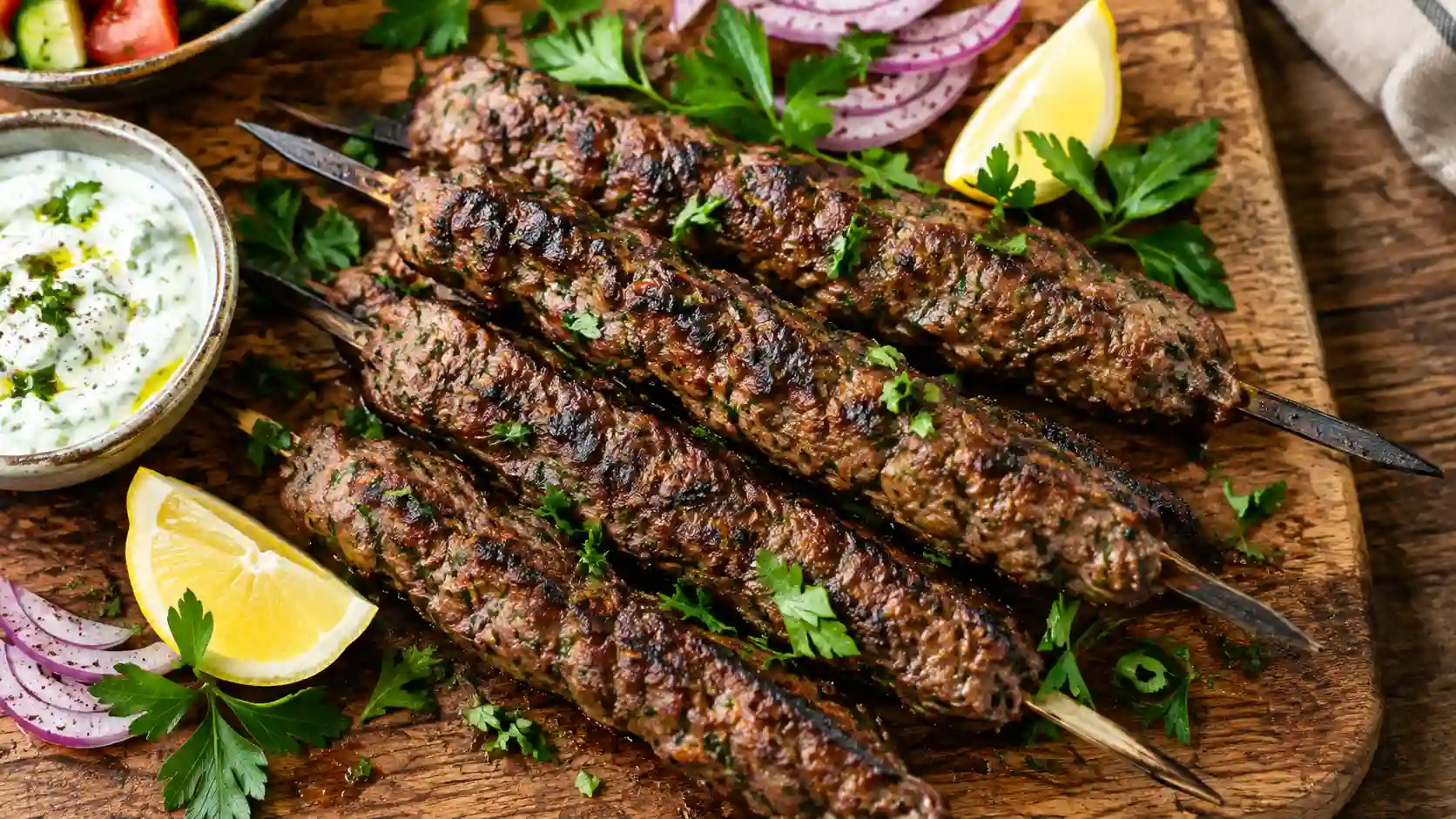
Lebanese kofta is traditionally made from finely minced lamb or beef, mixed with grated onion, chopped parsley, and a spice blend built around cinnamon, allspice, cumin, and black pepper. It’s shaped by hand — often around skewers for kebabs or into flat ovals for baking — and cooked hot and fast to keep the interior juicy. A popular oven variation layers the kofta with sliced potatoes and tomatoes, baking everything together so the vegetables absorb the meat’s juices.
What Is Lebanese Kofta?
Kofta belongs to a broader family of spiced minced-meat dishes found across the Middle East, South Asia, and the Balkans, but the Lebanese version has its own identity. Unlike kebab mixtures that rely heavily on fat and minimal seasoning, Lebanese kofta leans on fresh herbs and a specific spice profile that reflects Levantine cuisine’s use of warm baking spices in savory cooking. The meat is minced very finely — often twice-ground — so the mixture holds together without needing egg or breadcrumb as a binder, a key difference from Western-style meatballs.
Key Ingredients and Spices
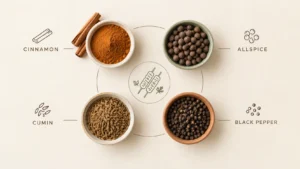
A standard Lebanese kafta spice mix includes ground cinnamon, allspice, black pepper, and salt, with cumin and sometimes nutmeg or clove added for depth. Finely grated onion is essential; it releases moisture that keeps the kofta tender during high-heat cooking, while excess liquid is typically squeezed out to prevent a mushy texture. Fresh parsley, finely minced, contributes color and a slightly peppery brightness that offsets the richness of the meat. Some cooks add a small amount of grated tomato or a pinch of Aleppo pepper for subtle heat, though the classic version stays relatively mild, letting the spice blend lead.
Lamb, Beef, or Chicken: Choosing Your Meat
Lamb is the traditional choice for Lebanese kofta, prized for its natural fat content, which keeps the kofta moist without added oil. Lebanese lamb kofta has a richer, slightly gamey flavor that pairs well with the cinnamon-forward spice mix. Beef kofta is a common substitute, offering a milder flavor and firmer texture; ground beef with at least 15–20% fat content works best, since lean beef tends to dry out on the grill. Chicken kofta is a lighter alternative, typically made with dark meat (thigh) rather than breast to avoid dryness, and often benefits from a touch of added olive oil in the mixture to compensate for chicken’s lower natural fat.
How to Make Lebanese Kofta (Step-by-Step)
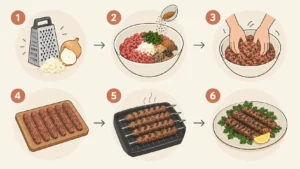
- Prepare the onion. Grate one medium onion and squeeze out excess liquid using a clean towel or cheesecloth. Skipping this step results in a wet mixture that won’t hold its shape.
- Combine the meat and aromatics. In a large bowl, combine the ground meat, drained onion, finely minced parsley, and spice blend (cinnamon, allspice, cumin, black pepper, salt).
- Mix by hand. Knead the mixture for 2–3 minutes until it becomes slightly sticky and uniform — this activates the meat’s proteins and helps the kofta hold together without a binder.
- Shape. Form the mixture into oval logs around flat metal skewers for kebabs, or into torpedo-shaped patties for oven or pan cooking.
- Cook. Grill over medium-high heat for 8–10 minutes, turning once, or broil/bake until the internal temperature reaches 160°F (71°C) for beef or lamb, and 165°F (74°C) for chicken.
- Rest. Let the kofta rest for 3–5 minutes before serving to allow the juices to redistribute.
Lebanese Kafta with Potatoes and Tomatoes (Oven Method)
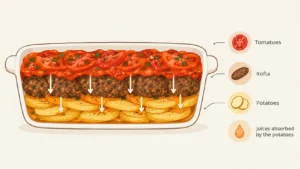
This one-pan version is a popular home-cooking staple. Sliced potatoes are par-baked briefly to soften before the raw kofta patties are laid on top, then covered with sliced tomatoes, onion rings, and sometimes bell pepper. The dish is baked uncovered at 400°F (200°C) for 35–45 minutes, during which the potatoes absorb the seasoned meat juices and the tomatoes soften into a light sauce. Par-baking the potatoes first matters because raw potato slices take longer to cook than the meat, and skipping this step often results in undercooked potatoes by the time the kofta is done.
Grilling vs. Baking: Which Method to Choose
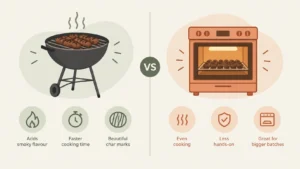
Grilling produces a smoky char and is the closest to how kofta is traditionally cooked in Lebanon, but it requires more attention to prevent the exterior from overcooking before the interior is done. Oven baking is more forgiving and better suited for the potato-and-tomato style dish, since it cooks everything evenly in one pan. Broiling offers a middle ground, giving some surface browning while keeping the process largely hands-off. The choice mainly comes down to whether the goal is a standalone kebab (grilling) or a full one-pan meal (baking).
Serving Suggestions and Wraps
Lebanese kofta is commonly served with rice pilaf, grilled vegetables, and a side of garlic sauce (toum) or yogurt-based sauce. For a wrap, warm kofta is placed in flatbread with chopped tomato, pickles, onion, and a drizzle of tahini or toum, then rolled tightly. The wrap format works especially well with the kebab-style skewered version, since the elongated shape fits neatly inside the bread.
Storage and Reheating
Cooked kofta keeps well in an airtight container in the refrigerator for up to 4 days. For longer storage, shaped raw kofta can be frozen on a tray until firm, then transferred to a freezer bag for up to 3 months — cooking from frozen isn’t recommended, as it leads to uneven results. To reheat, a low oven (300°F/150°C) covered with foil preserves moisture better than a microwave, which tends to dry out the meat.
Common Mistakes to Avoid
Overmixing the meat can make kofta dense and tough rather than tender, so mixing should stop as soon as the ingredients are evenly combined. Using meat that’s too lean often leads to dry, crumbly kofta, since fat is what keeps the interior moist during high-heat cooking. Skipping the onion-draining step is another frequent issue, as excess moisture prevents the kofta from browning properly and can cause it to fall apart on the grill.
Conclusion
Lebanese kofta rewards attention to a few key details: well-drained onion, a balanced warm-spice mix, meat with adequate fat, and cooking hot enough to sear the exterior while keeping the inside juicy. Whether grilled on skewers, wrapped in flatbread, or baked in a single pan with potatoes and tomatoes, the dish’s core technique stays the same, making it a flexible addition to a home cook’s regular rotation.
FAQ
What’s the difference between kofta and kafta?
They refer to the same dish; “kafta” is simply an alternate transliteration used more commonly in Lebanese and Levantine contexts.
Can I make Lebanese kofta without a grill?
Yes. Baking or broiling in the oven works well, especially for the potato-and-tomato version, and produces consistent results without special equipment.
What can I use instead of parsley?
Fresh cilantro or mint can be substituted, though this shifts the flavor away from the traditional profile; a mix of parsley with a small amount of mint is a common variation.
Why did my kofta fall apart while cooking?
This usually results from excess moisture in the mixture, often from undrained onion, or from meat that’s too lean to hold its shape without a binder.