Introduction
Pink soup is a cold, vividly colored soup built around beets, and it holds a genuinely important place in Baltic and Eastern European home cooking. The best-known version, Lithuania’s šaltibarščiai, has grown from a humble summer staple into a symbol of national food culture — celebrated with its own festival in Vilnius and increasingly recognized on international “unusual foods” lists. This article explains what pink soup is, how it’s made, where it comes from, how it differs across Lithuania, Latvia, and Poland, and how to make an authentic version at home.
Quick Summary
- Pink soup most commonly refers to šaltibarščiai, a cold Lithuanian beet soup made with kefir or buttermilk, beets, cucumbers, dill, and hard-boiled eggs.
- It’s traditionally served with hot boiled potatoes on the side, creating a hot-and-cold contrast.
- Similar cold beet soups exist in Poland (chłodnik), Latvia, and Belarus, each with regional variations.
- Vilnius hosts an annual Pink Soup Festival celebrating the dish.
- The pronunciation is roughly shahl-tee-BAHRSH-chay.
- Pink soup can be made vegetarian, dairy-free, or lighter depending on ingredient swaps.
What Is Pink Soup?
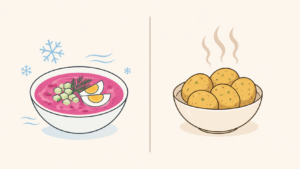
“Pink soup” is an informal English nickname for a family of cold beet soups eaten across the Baltic states, Poland, and parts of Eastern Europe. The color comes from beets, which turn the soup’s dairy base (usually kefir, buttermilk, or soured milk) a bright fuchsia-pink. The dish is served chilled, typically in warmer months, and is prized for being refreshing, tangy, and visually striking rather than heavy.
While regional names and recipes vary, the version most people mean when they say “pink soup” in English is Lithuania’s šaltibarščiai (also transliterated as saltibarsciai).
Lithuanian Pink Soup (Šaltibarščiai): Ingredients and Tradition
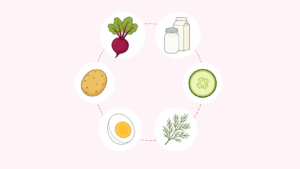
Šaltibarščiai’s core ingredients are:
- Cooked beets, grated or diced, which supply the color and earthy sweetness
- Kefir or buttermilk as the tangy, cooling base
- Fresh cucumbers, diced for crunch
- Fresh dill, the dish’s signature herb
- Hard-boiled eggs, sliced or quartered, added for protein and richness
- Green onions, for a mild sharpness
- Salt, and sometimes a splash of lemon juice or vinegar to brighten the flavor
The soup is almost always served with hot boiled potatoes on the side or dropped directly into the bowl. This hot-cold pairing is considered essential to the dish rather than optional — the warm potato tempers the tang of the kefir and turns the soup into a full meal rather than a starter.
Šaltibarščiai has deep roots in Lithuanian rural cooking, where kefir-based cold soups were a practical way to eat well during hot summers using ingredients that kept in a cool cellar: root vegetables, cultured dairy, and garden herbs.
How to Pronounce Šaltibarščiai
The word breaks down as šalti (cold) + barščiai (borscht/beet soup). A reasonable English approximation is:
shahl-tee-BAHRSH-chay
The “š” sounds like the “sh” in “shoe,” and “č” sounds like the “ch” in “chip.” Because the full Lithuanian name is a mouthful for English speakers, “pink soup” or “cold beet soup” has become the common shorthand internationally.
How Pink Soup Differs Across the Baltics and Poland
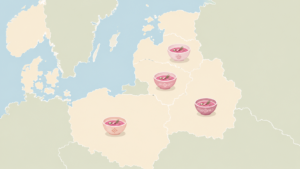
Cold beet soup is a shared culinary thread across the region, but each country treats it a little differently.
- Lithuania (šaltibarščiai): Kefir-based, includes cucumber, dill, and hard-boiled egg, served with hot potatoes. This is the most iconic and most photographed version, largely because of its intense pink color.
- Latvia (aukstā zupa / cold soup): Very similar to the Lithuanian version, using soured milk or kefir with beets, cucumber, dill, and egg — the two countries’ versions are close culinary cousins.
- Poland (chłodnik): Traditionally made with buttermilk and beets, but often includes radishes and a wider mix of fresh herbs; some regional variants skip the egg or lean more sour than sweet.
- Belarus and parts of Russia: Related cold beet-and-kefir soups appear under various regional names, generally following the same hot-potato, cold-soup structure.
Despite these differences, the underlying formula stays consistent: cooked beets plus a cultured dairy base plus fresh crunchy vegetables, served cold.
The Vilnius Pink Soup Festival
Vilnius holds an annual festival dedicated to šaltibarščiai, informally known internationally as the “Pink Soup Festival.” The event typically takes place in early summer, timed to when fresh beets, cucumbers, and dill are in season. It usually features:
- Communal cooking and tasting of šaltibarščiai
- Local vendors and chefs offering their own variations of the soup
- Cultural programming celebrating Lithuanian food traditions
- A festive, brightly colored atmosphere that leans into the soup’s striking pink hue
The festival has helped push šaltibarščiai beyond a home-cooking staple into something of a national food icon, and it’s a major reason the dish now shows up regularly in international food media and travel coverage of Lithuania.
How to Make Traditional Pink Soup at Home
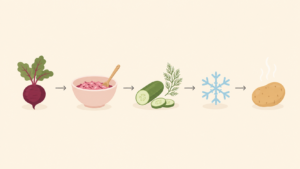
A basic šaltibarščiai method looks like this:
- Cook the beets. Boil or roast beets until tender, then peel and grate or dice them. Some cooks reserve a little beet cooking liquid to intensify the color.
- Build the base. Whisk kefir or buttermilk in a large bowl. Stir in the grated beets until the mixture turns a uniform bright pink.
- Add the vegetables and herbs. Fold in diced cucumber, chopped dill, and sliced green onion.
- Season. Add salt to taste, and a small squeeze of lemon juice if the kefir isn’t tangy enough on its own.
- Chill. Refrigerate for at least an hour — the soup is meant to be served cold, and chilling also lets the flavors meld.
- Boil the potatoes separately. Boil small potatoes until fork-tender; keep them hot.
- Serve. Ladle the cold soup into bowls, top with sliced hard-boiled egg, and serve the hot potatoes alongside or dropped directly into the bowl.
Skipping the hot potato changes the dish meaningfully — without it, the soup can taste one-note and overly tangy, since the potato’s starch and warmth are what balance the sharpness of the kefir.
Serving, Storing, and Substituting
- Dairy-free version: Coconut yogurt thinned with water, or a plant-based kefir, can replace dairy kefir, though the tang and richness will shift slightly.
- Lower-fat version: Low-fat kefir or buttermilk works fine; the soup doesn’t rely on fat for texture the way cream-based soups do.
- No fresh dill: Dried dill can substitute in a pinch, though the flavor will be milder and less bright.
- Storage: Pink soup keeps well covered in the refrigerator for up to two days; the color and flavor stay stable, though cucumbers will soften over time.
- Freezing is not recommended, since kefir-based soups tend to separate and turn watery after thawing.
Conclusion
Pink soup — most often meaning Lithuania’s šaltibarščiai — is a cold, kefir-based beet soup built for hot weather, balancing tangy dairy, earthy beets, crisp cucumber, and fresh dill, and traditionally finished with hard-boiled egg and a side of hot potatoes. Its close relatives in Latvia and Poland follow the same basic idea with regional tweaks. Backed by an annual festival in Vilnius, the dish has moved from a rural summer staple to one of Lithuania’s most recognizable culinary exports — as memorable for its color as for its flavor.
FAQ
Is “pink soup” the same as borscht? Not exactly. Traditional borscht is usually served hot and is a beet-and-vegetable soup, while pink soup (šaltibarščiai) is served cold and is built on a kefir or buttermilk base. They share beets as a core ingredient but are distinct dishes with different textures and serving styles.
What gives pink soup its color? The bright pink-magenta color comes from beets mixed into a white dairy base like kefir or buttermilk. The intensity of the color depends on how much beet and beet liquid is used.
Is pink soup vegetarian? The classic version is vegetarian, since it uses dairy and eggs rather than meat. It is not vegan as written, though dairy-free substitutes can make it plant-based.
Why is pink soup served with hot potatoes? The warm potato balances the cold soup’s tanginess and turns it into a more filling, complete dish. It’s considered a traditional pairing rather than an optional garnish.
Is “pink soup” also a video game reference? Yes — separately from the Baltic dish, “pink soup” is a well-known fan nickname in The Sims 2 community, referring to a corrupted or error-state food bowl that appears pink due to a graphics or coding glitch. It has no culinary connection to šaltibarščiai; it’s simply a shared nickname across two unrelated contexts.