Introduction
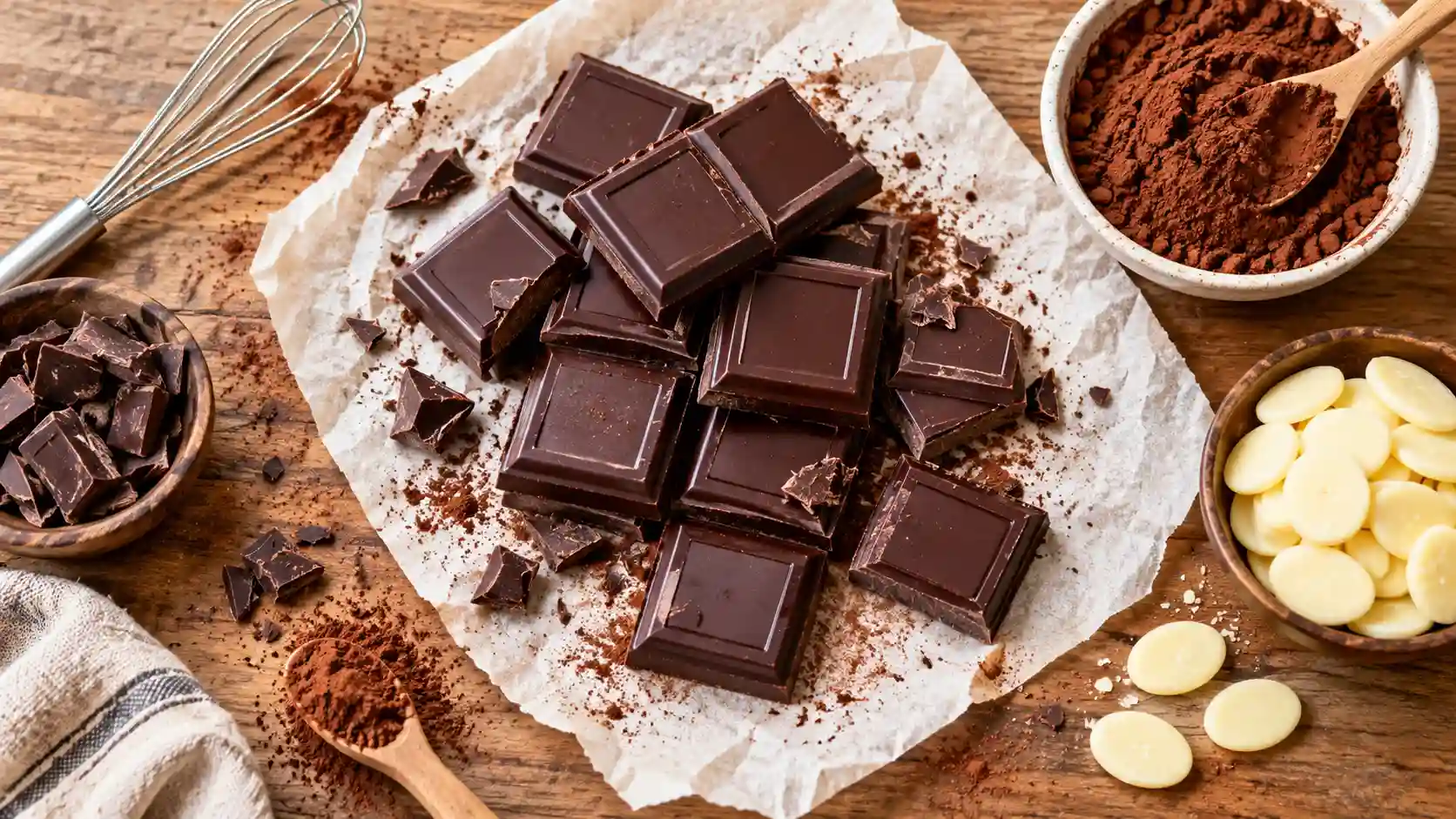
Homemade chocolate is chocolate made in a home kitchen from a fat (usually cocoa butter or coconut oil), cocoa powder, a sweetener, and optional flavorings. You skip roasting and grinding beans and combine ingredients that are already processed. The result is a smooth, snappy or soft-set chocolate you can mold, fill, and gift. This guide explains what each ingredient does, gives three base methods, and covers the techniques that decide whether your chocolate sets glossy or turns grainy. If you are new to making chocolate, start with our easy homemade chocolate recipe and return here for the deeper technique.
Quick Summary
- Homemade chocolate = fat + unsweetened cocoa powder + sweetener (+ optional milk powder, vanilla, salt).
- Cocoa butter gives a snap and melts near body temperature, close to commercial chocolate.
- Coconut oil is easier to find and cheaper, but the chocolate softens at room temperature and needs refrigeration.
- Milk powder creates a milk-chocolate style, but it must be fully dry and sifted.
- Water is the enemy. A few drops can make melted chocolate seize into a stiff paste.
- Storage: cocoa butter chocolate keeps in a cool, dry place; coconut oil chocolate belongs in the fridge.
What Is Homemade Chocolate?
Commercial chocolate begins with cacao beans that are fermented, dried, roasted, and ground into cocoa mass. That mass is pressed into cocoa butter (the fat) and cocoa solids (the base for cocoa powder). Factories recombine them with sugar and sometimes milk solids.
Homemade chocolate follows the same logic with shortcuts. You melt the fat, whisk in cocoa powder and sweetener, then pour it into molds. Because you skip conching (long mechanical smoothing), a very fine sweetener such as powdered sugar gives the smoothest mouthfeel. For a full walkthrough of the process, see how to make homemade chocolate step by step.
Cocoa Butter vs. Cacao Butter
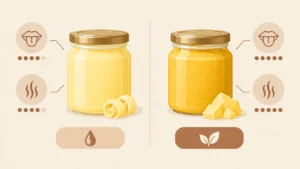
What is cocoa butter? Cocoa butter is the pale, natural fat extracted from cacao beans. It is solid at room temperature and melts at roughly 34–36°C (93–97°F), which is why chocolate melts in your mouth.
What is cacao butter? Cacao butter is the same fat. “Cacao” is typically used on labels for raw or minimally processed versions, while “cocoa butter” often refers to a deodorized version with a milder aroma. Unrefined cacao butter tastes more chocolatey; deodorized cocoa butter tastes neutral. Our guide to what cacao butter is and how to choose it covers the labels in detail.
Where to buy it: Cocoa butter is commonly sold as wafers or blocks in baking supply stores, health food shops, and online retailers. Wafers melt faster and measure easily. See where to buy cocoa butter for sourcing tips.
Core Ingredients and What Each Does
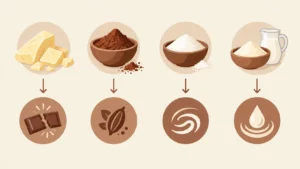
| Ingredient | Role | If you substitute or skip it |
|---|---|---|
| Cocoa butter | Structure, snap, melt-in-mouth feel | Coconut oil gives a softer set |
| Cocoa powder (unsweetened) | Color, bitterness, chocolate flavor | Sweetened mixes make the result too sweet |
| Powdered sugar | Sweetness, smooth texture | Granulated sugar leaves a gritty feel |
| Milk powder | Creamy, milk-chocolate flavor | Skipping it gives dark chocolate |
| Vanilla and salt | Round out flavor and reduce bitterness | Without salt, flavor tastes flat |
Dutch-process cocoa is darker and milder, while natural cocoa is more acidic and fruity. Either works for bars because no leavening reaction is involved. For a deeper comparison, read our homemade chocolate with cocoa powder guide.
Basic Homemade Chocolate with Cocoa Powder
This is the foundation method and the best starting point for the best homemade chocolate recipe with cocoa powder.
Ingredients
- 100 g (about ½ cup) cocoa butter
- 50 g (about ½ cup) unsweetened cocoa powder, sifted
- 40 g (about ⅓ cup) powdered sugar, sifted
- ½ tsp vanilla extract
- Small pinch of salt
Method
- Melt the cocoa butter in a heatproof bowl over barely simmering water, keeping the bowl dry and not touching the water.
- Remove from heat and whisk in the sifted cocoa powder and sugar until smooth.
- Stir in vanilla and salt.
- Pour into silicone molds and tap to release air bubbles.
- Chill 20–30 minutes until firm, then unmold.
Sifting matters because cocoa powder clumps easily, and clumps do not dissolve in fat. Whisking until glossy keeps cocoa particles suspended instead of sinking as the mixture cools.
Homemade Chocolate with Coconut Oil
When cocoa butter is hard to find, coconut oil is a common substitute.
Ingredients
- 100 g (about ½ cup) coconut oil
- 50 g (about ½ cup) cocoa powder
- 3 tbsp maple syrup or 40 g powdered sugar
- ½ tsp vanilla and a pinch of salt
Warm the coconut oil until just liquid, whisk in the remaining ingredients, pour into molds, and chill until set.
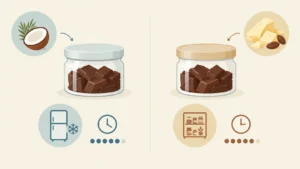
Why it behaves differently: Coconut oil melts around 24–25°C (76°F), well below cocoa butter. The chocolate softens in a warm kitchen, so store it in the fridge and serve it cold. It also lacks cocoa butter’s clean snap, giving a softer bite. Refined coconut oil is neutral in flavor; virgin coconut oil adds a coconut note. The full method with variations is in our homemade chocolate with coconut oil post.
Homemade Chocolate with Milk Powder
For a creamier, milk-chocolate-style bar, adjust the base recipe:
- 100 g cocoa butter
- 35 g cocoa powder
- 30 g full-fat milk powder, sifted
- 50 g powdered sugar
Whisk the dry ingredients into the melted cocoa butter until no lumps remain. Milk powder is hygroscopic, meaning it absorbs moisture, so use fresh powder from a sealed container. Damp or clumped powder leaves chocolate gritty. More ideas are in homemade chocolate with milk powder.
Tempering, Setting, and Why Texture Changes
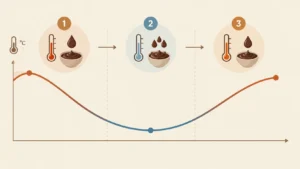
Tempering controls how cocoa butter crystals form. Properly tempered chocolate looks glossy, snaps cleanly, and resists melting on your fingers.
A typical dark chocolate approach:
- Melt to about 45–50°C (113–122°F).
- Cool to about 27–28°C (81–82°F) while stirring.
- Gently rewarm to about 31–32°C (88–90°F) before molding.
Milk chocolate temperatures run a few degrees lower. A digital thermometer makes this reliable.
Is tempering required? Not for bars you will keep in the fridge or eat quickly. Untempered chocolate still tastes good, but it may look dull or streaky and soften sooner at room temperature. Coconut oil chocolate cannot be tempered traditionally because it contains no cocoa butter crystals. For a step-by-step temperature guide, see how to temper chocolate at home.
Common Problems and Fixes
- Seized chocolate (thick, pasty): Caused by water or steam. Whisk in a teaspoon of warm neutral oil to smooth it, though it will not behave like the original.
- Grainy texture: Usually granulated sugar or unsifted powder. Use powdered sugar and sift.
- White streaks (bloom): Fat or sugar rising to the surface from temperature swings. It is safe to eat; remelt and retemper if appearance matters.
- Separated oily layer: Mixture was not whisked until emulsified. Rewarm gently and whisk.
- Soft chocolate: Likely coconut oil, high room temperature, or too much liquid sweetener.
Homemade Chocolate for Gifts and Storage
Homemade chocolates make practical gifts because they can be shaped, flavored, and packaged in advance. Pour into small molds, then add toppings such as chopped nuts, dried fruit, sea salt, or freeze-dried berries before setting. Arrange them in a homemade chocolate box lined with parchment or paper cups. For flavor combinations and packaging ideas, browse our homemade chocolate recipes for gifts.
Gift tips:
- Use cocoa butter chocolate for gifts that may sit at room temperature.
- Label ingredients clearly for allergens such as milk and nuts.
- Include storage instructions on the card.
Storage: Keep cocoa butter chocolate in an airtight container in a cool, dry place away from strong odors for several weeks. Coconut oil chocolate should stay refrigerated and is best within two to three weeks. Let chilled chocolate sit a few minutes before eating so condensation does not form.
Turning Homemade Chocolate into Other Recipes
Once you understand the base, you can use it across other recipes. Cocoa butter works as a stable, flavorful fat in cookies, ganache, and coatings; see cooking with cocoa butter, cocoa butter in baking, and recipes with cacao butter. Related guides:
- Drinks: homemade hot chocolate recipe, homemade hot chocolate mix, homemade chocolate milk
- Sauces and toppings: homemade chocolate syrup, homemade chocolate frosting, homemade chocolate icing
- Desserts: homemade chocolate pudding, homemade chocolate ice cream, homemade chocolate cake, homemade German chocolate cake
- Cookies: homemade chocolate chip cookies
- Trending: homemade Dubai chocolate
Conclusion
Homemade chocolate comes down to three decisions: the fat (cocoa butter for snap and stability, coconut oil for convenience), the dry ingredients (sifted cocoa powder and powdered sugar for smoothness), and the handling (keep everything dry and control temperature). Start with the cocoa powder base, then adapt it with milk powder, flavorings, or fillings. Once the technique is comfortable, the same chocolate becomes the starting point for gifts, desserts, and drinks. Explore the full homemade chocolate recipes collection for what to make next.
FAQ
Can I make homemade chocolate with only cocoa powder and coconut oil?
Yes. Combine melted coconut oil, cocoa powder, a sweetener, and a pinch of salt, then chill. It will be softer than cocoa butter chocolate and must be kept cold.
What is the best homemade chocolate recipe with cocoa powder?
The best balance is cocoa butter, sifted cocoa powder, and powdered sugar in roughly a 2:1:0.8 ratio by weight, as in the base recipe above.
Can I make homemade chocolate with milk powder?
Yes. Add 30 g of sifted, dry milk powder to the base recipe and increase the sugar slightly for a creamy, milk-chocolate style.
Do I need to temper homemade chocolate?
Not always. Tempering improves shine and snap, but chilled or quickly eaten chocolate is fine untempered.
Why did my chocolate turn thick and grainy?
Moisture is the most common cause. Even a drop of water or steam can seize chocolate, so keep tools and molds completely dry.
How long does homemade chocolate last?
Cocoa butter chocolate lasts several weeks in a cool, dry spot. Coconut oil chocolate is best refrigerated and eaten within two to three weeks.