Introduction
Sago plum pudding is a steamed, custard-like dessert built on tiny pearl sago, dried fruit, and warm spices, and it has been a staple of Australian and New Zealand community cookbooks for generations. Despite the name, it contains no plums — a naming quirk rooted in old English pudding traditions. This article breaks down what sago plum pudding actually is, why grandma’s version tastes different from a quick modern one, and how to adapt it for a slow cooker, microwave, or gluten-free kitchen without losing the pudding’s signature soft, jelly-like bite.
Quick Summary
Sago plum pudding is made by soaking pearl sago until it swells, then combining it with dried fruit (usually sultanas or raisins), butter, sugar, eggs or condensed milk, and mixed spice before steaming or slow-cooking the mixture into a firm, moist pudding. The sago is what gives the pudding its distinctive translucent, slightly chewy texture — closer to a baked rice pudding than a traditional fruit cake. Older recipes lean on butter, eggs, and long steaming times; condensed milk versions shortcut the process while adding sweetness and creaminess.
What Is Sago Plum Pudding?
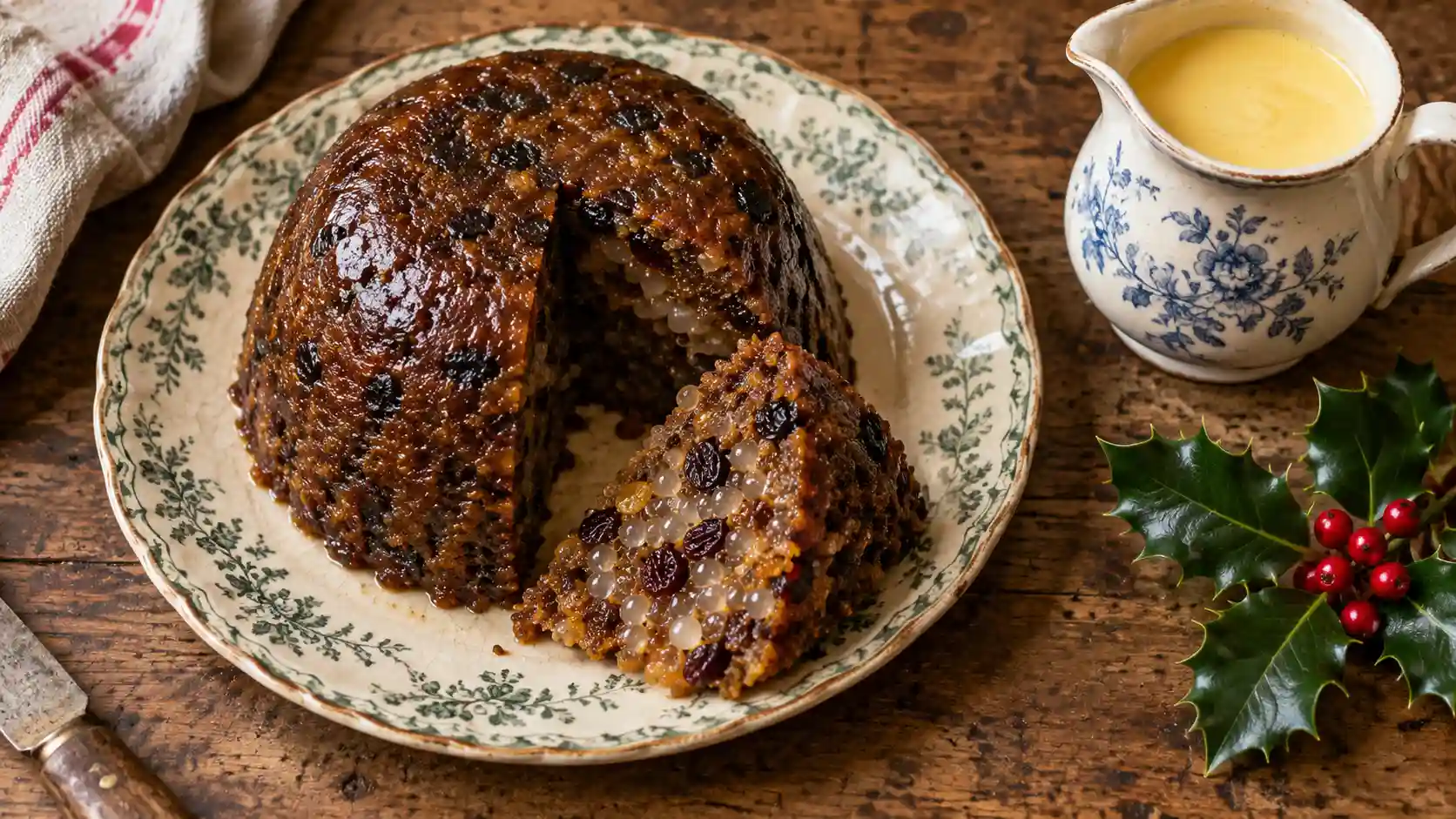
Sago plum pudding is a dessert built around pearl sago — small, round starch granules extracted from the sago palm — soaked and cooked until they turn glossy and translucent. Once combined with dried fruit, spices, and a binding agent (egg, butter, or condensed milk), the mixture is steamed or baked in a basin, producing a dense, moist pudding with a texture somewhere between tapioca pudding and traditional Christmas pudding. It’s a dish closely associated with Australian Country Women’s Association (CWA) cookbooks, church fundraiser recipe collections, and family recipe boxes passed down through generations.
Why It’s Called “Plum” Pudding (There’s No Plum in It)
The word “plum” in plum pudding doesn’t refer to the fruit. In older English usage, “plum” was a general term for any dried fruit — raisins, currants, or sultanas — used in a pudding or cake. Sago plum pudding inherited this naming convention from British Christmas and steamed pudding traditions, even though the actual fruit used is almost always sultanas, raisins, or a mix of dried fruit rather than fresh or dried plums.
The Role of Sago in Texture and Structure
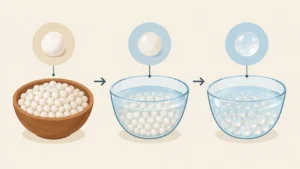
Sago acts as both a thickener and a textural centerpiece in the pudding. Raw sago pearls are hard and opaque; once soaked in milk or water and cooked, they absorb liquid, swell to several times their original size, and turn translucent. This transformation is what gives the pudding its signature glossy, slightly gelatinous bite — distinct from flour-based puddings, which rely on gluten structure instead. If sago isn’t soaked long enough before baking, the pearls stay partially opaque and gritty rather than plump and tender, so soaking time directly affects the final texture.
Traditional Ingredients and What Each One Does
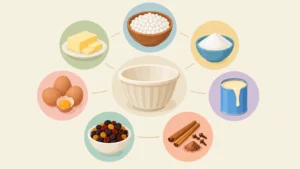
- Pearl sago — provides the pudding’s signature translucent texture and helps bind the mixture as it swells.
- Butter — adds richness and keeps the pudding moist during long steaming.
- Sugar — sweetens and helps the pudding develop a light caramel note during cooking.
- Eggs — bind the mixture and give it a custardy set, common in old-fashioned versions.
- Condensed milk — in modern variations, replaces some or all of the sugar and egg, adding sweetness, creaminess, and a softer set.
- Dried fruit (sultanas or raisins) — the “plum” component, adding chewiness and bursts of sweetness.
- Mixed spice or nutmeg — brings warmth, echoing traditional Christmas pudding flavoring.
- Bicarbonate of soda — sometimes included to lighten the dense sago mixture slightly.
Old-Fashioned vs. Condensed Milk Versions
Old-fashioned and traditional sago plum pudding recipes typically rely on butter, sugar, and eggs, cooked slowly to allow the sago to fully swell and the custard base to set — this is the method most associated with grandma’s original recipe and CWA-style cookbooks. Sago plum pudding with condensed milk is a newer shortcut: condensed milk replaces part of the sugar and egg, cutting down on ingredients and often shortening cooking time, while producing a slightly sweeter, creamier result. Neither method is more “authentic” than the other; they simply reflect different eras and levels of convenience, with the condensed milk version being the easier, quicker option for a modern kitchen.
Step-by-Step Method
- Soak the sago. Combine pearl sago with milk or water and set aside for at least an hour, or overnight, until the pearls are soft and translucent.
- Cream the base. Beat together butter and sugar (or mix in condensed milk) until smooth.
- Add binding ingredients. Stir in eggs one at a time, if using, followed by the spices.
- Fold in fruit and sago. Add the soaked sago and dried fruit, mixing until evenly distributed.
- Transfer to a greased basin. Traditional recipes use a pudding basin covered with baking paper and foil or a pudding cloth.
- Cook slowly. Steam, bake in a water bath, slow-cook, or microwave, depending on the method (see below).
- Rest before serving. Let the pudding sit for 10–15 minutes after cooking so it firms up and is easier to slice.
Cooking Methods: Steamed, Slow Cooker, and Microwave

Traditional sago plum pudding is steamed over simmering water for 2–3 hours, which produces the moistest texture and the most even sago swelling. A slow cooker version replicates this gentle, prolonged heat with less monitoring — the basin sits in the slow cooker with water added around it, cooking on low for 4–6 hours. A microwave version dramatically cuts cooking time, often to 10–15 minutes on medium power, but requires close attention since sago mixtures can overcook or dry out quickly in a microwave compared to slow, moist steaming. A Thermomix can be used to mix and precisely warm the batter before it’s transferred to a basin and steamed or slow-cooked by a conventional method, since the Thermomix bowl itself isn’t typically used for the full multi-hour steaming stage.
Gluten-Free Adaptation
Sago plum pudding is naturally close to gluten-free, since sago itself contains no gluten and the base recipe relies on it rather than flour for structure. To make a fully gluten-free version, check that any bicarbonate of soda, spice blends, and dried fruit are certified gluten-free (some pre-mixed spice blends and glacé fruits contain traces of gluten from processing), and substitute a gluten-free flour blend if the recipe calls for even a small amount of self-raising or plain flour as a binder.
Storage and Make-Ahead Tips
Sago plum pudding stores well because the sago helps it retain moisture rather than drying out. Once cooled, wrap the pudding tightly in foil or store in an airtight container in the refrigerator for up to five days. It also freezes well for up to three months — wrap individual portions before freezing so they can be reheated one at a time. To reheat, steam gently or microwave in short bursts, since sago can turn rubbery if reheated too quickly at high heat.
Serving Suggestions
Sago plum pudding is traditionally served warm with custard, cream, or a simple sweet sauce poured over the top. For a festive presentation, it’s often plated the way a Christmas pudding would be, with a dusting of extra spice or a spoonful of brandy custard for special occasions.
Conclusion
Sago plum pudding earns its place in Australian and New Zealand baking tradition through its distinctive texture — translucent, plump sago pearls binding dried fruit into a moist, spiced pudding. Whether made the old-fashioned way with butter and eggs or updated with condensed milk for convenience, and whether steamed for hours or finished in a slow cooker or microwave, the core method stays the same: soak the sago fully, cook it gently, and let it rest before serving.
FAQ
Does sago plum pudding contain plums? No. “Plum” refers to dried fruit like sultanas or raisins, following an older English naming convention for steamed puddings.
Can I make sago plum pudding gluten-free? Yes. Sago itself is gluten-free; just check that spice blends, dried fruit, and any flour additions are certified gluten-free.
What’s the difference between the traditional and condensed milk versions? The traditional version relies on butter, sugar, and eggs cooked slowly; the condensed milk version swaps in condensed milk for some or all of the sugar and egg for a quicker, creamier result.
Can sago plum pudding be made in a slow cooker or microwave? Yes. A slow cooker replicates traditional steaming over 4–6 hours on low, while a microwave version cooks in about 10–15 minutes but needs close attention to avoid drying out.
How long does sago plum pudding keep? Up to five days refrigerated in an airtight container, or up to three months frozen in individual portions.