Introduction
Coconut pudding is a broad family of coconut milk–based desserts that spans custards thickened with eggs, jellies set with gelatin or agar, and no-cook puddings thickened with chia seeds. Despite the shared name, a Thai coconut pudding, a Chinese coconut jelly, and an old-fashioned Southern-style coconut custard can look, taste, and behave completely differently in the kitchen. Understanding the ingredient science behind each version makes it far easier to choose the right technique, troubleshoot texture problems, and adapt any recipe to what you have on hand.
Quick Summary
Coconut pudding is made by thickening coconut milk or coconut cream with one of four agents: eggs (custard-style), cornstarch or tapioca starch (stovetop pudding), gelatin or agar-agar (jelly-style), or chia seeds (no-cook pudding). Regional versions include Thai coconut pudding, often layered with pandan and topped with sweet corn or taro; Chinese coconut pudding, typically a firmer, milk-based jelly set with agar; and old-fashioned Southern coconut custard, baked or stovetop-cooked with eggs and shredded coconut. Condensed milk versions swap some or all of the sugar and dairy for sweetened condensed milk, producing a denser, sweeter result.
What Is Coconut Pudding?
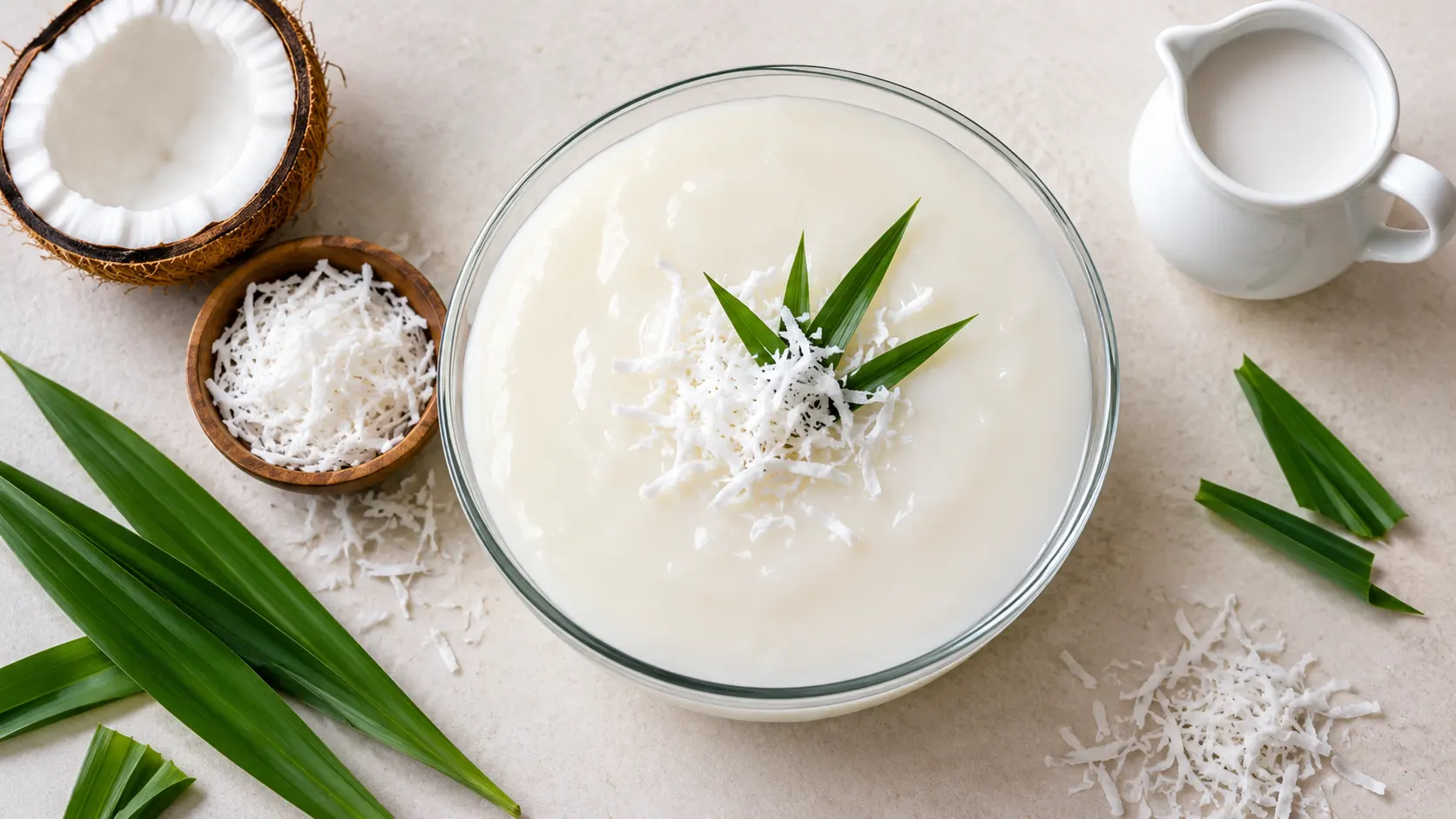
At its core, coconut pudding is any dessert built around coconut milk or coconut cream that has been thickened into a soft, spoonable, or sliceable texture. The defining variable is the thickening method, because it determines whether the final dessert behaves like a custard (soft-set, silky, slightly wobbly), a jelly (firm, sliceable, glossy), or a porridge-style pudding (thick, spoonable, opaque).
Coconut Milk vs. Coconut Cream: Why the Choice Matters
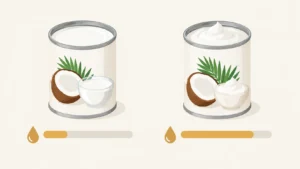
Coconut milk contains roughly 17–24% fat and a higher water content, while coconut cream is the thicker layer skimmed from the top of coconut milk, with a fat content closer to 20–50%. Using coconut cream instead of coconut milk produces a denser, richer pudding that sets more firmly, because there is less water to thicken and more fat to carry flavor. Substituting coconut cream for coconut milk in a recipe without adjusting the liquid or thickener amount can result in a pudding that is too stiff or greasy on the surface; conversely, using thin coconut milk in a recipe designed for cream can leave the pudding watery or slow to set.
The Four Ways to Set Coconut Pudding
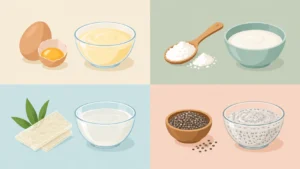
Egg-based custard: Eggs or egg yolks are whisked into warm coconut milk and gently heated until the proteins coagulate, thickening the mixture. Overheating causes the eggs to curdle, so custard-style coconut pudding is typically cooked over low heat or in a water bath.
Starch-thickened pudding: Cornstarch, tapioca starch, or rice flour is dissolved in cold liquid before being whisked into hot coconut milk. The starch granules swell and thicken as they heat, creating a glossy, spoonable pudding without eggs. This is the most common method for old-fashioned and stovetop coconut puddings.
Gelatin or agar-agar jelly: Gelatin (animal-derived) or agar-agar (plant-derived, from seaweed) is dissolved into hot coconut milk and then chilled until firm. Agar sets at room temperature and produces a firmer, more brittle texture than gelatin, which stays soft and needs refrigeration to hold its shape. This method is standard for Chinese coconut pudding and Vietnamese coconut jelly desserts.
Chia seed thickening: Chia seeds absorb roughly ten times their weight in liquid, forming a gel around each seed. Stirred into coconut milk and left to chill for several hours, they produce a no-cook, tapioca-like texture without any heat or starch.
Old-Fashioned Coconut Pudding
Old-fashioned coconut pudding generally refers to a stovetop or baked custard made with coconut milk, eggs or cornstarch, sugar, and shredded or flaked coconut folded in for texture. This style predates the coconut-cream and boxed-mix versions common today, and it typically has a softer, more rustic texture than modern set jellies. Vanilla extract and a pinch of salt are traditional additions that balance the sweetness of the coconut.
Thai Coconut Pudding and Kanom-Style Desserts
In Thailand, coconut-based sweets fall under the broader category of kanom (Thai desserts), many of which combine coconut milk with pandan leaf, taro, corn, or mung bean. A classic Thai coconut pudding layers a pandan-flavored coconut jelly base with a salted coconut cream topping, creating a two-tone dessert that balances sweet and salty flavors in the same bite. Tong sui, a category of Thai and Chinese sweet soups, sometimes includes a coconut pudding or jelly component served warm in a lightly sweetened coconut broth rather than chilled and sliced.
Chinese Coconut Pudding and Coconut Jelly
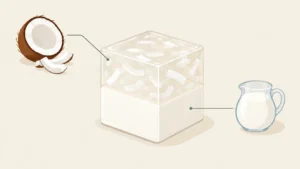
Chinese coconut pudding is typically set with agar-agar rather than gelatin, giving it a firmer, cleaner slice than custard-style versions. It is often poured in two layers — a coconut milk layer and a plain milk or almond milk layer — chilled separately so the layers stay distinct, then sliced into cubes or diamonds. This style overlaps closely with coconut jelly and coconut pudding jello variations found across Southeast Asia, where agar’s firm set and room-temperature stability make it practical for humid climates.
Coconut Pudding with Condensed Milk
Sweetened condensed milk is coconut milk’s natural partner in many recipes because it adds both sugar and dairy solids in a single ingredient, producing a denser, creamier pudding with less need for additional sugar. Because condensed milk is already thick and sweet, recipes that use it typically reduce the added sugar and sometimes reduce the starch or gelatin slightly, since the condensed milk itself contributes body.
Coconut Rice Pudding
Coconut rice pudding replaces some or all of the dairy in a traditional rice pudding with coconut milk, and uses cooked rice as both a textural component and a partial thickener as the starch from the rice releases into the liquid. Short-grain or glutinous rice varieties release more starch than long-grain rice, producing a creamier, stickier pudding.
Coconut Chia Pudding
Coconut chia pudding is a no-cook variation combining coconut milk with chia seeds in a roughly 3:1 to 4:1 liquid-to-seed ratio, stirred and left to gel in the refrigerator for at least four hours or overnight. Because it requires no cooking, it is one of the simplest coconut pudding recipes to prepare, and it is commonly used as a make-ahead breakfast rather than a dessert.
Coconut Pudding Cake
Coconut pudding cake refers to a baked dessert where a coconut pudding or custard layer forms underneath a cake layer during baking, a result of the batter separating into two textures in the oven. The bottom layer stays custardy while the top bakes into a light, sponge-like cake, a texture contrast that distinguishes it from a plain coconut cake with pudding used only as frosting or filling.
Troubleshooting Common Problems
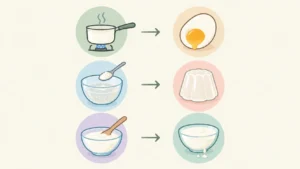
A coconut pudding that won’t set is usually under-thickened: starch-based puddings need to reach a full simmer to activate properly, while gelatin and agar need to be fully dissolved in hot liquid before chilling. A grainy or curdled custard is typically the result of cooking eggs over heat that is too high. A pudding that separates or weeps liquid after chilling often has too little thickener relative to the amount of liquid, or was chilled too quickly before the setting agent fully hydrated.
Storage and Make-Ahead Tips
Most coconut puddings keep well covered in the refrigerator for three to four days. Custard and starch-based versions are best stored with plastic wrap pressed directly against the surface to prevent a skin from forming. Agar-based jellies hold their shape at room temperature for a few hours, making them practical for transport, while gelatin-set versions should stay refrigerated until serving.
Conclusion
Coconut pudding is less a single recipe than a family of techniques united by coconut milk. Choosing between egg custard, starch, gelatin, agar, or chia comes down to the texture you want and how long the pudding needs to hold its shape outside the refrigerator. Once the thickening method is understood, regional variations — Thai, Chinese, Vietnamese, Hawaiian, or old-fashioned — become straightforward adaptations of the same underlying principles.
FAQ
What is the difference between coconut pudding and coconut custard? Coconut custard is thickened primarily with eggs, giving it a soft, silky set, while coconut pudding can be thickened with eggs, starch, gelatin, agar, or chia, giving it a wider range of possible textures.
Why is my coconut pudding not thickening? Starch-based puddings need to reach a full simmer for the starch to activate, while gelatin or agar must be fully dissolved in hot liquid before chilling; stopping the heat too early is the most common cause.
Can I make coconut pudding without eggs? Yes. Cornstarch or tapioca starch, gelatin, agar-agar, or chia seeds can all thicken coconut milk into a pudding without using eggs.
What is Thai coconut pudding usually served with? It is often served in layers with a salted coconut cream topping over a sweeter, sometimes pandan-flavored base, balancing sweet and salty flavors.
Is coconut pudding the same as coconut jelly? Not exactly. Coconut jelly typically refers to a firmer, agar- or gelatin-set version, while coconut pudding is a broader term that also includes softer custard and starch-thickened versions.