Introduction
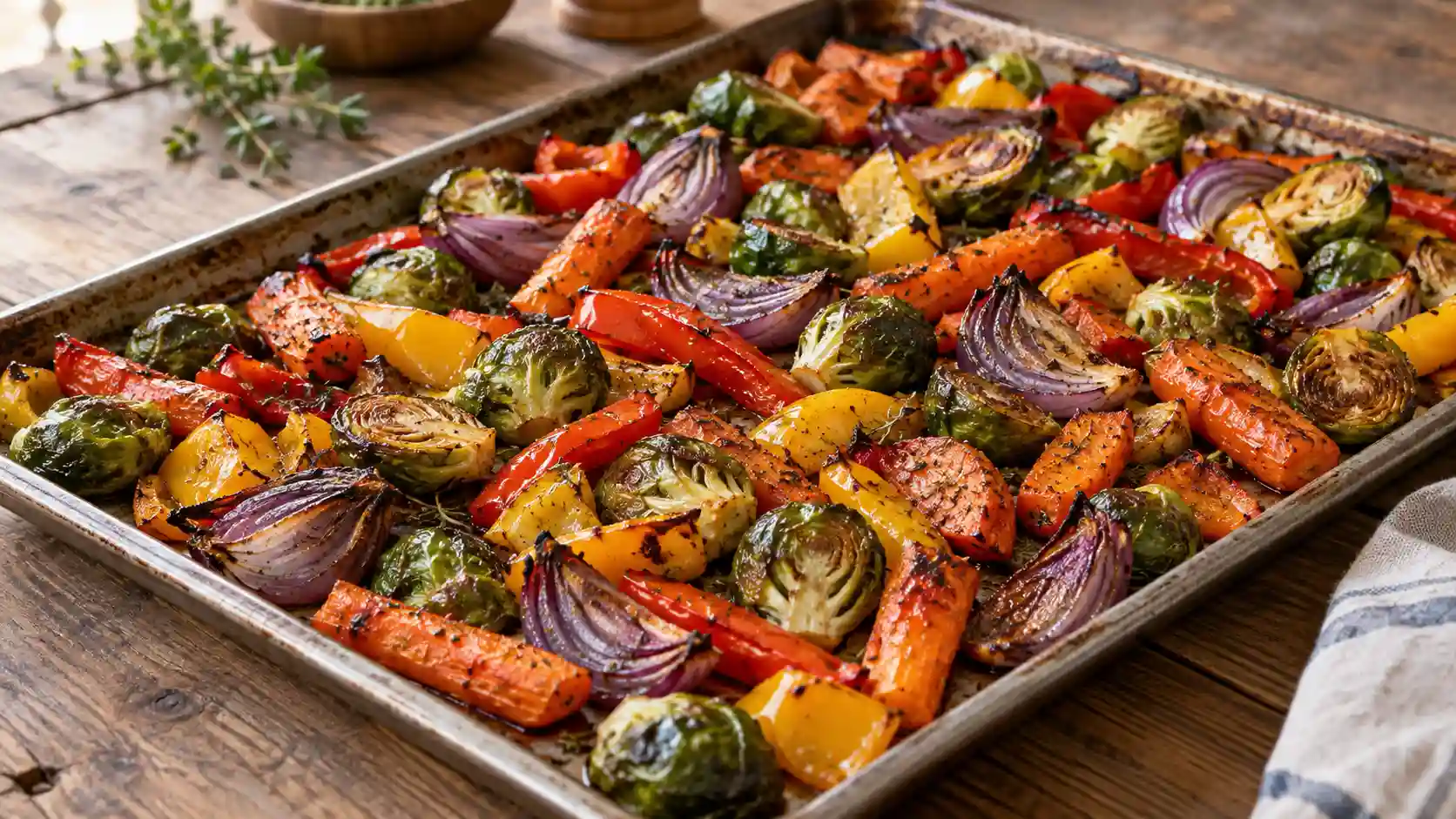
Roast vegetables are one of the most forgiving and universally loved side dishes in home cooking, prized for the way high heat transforms plain produce into something caramelized, tender, and deeply flavorful. Whether the goal is a simple weeknight side or the centerpiece of a full roast dinner, understanding the mechanics of roasting — heat, moisture, fat, and timing — is what separates soggy, pale vegetables from ones with crisp, golden edges and a sweet, concentrated taste.
Quick Summary
Roasting vegetables works best at 400–425°F (200–220°C), cut into even pieces, tossed lightly in oil, and spread in a single layer on a hot pan. Most vegetables take 20–40 minutes depending on density and size, with denser root vegetables needing longer and softer vegetables like zucchini or bell peppers needing less. An air fryer speeds this up, typically cutting cooking time by roughly a third.
What Makes Vegetables “Roast” Instead of “Bake”
Roasting and baking both use dry oven heat, but roasting specifically relies on higher temperatures to trigger the Maillard reaction — the chemical browning process that creates deep, savory, slightly sweet flavors on the vegetable’s surface. Baking tends to use gentler, lower heat for even cooking without heavy browning. This is why roast vegetables develop crisp, caramelized edges while baked vegetables stay softer and more uniform in color.
Choosing the Best Vegetables for Roasting
The best roasting vegetables are those that hold their shape under high heat and develop good caramelization. Reliable choices include:
- Root vegetables: carrots, potatoes, parsnips, sweet potatoes, beets
- Cruciferous vegetables: cauliflower, broccoli, Brussels sprouts
- Squash: butternut, acorn, zucchini
- Alliums: red onion, garlic
- Nightshades: bell peppers, tomatoes (best added later, as they release more moisture)
Vegetables with high water content, like tomatoes or mushrooms, benefit from being roasted separately or added partway through, since their moisture can slow browning in denser vegetables nearby.
How to Roast Vegetables in the Oven
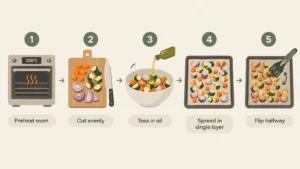
The fundamental method is the same across most vegetables:
- Preheat the oven fully before adding the tray — a cold start leads to steaming rather than roasting.
- Cut vegetables into similarly sized pieces so they cook at the same rate.
- Toss with oil (enough to lightly coat, not saturate) and salt.
- Spread vegetables in a single layer with space between pieces. Crowding traps steam and prevents browning.
- Roast, flipping halfway through for even color.
This process explains why overcrowded trays produce limp results: when pieces touch or overlap, the moisture they release has nowhere to escape, and the vegetables effectively steam in their own liquid instead of browning.
What Temperature to Roast Vegetables At
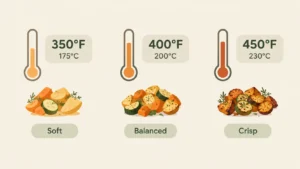
Most roast vegetable recipes call for somewhere between 400°F and 425°F (200°C to 220°C). At this range, the exterior browns before the interior overcooks, producing the classic contrast of a crisp outside and tender middle. Lower temperatures (around 350°F/175°C) are gentler but produce less caramelization and a softer texture throughout. Higher heat (450°F/230°C) roasts faster but requires closer attention to prevent burning, especially with smaller or thinner-cut pieces.
How Long to Roast Vegetables
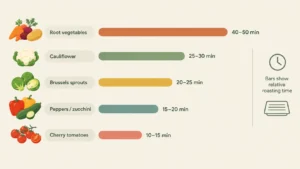
Cooking time depends on density, moisture content, and piece size:
- Dense root vegetables (potatoes, carrots, parsnips): 35–45 minutes at 400°F (200°C)
- Cauliflower and broccoli florets: 20–25 minutes
- Brussels sprouts (halved): 25–30 minutes
- Bell peppers, zucchini, onions: 20–25 minutes
- Cherry tomatoes: 15–20 minutes
Cutting vegetables smaller reduces roasting time but increases the ratio of browned surface to soft interior, which is why recipes often specify a particular cut size rather than leaving it open-ended.
Roasting Vegetables in an Air Fryer
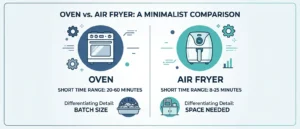
An air fryer roasts vegetables using rapid, circulated hot air in a much smaller space, which is why it cooks faster than a conventional oven — typically 10–15 minutes at 380–400°F (190–200°C) for most vegetables. The trade-off is capacity: air fryers require smaller batches to maintain the single-layer spacing that allows proper browning, so larger quantities need to be cooked in stages.
Roasted Root Vegetables
Root vegetables — carrots, parsnips, beets, turnips, and potatoes — are especially well suited to roasting because their low water content and high starch or sugar levels allow them to caramelize deeply rather than turn mushy. Their density also means they benefit from a slightly longer roast at a moderate temperature, giving the heat time to penetrate the center before the outside overcooks.
Mediterranean Roasted Vegetables
A Mediterranean-style roast typically combines zucchini, eggplant, red onion, bell peppers, cherry tomatoes, and sometimes fennel, seasoned with olive oil, garlic, and herbs like oregano, thyme, or rosemary. Because this mix includes higher-moisture vegetables like eggplant and tomatoes alongside firmer ones like peppers and onions, cutting the softer vegetables slightly larger helps balance their faster cooking time against the rest of the tray.
Pairing Roast Vegetables with Chicken and Roast Dinners
Roast vegetables are a traditional companion to roast chicken and full roast dinners, partly because they can share oven space and a similar temperature range. When roasting vegetables alongside chicken, positioning vegetables on a lower rack or around the chicken allows them to pick up rendered fat and drippings, adding flavor while the chicken cooks. For a full roast dinner, starchier vegetables like potatoes and parsnips are typically prioritized for their ability to hold up over a longer cook time.
Seasoning and Flavor Tips
Beyond salt and oil, roast vegetables respond well to:
- Acid (a squeeze of lemon or splash of vinegar after roasting) to brighten sweetness
- Fresh herbs added at the end, since delicate herbs like parsley burn under sustained high heat
- Hardy herbs like rosemary and thyme, which can roast the full time without scorching
- Spice blends such as smoked paprika, cumin, or za’atar for variation
Conclusion
Roast vegetables reward attention to a few key variables: even cuts, adequate spacing, sufficient heat, and timing suited to each vegetable’s density. Mastering these fundamentals means the same basic method can produce everything from a simple weeknight tray to a full Mediterranean-style spread or a roast dinner centerpiece.
FAQ
How long do you roast vegetables for?
Most vegetables take 20–40 minutes at 400°F (200°C), with denser root vegetables on the longer end and softer vegetables like zucchini or peppers on the shorter end.
What temperature is best for roasting vegetables?
400–425°F (200–220°C) is the standard range, balancing good caramelization with even cooking.
Can you roast vegetables in an air fryer?
Yes. Air fryers cook vegetables faster than a conventional oven, usually in 10–15 minutes, though smaller batches are needed to keep pieces from overlapping.
Why do my roast vegetables come out soggy instead of crispy?
This usually happens when the tray is overcrowded or the oven isn’t fully preheated, both of which trap moisture and cause steaming instead of browning.