Introduction
Provolone pizza swaps the familiar stretchy pull of mozzarella for something sharper, nuttier, and more complex. It’s a favorite in Italian-American pizzerias, especially in the Northeast, where provolone often layers alongside or instead of mozzarella for extra depth. This guide covers what provolone pizza actually is, how it compares to other cheeses, which toppings pair best with it, and how to build one successfully at home.
Quick Summary
Provolone is a semi-hard Italian cheese made from cow’s milk, aged anywhere from a few weeks (dolce, or “sweet”) to over a year (piccante, or “sharp”). On pizza, it melts less stringy than mozzarella but browns beautifully and adds a savory, slightly tangy backbone. It pairs especially well with cured meats, mushrooms, and pesto, and works either as a standalone cheese or blended with mozzarella for balance.
1. What Is Provolone Pizza?
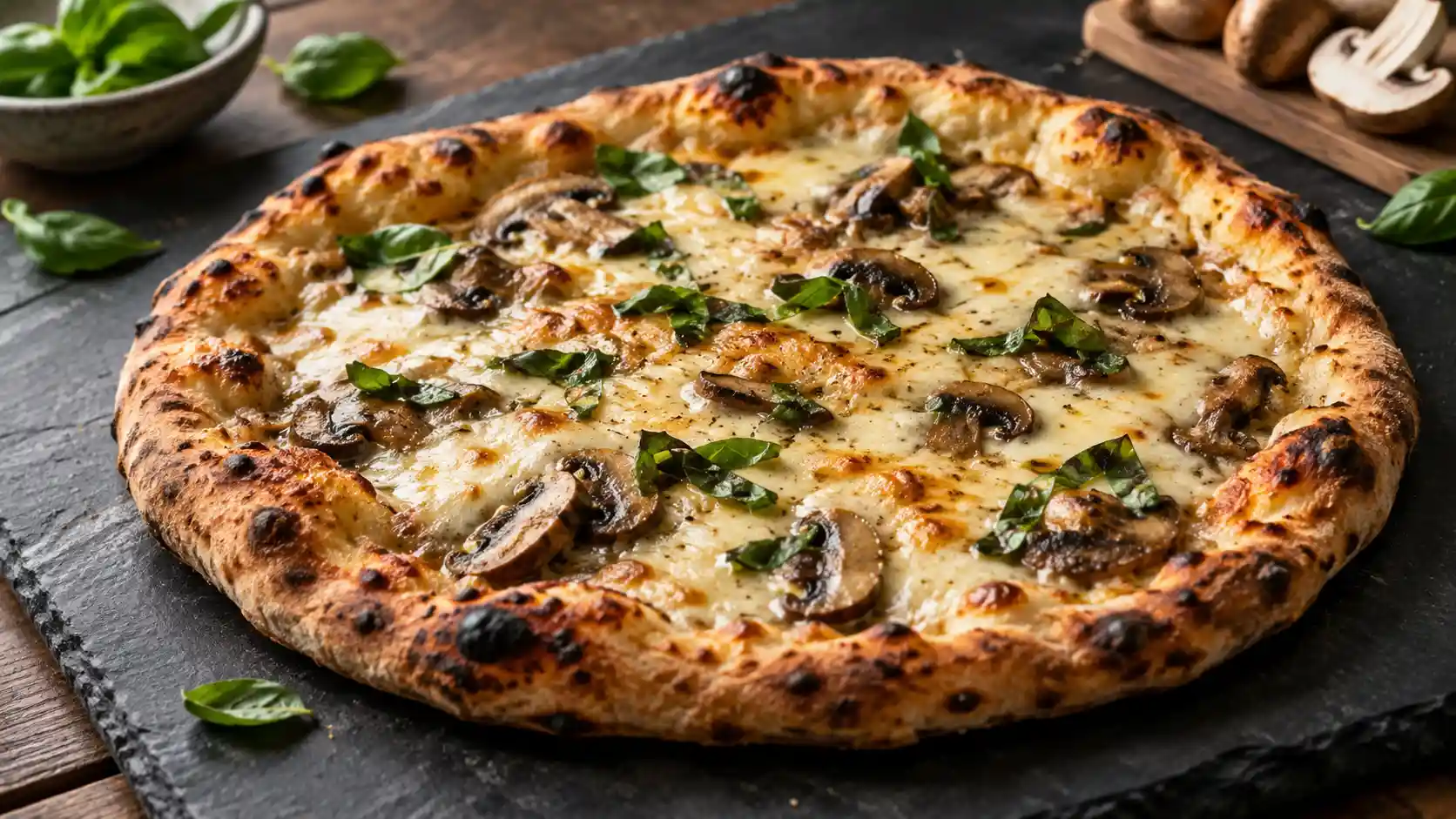
Provolone pizza is any pizza that uses provolone cheese as a primary or supporting topping instead of, or alongside, mozzarella. Provolone is a pasta filata cheese — the same stretched-curd family as mozzarella — but it’s aged longer, which firms up its texture and deepens its flavor. That aging is the reason provolone behaves differently in the oven: it melts into a smooth, slightly oily layer rather than mozzarella’s long, elastic strands, and it browns and crisps at the edges faster.
This makes provolone especially popular for “upside down” style pizzas, a regional variation (common in parts of New England) where the cheese goes directly on the dough and the sauce is spooned on top. Because provolone doesn’t weep as much moisture as mozzarella, it holds up well under sauce without making the crust soggy.
2. Provolone vs. Mozzarella on Pizza
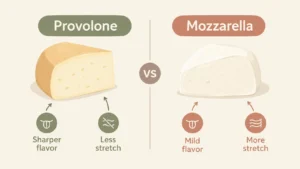
The core difference comes down to moisture and age. Fresh mozzarella is high-moisture and mild, built for that classic cheese-pull. Provolone is lower-moisture and aged, so it contributes flavor first and stretch second.
- Flavor: Provolone is sharper and more savory; mozzarella is mild and milky.
- Melt behavior: Mozzarella stretches; provolone spreads and browns.
- Moisture control: Provolone releases less liquid, which helps keep a crust crisp.
Neither is objectively “better” — the choice depends on whether the goal is classic pizzeria pull (mozzarella) or a richer, more savory bite (provolone). Many pizzerias split the difference with a blend of both.
3. Provolone vs. Other Cheeses
Provolone vs. Parmesan/Asiago: Parmesan and asiago are hard, granular cheeses meant for finishing — grated on top after baking for a salty, umami hit. Provolone is a melting cheese used as a base layer. They serve different roles and are often used together rather than as substitutes.
Provolone vs. Feta: Feta is brined, crumbly, and tangy; it doesn’t melt smoothly the way provolone does. Feta adds pops of salty contrast, while provolone provides an even, cohesive layer of melted cheese.
Provolone vs. Cheddar: Cheddar melts richly but can turn oily and separate at high pizza-oven temperatures. Provolone holds its structure better under heat, making it more reliable for a clean, even melt.
4. Sharp vs. Dolce Provolone: Which to Choose
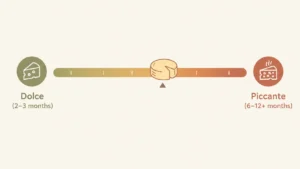
Provolone comes in two main styles based on aging:
- Provolone dolce is aged around 2–3 months. It’s mild, buttery, and closer to a young cheese in character — a gentler entry point for anyone new to provolone on pizza.
- Provolone piccante is aged 6 months to over a year. It’s notably sharper, with a peppery, tangy bite that stands up well against bold toppings like salami or mushrooms.
For a pizza where provolone is the star, piccante gives more presence. For a subtler layer blended with mozzarella, dolce blends in more smoothly.
5. Best Provolone Pizza Toppings and Combinations
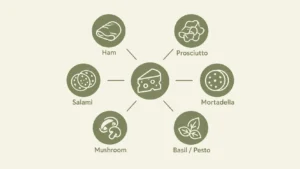
Provolone’s savory depth makes it a natural match for cured meats and earthy vegetables:
- Ham and provolone – a classic, slightly sweet-and-savory pairing.
- Prosciutto and provolone – added after baking to preserve the prosciutto’s delicate texture.
- Salami and provolone – the cheese’s sharpness balances salami’s fat and spice.
- Mortadella and provolone – a rich, Italian-deli-inspired combination.
- Mushroom and provolone – earthy mushrooms echo provolone’s savory notes.
- Pesto and provolone – basil and garlic brighten provolone’s tang.
- Philly-style steak and provolone – a cheesesteak-inspired pizza where provolone plays the same role it does on the sandwich.
Mixing provolone with mozzarella is one of the most common approaches, since mozzarella keeps the classic stretch while provolone adds flavor complexity.
6. Smoked Provolone Pizza
Smoked provolone is provolone that’s been cold- or hot-smoked after aging, giving it a deep, woodsy flavor. On pizza, it adds a barbecue-adjacent smokiness without needing a smoker at home — useful on pizzas with grilled vegetables, bacon, or barbecue chicken, where the cheese itself carries some of the smoky character rather than relying entirely on the toppings.
7. How to Make Provolone Pizza at Home
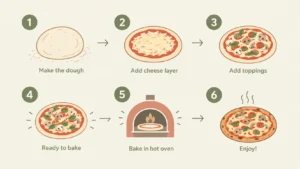
Ingredients: pizza dough, tomato sauce (or olive oil base), shredded or thinly sliced provolone, optional mozzarella blend, toppings of choice.
Method:
- Preheat the oven (or pizza stone) as hot as it goes — ideally 475–500°F (245–260°C).
- Stretch the dough and, for an “upside-down” style, layer provolone directly on the dough first, then add sauce on top; for a traditional build, sauce goes down first, cheese on top.
- Use shredded provolone for even melting, or thin slices for a more rustic, patchy look.
- Add toppings, keeping in mind that provolone releases some oil during baking, so avoid overly wet toppings that could compound sogginess.
- Bake until the crust is golden and the provolone is bubbling and lightly browned at the edges, typically 10–14 minutes depending on oven temperature.
- Rest for a few minutes before slicing to let the cheese set slightly.
8. Common Mistakes to Avoid
- Using only piccante provolone on a delicate pizza — its sharpness can overpower mild toppings.
- Skipping the mozzarella blend on a first attempt — a 50/50 mix is more forgiving than straight provolone.
- Overloading wet toppings, which can make an already oil-releasing cheese feel greasy.
- Baking at too low a temperature, which lets provolone separate instead of browning cleanly.
Conclusion
Provolone pizza offers a flavor-forward alternative to standard mozzarella-topped pies, prized for its savory depth, cleaner melt, and versatility across dolce and piccante styles. Whether blended with mozzarella for balance or used solo with cured meats and mushrooms, provolone rewards a hot oven and thoughtful topping pairing with a pizza that’s more complex than the everyday slice.
FAQ
Is provolone good on pizza?
Yes — it melts smoothly, browns well, and adds a sharper, more savory flavor than mozzarella, making it a strong choice for anyone wanting more depth than a classic cheese pizza.
Can I use provolone instead of mozzarella on pizza?
Yes, though pure provolone won’t stretch the way mozzarella does. Many cooks blend the two for balanced flavor and texture.
What’s the difference between provolone dolce and piccante?
Dolce is younger and milder; piccante is aged longer and significantly sharper and tangier.
Does provolone melt well on pizza?
Yes, it melts into a smooth, even layer, though it spreads rather than stretches like mozzarella.