Introduction
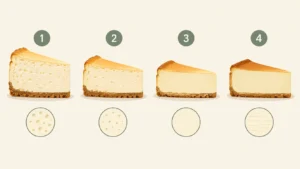
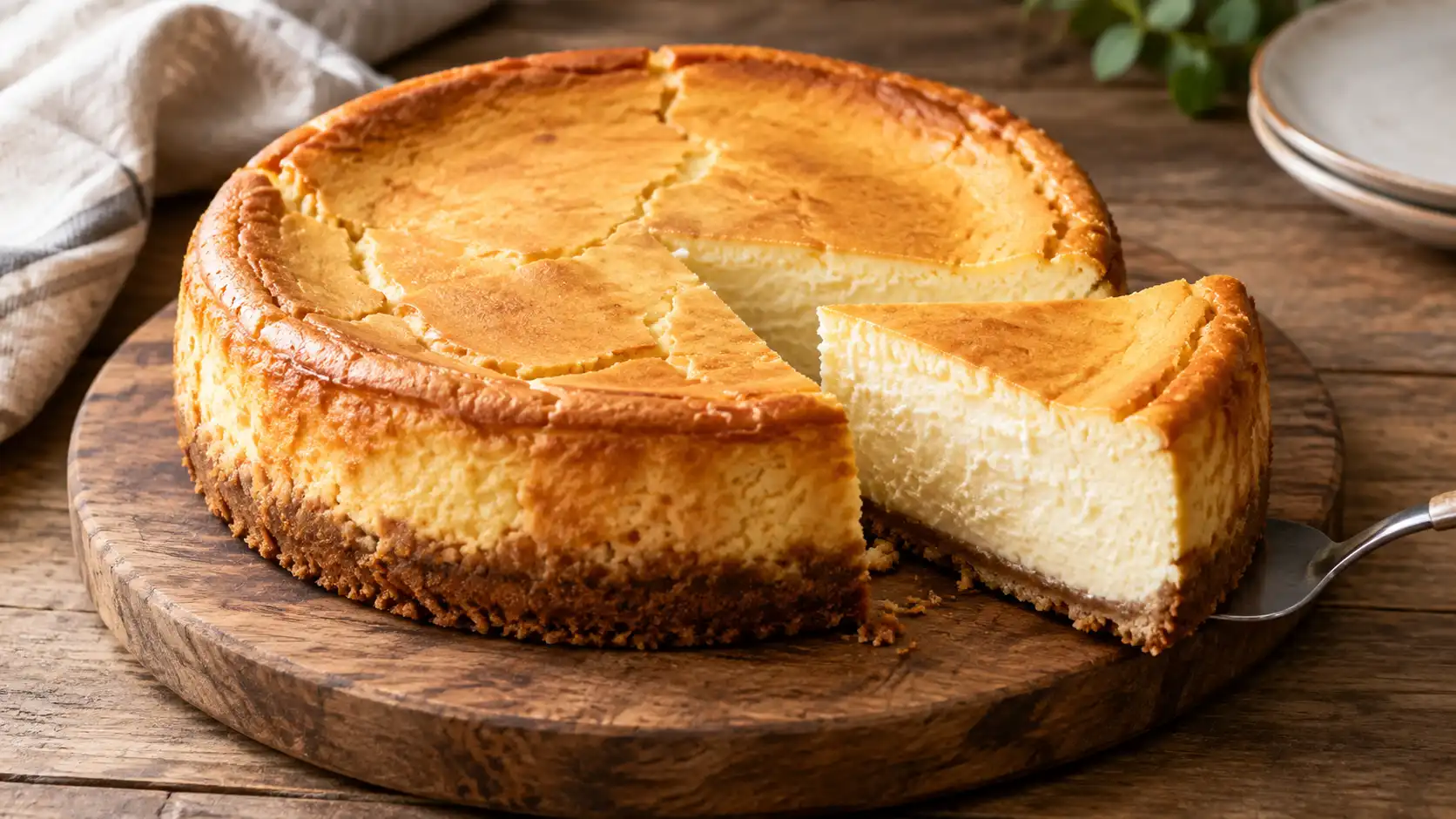
A baked cheesecake in the Nigella Lawson tradition is built around a simple idea: full-fat cream cheese, eggs, and sugar, baked slowly until just set, then finished with a soured-cream or crème fraîche topping that adds tang and a silky final layer. It’s less fussy than a classic New York cheesecake, doesn’t require a water bath in most versions, and leans on gentle, low-temperature baking to keep the texture dense but not dry. This guide breaks down what defines that style, why each ingredient and step matters, and how it compares to baked cheesecake recipes from other well-known British cooks.
Quick Summary
- Nigella-style baked cheesecakes typically use a biscuit-crumb base, a cream cheese filling enriched with eggs and sugar, and a soured cream or crème fraîche topping baked on separately.
- Low, steady oven temperatures (usually around 150–160°C/300–320°F) prevent cracking and overcooking.
- The cheesecake is usually left to cool in the switched-off oven before chilling for several hours or overnight.
- Flavor variations — lemon, chocolate, raspberry, orange, ricotta — follow the same base method with small adjustments to fat content or acidity.
- Compared with a classic New York cheesecake, this style is generally shorter, denser at the edges, and softer in the center.
What Makes a Nigella-Style Baked Cheesecake Different
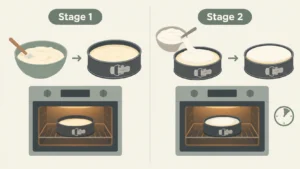
The defining feature is the two-stage bake: the cream cheese filling goes in first and bakes until nearly set, then a soured cream or crème fraîche layer is poured over the top and baked briefly again. This technique does two things structurally. First, it hides any surface cracks that formed during the first bake, since the topping seals over them. Second, it adds a tart contrast to the sweeter, denser custard underneath, which is a flavor signature associated with this style of British baked cheesecake.
Unlike some New York recipes that rely on a water bath to regulate heat, this approach controls temperature primarily through a low, steady oven setting and residual heat from a gradual cool-down rather than active steam insulation.
Core Ingredients and Why Each One Matters
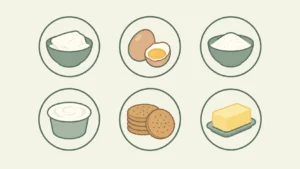
- Full-fat cream cheese — Lower-fat versions release more water during baking, which thins the custard and increases the risk of a wet, sunken center.
- Eggs — Provide structure through protein coagulation. Too many eggs, or eggs added at too high a temperature, can overwhelm the mixture and produce a rubbery texture instead of a creamy one.
- Caster sugar — Finer sugar dissolves more evenly into the cream cheese base than granulated sugar, reducing the chance of a grainy filling.
- Soured cream or crème fraîche — Used both in the filling for tang and as a separate topping layer; its acidity also helps tenderize the custard.
- Digestive biscuits (or similar) and melted butter — Form the base. The ratio of butter to crumbs affects whether the base holds together when sliced or crumbles apart.
- Vanilla or citrus zest — Added in small quantities to round out sweetness without overpowering the tang of the cream cheese.
Step-by-Step Method
- Prepare the base. Crush biscuits finely, mix with melted butter, and press firmly into the bottom of a springform tin. A tightly packed base slices more cleanly.
- Make the filling. Beat softened cream cheese with sugar until smooth, then add eggs one at a time on a low speed to avoid incorporating excess air, which can cause the surface to puff and crack.
- Bake the filling. Pour over the chilled base and bake at a low temperature until the edges are set but the center still has a slight wobble.
- Add the topping. Mix soured cream or crème fraîche with a little sugar and vanilla, then spread over the partially baked filling and return to the oven briefly.
- Cool gradually. Turn off the oven and leave the cheesecake inside with the door ajar. Sudden temperature drops are one of the main causes of surface cracking.
- Chill thoroughly. Refrigerate for at least four hours, ideally overnight, before releasing from the tin and slicing.
Avoiding Cracks and Overbaking
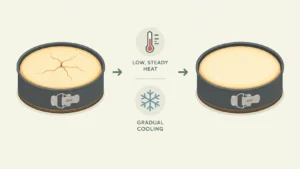
Cracking is almost always linked to two factors: overbeating (which traps air that expands and then collapses) and rapid temperature change. Baking low and slow, avoiding high mixer speeds once the eggs are added, and cooling the cheesecake gradually inside the oven all reduce the risk. A cheesecake that’s pulled from the oven the moment it looks fully set has usually already overbaked, since residual heat continues cooking the center after removal.
Popular Flavor Variations
- Lemon — Zest and a small amount of juice added to the filling, balancing the richness of the cream cheese.
- Chocolate — Melted dark chocolate folded into the base filling, which also firms the texture slightly once chilled.
- Raspberry — Often swirled through the filling or served as a compote alongside rather than baked directly in, to avoid excess moisture.
- Orange — Zest-based, sometimes paired with a hint of spice.
- Ricotta — A lighter, slightly grainier alternative to an all-cream-cheese filling, giving a less dense final texture.
How It Compares: Nigella vs. Jamie Oliver vs. Mary Berry vs. Delia
While all four cooks work from the same basic components — cream cheese, eggs, sugar, and a biscuit base — their approaches differ in technique. Jamie Oliver’s baked cheesecake recipes tend to favor simpler, fewer-step methods aimed at home cooks with less baking experience. Mary Berry’s versions, shaped by her background in classic British baking, often specify more precise timings and use a water bath more consistently to control texture. Delia Smith’s recipes are known for being methodical and heavily instructional, walking through each stage in detail to minimize error. The Nigella approach sits between these: relatively simple in ingredient list, but distinguished by that two-stage bake-and-top method described above.
New York-Style Baked Cheesecake: Key Differences
A traditional New York cheesecake uses a higher proportion of cream cheese to other ingredients, is baked at a slightly higher initial temperature before dropping, and frequently uses a water bath throughout the full bake to produce an ultra-dense, tall, straight-sided result. It’s generally richer and firmer than a Nigella-style version, with less emphasis on a tangy topping layer and more on a thick, uniform custard body.
Storage and Make-Ahead Tips
Baked cheesecake keeps well covered in the refrigerator for up to four to five days. It also freezes well for up to two months if wrapped tightly, ideally without the topping added until after thawing, since soured cream and crème fraîche layers can separate slightly on freezing. Bringing a slice to room temperature for 15–20 minutes before serving softens the texture and brings out more flavor than serving it straight from the fridge.
Conclusion
A Nigella-style baked cheesecake is defined less by an exotic ingredient list and more by technique: full-fat cream cheese, a gentle bake, and a tangy soured cream or crème fraîche topping added partway through cooking. Getting the texture right comes down to controlling temperature and handling the eggs gently, while flavor variations like lemon, chocolate, or ricotta simply adjust the base formula rather than changing the underlying method. Compared with recipes from Jamie Oliver, Mary Berry, Delia Smith, or a classic New York-style bake, this version stands out for its balance of richness and tang.
FAQ
Does a Nigella-style baked cheesecake need a water bath?
Most versions don’t require one, relying instead on a low oven temperature and gradual cooling to prevent cracking.
Why did my cheesecake crack?
Overbeating the eggs into the mixture and cooling the cheesecake too quickly after baking are the two most common causes.
Can I make a baked cheesecake ahead of time?
Yes — it’s often better made a day in advance, since chilling overnight firms the texture and lets flavors settle.
What’s the difference between this and a New York cheesecake?
New York-style cheesecakes are typically denser, taller, and richer, often baked in a water bath throughout, with less emphasis on a separate tangy topping layer.
Can I freeze a baked cheesecake?
Yes, for up to two months if tightly wrapped, though it’s best to add the soured cream topping after thawing rather than before freezing.