Introduction
Cheese and spinach rolls sit at a comfortable intersection of savory pastry, quick lunchbox food, and party catering staple. They’re built from just a few components — a pastry casing, a wilted spinach filling, and a binding cheese — yet small differences in ratio, moisture control, and pastry choice separate a soggy, bland roll from one with a crisp shell and a rich, well-seasoned center. This guide breaks down the ingredients, technique, and variations behind a reliable batch of cheese and spinach rolls, along with how homemade versions compare to popular store-bought ones.
Quick Summary
Cheese and spinach rolls are made by wrapping a seasoned mixture of cooked spinach and cheese (commonly feta, ricotta, cottage, or cream cheese) in puff pastry or filo, then baking until golden. The biggest factors in a good result are removing excess moisture from the spinach, balancing salty and creamy cheeses, and sealing the pastry well before baking at a high temperature (around 200°C/400°F) for 20–25 minutes.
What Are Cheese and Spinach Rolls?
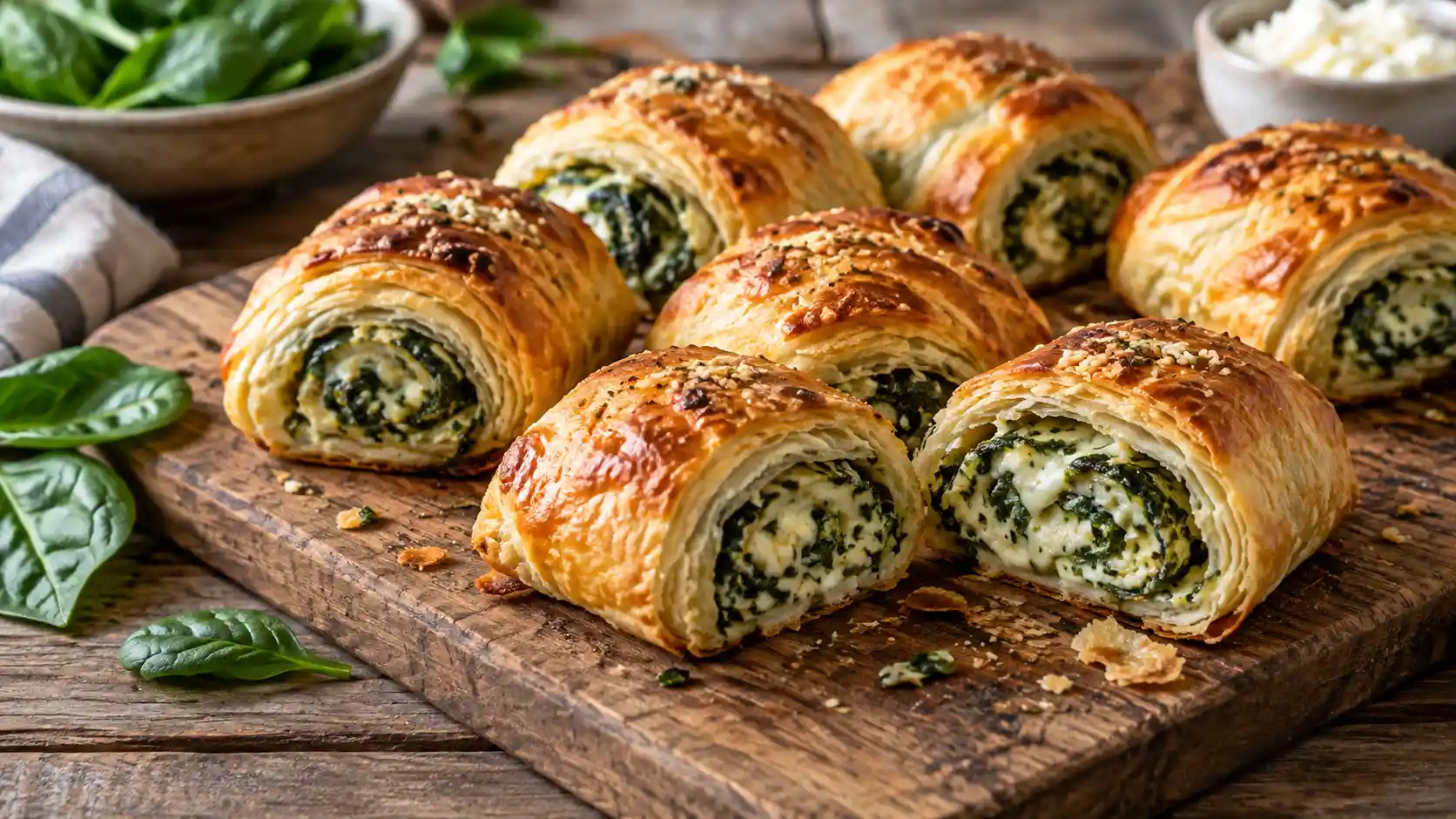
A cheese and spinach roll is a savory pastry log or triangle filled with a spinach-and-cheese mixture, most often made with puff pastry for a flaky, layered exterior. They’re closely related to spanakopita but shaped as rolls rather than a full pie, which makes them portable and easy to portion — a reason they’re common in school lunches, bakeries, and supermarket snack aisles across Australia and the UK.
Key Ingredients and Why They Matter
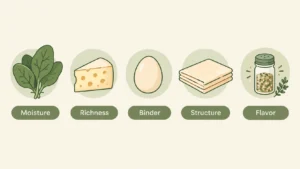
- Spinach: Fresh spinach must be wilted and thoroughly drained; frozen spinach must be thawed and squeezed dry. Excess water is the single biggest cause of a soggy roll, because trapped liquid steams the pastry from the inside instead of letting it crisp.
- Cheese: Provides moisture, saltiness, and richness. Firm, salty cheeses (feta) contrast well with creamy ones (ricotta, cottage, cream cheese), which is why many recipes combine two types rather than using just one.
- Egg: A beaten egg binds the filling so it holds together when sliced, and also serves as an egg wash for a glossy, golden crust.
- Seasoning: Nutmeg, black pepper, garlic, and spring onion are common additions that offset the mildness of spinach and cheese without overpowering them.
- Pastry: Determines texture — puff pastry gives height and flakiness, filo gives a thinner, crisper, more delicate shell.
Puff Pastry vs. Filo: Choosing Your Base
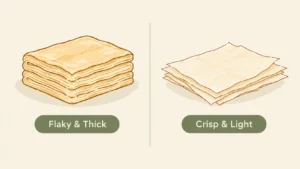
Puff pastry is the more common choice for cheese and spinach rolls because its layered structure puffs dramatically in the oven, creating a substantial, flaky casing that holds a generous filling without tearing. It’s also more forgiving for beginners, since it doesn’t dry out as quickly as filo during handling.
Filo pastry produces a thinner, crisper result closer to traditional Greek spanakopita rolls. Because filo sheets are fragile and dry out fast, they need to be kept covered with a damp cloth while working and brushed with melted butter or oil between layers to prevent cracking. Filo rolls are lighter and less rich than puff pastry versions, which suits people who want a crisper bite with less pastry volume.
Step-by-Step Method
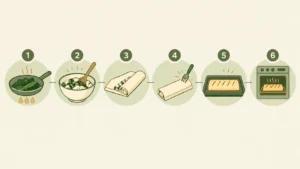
- Wilt the spinach. Cook fresh spinach in a dry pan until just wilted, or thaw frozen spinach completely. Squeeze out as much liquid as possible using a clean tea towel or your hands — this step determines whether the final pastry is crisp or soggy.
- Mix the filling. Combine the drained spinach with your chosen cheese(s), a beaten egg, and seasoning. The mixture should hold together when pressed, not run or pool liquid.
- Prepare the pastry. Roll out puff pastry sheets and cut into rectangles, or lay out filo sheets brushed lightly with butter.
- Fill and roll. Spoon the filling along one edge, roll tightly, and seal the edge with a little egg wash or water — an unsealed edge is a common cause of filling leaking out during baking.
- Cut and score. Slice into individual rolls and score the top lightly, which allows steam to escape and helps the pastry puff evenly instead of splitting unpredictably.
- Egg wash and bake. Brush with beaten egg for color, then bake at around 200°C (400°F) for 20–25 minutes, until deep golden brown and puffed.
Cheese Variations: Feta, Cottage, Cream, and Creamy Blends
- Feta cheese and spinach rolls lean salty and tangy, and pair well with a touch of lemon zest or dill.
- Cottage cheese and spinach rolls are milder and lighter, often chosen as a slightly lower-fat alternative to cream cheese or feta blends, though cottage cheese’s higher water content means it needs draining too.
- Cream cheese and spinach rolls produce a smoother, richer, more indulgent filling with a subtle tang, and blend particularly well with garlic and parmesan.
- Creamy cheese and spinach rolls, a term often used for ricotta- or cream-cheese-based versions, describe a softer, less crumbly filling than an all-feta version.
Combining a firm salty cheese with a soft creamy one is the most common professional approach, since it balances flavor intensity with a smooth, cohesive texture that doesn’t crumble when the roll is sliced.
Common Mistakes and How to Avoid Them
- Soggy bottoms: Usually caused by excess spinach moisture or underbaking. Draining spinach thoroughly and baking on a preheated tray helps.
- Filling leaking out: Happens when the pastry seam isn’t sealed properly before baking. Press seams firmly and place rolls seam-side down.
- Pale, flat pastry: Often means the oven wasn’t hot enough, or the pastry wasn’t cold when it went in — cold puff pastry puffs more dramatically than pastry that’s warmed and softened during handling.
- Overly salty filling: Easy to do when combining feta with other salted cheeses; taste the mixture before assembling and adjust.
Storage, Freezing, and Reheating
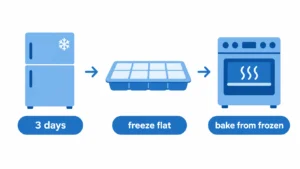
Baked cheese and spinach rolls keep in an airtight container in the fridge for up to three days. To reheat, use an oven or air fryer rather than a microwave, since dry heat restores crispness while a microwave will soften the pastry.
For freezing, unbaked rolls freeze well: assemble, freeze flat on a tray until solid, then transfer to a bag. Bake from frozen, adding a few extra minutes to the cooking time. Freezing already-baked rolls is possible but tends to soften the pastry slightly on reheating compared to baking from frozen raw.
Store-Bought Options: Woolworths, Coles, Aldi, and Herbert Adams
For a quicker option, most Australian supermarkets stock frozen or bakery-style cheese and spinach rolls. Woolworths and Coles both carry their own bakery-brand versions alongside third-party brands, while Aldi’s seasonal or rotating frozen aisle sometimes includes similar party-food pastries. Herbert Adams is a widely recognized Australian brand specifically known for its frozen cheese and spinach rolls, commonly found in the freezer section at Coles. Store-bought versions are convenient and consistent but typically use a higher ratio of pastry to filling than homemade versions, which affects both flavor and calorie count.
Calories and Nutrition
Calorie counts for a cheese and spinach roll vary significantly based on size, pastry type, and cheese used, generally ranging from roughly 150–300 calories per roll for a standard bakery-sized portion. Puff pastry versions tend to be higher in calories and fat than filo versions due to the pastry’s butter content and layered structure. Homemade rolls allow more control over calorie count, since the filling-to-pastry ratio, cheese type, and portion size can all be adjusted, whereas store-bought rolls are fixed to the manufacturer’s formulation.
Conclusion
Cheese and spinach rolls are a flexible savory pastry that rewards attention to two things above all: drying out the spinach and sealing the pastry properly. Beyond that, the recipe is highly adaptable — puff pastry or filo, feta or cream cheese or a blend, homemade or store-bought — making it easy to tailor to taste, dietary preference, or how much time is available.
FAQ
What is the best cheese for spinach rolls?
A blend of a salty cheese (like feta) with a creamy one (like ricotta or cream cheese) is generally considered the best combination, balancing flavor and texture.
Can I make cheese and spinach rolls ahead of time?
Yes. They can be assembled and refrigerated unbaked for a few hours, or frozen unbaked for longer storage, then baked directly from cold or frozen.
Why are my spinach rolls soggy?
Soggy rolls are almost always caused by excess moisture left in the spinach, an underbaked center, or a pastry that wasn’t fully preheated before going into the oven.
Is puff pastry or filo better for spinach rolls?
Puff pastry gives a thicker, flakier, more indulgent result, while filo gives a thinner, crisper, lighter texture. Neither is objectively better — it depends on the desired texture.
How many calories are in a cheese and spinach roll?
Typically around 150–300 calories per roll, depending on size, pastry type, and cheese content.