Introduction
A passion fruit sour balances two things that seem opposed: the fruit’s sharp, tangy acidity and a smoothing sweetness that rounds it into something drinkable and craveable. Whether it appears as a cocktail, a mocktail, a beer, a curd, or a candy, the “sour” in its name refers to a specific flavor profile built around citric and malic acid, not a flaw in the fruit. This guide breaks down what makes passion fruit taste sour, how that sourness is used across recipes and products, and how to build a balanced passion fruit sour at home.
Quick Summary
Passion fruit is naturally tart because of its high citric and malic acid content, especially when slightly underripe. A passion fruit sour cocktail typically combines passion fruit pulp or purée, a spirit (commonly vodka, pisco, or amaretto), citrus juice, a sweetener, and egg white or aquafaba for texture. Riper fruit and fruit with deeper orange, red, or purple skin tend to taste sweeter, while yellow and green-tinged fruit skew more acidic. The same sour-sweet tension shows up in passion fruit beers, curds, and candies, where sugar is calibrated to offset the fruit’s natural bite.
Is Passion Fruit Sour or Sweet?
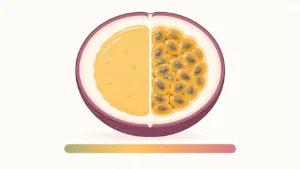
Passion fruit is both, and that duality is central to its appeal. The pulp carries a tropical sweetness layered over a pronounced tartness, similar in structure to how a ripe pineapple or a tart cherry balances sugar against acid. Most tasters describe it as sour-forward when eaten alone and sweet-forward when the seeds are chewed, since the gel around each seed carries more sugar than the juice itself. This is why passion fruit works so well in sour-style drinks: the fruit already does half the flavor-balancing work before a bartender or home cook adds anything else.
Why Passion Fruit Tastes Sour (Ripeness, Variety, and Color)
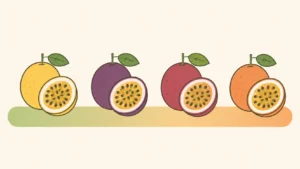
Passion fruit sourness comes down to three factors: ripeness, variety, and skin color.
- Ripeness: Underripe passion fruit is noticeably more acidic and can taste bitter rather than sour. As the fruit ripens, its skin wrinkles and its sugar content rises while acidity drops slightly, producing the familiar tart-sweet balance.
- Variety: Yellow passion fruit tends to be more acidic and intensely aromatic, which is why it’s favored in commercial juice production. Purple passion fruit is generally milder and sweeter, with a smaller, more concentrated pulp cavity.
- Color: Red and orange-skinned passion fruit varieties often skew sweeter, while green-tinged or unripe yellow fruit is where most of the sharp sourness comes from. If a passion fruit tastes unusually sour or slightly bitter, it likely was picked before full ripeness.
Core Ingredients for a Passion Fruit Sour
A passion fruit sour, in either cocktail or mocktail form, is built from five components:
- Passion fruit pulp or purée — fresh, strained, or store-bought unsweetened purée
- A base spirit or non-alcoholic base — vodka, pisco, amaretto, agave spirit, or a spirit-free alternative
- Citrus juice — usually lemon or lime, to reinforce the sour profile
- A sweetener — simple syrup, honey syrup, or agave syrup
- A texturizing agent — egg white or aquafaba, shaken to create the classic frothy “sour” head
Mango, raspberry, or kiwi are common flavor add-ins that soften or complicate the tartness without masking the passion fruit itself.
Classic Passion Fruit Sour Cocktail Recipe
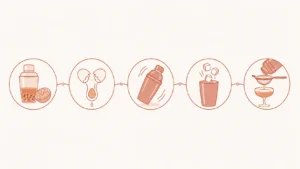
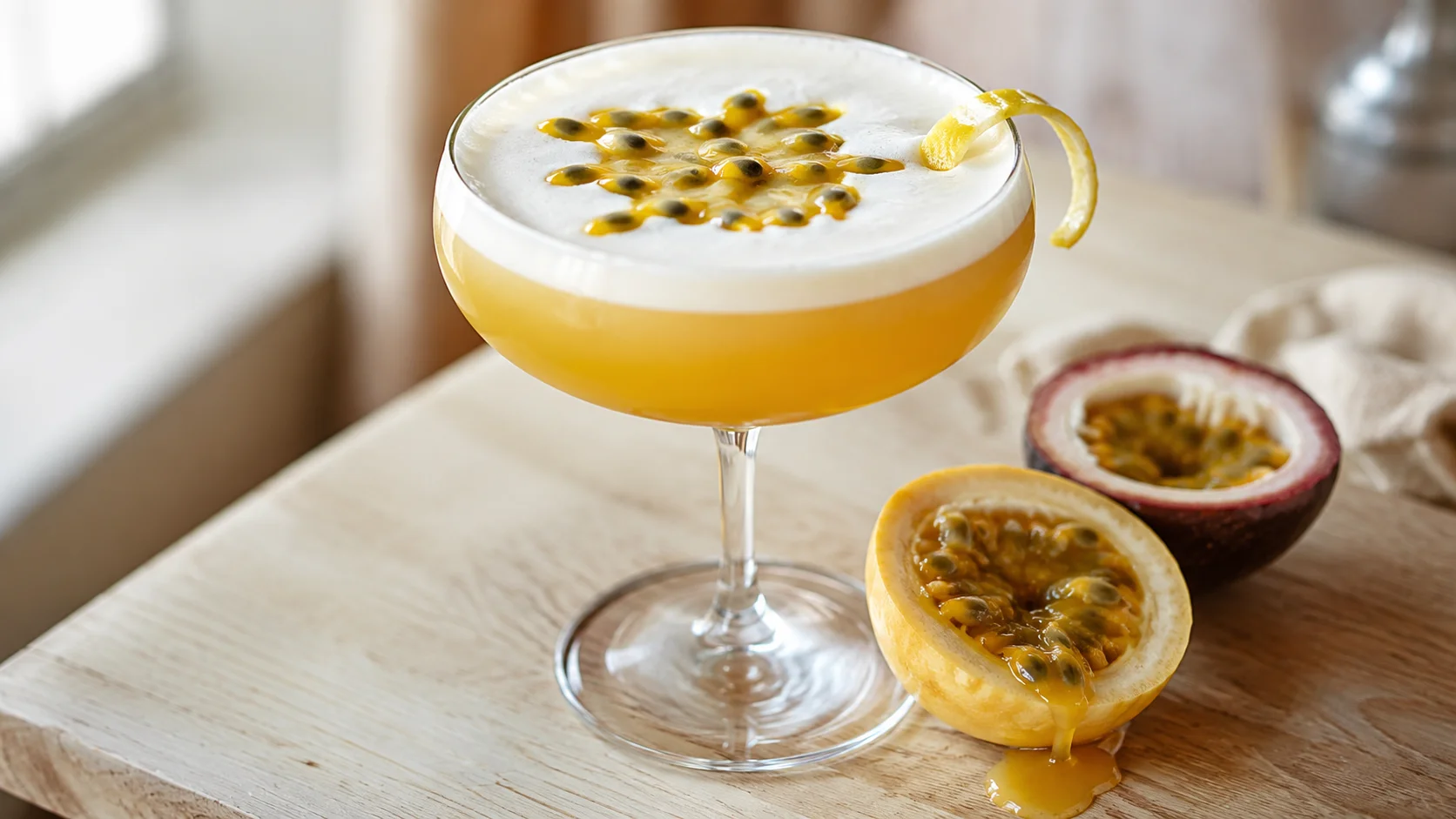
- Combine 60 ml vodka (or pisco/amaretto for a variation), 30 ml fresh passion fruit pulp, 20 ml fresh lemon juice, and 15 ml simple syrup in a shaker.
- Add one egg white or 30 ml aquafaba.
- Dry shake (no ice) for 15 seconds to build foam.
- Add ice and shake hard again for 15–20 seconds.
- Double-strain into a chilled coupe glass.
- Garnish with a few passion fruit seeds or a lemon twist.
The dry shake step matters because it lets the egg white or aquafaba emulsify before dilution, producing the thick, stable foam that defines a proper sour.
Passion Fruit Sour Mocktail
For a non-alcoholic version, replace the spirit with an equal measure of soda water or a non-alcoholic spirit alternative, and keep the passion fruit, lemon, syrup, and aquafaba the same. Because there’s no alcohol to cut through the sweetness, reduce the syrup slightly and add an extra dash of lemon juice to preserve the tart-forward balance that makes a sour recognizable as a sour.
Spirit Variations: Vodka, Agave, Amaretto, and Pisco
- Vodka gives a clean, neutral base that lets the passion fruit’s aroma lead.
- Agave spirits (like tequila or mezcal) add an earthy, slightly smoky counterpoint that plays well against the fruit’s brightness.
- Amaretto brings almond and marzipan sweetness, softening the sourness into something closer to a dessert cocktail.
- Pisco is a traditional pairing in South American sour-style drinks, contributing floral, grape-forward notes that complement passion fruit’s tropical profile without competing with it.
Passion Fruit Sour Beer and Fruited Styles
Passion fruit appears frequently in fruited sour beer styles, particularly Berliner Weisse and gose-style beers, where the base beer is already tart from lactic acid fermentation. Brewers add passion fruit purée during or after fermentation, letting the fruit’s natural acidity layer on top of the beer’s existing sourness rather than fighting it. This is different from a fruit lambic, where the sourness develops over long barrel aging. In fruited sour beers, passion fruit is prized because its aroma stays vivid even after fermentation strips out most of the sugar.
Passion Fruit Curd, Candy, and Other Sour Treats
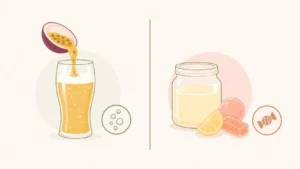
Passion fruit curd follows the same principle as lemon curd: egg yolks, sugar, butter, and passion fruit juice are cooked slowly until thickened, with the fruit’s acidity helping set the curd’s texture alongside the eggs. In confectionery, passion fruit shows up in sour gummies, sour straws, and fruit-flavored chews, where citric acid is often added on top of the natural fruit flavoring to intensify the tartness and create that sharp, mouth-puckering hit associated with sour candy. Vegan versions of passion fruit sours and curds typically substitute aquafaba for egg white and a plant-based fat or cornstarch slurry for butter and yolks.
Substitutions and Flavor Pairings
If fresh passion fruit isn’t available, a mix of orange juice and a small amount of extra lemon juice can approximate the tang, though it won’t replicate the floral aroma. Mango softens passion fruit’s sharpness and adds body, making it a common pairing in purées. Raspberry adds color and a berry-forward tartness that layers well without overwhelming the passion fruit. Kiwi contributes a grassy brightness that works particularly well in mocktail versions, where there’s less alcohol to carry the flavor.
Conclusion
Passion fruit’s sourness isn’t an inconsistency in the fruit — it’s the defining trait that makes it so versatile across cocktails, mocktails, beer, curd, and candy. Understanding how ripeness, variety, and color affect that acidity makes it easier to choose the right fruit and balance it correctly, whether the goal is a classic shaken sour, a fruited beer, or a batch of homemade curd.
FAQ
Is passion fruit sour or bitter? Ripe passion fruit is sour, not bitter. Bitterness usually signals an underripe fruit or one that includes bits of the tough outer rind.
Why is my passion fruit sour? It’s likely underripe, or it’s a naturally more acidic yellow variety. Letting it ripen further at room temperature until the skin wrinkles will reduce the sharpness.
What alcohol goes best in a passion fruit sour? Vodka, pisco, amaretto, and agave spirits all pair well, each shifting the drink’s character from clean and fruit-forward (vodka) to nutty and rounded (amaretto).
Can a passion fruit sour be made without egg? Yes. Aquafaba (chickpea brine) is a standard vegan substitute that produces a similar foam texture when shaken.
Does passion fruit sour beer taste like a cocktail? Not quite — it takes on the fruit’s tartness and aroma but retains the carbonation and lighter body of a Berliner Weisse or gose-style base beer.