Introduction
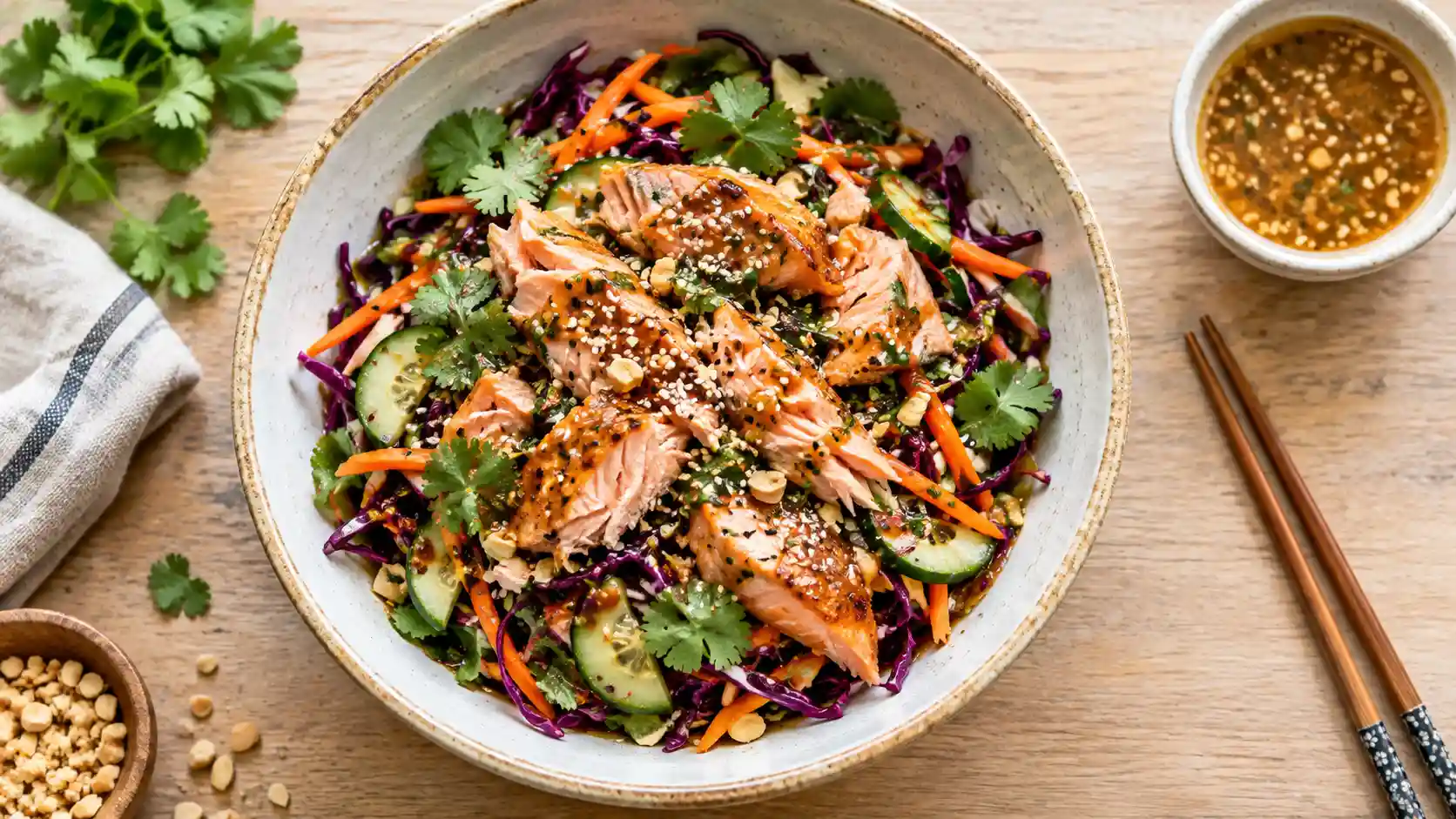
An Asian salmon salad pairs seared or grilled salmon with crisp vegetables, aromatics, and a bright, umami-forward dressing built from ingredients like soy sauce, sesame oil, rice vinegar, and fresh ginger. It sits at the intersection of two food traditions: the technique-driven approach to cooking fish common in Western kitchens, and the layered, acid-sweet-salty flavor balance typical of East and Southeast Asian cuisines. The result is a dish that feels light but satisfying, works equally well warm or cold, and adapts easily to noodles, rice, or leafy greens as its base.
Quick Summary
An Asian salmon salad typically combines cooked salmon (grilled, pan-seared, or broiled), a crunchy vegetable base such as napa cabbage, cucumber, carrots, or edamame, and a dressing built around soy sauce, sesame oil, rice vinegar, and either fresh ginger or peanut butter. It can be served over greens for a low-carb version, over rice or soba noodles for a heartier bowl, or tucked into a sandwich or wrap. Most versions take under 30 minutes to prepare and can be eaten warm, room temperature, or chilled.
What Is an Asian Salmon Salad?
The term covers a broad family of recipes rather than one fixed dish. What unites them is the combination of cooked salmon with a dressing that draws on Asian pantry staples — soy sauce or tamari, sesame oil, rice vinegar, fresh ginger, garlic, and sometimes chili or peanut butter. The vegetable base varies by region and preference: shredded cabbage and carrots for a slaw-style salad, cucumber and edamame for a lighter bowl, or soba and rice noodles for a more filling meal. Because the salmon can be prepared multiple ways and the base can shift from greens to noodles to grain bowls, the dish is flexible enough to function as a light lunch, a dinner entrée, or a meal-prep staple.
Core Ingredients and Their Roles
Each component in an Asian salmon salad serves a specific function rather than being interchangeable filler.
- Salmon provides the protein and fat that anchor the dish; its natural richness balances the acidity and salt in the dressing.
- Soy sauce or tamari contributes salt and umami depth, forming the backbone of most dressings.
- Sesame oil (toasted, not raw) adds a nutty aroma that signals “Asian-style” to the palate; a little goes a long way since it’s potent and can turn bitter if overheated.
- Rice vinegar supplies acidity that cuts through the salmon’s fat and brightens the whole dish.
- Fresh ginger and garlic add pungency and aromatic lift; using fresh rather than powdered versions changes both the intensity and the texture of the dressing.
- Crunchy vegetables (cabbage, carrots, cucumber, radish, bell pepper) provide textural contrast to the tender fish.
- Herbs like cilantro, mint, or Thai basil add a fresh, slightly peppery top note.
- Crushed peanuts or cashews and sesame seeds contribute crunch and a final layer of nuttiness.
The Dressing: Ginger-Sesame vs. Peanut
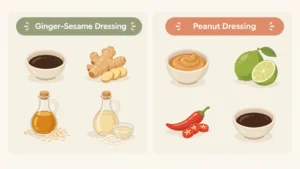
Two dressing styles dominate Asian salmon salad recipes, and choosing between them changes the character of the whole dish.
A ginger-sesame dressing is lighter and more acidic, typically built from soy sauce, rice vinegar, sesame oil, grated ginger, garlic, and a touch of honey or sugar to round out the sharpness. It keeps the salad feeling fresh and is well suited to salads with a lot of raw vegetables.
A peanut dressing is thicker and richer, made by whisking peanut butter with soy sauce, rice vinegar or lime juice, a little water to thin it, and often chili and ginger. Peanut dressing pairs especially well with noodle-based versions, since its body helps it cling to strands of soba or rice noodles in a way a thinner vinaigrette cannot.
Both dressings can be made ahead and keep well refrigerated for several days, though sesame oil’s flavor intensifies over time, so it’s worth tasting and adjusting before serving.
Choosing and Cooking the Salmon
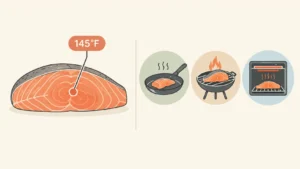
Salmon can be prepared for this salad in several ways, each producing a different eating experience.
- Pan-seared: A hot skillet with a little oil produces a crisp exterior and moist interior in about 3–4 minutes per side for a standard fillet, and is the fastest weeknight method.
- Grilled: Adds smokiness and slight char, well suited to warmer-weather versions of the salad.
- Broiled: A hands-off method that works well for larger batches.
- Hot-smoked or canned salmon: Convenient shortcuts that skip active cooking entirely and work well for quick lunches; hot-smoked salmon adds a distinct smoky depth that raw-cooked salmon lacks.
Regardless of method, salmon is done when it flakes easily with a fork and reaches an internal temperature of about 145°F (63°C); pulling it slightly earlier and letting it rest helps keep it moist, since carryover cooking continues after it’s removed from heat.
Building the Salad Base: Greens, Noodles, or Bowl Style
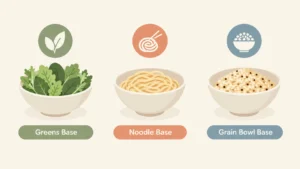
The base determines whether the dish reads as a light salad or a full meal.
- Greens-based: Shredded napa or red cabbage, romaine, or mixed greens keep the dish low-carb and crisp.
- Noodle-based: Soba, rice noodles, or glass noodles turn the salad into a more substantial bowl and pair particularly well with peanut dressing, which coats the noodles evenly.
- Grain-bowl style: Rice or quinoa as a base creates a heartier, meal-prep-friendly option.
- Sandwich or wrap: Flaked salmon salad, dressed lightly, can be layered into a sandwich or lettuce wrap for a portable version.
Step-by-Step Preparation Method
- Season the salmon simply — salt, pepper, and a touch of sesame oil — so the dressing remains the dominant flavor.
- Cook the salmon using the chosen method and let it rest for a few minutes before flaking or slicing.
- Whisk together the dressing ingredients, tasting and adjusting the balance of salty, sour, and sweet.
- Prepare the base — shred vegetables, cook and cool noodles, or wash and dry greens thoroughly, since excess water dilutes the dressing.
- Combine the base with the dressing, tossing to coat evenly.
- Top with the salmon, then finish with herbs, crushed nuts, and sesame seeds just before serving to preserve their crunch.
Ingredient Substitutions and Their Effects
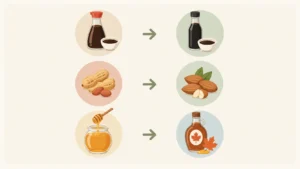
- Tamari for soy sauce makes the dish gluten-free without changing the flavor profile significantly.
- Coconut aminos for soy sauce produces a milder, slightly sweeter result and reduces sodium.
- Almond butter for peanut butter works in the peanut-style dressing for those with peanut allergies, though it yields a slightly less rich flavor.
- Canned or smoked salmon for freshly cooked salmon trades some textural contrast for convenience and a more pronounced smoky or briny flavor.
- Maple syrup or agave for honey keeps the dressing vegan without altering the sweetness balance much.
- Zucchini noodles for rice or soba noodles lowers the carbohydrate content but produces a wetter salad, since zucchini releases moisture as it sits.
Storage and Make-Ahead Tips
Dressing can be made up to five days ahead and stored in a sealed container in the refrigerator. Cooked salmon keeps for up to three days refrigerated and can be added cold or gently reheated. For meal prep, it’s best to store the dressing, base, and salmon separately and combine just before eating — pre-dressed greens wilt and noodles can clump, while pre-dressed cabbage-based slaws hold up somewhat better than delicate lettuces.
Dietary Adaptations
- Low-carb: Use a greens or cabbage base instead of noodles or rice, and confirm the dressing’s sweetener is used sparingly.
- Gluten-free: Swap soy sauce for tamari and confirm noodles (if used) are rice- or buckwheat-based rather than wheat-based soba blends.
- Dairy-free: The dish is naturally dairy-free in most standard formulations.
- Nut-free: Omit peanut dressing and crushed nuts in favor of the ginger-sesame dressing and a seed-based garnish like extra sesame seeds.
Conclusion
Asian salmon salad is less a single recipe than a flexible framework: cooked salmon, a crunchy or noodle-based foundation, and a soy-ginger-sesame or peanut dressing that ties everything together. Its adaptability — across cooking methods, bases, and dietary needs — makes it equally suited to a quick weekday lunch and a make-ahead meal-prep staple, while its balance of protein, vegetables, and healthy fats keeps it firmly in the “light but satisfying” category of meals.
FAQ
What salad goes well with salmon? Crisp, acidic salads — such as those built on shredded cabbage, cucumber, or mixed greens with a vinegar-based dressing — pair especially well with salmon, since the acidity offsets the fish’s natural richness.
What is a good dressing for salmon salad? A soy sauce, rice vinegar, sesame oil, and ginger dressing is a reliable, widely used option; a peanut-based dressing is a heartier alternative, particularly for noodle-based versions.
Can Asian salmon salad be made with canned salmon? Yes. Canned or hot-smoked salmon works well as a shortcut, though it produces a softer texture and different flavor profile compared with freshly seared or grilled salmon.
Is Asian salmon salad healthy? It generally combines lean protein, healthy fats from salmon and sesame oil, and a variety of vegetables, making it a nutrient-dense option, though sodium can run high depending on how much soy sauce is used in the dressing.
Can this salad be served warm or cold? Both. The salmon can be served warm straight off the pan or grill, or chilled and added to a cold, pre-dressed salad — the dish works well either way.