Introduction
A good fig jam recipe for Australia works with what’s actually available here: a short, intense fig season running roughly from late summer into early autumn, and a climate where quick, small-batch preserving beats long simmering on a hot day. This guide covers the old-fashioned method Australian home cooks have used for generations, along with modern shortcuts like the Thermomix, a dried-fig version for when fresh figs aren’t in season, and the classic fig and ginger combination. Every method below uses figs, sugar, and lemon juice — no pectin required — because ripe figs contain enough natural pectin and acid to set well on their own once you understand the technique.
Quick Summary
Fig jam is made by simmering chopped fresh or dried figs with sugar and lemon juice until the mixture thickens and reaches setting point, then sealing it in sterilised jars. Fresh figs need roughly equal weight in sugar; dried figs need less sugar and extra water to rehydrate them first. No pectin is required if you use slightly underripe figs and enough lemon juice, and a Thermomix or slow simmer both work equally well. The jam is ready when it passes the cold-plate wrinkle test, and it will keep for up to 12 months unopened.
What You Need for an Old-Fashioned Fig Jam
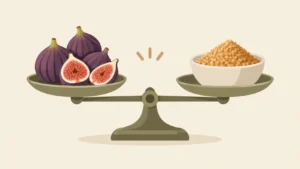
The old-fashioned fig jam recipe Australian cooks have relied on for decades follows a simple ratio: equal parts figs and sugar by weight, plus lemon juice for acidity and pectin support. For a simple fig jam recipe that yields about four to five medium jars, you’ll need:
- 1 kg fresh figs, stems trimmed and roughly chopped
- 800 g–1 kg white sugar (adjust for sweetness and fig ripeness)
- Juice of 2 lemons (about 60–80 ml)
- A heavy-based, wide saucepan
- Sterilised glass jars with lids
Choosing figs slightly underripe rather than fully soft gives a better set, since unripe fruit holds more natural pectin. This is the principle behind most CWA-style preserving methods: work with the fruit’s own properties rather than relying on commercial setting agents.
How to Make Fig Jam From Fresh Figs (Step-by-Step)
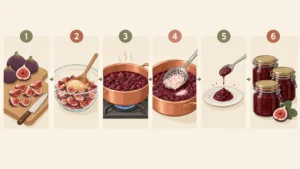
This is the core method for how to make fig jam with fresh figs, and it applies whether you’re aiming for a rustic, chunky texture or a smoother spread.
- Prepare the figs. Wash, trim the stems, and chop or quarter the figs depending on the texture you want. Smaller pieces break down faster and give a smoother jam.
- Macerate. Combine figs, sugar, and lemon juice in a bowl. Let the mixture sit for 1–2 hours, or overnight in the fridge. This draws out juice and helps the sugar dissolve evenly, reducing the risk of catching and burning later.
- Simmer gently. Transfer everything to a wide, heavy-based saucepan. Cook over low-medium heat, stirring until the sugar fully dissolves, before increasing to a steady simmer.
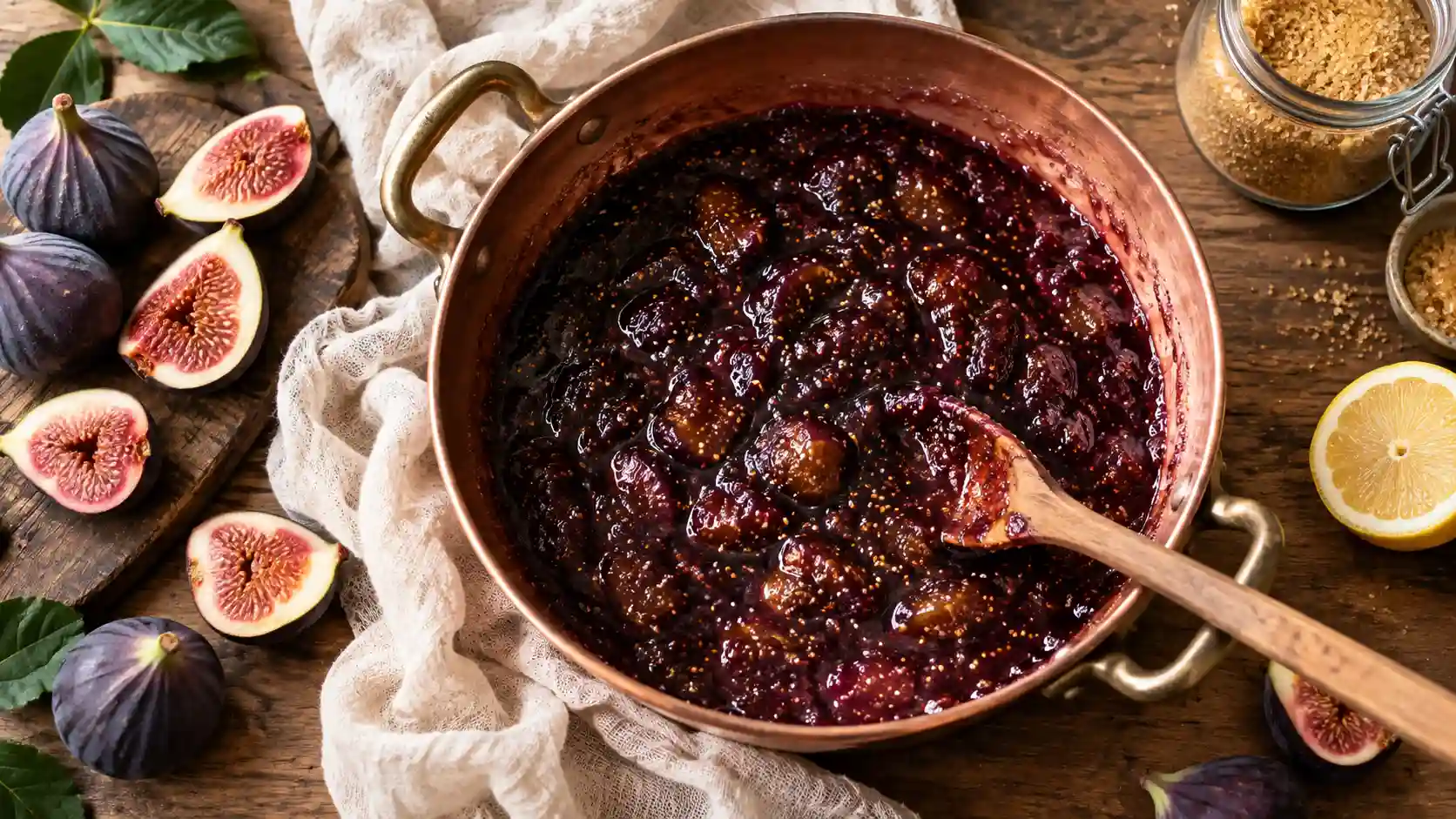
- Reduce and thicken. Simmer uncovered for 35–50 minutes, stirring occasionally and skimming any foam. The wide surface area matters here — a narrow pot slows evaporation and can leave the jam runny even after long cooking.
- Test for set. Place a small saucer in the freezer beforehand. Drop a teaspoon of jam onto it, wait 30 seconds, then push it with a finger. If it wrinkles and holds a line, it’s ready.
- Jar and seal. Ladle the hot jam into sterilised jars, seal immediately, and turn upside down for a minute to help create a vacuum seal.
Getting the Set Right Without Pectin
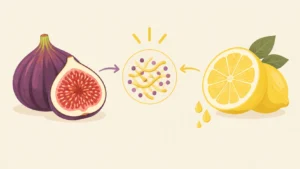
An old-fashioned fig jam recipe Australia without pectin relies on three factors working together: fruit ripeness, sugar ratio, and acidity. Figs are naturally low in pectin compared to fruits like apples or citrus, which is why lemon juice does double duty — it boosts acidity, which helps pectin molecules bind, and it balances the fig’s natural sweetness.
If a batch isn’t setting after 45 minutes of simmering, the most common cause is fruit that was too ripe or too watery, rather than a genuine lack of pectin. Extending the simmer time, rather than adding commercial pectin, is usually enough to fix this, since further reduction concentrates both the sugar and the fruit’s own pectin.
Dried Fig Jam: A Year-Round Alternative
A dried fig jam recipe Australia cooks turn to outside of fig season uses roughly 500 g dried figs, rehydrated in 750 ml water or a mix of water and orange juice for a few hours before cooking. Because dried figs are already concentrated in sugar, use less added sugar than the fresh-fig method — around 300–400 g is usually enough. This is one of the simplest dried fig jam approaches, since rehydration softens the fruit and shortens overall simmer time to about 25–30 minutes.
Thermomix Fig Jam Method
For a Thermomix fig jam recipe Australia households increasingly use, the process is largely the same but hands-off. Chop figs, sugar, and lemon juice in the bowl (3 sec/speed 5), then cook at 100°C, speed 1, for 35–40 minutes with the measuring cup off to allow evaporation. Check for set using the cold-plate test partway through, and extend cooking in 5-minute increments if needed. The main advantage of this method is even heat distribution, which lowers the risk of the jam catching on the base of the pan.
Fig and Ginger Jam Variation
A fig and ginger jam recipe Australia bakers often pair with cheese boards adds warmth and a slight bite to the base recipe. Add 40–60 g finely grated fresh ginger (or 2 tsp ground ginger) along with the sugar and lemon juice at the start of cooking. The ginger’s heat mellows during the long simmer, leaving a rounded spiciness rather than a sharp one. This variation works well with both the fresh and dried fig methods above, with no other changes to ratios or timing required.
A Healthier, Lower-Sugar Approach
A healthier fig jam recipe Australia cooks can make by reducing sugar to roughly 60% of the fig weight rather than a 1:1 ratio. This produces a softer set and a shorter shelf life — closer to 3–4 weeks refrigerated rather than up to 12 months shelf-stable — because sugar acts as a preservative as well as a sweetener. For a lower-sugar batch, smaller jar sizes and refrigerator or freezer storage are more reliable than room-temperature shelf storage.
Storing and Preserving Your Jam
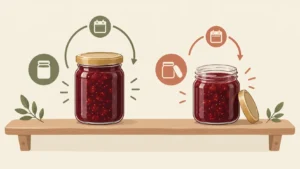
Properly sealed jars of full-sugar fig jam keep in a cool, dark pantry for up to 12 months unopened. Once opened, store in the fridge and use within 4–6 weeks. A jam that fails to seal (the lid doesn’t pop down and stay down) should be refrigerated and used within a few weeks rather than stored at room temperature.
Conclusion
Whether you’re following a simple fig jam recipe with fresh summer fruit, working from dried figs in the off-season, using a Thermomix for convenience, or adding ginger for extra depth, the underlying method stays consistent: ripe-but-firm figs, balanced sugar, and enough lemon juice to help everything set naturally. Once you understand why each step matters — macerating for even sugar distribution, wide pans for faster reduction, the cold-plate test for accuracy — you can adapt the base recipe confidently to whatever figs and season you’re working with.
FAQ
Is fig jam the same as fig jelly? No. Jam is made from crushed or chopped whole fruit, giving it texture and pieces of fruit. Jelly is made from strained fruit juice only, giving a smooth, clear set with no fruit pieces.
Do I need condensed milk for fig jam? No — traditional fig jam uses only figs, sugar, and lemon juice. Condensed milk is not part of a standard fig jam recipe and would produce a caramel-style spread rather than a true jam.
Why isn’t my fig jam setting? Most often this is because the figs were too ripe or the pan was too narrow, slowing evaporation. Continue simmering and retest with the cold-plate method rather than adding pectin straight away.
Can I use dried figs instead of fresh? Yes. Rehydrate dried figs in water first, then reduce the added sugar slightly since dried figs are already more concentrated in natural sugars.
How long does homemade fig jam last? Properly sealed, full-sugar fig jam lasts up to 12 months in a cool, dark pantry unopened, and 4–6 weeks once opened and refrigerated.