Introduction
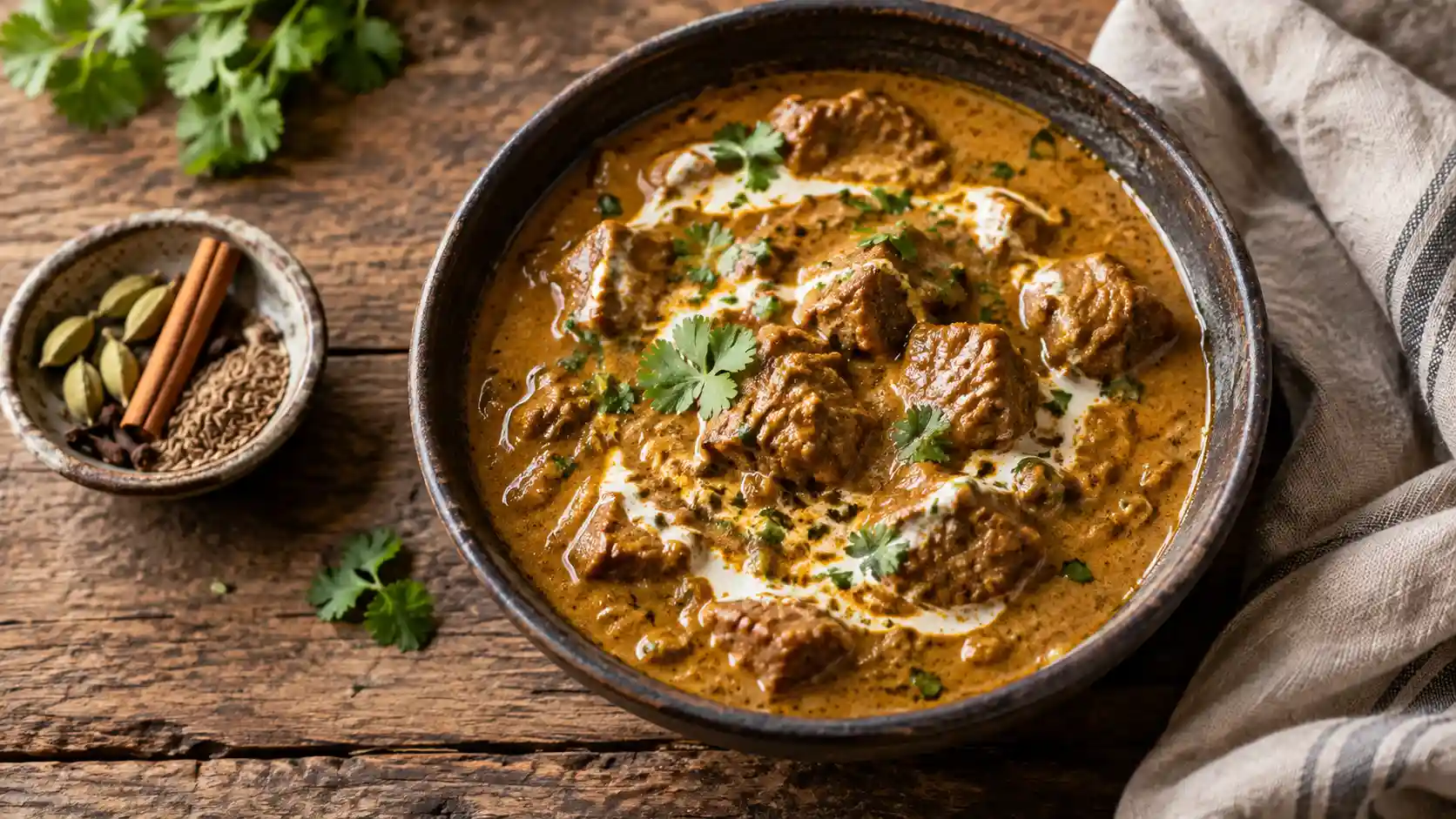
Beef korma made in a slow cooker turns a traditionally slow-simmered Indian curry into a low-effort, high-reward meal. The slow cooker’s steady, gentle heat mirrors the long braising time that beef korma has always needed, so the method isn’t a shortcut that sacrifices flavor — it’s arguably a better tool for the job than a stovetop pot that needs constant watching. This guide explains what beef korma actually is, why the slow cooker suits it, which ingredients matter most and why, exact timing, and how to adjust the recipe without losing the dish’s signature richness.
Quick Summary
Beef korma is a mild, aromatic Indian curry built on a base of browned onions, ground spices, and a creamy finishing liquid — typically yogurt, cream, ground nuts, or coconut milk. In a slow cooker, cubed beef chuck or blade steak cooks on low for 7–8 hours or high for 4–5 hours until fall-apart tender, absorbing the korma sauce as it breaks down. The result is a rich, nutty, gently spiced curry with minimal hands-on effort.
What Is Beef Korma?
Korma refers to a braising technique that originated in Mughal-era South Asian cooking, where meat is slow-cooked in a small amount of liquid alongside aromatics until it becomes tender and the sauce concentrates. Traditional beef korma relies on a spice base of coriander, cumin, cardamom, and cinnamon, softened onions, garlic, and ginger, and a creamy element that gives the sauce its characteristic body. Unlike hotter curries such as vindaloo, korma is defined by warmth and depth rather than chili heat, which makes it a good introduction to Indian cooking for people who want flavor without intensity.
Why a Slow Cooker Works So Well for Korma
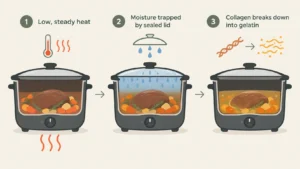
Korma’s defining trait — meat that’s tender enough to shred with a fork, in a sauce that’s thickened by slow reduction rather than added starch — depends on sustained low heat over several hours. A slow cooker holds a consistent low temperature for exactly that length of time without needing to be monitored, which is why slow cooker beef korma is often described as tasting closer to a restaurant version than a rushed 30-minute stovetop curry. The sealed lid also traps moisture, so tougher cuts of beef stay succulent instead of drying out, and the connective tissue in cuts like chuck has time to break down into gelatin, which naturally thickens the sauce.
Key Ingredients and What They Do
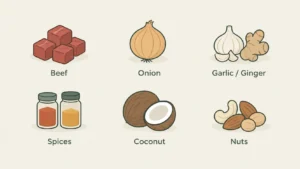
- Beef chuck or blade steak: These cuts have more connective tissue than lean cuts like sirloin. That tissue is what makes slow-cooked beef korma tender rather than chewy; a lean cut would dry out over a 7-hour cook.
- Onions: Cooked down until soft and golden before slow cooking, onions form the sweet, savory backbone of the sauce. Skipping this step leaves the finished curry tasting flat and raw.
- Garlic and ginger: Provide the sharp, aromatic top notes that balance the richness of the cream or coconut milk.
- Ground spices (coriander, cumin, cardamom, cinnamon, turmeric): Bloomed briefly in oil before adding to the slow cooker, these develop deeper flavor than spices added raw, since heat releases their essential oils.
- Coconut milk, yogurt, or cream: This is the ingredient that separates korma from a simple tomato-based curry. Coconut milk gives a subtly sweet, dairy-free richness and is the most stable option for long slow-cooking, since it’s less prone to splitting than yogurt.
- Ground almonds or cashews (optional): Add body and a subtle nuttiness; traditional beef korma recipes often include these for extra creaminess without extra dairy.
Step-by-Step Slow Cooker Beef Korma Method
- Sear the beef. Browning cubed beef in a hot pan before it goes into the slow cooker isn’t essential for tenderness, but it builds a layer of savory flavor (via the Maillard reaction) that plain slow cooking alone can’t replicate.
- Soften the aromatics. Cook onion, garlic, and ginger until golden, then stir in the ground spices for about a minute until fragrant.
- Combine in the slow cooker. Add the beef, spiced onion mixture, a small amount of stock or water, and your creamy base (coconut milk or yogurt).
- Cook low and slow. Set to low for 7–8 hours or high for 4–5 hours, stirring only if convenient — frequent lid-lifting releases heat and extends cooking time.
- Finish the sauce. In the last 30 minutes, stir in extra coconut milk, cream, or ground nuts if you want a thicker, glossier finish, and adjust salt to taste.
- Rest before serving. Letting the curry sit for 10 minutes allows the sauce to settle and coat the meat more evenly.
How Long to Cook Beef Korma in a Slow Cooker
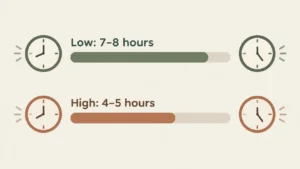
For beef chuck or blade cut into 3–4 cm cubes, 7–8 hours on low is the standard target, since this gives connective tissue enough time to dissolve without the beef drying out. On high, 4–5 hours achieves a similar result faster, though many cooks find low heat produces a slightly more tender, evenly cooked texture because the temperature ramps up more gradually. Cooking beyond these windows won’t harm the dish much, since slow cookers hold food at a safe, gentle simmer, but under-cooking (under 4 hours on low) usually leaves the beef tough, as the collagen hasn’t had time to convert to gelatin.
Coconut Milk vs. Yogurt-Based Korma
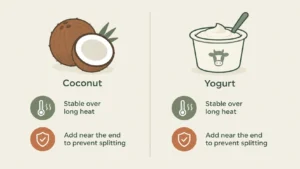
Coconut milk and yogurt both create a creamy korma sauce, but they behave differently over a long cook. Coconut milk holds up well to extended heat and doesn’t curdle, making it the more reliable choice for a slow cooker recipe left unattended for hours. Yogurt-based korma is closer to a traditional North Indian preparation and gives a slightly tangier, lighter sauce, but yogurt can split if added too early or cooked at too high a temperature — stirring it in only during the final 20–30 minutes, off the highest heat setting, helps it stay smooth. Coconut milk also makes the dish naturally dairy-free, which is one reason slow cooker beef korma with coconut milk has become a popular variation of the traditional recipe.
Common Substitutions and How They Change the Dish
- Swapping chuck for a leaner cut shortens the cooking time needed but increases the risk of dry, stringy meat, since there’s less fat and collagen to render.
- Using coconut cream instead of coconut milk produces a thicker, richer sauce, since coconut cream has a higher fat content.
- Replacing ground nuts with nut butter thickens the sauce faster but can make the flavor slightly heavier and more one-dimensional.
- Adding a store-bought korma paste instead of individual spices speeds up prep significantly and gives a consistent flavor, though homemade spice blends generally offer more depth and let you control heat and salt precisely.
- Using bone-in beef adds extra richness to the sauce as the bones release flavor and gelatin during the long cook, though it requires removing bones before serving.
Storage and Reheating
Slow cooker beef korma keeps well in an airtight container in the refrigerator for up to 4 days, and the flavor often improves after a day as the spices continue to meld. It also freezes well for up to 3 months; coconut milk-based korma tends to freeze and reheat more smoothly than yogurt-based versions, which can separate slightly when thawed. Reheat gently on the stovetop or in the microwave, adding a splash of water or coconut milk if the sauce has thickened too much in storage.
Conclusion
Slow cooker beef korma takes a dish that’s traditionally been about patience — long braising, careful spice building, and a sauce that develops over hours — and makes it achievable with very little active cooking time. Choosing the right cut of beef, blooming the spices properly, and picking coconut milk or yogurt based on how hands-off you want the process to be are the main decisions that shape the final result. Once those basics are in place, the slow cooker does the rest of the work reliably and consistently.
FAQ
Can I make beef korma in a slow cooker without searing the beef first? Yes, though searing adds a layer of browned flavor that plain slow cooking doesn’t develop on its own. If you’re short on time, you can skip this step and still get a tender, flavorful curry.
Is slow cooker beef korma very spicy? No. Korma is defined by warm, aromatic spices like cardamom and cinnamon rather than chili heat, making it one of the milder Indian curry styles.
Can I use beef korma paste instead of individual spices? Yes, a store-bought korma paste is a reliable shortcut that works well in a slow cooker, though blending your own spices typically gives a more layered, traditional flavor.
What’s the best beef cut for slow cooker korma? Chuck or blade steak, since their connective tissue breaks down over the long cook time and keeps the meat tender rather than dry.
Can I thicken slow cooker beef korma at the end? Yes. Stirring in extra coconut milk, cream, or ground almonds during the final 30 minutes thickens the sauce without needing added starch.