Introduction
Tomato paste is one of the most concentrated tomato products used in everyday cooking, prized for its deep color, thick texture, and intense flavor. Made by slow-cooking tomatoes down and removing their seeds and skins, it packs the essence of ripe tomatoes into a small amount of product. Because it’s so concentrated, a little goes a long way — which is why it shows up in everything from weeknight pasta sauces to slow-braised stews. This article explains what tomato paste actually is, how it differs from puree and sauce, how to make it at home, and how to use, store, and substitute it with confidence.
Quick Summary
Tomato paste is tomatoes cooked down for hours until most of the water evaporates, leaving a thick, deep-red concentrate. It’s more intense than tomato puree (which retains more water and a looser texture) and far more concentrated than tomato sauce (which is thinner and often seasoned). Tomato paste is used to build depth of flavor, thicken dishes, and add rich color. It can be diluted into a sauce, substituted with puree or fresh tomatoes in a pinch, and stored in the fridge for about one to two weeks or frozen for several months.
What Is Tomato Paste?
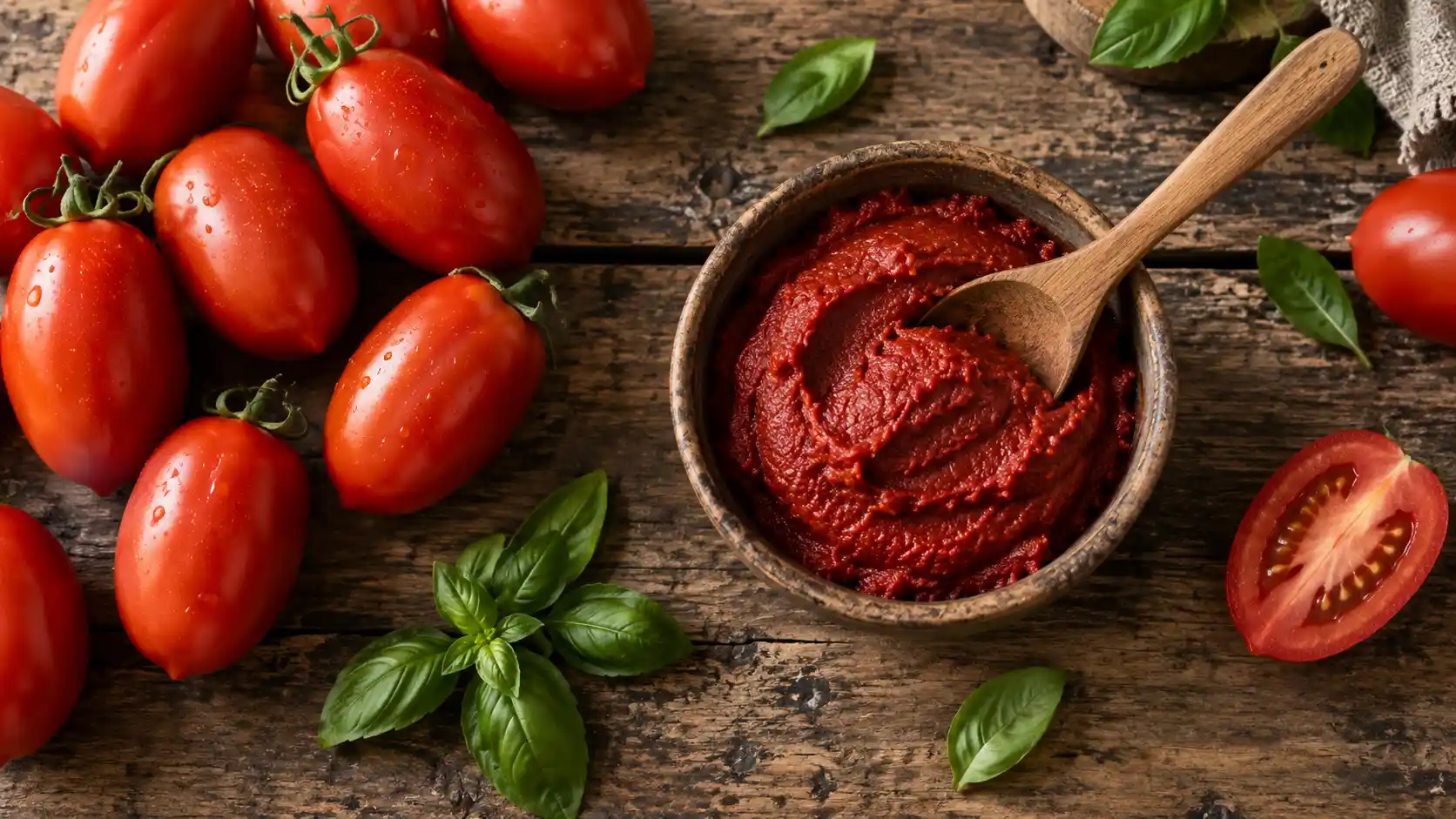
Tomato paste starts as fresh tomatoes that are cooked, strained to remove skins and seeds, and then simmered for an extended period until nearly all the liquid evaporates. What remains is a thick, deep red-brown paste with a rich, slightly sweet-tart flavor and a texture similar to soft clay. Because the water content is so low, the tomato flavor is concentrated, which is why recipes typically call for only a tablespoon or two rather than a whole can.
This concentration is also why tomato paste behaves differently in cooking than other tomato products. It caramelizes when briefly cooked in oil or fat, developing a deeper, almost roasted flavor — a technique commonly used at the start of soups, stews, and braises.
Tomato Paste vs. Tomato Puree
Tomato paste and tomato puree are often confused, but they are not interchangeable without adjustment. Tomato puree is made by cooking and straining tomatoes, but it is not reduced nearly as much as paste, so it retains more natural water content and a thinner, pourable consistency. Its flavor is milder and closer to fresh tomatoes, while paste tastes more concentrated and slightly caramelized due to the longer cooking time.
In practice, tomato puree works well as a base for sauces that need body without excessive thickness, while tomato paste is better suited to boosting flavor and thickness in small quantities. If a recipe calls for puree and only paste is available, diluting the paste with water (roughly one part paste to one part water) approximates puree’s consistency, though the flavor will be slightly more intense.
Tomato Paste vs. Tomato Sauce
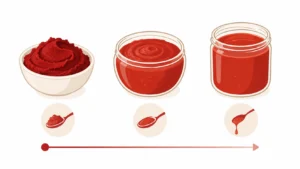
Tomato sauce is a finished or semi-finished product, typically made from tomatoes, water, and seasonings such as salt, herbs, garlic, or onion. It has a pourable, often smooth consistency and a flavor profile that’s ready to use straight from the jar or can. Tomato paste, by contrast, is unseasoned and far thicker — it’s an ingredient meant to be built upon, not a finished product.
The key distinction is concentration and intent: tomato sauce is designed to be eaten mostly as-is, while tomato paste is designed to be diluted, cooked into other ingredients, or used in small amounts to intensify flavor and color elsewhere in a dish.
How to Make Tomato Paste at Home
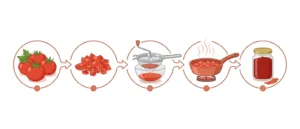
Homemade tomato paste requires time but few ingredients. The basic process:
- Prepare the tomatoes. Wash, core, and roughly chop ripe tomatoes (Roma or plum varieties work particularly well due to their lower water content).
- Cook down. Simmer the tomatoes until soft, then pass them through a food mill or strainer to remove skins and seeds.
- Reduce slowly. Return the strained pulp to a wide, heavy pan and simmer uncovered on low heat, stirring frequently to prevent scorching, until the mixture thickens dramatically and darkens in color. This can take several hours on the stovetop, or the reduction can be finished in a low oven, spreading the pulp on a baking sheet and stirring occasionally.
- Season lightly if desired. A small pinch of salt helps preserve the paste, though it isn’t required.
- Cool and store in a clean, airtight container.
Using lower-water tomato varieties and a wide pan (which increases evaporation surface area) both speed up the process and improve the final texture.
Common Uses for Tomato Paste
Tomato paste’s concentrated flavor makes it useful across a wide range of dishes:
- Soups and stews: A spoonful sautéed briefly in oil before adding other ingredients deepens the overall flavor base.
- Pasta sauces: Added alongside crushed or whole tomatoes, it thickens the sauce and rounds out acidity.
- Braises and stews: It helps build a rich, savory backbone in dishes like chili, bolognese, or beef stew.
- Marinades and glazes: Its sweetness and umami complement barbecue sauces and glazes.
- Pizza sauce: A small amount blended with herbs and a touch of water creates a quick, thick pizza sauce base.
Because it’s so concentrated, tomato paste is rarely the sole tomato component in a recipe — it typically works alongside diced, crushed, or pureed tomatoes.
Turning Tomato Paste Into Sauce
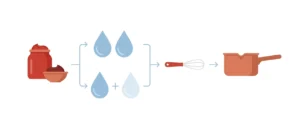
To convert tomato paste into a usable sauce, dilute it gradually with water, broth, or wine while whisking to avoid lumps. A general starting ratio is one part tomato paste to two or three parts liquid, adjusted to taste. From there, season with salt, garlic, dried herbs (such as oregano or basil), and a touch of sugar if needed to balance acidity. Simmering the mixture for ten to fifteen minutes helps the flavors meld and the sauce thicken slightly as it reduces again.
Sun-Dried Tomato Paste
Sun-dried tomato paste is a distinct product made by blending sun-dried tomatoes (rather than fresh ones) into a thick paste, often with olive oil, garlic, and herbs. It has a more intense, slightly smoky and tangy flavor compared to standard tomato paste, and it’s commonly used as a spread, a base for pesto-style sauces, or a flavor booster in dressings and marinades. Unlike regular tomato paste, it is typically ready to eat without further cooking.
Substitutes for Tomato Paste
When tomato paste isn’t available, several substitutes can work depending on the dish:
- Tomato puree, reduced: Simmer puree until thickened to approximate the concentration of paste.
- Crushed or diced canned tomatoes, reduced: Cook down until most liquid evaporates.
- Ketchup (in small amounts): Adds sweetness and tang, though it changes the flavor profile slightly and isn’t ideal for savory braises.
- Sun-dried tomatoes, blended: Provides concentrated tomato flavor with a different, more intense character.
As a rule, any substitute should be reduced or concentrated to match tomato paste’s thickness, since a thinner substitute will add unwanted liquid to the dish.
Storage: Fridge, Freezer, and Shelf Life
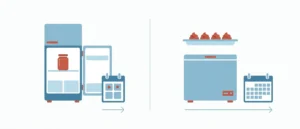
Once opened, tomato paste keeps in the refrigerator for about one to two weeks when stored in an airtight container, with a thin layer of olive oil on top sometimes used to extend freshness slightly. For longer storage, tomato paste freezes well: portioning it into tablespoon-sized dollops on a lined tray, freezing until solid, then transferring to a freezer bag allows individual portions to be used straight from frozen without thawing the whole batch. Frozen tomato paste typically keeps its quality for several months.
Conclusion
Tomato paste is a small but powerful ingredient — a concentrated form of tomato that adds depth, richness, and color wherever it’s used. Understanding how it differs from puree and sauce, how to dilute or substitute it, and how to store it properly makes it far easier to use confidently in everyday cooking, from a quick weeknight pasta sauce to a slow-simmered stew.
FAQ
Is tomato puree the same as tomato paste?
No. Tomato puree is thinner and less concentrated, with a milder flavor, while tomato paste is thick, deeply reduced, and much more intense.
Can you freeze tomato paste?
Yes. Freezing in small, pre-portioned amounts (such as tablespoon dollops) makes it easy to use only what’s needed without thawing the entire container.
How long does tomato paste last in the fridge?
Once opened, it generally stays fresh for about one to two weeks when kept in an airtight container.
What can I use instead of tomato paste?
Reduced tomato puree or crushed tomatoes, a small amount of ketchup, or blended sun-dried tomatoes can all work as substitutes, depending on the dish.
How do I make tomato sauce from tomato paste?
Dilute the paste with water, broth, or wine (roughly one part paste to two or three parts liquid), then season with salt, herbs, and garlic, and simmer to combine.