Introduction
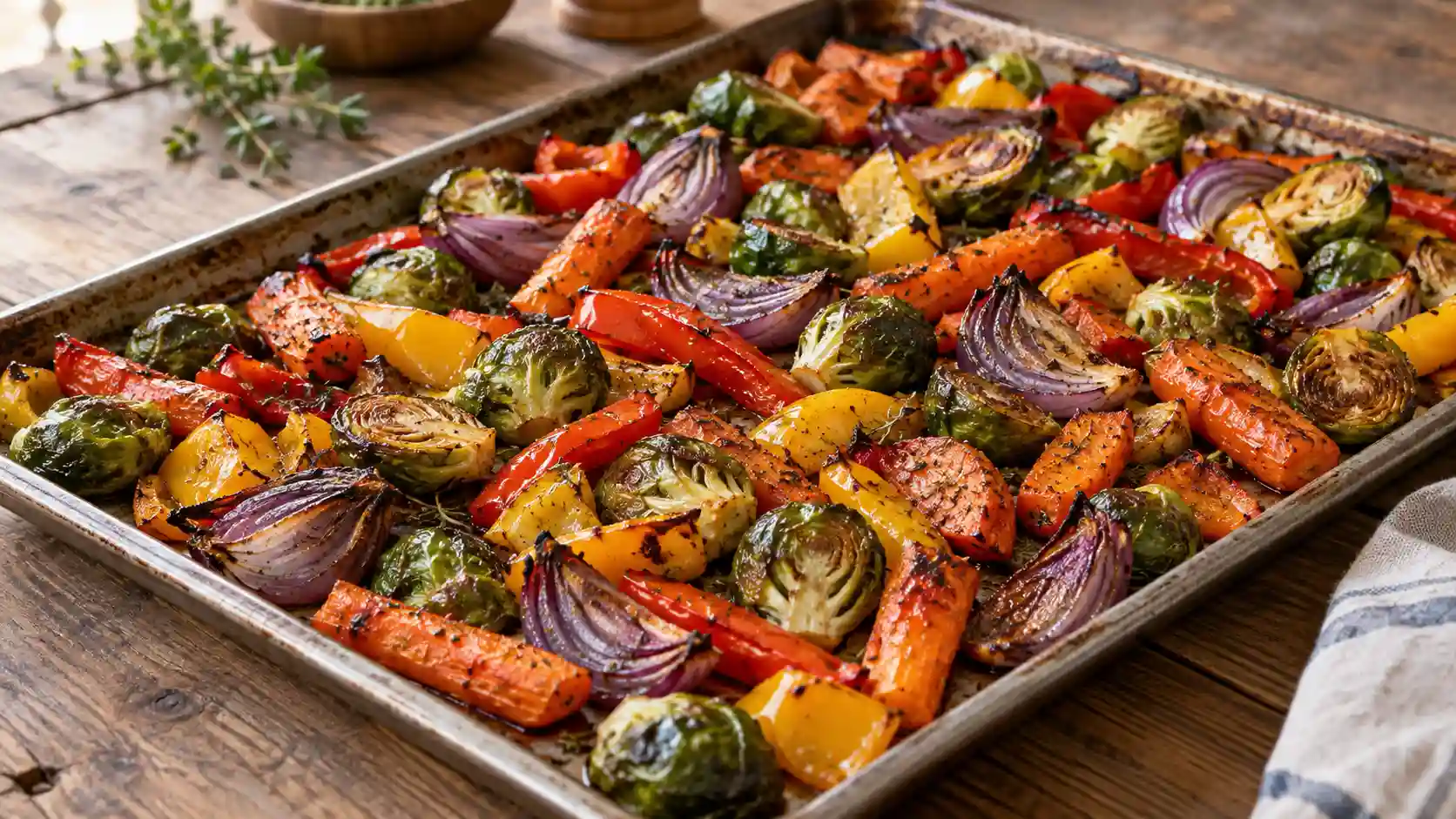
Roast vegetables are one of the most versatile side dishes in home cooking, turning simple ingredients like carrots, potatoes, and peppers into caramelized, flavorful additions to almost any meal. The process relies on dry heat to concentrate natural sugars and develop browning, but getting consistently good results depends on choosing the right vegetables, cutting them evenly, using enough fat and seasoning, and matching temperature to cooking method. This guide covers oven roasting, air fryer roasting, and grilling, along with practical timing at common temperatures.
Quick Summary
- Most vegetables roast well between 180°C and 220°C (350°F–425°F).
- Cut vegetables into similar-sized pieces so they cook evenly.
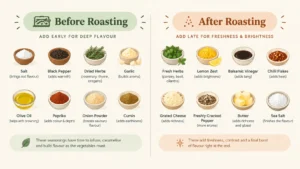
- Toss with oil, salt, and pepper before roasting; add herbs and acid after.
- Air fryers roast vegetables faster than a conventional oven, often in 12–20 minutes.
- Grilling works best for vegetables that hold their shape, like zucchini and peppers.
- Roasted vegetables keep in the fridge for 3–4 days and reheat well in a hot oven or air fryer.
What Makes Roasting Work
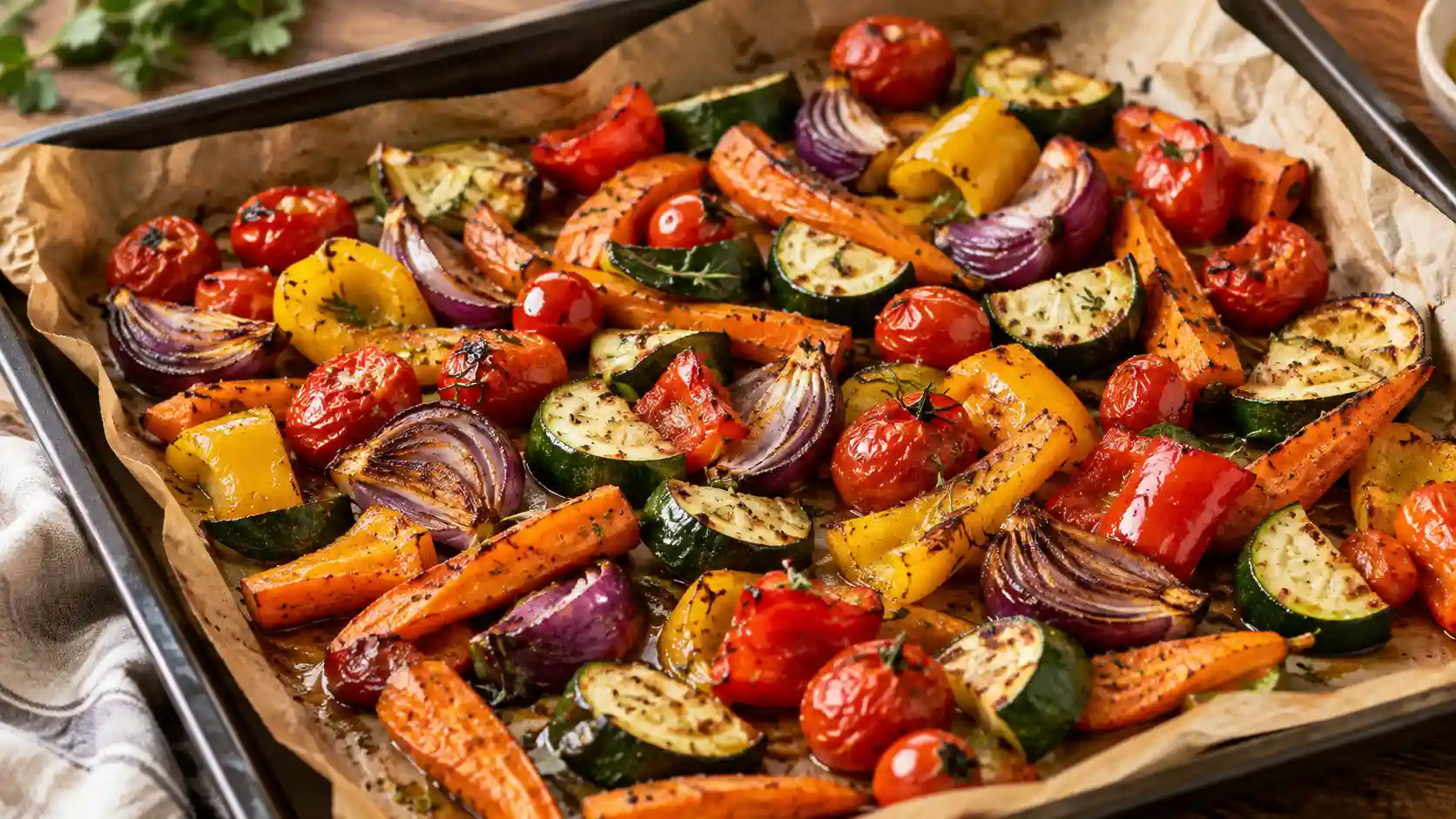
Roasting uses dry, radiant heat, usually above 180°C (350°F), to draw moisture out of a vegetable’s surface while its natural sugars caramelize through the Maillard reaction. This is why roasted vegetables taste sweeter and more complex than steamed or boiled ones. Enough surface area exposed to heat, and enough space between pieces on the tray, allows moisture to evaporate rather than steam the vegetables, which is the main reason crowded trays produce soft, pale results instead of golden, crisp-edged ones.
Best Vegetables for Roasting
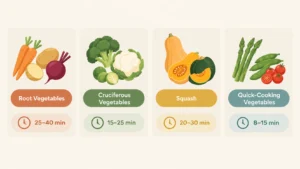
Root vegetables and dense, low-moisture vegetables roast most reliably:
- Root vegetables: carrots, potatoes, parsnips, sweet potatoes, beets
- Cruciferous vegetables: broccoli, cauliflower, Brussels sprouts
- Squash: pumpkin, butternut squash, zucchini
- Alliums: onions, garlic, shallots
- Peppers and tomatoes: bell peppers, cherry tomatoes
Vegetables with higher water content, like zucchini and tomatoes, roast faster and can turn mushy if left too long, so they’re often added partway through a mixed tray of slower-cooking root vegetables.
Seasoning Roast Vegetables
A basic seasoning approach is olive oil, salt, and black pepper, tossed on before roasting so the oil helps conduct heat and the salt draws out surface moisture for better browning. Beyond the basics:
- Herbs: rosemary, thyme, and oregano hold up well to high heat; softer herbs like basil and parsley are best added after roasting.
- Spices: smoked paprika, cumin, and chili flakes add depth without burning easily.
- Aromatics: whole garlic cloves or sliced onion roasted alongside vegetables add sweetness as they soften.
- Finishing touches: a squeeze of lemon, a drizzle of balsamic glaze, or grated parmesan added after roasting brightens the dish without softening the vegetables’ texture.
Oven Temperature and Timing Guide
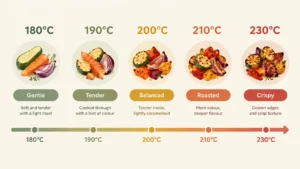
Roasting temperature affects both cooking time and texture — higher heat produces more caramelization in less time but requires closer attention to avoid burning.
| Temperature | Approx. Time (root vegetables) | Approx. Time (quicker vegetables) |
|---|---|---|
| 180°C / 350°F | 40–50 minutes | 20–25 minutes |
| 200°C / 400°F | 30–40 minutes | 15–20 minutes |
| 220°C / 425°F | 20–30 minutes | 12–18 minutes |
At 180°C, vegetables cook more gently and evenly, which suits large, dense pieces like whole small potatoes. At 200°C, most standard roast vegetable recipes strike a balance between caramelization and even cooking. At 220–425°F, vegetables brown quickly, which works well for thinner cuts like sliced peppers or asparagus but can dry out root vegetables if they’re cut too small. Turning vegetables halfway through roasting helps them brown evenly on multiple sides.
Roasting in an Air Fryer
An air fryer circulates hot air more directly around food than a conventional oven, which shortens cooking time by roughly a third and produces a crisper exterior. Most vegetables roast well in an air fryer at 190–200°C (375–400°F) for 12–20 minutes, depending on density, and benefit from a shake or toss halfway through. Because the basket has limited space, vegetables should be arranged in a single layer rather than piled, since overcrowding is the most common reason for uneven or soggy results in an air fryer.
Roasting on the Grill
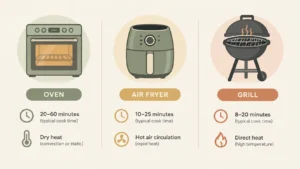
Grilling vegetables uses direct or indirect heat from below, producing char and smoky flavor that an oven can’t replicate. Vegetables that hold their structure — zucchini, peppers, corn, mushrooms, and thick onion slices — are best suited to the grill, since softer vegetables can fall through the grates or collapse. Cutting vegetables into flat, wide pieces or skewering smaller ones helps them cook evenly over direct heat, and brushing with oil before grilling prevents sticking.
Mediterranean-Style Roasted Vegetables
A Mediterranean approach typically combines zucchini, eggplant, red onion, bell peppers, and cherry tomatoes with olive oil, garlic, and dried oregano, roasted at around 200°C (400°F) until the edges caramelize. Because eggplant and zucchini release more moisture than root vegetables, they’re often roasted at a slightly higher temperature to encourage browning before they soften too much. A finish of crumbled feta and fresh herbs after roasting is a common way to round out the dish without dulling the vegetables’ texture.
Serving Roast Vegetables with Chicken and Roast Dinners
Roast vegetables are a common pairing with roast chicken because both cook well in a similar temperature range, allowing them to share an oven. For a traditional roast dinner, root vegetables like potatoes, carrots, and parsnips are usually added earlier, since they take longer than quicker-cooking vegetables like broccoli or green beans, which can be added later or cooked separately to avoid overcooking. Basting vegetables with pan drippings partway through roasting chicken adds flavor and helps compensate for uneven oven heat near the tray’s edges.
Storing and Reheating
Roasted vegetables keep in an airtight container in the refrigerator for 3–4 days. Because refrigeration reintroduces moisture to the surface, reheating in a hot oven or air fryer at 200°C (400°F) for 8–10 minutes restores more crispness than microwaving, which tends to soften the vegetables further.
Conclusion
Successful roast vegetables come down to a few consistent principles: even cutting, adequate spacing, enough fat and salt, and a temperature matched to the cooking method and vegetable type. Whether using a conventional oven, an air fryer, or a grill, understanding how heat, moisture, and timing interact allows for reliable, well-browned results across almost any vegetable combination.
FAQ
What temperature is best for roasting vegetables?
200°C (400°F) is the most commonly recommended temperature, offering a balance between caramelization and even cooking for most vegetable types.
How long does it take to roast vegetables?
Most vegetables take 20–40 minutes in a conventional oven, depending on temperature and how densely they’re cut, while an air fryer typically cuts this to 12–20 minutes.
Can you roast vegetables in an air fryer?
Yes, air fryers roast vegetables faster than a conventional oven due to more direct air circulation, usually at 190–200°C for 12–20 minutes with a shake halfway through.
Why are my roast vegetables soggy instead of crispy?
Overcrowding the tray or basket is the most common cause, since it traps steam around the vegetables instead of allowing moisture to evaporate.
Do you need to flip vegetables while roasting?
Turning vegetables halfway through cooking helps them brown evenly on more than one side, particularly in a conventional oven where heat comes mainly from below.