Introduction
Roasted vegetables are one of the simplest, most forgiving dishes in home cooking, yet small missteps in temperature, spacing, or timing are the difference between vegetables that caramelize beautifully and ones that steam into a mushy pile. This guide explains exactly how to make roasted vegetables that turn out crisp-edged, tender-centered, and full of flavor every time, whether you’re using an oven, an air fryer, or a stovetop pan. It also covers vegetable pairings, timing by type, and how to build flavor profiles like Mediterranean-style roasting.
Quick Summary
- Roast at a high temperature (400–450°F / 200–230°C) for deep caramelization.
- Cut vegetables into similar sizes so they cook evenly.
- Use enough space on the pan — overcrowding causes steaming instead of roasting.
- Group vegetables by cook time, or stagger their addition to the oven.
- Toss in oil, salt, and pepper before roasting; add delicate herbs after.
- Most vegetables roast in 20–40 minutes; dense root vegetables take longer.
Why Roasting Works: The Science of Flavor and Texture
Roasting relies on the Maillard reaction and caramelization, two heat-driven processes that occur when a vegetable’s surface reaches temperatures above roughly 300°F (150°C). This is why oven temperature matters so much: at lower heat, vegetables release moisture and effectively steam in their own liquid before that surface browning can happen. High, dry heat evaporates surface moisture quickly, allowing sugars and proteins on the vegetable’s exterior to brown and develop the nutty, slightly sweet flavors associated with good roasted vegetables. Oil plays a supporting role by conducting heat evenly across the surface and helping prevent sticking, while also carrying fat-soluble flavor from herbs and spices.
Choosing the Best Vegetables to Roast Together
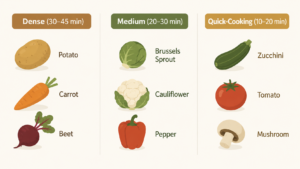
The best vegetables to roast together are ones with similar density and moisture content, since this determines how long each one takes to soften and brown.
Dense, slow-cooking vegetables (30–45 minutes): potatoes, carrots, beets, winter squash, parsnips Medium-density vegetables (20–30 minutes): Brussels sprouts, cauliflower, broccoli, bell peppers, red onion Quick-cooking, high-moisture vegetables (10–20 minutes): zucchini, cherry tomatoes, asparagus, mushrooms, green beans
Pairing vegetables within the same cook-time group avoids the common problem of some pieces burning while others remain raw. If you want to combine a fast and slow vegetable — like potatoes and zucchini — start the dense vegetable first and add the quicker one partway through roasting.
Step-by-Step: How to Make Roasted Vegetables in the Oven
- Preheat the oven to 425°F (220°C). A fully preheated oven ensures vegetables begin browning immediately rather than gradually heating up and releasing excess moisture.
- Cut vegetables into uniform pieces, roughly 1 to 1.5 inches, so they finish cooking at the same rate.
- Dry the vegetables with a paper towel if they were recently washed; residual water surface moisture delays browning.
- Toss with oil — about 1 to 2 tablespoons per pound of vegetables — along with salt and pepper.
- Spread in a single layer on a rimmed sheet pan, leaving space between pieces.
- Roast for 20–40 minutes, depending on the vegetable, flipping halfway through for even color.
- Check doneness with a fork; vegetables should be tender in the center and browned at the edges.
How to Make Roasted Vegetables Crispy (Not Soggy)
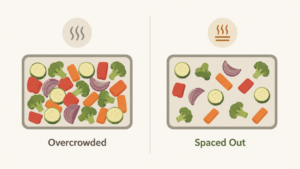
Crispy roasted vegetables depend on limiting steam. The three most common causes of soggy vegetables are overcrowding the pan, using too low an oven temperature, and skipping the drying step. Spacing pieces at least half an inch apart allows hot air to circulate around each one, which is what produces browning rather than steaming. Parchment paper or a light coating of oil on the pan also helps prevent sticking without trapping moisture underneath the vegetables. For extra crispness, a light dusting of cornstarch on starchy vegetables like potatoes can enhance the crust.
Oven Roasted Vegetables and Potatoes (and Carrots)
Potatoes and carrots are two of the most popular vegetables to roast together because both are dense root vegetables with similar cook times. Cut potatoes into 1-inch cubes and carrots into similarly sized chunks or thick coins so they finish together. Parboiling potatoes for 5 minutes before roasting can improve crispness by softening the exterior starch, which then crisps more dramatically in the oven. Roast both at 425°F (220°C) for about 35–40 minutes, tossing halfway through, until the potatoes are golden and the carrots are tender with browned edges.
Mediterranean Roasted Vegetables
Mediterranean roasted vegetables typically combine zucchini, bell peppers, red onion, eggplant, and cherry tomatoes with olive oil, garlic, and herbs like oregano, thyme, and rosemary. Because eggplant and zucchini release more moisture than root vegetables, they benefit from slightly higher heat (450°F / 230°C) and shorter roasting times of around 20–25 minutes. A finishing touch of lemon juice, crumbled feta, or fresh parsley after roasting adds brightness that balances the deep, caramelized flavors built during cooking. This style of preparation — inspired by classic Mediterranean and British home-cooking traditions, including techniques popularized by well-known chefs such as Jamie Oliver — favors generous olive oil, whole garlic cloves roasted in their skins, and hearty use of woody herbs.
How to Make Roasted Vegetables in an Air Fryer
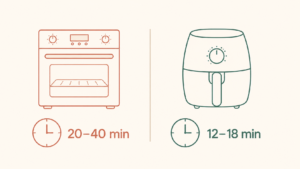
An air fryer roasts vegetables using rapid, circulating hot air, which produces similar caramelization to an oven but in less time due to more concentrated heat contact. Set the air fryer to 400°F (200°C) and cook vegetables in a single layer, shaking the basket every 8–10 minutes. Most vegetables are done in 12–18 minutes, roughly half the time of conventional oven roasting. Because air fryer baskets are smaller, cooking in batches produces better texture than overcrowding a single load.
Other Ways to Roast Without an Oven
Vegetables can also be “roasted” on the stovetop using a heavy skillet or cast-iron pan over medium-high heat. This method works especially well for smaller cuts of vegetables like mushrooms, green beans, or diced potatoes. Use enough oil to coat the pan, avoid stirring too frequently so surfaces have contact time with the hot pan, and cook in batches to prevent crowding. A grill can achieve a similar caramelized effect for larger vegetable pieces or skewers, using direct medium-high heat.
Roasting From Frozen
Frozen vegetables can be roasted directly without thawing, though they release more surface moisture during cooking. To compensate, roast at a slightly higher temperature (425–450°F / 220–230°C) and extend the cooking time by 10–15 minutes compared to fresh vegetables. Patting frozen vegetables dry before tossing with oil, and using a slightly higher oil ratio, helps offset the extra moisture and still achieve browned edges.
Make-Ahead, Storage, and Reheating
Roasted vegetables can be prepped ahead in two ways: chopping raw vegetables up to 2 days in advance and storing them in the refrigerator, or fully roasting them up to 4 days ahead and reheating before serving. To reheat without sogginess, use an oven or air fryer at 400°F (200°C) for 8–10 minutes rather than a microwave, which introduces steam and softens the crisp edges built during the original roast.
How to Make Roasted Vegetables Taste More Interesting
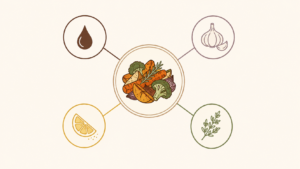
Beyond salt, pepper, and oil, several techniques add depth: tossing vegetables with balsamic vinegar or maple syrup before roasting encourages deeper caramelization; adding minced garlic or grated Parmesan in the final 5–10 minutes prevents burning while still infusing flavor; and finishing with fresh herbs, citrus zest, toasted nuts, or a flavored oil after roasting adds contrast in both flavor and texture. Spice blends such as smoked paprika, cumin, or za’atar can also shift a simple side dish toward a specific cuisine profile.
Conclusion
Learning how to make roasted vegetables well comes down to a few consistent principles: high heat, dry surfaces, adequate spacing, and grouping vegetables by cook time. Once these fundamentals are in place, the technique adapts easily across ovens, air fryers, stovetops, and even frozen produce, making it one of the most versatile cooking methods for building flavorful, texturally satisfying vegetable dishes.
FAQ
How long does it take to make roasted vegetables in the oven? Most vegetables take 20–40 minutes at 400–450°F (200–230°C), depending on density; root vegetables like potatoes and carrots take the longest, while quick-cooking vegetables like zucchini or tomatoes finish faster.
What is the best temperature for roasting vegetables? 425°F (220°C) is a reliable standard temperature that balances even cooking with good caramelization; denser vegetables can handle up to 450°F (230°C).
Why are my roasted vegetables soggy instead of crispy? Sogginess is usually caused by overcrowding the pan, using too low a temperature, or not drying the vegetables before roasting, all of which trap steam instead of allowing browning.
Can I roast vegetables without an oven? Yes — an air fryer, stovetop skillet, or grill can all achieve a similar caramelized effect using high, direct heat.
Can I roast vegetables from frozen? Yes, frozen vegetables can go straight into the oven or air fryer; use a slightly higher temperature and longer cook time to account for extra moisture.