Introduction
Lamb chop casserole is a slow-simmered dish that transforms budget-friendly cuts of lamb into a rich, fork-tender meal with minimal hands-on effort. Unlike quick-seared lamb dishes, a casserole relies on low, steady heat to break down connective tissue, so the meat becomes soft while the surrounding vegetables and liquid reduce into a thick, savoury gravy. This dish sits at the intersection of comfort food and practicality: it uses affordable cuts, feeds a family from one pot, and improves in flavor the next day. Whether cooked in the oven, a slow cooker, or spiced with North African flavors for a Moroccan variation, the underlying technique stays the same — brown the meat, build a flavorful base, then let time do the work.
Quick Summary
- Best cuts: shoulder, neck, or forequarter chops (well-marbled, connective tissue breaks down during slow cooking); loin and chump chops work but can dry out with long braising.
- Core method: sear the chops, sauté aromatics, deglaze, add stock and vegetables, then cook low and slow (oven, stovetop, or slow cooker) until the meat is tender.
- Cooking times: roughly 1.5–2 hours in a 160–170°C (325°F) oven, or 6–8 hours on low in a slow cooker.
- Classic pairing: potatoes, carrots, onions, and root vegetables in a thickened stock-based gravy.
- Variation: Moroccan-style versions swap the traditional gravy for a spiced tomato base with cumin, cinnamon, ginger, and preserved lemon or apricots.
What Makes a Great Lamb Chop Casserole
A successful lamb chop casserole depends on three interacting factors: the cut of meat, the cooking liquid, and the cooking time. Because lamb chops contain more connective tissue and fat than, say, chicken thighs, they need extended, moist heat to become tender rather than tough. Searing the chops first is not just about color — the browned, caramelized surface (created through the Maillard reaction) adds depth of flavor that a straight braise cannot replicate. That browned residue left in the pan, often called fond, is then dissolved with stock, wine, or water in a step called deglazing, which recovers those flavor compounds directly into the sauce.
The cooking liquid should just cover or come partway up the chops, not fully submerge them, so the exposed portions can develop a slight crust while the submerged parts stew. A well-balanced casserole liquid usually includes stock, a small amount of acid (tomato, wine, or vinegar) to help tenderize the meat, and aromatics like garlic, onion, and herbs such as rosemary or thyme, which pair naturally with lamb’s stronger flavor profile.
Choosing the Right Lamb Chops
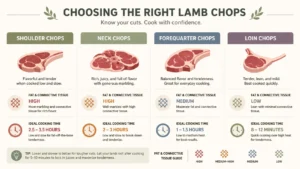
Not all lamb chops behave the same way in a casserole:
- Shoulder chops — well-marbled with connective tissue, ideal for long, slow cooking; they become very tender and are a favorite for both oven and slow cooker casseroles.
- Neck chops — inexpensive and rich in collagen, which melts down into a naturally thickened, gelatinous gravy over time.
- Forequarter chops — similar to shoulder chops, with good fat content for braising.
- Loin and chump chops — leaner and more tender to begin with; they cook faster and can turn dry or stringy if braised for the same length of time as shoulder or neck chops, so reduce their cooking time or add them later in the process.
Choosing the right cut matters because it directly affects both texture and cooking time. A recipe built around neck or shoulder chops that is used with loin chops instead may produce a casserole with overcooked, dry meat, since leaner cuts don’t have the same fat and collagen buffer.
Old Fashioned Lamb Chop Casserole with Potatoes
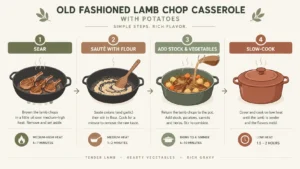
The old fashioned version of this dish is built on a simple, no-frills combination: lamb chops, potatoes, carrots, onion, and a stock-based gravy, often thickened with flour. This style traditionally uses whatever root vegetables were on hand, which is part of why it remains a popular family recipe passed down through generations.
Method overview:
- Season and sear the lamb chops in a heavy pot or casserole dish until browned on both sides, then set aside.
- Sauté sliced onions and a little flour in the rendered lamb fat to form a light roux, which thickens the final gravy without needing a separate cornstarch slurry.
- Gradually whisk in stock to avoid lumps, then return the chops to the pot along with quartered potatoes and sliced carrots.
- Cover and cook low and slow — either in a 160°C (325°F) oven or on the stovetop over a gentle simmer — for 1.5 to 2 hours, until the potatoes are tender and the meat pulls apart easily.
The potatoes serve a dual purpose in this dish: they absorb the meaty, herbed gravy as they cook, and their starch helps thicken the sauce further, giving old fashioned lamb chop casserole its characteristically hearty, stick-to-the-ribs texture.
Easy Lamb Chop Casserole in the Oven
An oven-based casserole is often the easiest version to manage because it requires no monitoring on the stovetop — once the dish is covered and in the oven, the surrounding heat cooks the contents evenly on all sides. For an easy version:
- Sear the chops in an oven-safe casserole dish or Dutch oven.
- Add chopped onion, garlic, and any root vegetables directly to the same pot.
- Pour in enough stock to reach about two-thirds up the sides of the ingredients.
- Cover tightly with a lid or foil and bake at 160–170°C (325–340°F) for 1.5 to 2 hours.
Covering the dish is essential: it traps steam, which keeps the meat moist and prevents the liquid from reducing too quickly before the lamb has had time to tenderize. Removing the lid for the final 15–20 minutes allows the sauce to thicken slightly and the top of the meat to develop a light char if desired.
Lamb Chop Casserole in the Slow Cooker
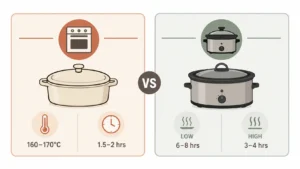
A slow cooker version is well-suited to lamb chops because the appliance’s low, consistent heat mirrors the same low-and-slow principle used in oven braising, but with less supervision. The main difference is timing and liquid ratio — slow cookers trap more moisture than an open oven dish, so slightly less liquid is needed to avoid a watery casserole.
Method overview:
- Sear the chops on the stovetop first; this step is optional but improves flavor and appearance, since slow cookers don’t brown food.
- Transfer the chops to the slow cooker along with chopped vegetables, stock, and seasoning.
- Cook on low for 6–8 hours, or on high for 3–4 hours, until the meat is tender enough to separate from the bone easily.
- If the sauce is thinner than desired at the end, remove the lid for the last 30 minutes on high, or stir in a small cornstarch slurry to thicken it.
Because slow cookers hold a steady, gentle temperature, they’re particularly forgiving for tougher cuts like neck or shoulder chops, making this method a reliable option for a hands-off weeknight dinner.
Moroccan Lamb Chop Casserole
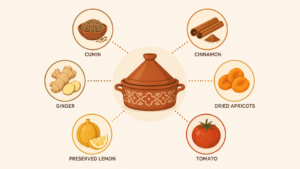
Moroccan lamb chop casserole reworks the classic formula by replacing the stock-and-flour gravy with a spiced, tomato-based sauce inspired by North African tagine cooking. The core technique — sear, build a flavor base, then braise slowly — stays the same, but the flavor profile shifts substantially.
Key differences from the classic version:
- Spices: ground cumin, ground ginger, cinnamon, and paprika replace the herb-forward seasoning (rosemary, thyme) of the traditional recipe.
- Liquid base: crushed tomatoes or tomato paste combined with stock create a thicker, more concentrated sauce than a plain gravy.
- Add-ins: dried apricots, chickpeas, or preserved lemon are common additions that introduce sweetness and brightness to balance the richness of the lamb.
- Finishing touch: fresh cilantro or parsley and toasted almonds are often scattered over the top just before serving.
This variation works well in the oven, on the stovetop, or in a slow cooker, since the technique for tenderizing the chops doesn’t change — only the seasoning and sauce components do. It’s a useful option for anyone who wants the same comforting, slow-cooked texture as an old fashioned casserole but with a warmer, more aromatic flavor profile.
Common Mistakes and How to Avoid Them
- Skipping the sear: Going straight to braising without browning the chops first results in a flatter-tasting sauce, since the fond that builds flavor is never created.
- Using lean cuts for long braises: Loin or chump chops cooked for the same 1.5–2 hours as shoulder or neck chops often turn dry, because they lack the fat and collagen that keep tougher cuts moist during extended cooking.
- Too much liquid: Fully submerging the chops dilutes the final sauce and prevents any surface browning; liquid should reach about two-thirds up the ingredients.
- Cooking at too high a temperature: A hot oven or a high slow-cooker setting cooks the outside of the meat faster than the connective tissue can break down, leading to tough, chewy chops instead of fall-apart tenderness.
- Adding potatoes too early in a slow cooker: Potatoes can turn mushy if added at the very start of a long slow-cooker cycle; adding them partway through helps them hold their shape better.
Storage, Reheating, and Make-Ahead Tips
Lamb chop casserole stores well and often tastes better the next day, as the flavors continue to meld. Cooled leftovers keep in an airtight container in the refrigerator for up to 3–4 days. For longer storage, the casserole can be frozen for up to 3 months; freezing works especially well since the sauce protects the meat from drying out. When reheating, do so gently on the stovetop over low heat or in a covered oven dish, adding a splash of stock or water if the sauce has thickened too much in storage. This dish also works well as a make-ahead meal — preparing it a day in advance and reheating before serving allows the flavors even more time to develop.
Conclusion
Lamb chop casserole is a flexible, technique-driven dish rather than a single fixed recipe. The same core method — searing, building a flavorful liquid base, and cooking low and slow — applies whether the dish is made the old fashioned way with potatoes and carrots, adapted for the oven, left to cook unattended in a slow cooker, or given a spiced Moroccan twist. Understanding how cut choice, liquid ratio, and cooking time interact gives home cooks the flexibility to adjust the recipe to their equipment and schedule while still achieving tender, richly flavored results.
FAQ
What is the best cut of lamb for a casserole? Shoulder, neck, or forequarter chops are best, since their fat and connective tissue break down during slow cooking, keeping the meat moist and tender.
Can I make lamb chop casserole in a slow cooker? Yes. Sear the chops first for better flavor, then cook on low for 6–8 hours or on high for 3–4 hours until tender.
How long does lamb chop casserole take to cook in the oven? Typically 1.5 to 2 hours at 160–170°C (325–340°F), covered, until the meat is fork-tender.
Why is my lamb chop casserole tough? This usually happens when lean cuts like loin or chump chops are braised for too long, or when the dish is cooked at too high a temperature, which cooks the meat before the connective tissue has time to soften.
Can I add potatoes to lamb chop casserole? Yes — potatoes are a traditional addition in old fashioned versions. In a slow cooker, add them partway through cooking rather than at the start to prevent them from turning mushy.
What makes Moroccan lamb chop casserole different? It replaces the classic stock-and-flour gravy with a spiced tomato-based sauce using cumin, cinnamon, and ginger, often finished with dried apricots or preserved lemon.