Introduction
A good pesto recipe comes down to ratios, temperature control, and how finely the ingredients are processed — and a Thermomix handles all three with unusual precision. Because the machine weighs, chops, and blends in one bowl, a thermomix pesto recipe removes most of the guesswork that trips people up with a mortar and pestle or a standard food processor: uneven chopping, over-oxidized basil, or a sauce that separates. This guide walks through the classic basil version, plus nut-free, cashew, and spinach variations, and shows how to turn any of them into a complete chicken pesto pasta dinner.
Quick Summary
Traditional pesto is built from five components: a leafy herb (usually basil), a hard cheese, a fat (olive oil), a nut or seed, and garlic, brought together with salt and sometimes lemon juice or acidity for balance. In a Thermomix, the classic method blitzes garlic and nuts first, then adds cheese, basil, and oil in short pulses to avoid overheating the leaves. TM5 and TM6 models use the same core technique, though the TM6’s higher max speed can shorten blending time slightly. Nut-free and spinach versions swap ingredients but follow the identical process, since the technique — not the ingredient list — is what makes Thermomix pesto reliably smooth.
What Makes Pesto Work: The Core Ingredients
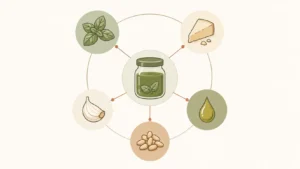
Every pesto, regardless of variation, relies on the same functional roles rather than fixed ingredients:
- Herb base — traditionally fresh basil, providing aroma and color. Basil pesto pasta recipes depend on using leaves rather than stems, since stems add bitterness and fiber that resist blending.
- Hard cheese — usually Parmesan or Pecorino, contributing salt, umami, and a slightly grainy texture that helps the sauce cling to pasta.
- Fat — extra virgin olive oil binds the other ingredients into an emulsion and carries flavor. Using oil that’s too cold can cause the sauce to seize or separate.
- Nut or seed — pine nuts are classic, but cashews, walnuts, sunflower seeds, or pumpkin seeds all work, each shifting the flavor from buttery (pine nuts, cashews) to earthier (walnuts) or more neutral (seeds).
- Garlic — added in small amounts, since raw garlic intensifies as pesto sits.
Understanding these roles makes it straightforward to substitute — swap the nut for an allergy-friendly option, or the herb for spinach — without breaking the sauce’s texture or balance.
The Classic Thermomix Basil Pesto Method (TM5 & TM6)
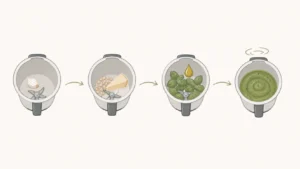
- Place garlic cloves into the mixing bowl and chop 3 seconds/Speed 7.
- Add pine nuts and Parmesan; chop 5 seconds/Speed 8.
- Add fresh basil leaves, olive oil, and a pinch of salt.
- Blend 10–15 seconds/Speed 6–7, using the spatula to help incorporate ingredients through the lid opening rather than stopping to scrape down mid-blend.
This order matters: chopping the hard ingredients (garlic, nuts, cheese) before adding the basil prevents the leaves from being over-processed, which is what causes pesto to turn a dull, oxidized green instead of staying bright.
Why Blade Speed and Timing Matter
Basil bruises easily, and prolonged high-speed blending generates heat through friction, which accelerates oxidation and can give pesto a bitter, “cooked” taste. Keeping blend time under 15 seconds and using pulses rather than continuous high speed preserves both color and flavor. This is also why a Thermomix tm6 pesto recipe and a TM5 version use nearly identical timing — the newer model’s higher top speed isn’t an advantage here, since pesto is a low-speed, short-duration task rather than one that benefits from maximum power.
Nut-Free Pesto in the Thermomix
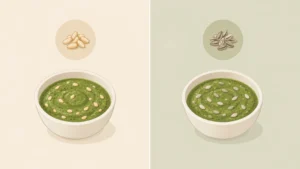
A nut-free pesto recipe in the Thermomix follows the same steps as the classic method, replacing pine nuts with roasted sunflower seeds or pumpkin seeds in equal quantity. Seeds have a milder flavor than nuts, so some cooks add an extra tablespoon of Parmesan to compensate for the lost richness. This version is a common substitution for school lunches or households managing nut allergies, and it holds up well in both raw sauces and baked dishes.
Cashew Pesto: A Creamier Alternative
Cashews have a naturally soft texture and mild sweetness, which makes cashew pesto noticeably creamier than a pine nut version, closer in mouthfeel to a dairy-based sauce. Because cashews are softer than pine nuts, they blend down faster — reducing chop time by a few seconds prevents the sauce from turning into a paste rather than a textured pesto. This variation pairs particularly well with roasted vegetables, where a richer sauce balances the vegetables’ char.
Spinach Pesto: A Milder, Budget-Friendly Variation
Replacing some or all of the basil with fresh spinach produces a milder, less peppery pesto, often used when basil is out of season or expensive. Spinach has a higher water content than basil, so many recipes reduce the olive oil slightly or add extra Parmesan to keep the texture from becoming watery. Combining spinach with a smaller portion of basil — roughly half and half — keeps some of basil’s aromatic character while stretching the recipe further.
Turning Pesto Into a Meal: Chicken Pesto Pasta
For chicken pesto pasta, cook diced or sliced chicken breast separately (pan-seared or in the Thermomix Varoma) and toss it with cooked pasta and pesto off the heat. Adding pesto to hot pasta directly over heat can cause the sauce to split, since basil pesto is an emulsion that wasn’t designed to be cooked further. A splash of reserved pasta water helps the sauce coat the noodles evenly and loosens pesto that has thickened after chilling.
Storage, Freezing, and Shelf Life

Fresh pesto keeps for about 5–7 days refrigerated in an airtight container, with a thin layer of olive oil poured on top to limit air contact and slow oxidation. For longer storage, pesto freezes well in ice cube trays, giving pre-portioned amounts that thaw quickly for single servings. Cheese is often best left out before freezing and stirred in fresh after thawing, since dairy can change texture after being frozen and reheated.
Common Mistakes and How to Avoid Them
- Over-blending, which heats and oxidizes the basil, dulling both color and flavor.
- Using pre-grated cheese, which often contains anti-caking agents that prevent a smooth emulsion.
- Adding cold oil straight from the fridge, which can cause the sauce to seize instead of blending smoothly.
- Skipping the garlic-and-nut chop step, which leaves gritty pieces of garlic or nuts in the finished sauce instead of a uniform texture.
Conclusion
A reliable thermomix pesto recipe depends less on a single “correct” ingredient list and more on understanding what each component does — and processing it in an order that protects the basil’s color and flavor. Once that method is understood, nut-free, cashew, and spinach variations are simple substitutions rather than separate recipes, and the same base sauce can move from a quick pasta dinner to a chicken pesto pasta meal with minimal extra effort.
FAQ
Can I make pesto without a nut of any kind? Yes — sunflower or pumpkin seeds work as a direct substitute, keeping the texture similar while removing tree nuts and peanuts entirely.
Does TM6 make pesto faster than TM5? Not meaningfully. Pesto blending times stay short on both models, since the goal is to protect the basil rather than maximize processing power.
Why did my pesto turn brown? Over-blending or exposure to air after storage causes oxidation. Short blend times and a layer of oil on top during storage help prevent this.
Can I use walnuts instead of pine nuts? Yes, though walnuts add a more bitter, earthy note than the buttery flavor of pine nuts or cashews.