Introduction
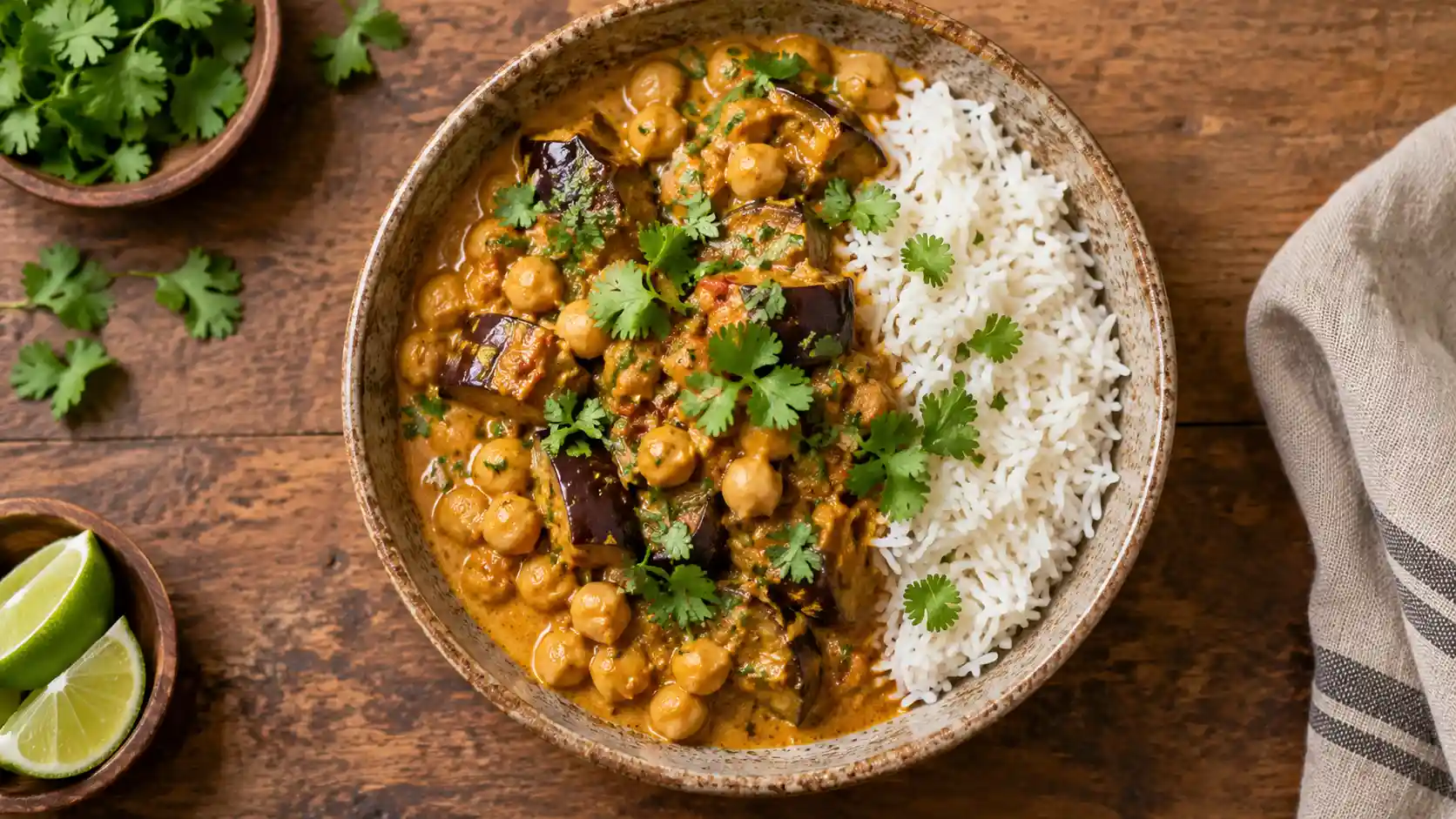
Eggplant and chickpea curry is a plant-based stew built on two ingredients that complement each other. Eggplant (also called aubergine) turns silky and absorbs spice. Chickpeas add body, protein, and fiber. Together they make a filling, one-pot dish that suits vegan, vegetarian, and dairy-free diets. If you enjoy this style of cooking, you will find more ideas in our collection of vegan curry recipes.
This guide explains how the curry works: why each ingredient is used, how technique changes the result, and how regional styles differ. It also covers common variations such as coconut milk, spinach, roasting, and slow cooker methods.
Quick Summary
- Dish type: Vegan curry stew made with eggplant, chickpeas, spices, and tomato or coconut milk.
- Serves: 4 people.
- Prep time: 15 minutes.
- Cook time: 30–35 minutes on the stovetop.
- Core ingredients: Eggplant, cooked chickpeas, onion, garlic, ginger, curry spices, tomato, coconut milk.
- Key technique: Brown the eggplant first, then simmer it gently so it turns creamy without falling apart.
- Storage: Refrigerate for up to 4 days or freeze for up to 3 months.
- Dietary fit: Vegan, dairy-free, and gluten-free when served with rice.
What Is Eggplant and Chickpea Curry?
Eggplant and chickpea curry is a stew in which cubed eggplant and cooked chickpeas simmer in a spiced sauce. The sauce is usually based on onion, garlic, ginger, ground spices, and either tomatoes, coconut milk, or both.
The dish appears in many cuisines. South Asian versions rely on curry powder or a blend of cumin, coriander, turmeric, and chili. Mediterranean and Middle Eastern stews pair the same two vegetables with cinnamon, paprika, and tomato. Because the base ingredients are so adaptable, “eggplant chickpea curry,” “chickpea and eggplant curry,” and “aubergine and chickpea curry” all describe the same core idea. For more ways to cook the main vegetable, browse our eggplant recipes.
Ingredients and What Each One Does
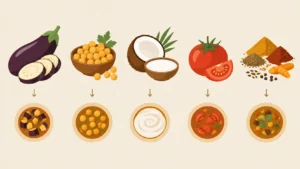
Understanding each ingredient helps you adjust the recipe confidently.
Eggplant (2 medium, about 650 g / 1.4 lb). Eggplant has a spongy interior that soaks up oil and sauce. Browning it first creates flavor and helps it hold its shape. Cut into 2.5 cm (1 inch) cubes, it cooks evenly. If you are unsure what to look for at the market, see our guide on how to choose and store eggplant.
Chickpeas (one 400 g / 14 oz can, drained, or about 1½ cups cooked). Chickpeas add protein, fiber, and a firm texture that contrasts with soft eggplant. Canned chickpeas save time. Dried chickpeas, soaked overnight and boiled until tender, give a slightly better texture. Our guide to cooking dried chickpeas from scratch covers soaking and timing, and our chickpea recipes collection has more ways to use them.
Onion, garlic, and ginger. This aromatic base builds savory depth. Cooking the onion until golden adds natural sweetness that balances the spices.
Spices. A typical blend includes 2 teaspoons curry powder, 1 teaspoon ground cumin, 1 teaspoon ground coriander, ½ teaspoon turmeric, and ½ teaspoon chili powder. Toasting spices in hot oil for about 30 seconds releases their aroma, which is why they are added before any liquid. You can also make your own with our homemade curry powder recipe.
Tomato (1 can, 400 g / 14 oz, crushed). Tomato adds acidity and body. The acid brightens the dish and cuts through the richness of the oil and coconut.
Coconut milk (200–400 ml). Coconut milk makes the sauce creamy and softens the heat of the spices. Full-fat coconut milk gives a thicker sauce, while light coconut milk gives a thinner, brothier curry. Read our coconut milk guide to learn how the types differ.
Oil, salt, and lemon or lime juice. Oil carries fat-soluble spice flavors. Salt draws out flavor, and a squeeze of citrus at the end lifts the whole dish.
How to Make Easy Eggplant and Chickpea Curry
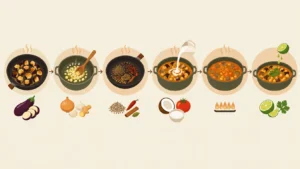
- Brown the eggplant. Heat 3 tablespoons of oil in a large, deep pan over medium-high heat. Cook the cubed eggplant in a single layer, in two batches if needed, for 6–8 minutes until golden. Browning improves flavor and reduces mushiness. Overcrowding the pan steams the eggplant instead, so use batches.
- Cook the aromatics. In the same pan, add a little more oil and cook one diced onion for 5–6 minutes until soft and golden. Stir in 3 minced garlic cloves and 1 tablespoon grated ginger for 1 minute.
- Toast the spices. Add the ground spices and stir for 30 seconds. If they stick, add a splash of water.
- Add liquids. Pour in the crushed tomatoes and coconut milk. Add ½ cup (120 ml) water and 1 teaspoon salt. Stir well, scraping up browned bits from the bottom.
- Simmer. Return the eggplant to the pan, add the chickpeas, and bring to a gentle simmer. Cover partially and cook for 20–25 minutes, stirring occasionally, until the eggplant is very tender and the sauce is thick.
- Finish. Stir in lemon or lime juice and adjust the salt. Garnish with fresh cilantro.
Serve with fluffy basmati rice, homemade naan, or quinoa.
Regional Styles: Sri Lankan and Indian
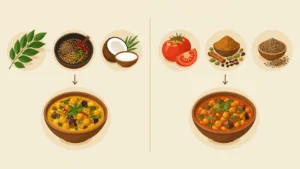
Sri Lankan Eggplant and Chickpea Curry
Sri Lankan curries typically use coconut milk and a distinctive spice profile. Sri Lankan curry powder is often roasted, which gives a darker, deeper flavor than standard curry powder. Common additions include curry leaves, mustard seeds, cinnamon, and sometimes pandan leaf. Many Sri Lankan curries use coconut milk in two stages: a thinner milk for simmering and a thicker one stirred in at the end for richness.
To adapt the base recipe, add 10–12 curry leaves and 1 teaspoon mustard seeds to the hot oil before the onion, use roasted curry powder, and finish with thick coconut milk. This produces a rich, fragrant curry with a classic island character. For more dishes in this style, see our Sri Lankan recipes.
Indian-Style Eggplant Chickpea Curry
Indian versions often skip coconut milk, especially in northern styles, and rely on tomato, onion, and whole or ground spices. Some recipes start with cumin seeds and finish with garam masala. In regions such as South India, coconut may be added as paste or milk. Because India has many regional cuisines, there is no single “Indian” version, so it helps to treat the spice choices as adjustable. Our Indian vegetarian recipes page shows how other dishes handle these differences.
Mediterranean and Ottolenghi-Style Influence
Eggplant and chickpeas also appear in Mediterranean-style stews flavored with cumin, cinnamon, tomato, and herbs. These dishes share the same technique: roast or sear the eggplant, then combine it with chickpeas in a tomato-based sauce.
Variations: Spinach, Roasted, Slow Cooker and More
Roasted eggplant version. Toss the cubes with oil and salt and roast at 220°C (425°F) for 25 minutes, turning once. Roasting uses less oil than pan-frying and gives a caramelized flavor. Add the roasted eggplant to the sauce for the last 10 minutes. Our guide to roasting vegetables explains how temperature and spacing affect browning.
Eggplant and chickpea curry with spinach. Stir in 150 g (5 oz) of fresh spinach in the last 2 minutes. It wilts quickly and adds color, iron, and a mild earthy flavor. See also our spinach and chickpea curry.
Slow cooker method. Brown the eggplant and aromatics on the stovetop for better flavor, then transfer everything to the slow cooker. Cook on low for 4–5 hours or on high for 2–3 hours. Slow cooking breaks the eggplant down further, so the result is softer and stew-like. Add spinach and citrus at the end. More ideas are in our vegan slow cooker recipes.
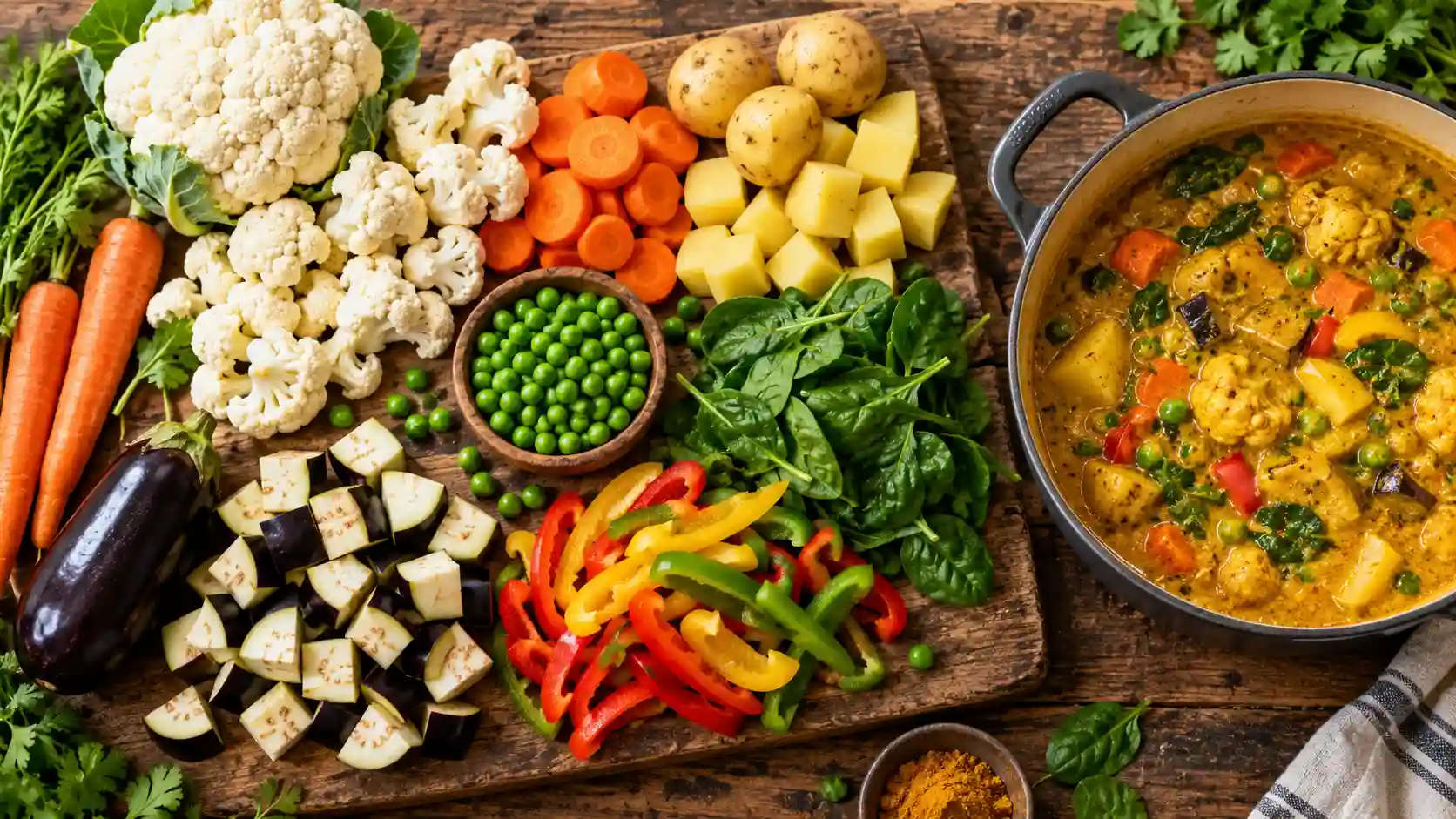
Added vegetables. Cauliflower florets, cubed potato, or pumpkin all work well. Potato and pumpkin need 20–25 minutes of simmering and add natural sweetness and thickness. Cauliflower needs about 10–15 minutes and keeps more bite. For standalone versions, try our cauliflower curry or pumpkin curry.
Coconut milk versus tomato-only. A tomato-only curry is lighter and tangier. Adding coconut milk makes it richer and mellower. Using both creates balance.
Texture, Flavor, and Troubleshooting
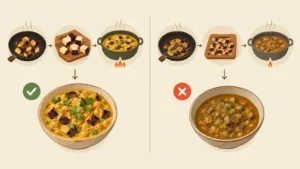
Why is my eggplant mushy? Mushiness usually comes from skipping the browning step, cutting the pieces too small, or simmering too vigorously. Brown first, keep the cubes large, and simmer gently.
Why is my curry bitter? Older or very large eggplants can taste slightly bitter. Choose firm, glossy eggplants with smooth skin. Salting the cubes for 20 minutes and rinsing them is optional and can reduce bitterness, though most modern varieties do not need it.
Why is my curry watery? Simmer uncovered for 5–10 minutes to reduce the sauce. Lightly mashing a few chickpeas against the pan also thickens it.
Why does my curry taste flat? Under-salting and lack of acid are the usual causes. Add salt in small amounts and finish with lemon or lime juice.
Can I reduce the oil? Yes. Roasting the eggplant instead of frying it cuts the oil, though the texture will be slightly drier.
Storage, Reheating, and Serving
Cool the curry within 2 hours of cooking. Store it in an airtight container in the refrigerator for up to 4 days. For longer storage, freeze it for up to 3 months. Thaw overnight in the fridge. Our freezer meal prep guide has more tips on portioning and labeling.
Reheat gently on the stovetop, adding a splash of water or coconut milk if the sauce has thickened. The flavor often improves the next day because the spices continue to blend.
Good serving options include basmati or jasmine rice, naan or roti, quinoa, or cauliflower rice. A spoonful of plant-based yogurt and fresh herbs add freshness. A simple cucumber salad makes a cooling side.
Conclusion
Eggplant and chickpea curry works because each ingredient contributes something specific: eggplant for creaminess, chickpeas for body, spices for depth, and coconut milk or tomato for the sauce. Browning the eggplant, toasting the spices, and simmering gently are the three steps that most affect the result. Once you understand the basic method, you can switch to a Sri Lankan-style, Indian-style, roasted, spinach, or slow cooker version without changing the overall approach. To keep exploring, visit our full vegan dinner recipes collection.
FAQ
What goes well with eggplant and chickpea curry?
Rice, flatbread, quinoa, or a simple cucumber salad. Plant-based yogurt adds a cooling contrast.
Is eggplant and chickpea curry vegan?
Yes, as long as the oil, coconut milk, and any added ingredients contain no animal products.
Can I make it without coconut milk?
Yes. Use crushed tomatoes and a little extra water for a lighter curry. For creaminess, add a spoonful of cashew butter or blended cashews.
Can I use dried chickpeas?
Yes. Soak them overnight, boil until tender (about 1 hour), and use about 1½ cups cooked. Canned chickpeas are faster.
Do I need to salt eggplant first?
Not necessarily. Salting can reduce bitterness and moisture in older eggplants, but fresh, firm eggplants usually do not require it.
How do I make it in a slow cooker?
Brown the eggplant and onion first, add everything to the slow cooker, and cook on low for 4–5 hours. Add spinach and lemon juice at the end.
How spicy is this curry?
It is mildly spicy as written. Reduce or omit the chili powder for a milder dish, or add fresh green chili for more heat.
Can I freeze it?
Yes. It freezes well for up to 3 months. The eggplant softens slightly after thawing, but the flavor holds.