Introduction
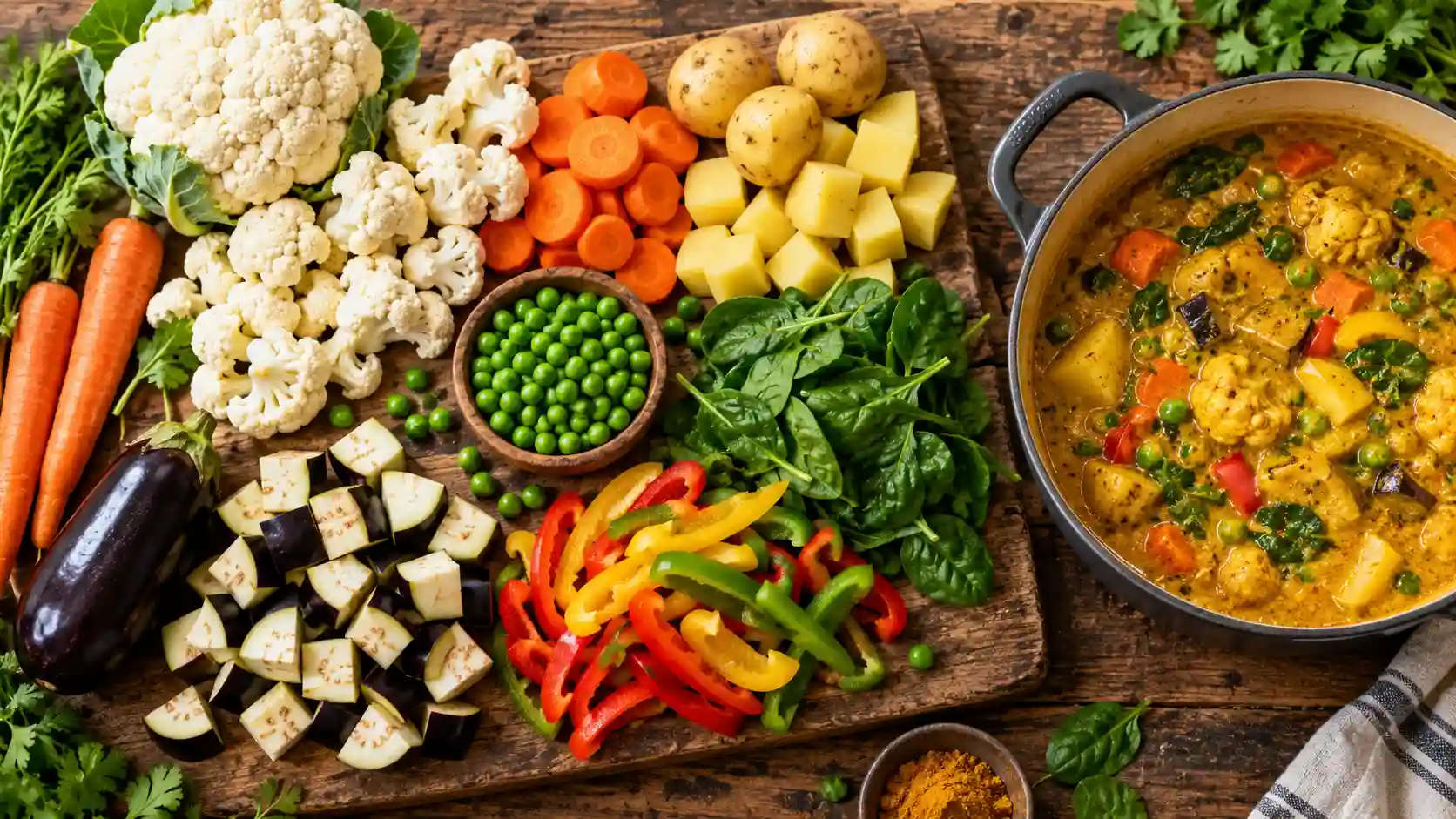
The best vegetables for curry are those that hold their shape in a simmering sauce and absorb spice without turning to mush. Potatoes, cauliflower, carrots, peas, spinach, eggplant, bell peppers, and green beans all do this well. The right choice depends on the curry style, the cooking time, and the texture you want. This guide explains which vegetables suit Indian, Thai, Japanese, and chicken curries, how to cut them, and the order in which to add them.
Quick Summary
- Firm vegetables (potato, carrot, pumpkin, cauliflower) go in first because they need the longest cooking time.
- Medium vegetables (eggplant, bell pepper, zucchini, green beans) go in midway.
- Tender vegetables (spinach, peas, fresh herbs) go in during the last 1–3 minutes.
- Starchy vegetables thicken the sauce slightly as they cook.
- Frozen vegetables work well in curry and can go in without thawing.
- Cutting size matters: pieces of about 2–3 cm (1 inch) cook evenly.
- Coconut milk softens heat and pairs well with most vegetables.
What Makes a Vegetable Good for Curry?
Curry is a slow-simmered sauce built on aromatics, spices, and a liquid such as tomato, stock, yogurt, or coconut milk. A good curry vegetable does one of three things:
- Holds structure. Potatoes, carrots, and cauliflower stay firm because of their dense cell walls.
- Absorbs flavor. Eggplant and cauliflower have porous flesh that soaks up spiced sauce.
- Adds contrast. Peas, spinach, and bell peppers bring color, sweetness, or freshness.
Vegetables with very high water content, such as cucumber or lettuce, release too much liquid and dilute the sauce. They are rarely used in curry.
Best Vegetables for Curry by Type
| Group | Vegetables | Why they work |
|---|---|---|
| Starchy and firm | Potato, sweet potato, carrot, pumpkin, butternut squash | Hold shape, add body and mild sweetness |
| Cruciferous | Cauliflower, broccoli | Absorb spices, stay slightly firm |
| Soft and absorbent | Eggplant, zucchini, mushrooms | Soak up sauce, become creamy |
| Green and quick-cooking | Spinach, peas, green beans, okra | Add color and freshness |
| Sweet and crunchy | Bell peppers, baby corn, bamboo shoots | Add contrast and bite |
For an easy starting point, a mix of potato, carrot, peas, and cauliflower works in nearly any curry.
Vegetables for Indian Curry
Indian curries use vegetables in many forms, from dry stir-fried dishes to gravies. Common choices include:
- Potato and cauliflower (aloo gobi) for a dry, spiced dish
- Peas and potato (aloo matar) in a tomato-onion gravy
- Spinach blended or stirred in for saag-style curries
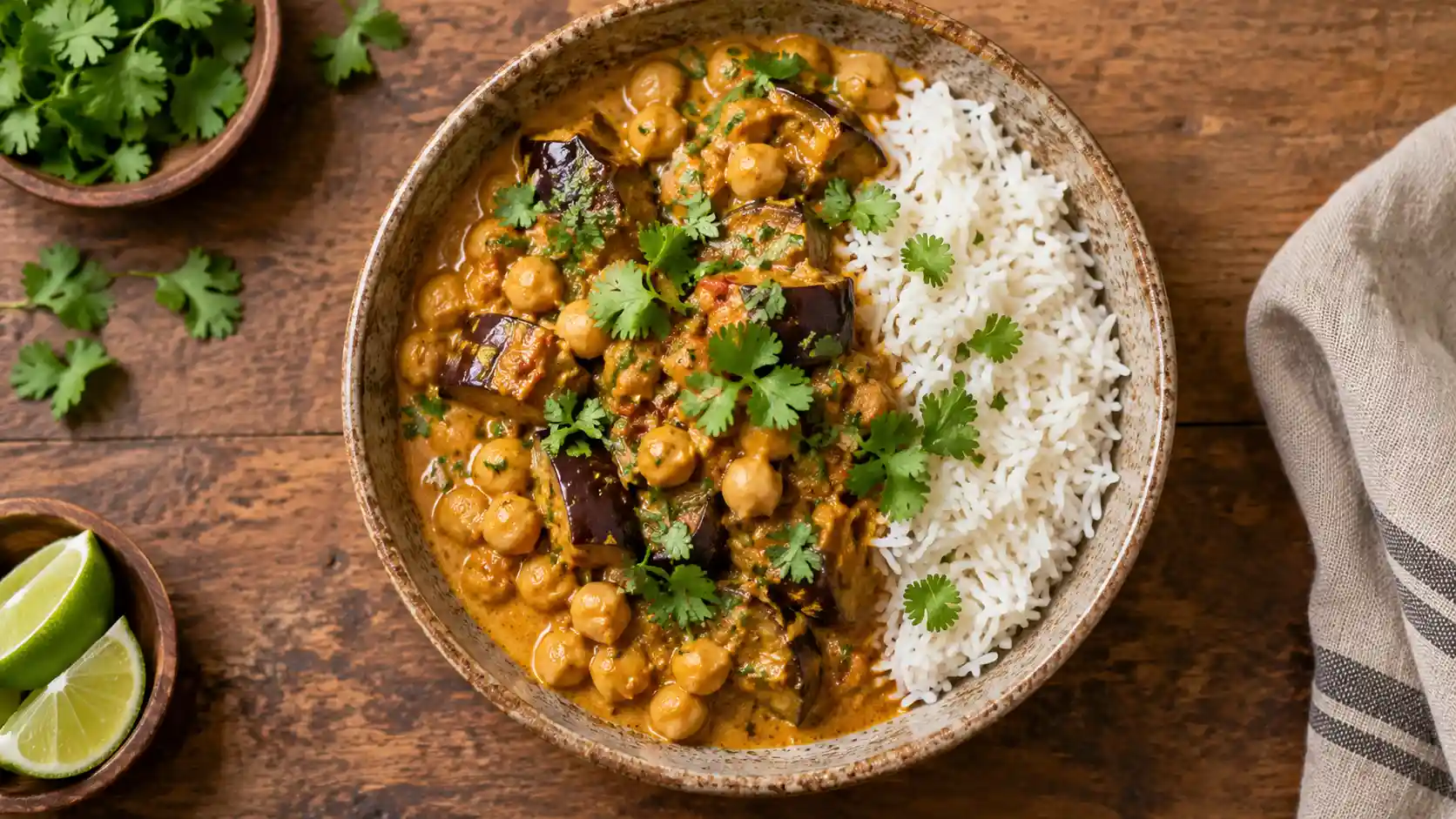
- Eggplant for baingan masala
- Okra for bhindi, which needs high heat and little stirring to avoid stickiness
- Tomatoes and onions, which form the base of the sauce
- Carrots, green beans, and cauliflower for mixed vegetable curries
If you ask what vegetables go in an Indian curry, the answer is nearly any seasonal vegetable. Mixed vegetable curries rely on whatever is fresh, while classic dishes pair specific vegetables with specific spice blends.
Vegetables for Thai Curry
Thai curries (green, red, and yellow) use a paste of chilies, herbs, and aromatics simmered in coconut milk. The vegetables are cut smaller and cooked more briefly than in many Indian curries.
Suitable choices include:
- Thai or regular eggplant
- Green beans
- Bamboo shoots
- Bell peppers
- Zucchini
- Baby corn
- Broccoli
- Mushrooms
For a vegetable green curry, add firmer vegetables to the simmering coconut milk first, then softer ones near the end so they keep a slight crunch. Thai basil goes in last, off the heat or just before serving, because heat quickly dulls its aroma.
Vegetables for Japanese Curry
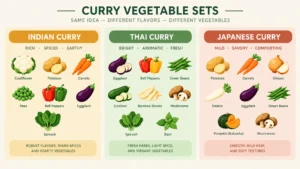
Japanese curry is thick, mild, and slightly sweet, and it is built around three classic vegetables: potatoes, carrots, and onions. These are simmered until tender in a roux-based sauce, so they must be sturdy enough for longer cooking.
You can also add:
- Kabocha (Japanese pumpkin)
- Eggplant
- Mushrooms
- Broccoli
Japanese curry is usually served over rice or with udon noodles, and it is often accompanied by pickled vegetables such as fukujinzuke (a sweet-tangy relish of chopped pickled vegetables) or rakkyo (pickled shallots). The pickles add acidity that balances the rich sauce.
Vegetables for Chicken Curry
When vegetables share the pot with chicken, they need to be timed so both finish together. Good choices include:
- Potatoes, which soak up chicken-flavored sauce
- Carrots, which add sweetness
- Peas, added near the end
- Bell peppers, which add color and mild sweetness
- Spinach, wilted in during the last minutes
- Cauliflower
- Tomatoes, which also act as part of the sauce
Bone-in chicken pieces need 25–35 minutes of simmering, so potatoes and carrots can go in at the same time. Boneless chicken cooks in 10–15 minutes, so cut the vegetables smaller or add them earlier than the chicken.
How to Cut Vegetables for Curry
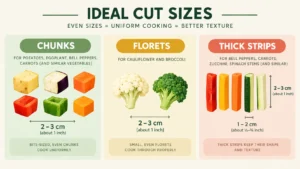
Cutting size controls how fast vegetables cook and how they feel in the sauce.
- Potatoes and carrots: 2–3 cm (about 1 inch) chunks for Indian and chicken curries.
- Japanese style: Use rangiri, a rolling cut that exposes more surface area, so the pieces cook evenly and absorb the sauce.
- Cauliflower: Break into medium florets of about 3–4 cm.
- Eggplant: Cut into 2–3 cm cubes; they shrink as they cook.
- Bell peppers and zucchini: Cut into thick strips or large pieces so they do not turn mushy.
- Green beans: Trim and cut into 3–4 cm lengths.
Keep pieces of one vegetable the same size. Uneven pieces cook unevenly, leaving some raw and others broken down.
How to Cook Vegetables for Curry
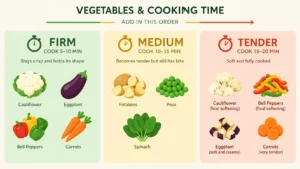
The order in which vegetables enter the pot decides their final texture.
- Start with aromatics. Cook onion, garlic, and ginger, then add the spices and bloom them briefly in oil.
- Add firm vegetables. Potato, carrot, pumpkin, and cauliflower go in with the liquid and simmer for 10–20 minutes.
- Add medium vegetables. Eggplant, bell pepper, zucchini, and green beans need about 5–10 minutes.
- Finish with tender vegetables. Peas, spinach, and herbs need only 1–3 minutes.
Simmer gently rather than boiling hard. Vigorous boiling breaks vegetables apart and can make coconut milk separate. If you want a thicker sauce, crush a few pieces of potato against the side of the pot.
Frozen and Pickled Vegetables for Curry
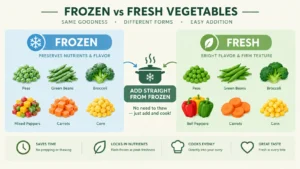
Frozen vegetables. Frozen peas, spinach, green beans, cauliflower, and mixed vegetables are practical for curry because they are blanched before freezing and cook quickly. Add them straight from the freezer without thawing. Squeeze excess water from frozen spinach before adding it. Frozen zucchini and eggplant tend to turn soft, so fresh is better for those.
Pickled vegetables. Pickled vegetables are generally served beside curry rather than cooked in it. Their acidity cuts through rich, spiced sauce. Examples include fukujinzuke with Japanese curry and lime or mixed vegetable pickles with Indian meals.
Simple Veg Curry With Coconut Milk
Here is a basic method that works for an easy vegetable curry.
Ingredients
- 1 tbsp oil
- 1 onion, chopped
- 2 garlic cloves and 1 tbsp grated ginger
- 2 tbsp curry powder or paste
- 2 potatoes and 2 carrots, cut into 2–3 cm chunks
- 1 small cauliflower, in florets
- 400 ml (1 can) coconut milk
- 250 ml vegetable stock
- 1 cup frozen peas
- Salt, and lime juice to finish
Method
- Cook the onion in oil until soft, then add garlic, ginger, and curry powder for 1 minute.
- Add potatoes, carrots, coconut milk, and stock. Simmer gently for 10 minutes.
- Add the cauliflower and cook 8–10 minutes more, until tender.
- Stir in the peas for 2 minutes. Season with salt and lime juice.
The coconut milk rounds out the spices and gives the sauce a creamy body without dairy.
Conclusion
The best vegetables for curry combine firm, absorbent, and fresh-tasting types. Potatoes, carrots, and cauliflower give structure, eggplant and mushrooms soak up the sauce, and peas, spinach, and bell peppers add color. Adjust your choice to the curry style, cut pieces evenly, and add them in order from firmest to most tender.
FAQ
What vegetables go in an Indian curry?
Common choices include potato, cauliflower, peas, spinach, eggplant, okra, carrots, green beans, and tomatoes.
What are the best vegetables for curry?
Potato, carrot, cauliflower, peas, spinach, eggplant, and bell pepper are reliable choices across most curry styles.
What vegetables are good for Thai curry?
Eggplant, green beans, bamboo shoots, bell peppers, zucchini, baby corn, and broccoli suit Thai curries.
What vegetables go in Japanese curry?
Potatoes, carrots, and onions are standard. Kabocha, mushrooms, and eggplant are common additions.
What vegetables go with chicken curry?
Potatoes, carrots, peas, bell peppers, spinach, cauliflower, and tomatoes work well.
Can I use frozen vegetables in curry?
Yes. Add them directly from frozen near the end of cooking. Peas, spinach, green beans, and cauliflower work best.
How do I keep vegetables from going mushy in curry?
Cut them evenly, add firm ones first and tender ones last, and simmer gently instead of boiling.