Introduction
Pad see ew sauce is the small but mighty mixture that defines one of Thailand’s most popular stir-fried noodle dishes. Unlike pad Thai, which relies on a tangy, multi-component sauce, pad see ew sauce is built around dark, savory, slightly sweet soy-based flavors that coat wide rice noodles and caramelize against a hot wok. Understanding how this sauce works — its ingredients, ratios, and substitutions — makes it possible to recreate an authentic version at home, adjust it for dietary needs, or simply understand what makes the dish taste the way it does.
Quick Summary
Pad see ew sauce typically combines dark soy sauce, light soy sauce, oyster sauce, sugar, and sometimes white vinegar or fish sauce. The dark soy sauce provides color and a mild molasses-like sweetness, the light soy sauce adds saltiness, the oyster sauce contributes umami depth, and sugar balances the overall flavor. The sauce is usually mixed in advance and added directly to noodles, protein, and Chinese broccoli in a hot wok for a short, high-heat stir-fry.
What Is Pad See Ew Sauce?
Pad see ew translates roughly to “stir-fried soy sauce noodles,” and the sauce reflects that name directly. It is a soy-forward sauce rather than a citrus- or tamarind-based one, which is why the finished dish looks darker and tastes more savory-sweet than sour. The sauce is not served on the side; it is fully incorporated during cooking, which allows the sugars in it to caramelize slightly against the wok’s surface — a reaction that contributes to the dish’s characteristic smoky flavor, often called “wok hei.”
Pad See Ew Sauce Ingredients
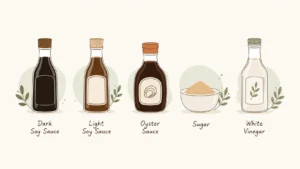
A standard pad see ew sauce includes:
- Dark soy sauce – for color and a subtle sweetness
- Light soy sauce (or regular soy sauce) – for primary saltiness
- Oyster sauce – for umami richness and slight thickness
- Sugar (white or palm sugar) – to round out the salty and savory notes
- White vinegar (optional) – for a faint background tang
- Fish sauce (optional, regional variation) – for additional depth
Each ingredient plays a distinct role. Removing the sugar, for instance, results in a flatter, overly salty sauce, while omitting the dark soy sauce leaves the noodles pale and less visually authentic.
How to Make Pad See Ew Sauce (Step-by-Step)
- Combine the liquids. In a small bowl, whisk together dark soy sauce, light soy sauce, oyster sauce, and vinegar if using.
- Dissolve the sugar. Add sugar and stir until it fully dissolves into the liquid mixture; this prevents uneven sweetness during cooking.
- Taste and adjust. The sauce should taste salty, mildly sweet, and deeply savory before it touches the wok, since flavors will mellow slightly once noodles and vegetables are added.
- Set aside. Keep the sauce ready near the stove, since pad see ew cooks quickly over high heat and there is little time to measure ingredients mid-stir-fry.
- Add during cooking. Pour the sauce over noodles and protein once they are already in the hot wok, tossing quickly so it distributes evenly and begins to caramelize rather than pool and boil.
Pad See Ew Sauce Ratio Explained
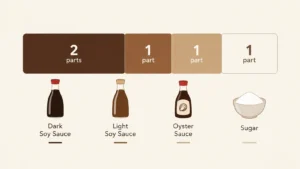
While exact proportions vary by household, a widely used baseline ratio is:
- 2 parts dark soy sauce
- 1 part light soy sauce
- 1 part oyster sauce
- 1 part sugar
This ratio produces a balanced sauce that is savory-forward with a gentle sweetness. Cooks who prefer a sweeter profile often increase the sugar slightly, while those wanting a saltier, more traditional street-food flavor increase the light soy sauce instead. Because dark soy sauce is less salty than light soy sauce despite its intense color, using too much dark soy sauce without adjusting other seasonings can result in a visually rich but under-seasoned dish.
Pad See Ew vs. Pad Thai Sauce
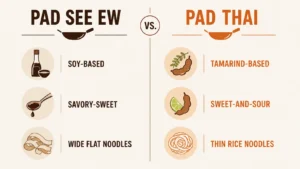
Pad see ew and pad Thai sauces differ fundamentally in flavor direction. Pad Thai sauce is built on tamarind paste, fish sauce, sugar, and sometimes vinegar, creating a sweet-and-sour profile with a lighter color. Pad see ew sauce, by contrast, is soy-based, darker, and savory-sweet rather than tangy. The two dishes also use different noodles and cooking techniques: pad Thai noodles are thin rice noodles typically stir-fried with a drier sauce, while pad see ew uses wide, flat rice noodles cooked with more sauce and higher heat to encourage light charring.
Substitutes for Oyster Sauce and Other Key Ingredients
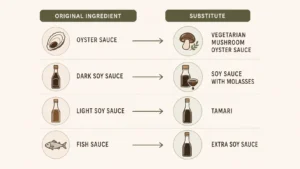
Several substitutions are common depending on dietary needs or ingredient availability:
- Oyster sauce substitute: Vegetarian “stir-fry sauce” or mushroom-based oyster sauce alternatives replicate the umami and thickness without shellfish.
- Dark soy sauce substitute: A mix of regular soy sauce with a small amount of molasses or dark brown sugar can approximate the color and sweetness.
- Light soy sauce substitute: Regular soy sauce or tamari works well, though tamari has a slightly different aroma.
- Sweet soy sauce substitute: Combining soy sauce with sugar or palm sugar syrup creates a similar sticky sweetness when kecap manis isn’t available.
Each substitution changes the final texture or sweetness slightly, so minor sugar or salt adjustments are usually needed after switching an ingredient.
Vegan and Vegetarian Pad See Ew Sauce
To make the sauce fully plant-based, mushroom-based vegetarian oyster sauce replaces traditional oyster sauce, and any fish sauce is swapped for an equal amount of soy sauce or a small addition of finely chopped fermented soybean for depth. These swaps preserve the umami backbone of the sauce while keeping it free of animal products, and they integrate the same way into the cooking process without changing the ratio significantly.
Storage and Make-Ahead Tips
Pad see ew sauce can be mixed several days in advance and stored in a sealed container in the refrigerator, since none of its core ingredients spoil quickly at cold temperatures. Preparing it ahead of time is useful for weeknight cooking, as pad see ew’s high-heat, fast cooking style leaves little room to measure seasonings mid-stir-fry. The sauce does not freeze particularly well due to potential separation, so refrigeration rather than freezing is generally recommended for short-term storage.
Conclusion
Pad see ew sauce is a straightforward but precisely balanced mixture of dark soy sauce, light soy sauce, oyster sauce, and sugar that defines the flavor of one of Thailand’s most recognizable noodle dishes. Understanding its ratio, ingredient roles, and possible substitutions makes it easy to adapt the sauce for different diets while preserving its signature savory-sweet, umami-rich character — and clarifies exactly how it differs from the tangier, tamarind-based sauce used in pad Thai.
FAQ
Is pad see ew sauce the same as pad Thai sauce?
No. Pad see ew sauce is soy-based and savory-sweet, while pad Thai sauce is tamarind-based and sweet-and-sour.
What can I use instead of oyster sauce in pad see ew?
Vegetarian stir-fry sauce or mushroom-based oyster sauce alternatives are the most common substitutes.
Why is my pad see ew sauce too salty?
This usually happens when light soy sauce or regular soy sauce is used in excess relative to sugar; adding a small amount of sugar helps rebalance the flavor.
Can pad see ew sauce be made vegan?
Yes, by using a mushroom-based vegetarian oyster sauce and replacing any fish sauce with additional soy sauce.