Introduction
Passata pizza sauce is a smooth, uncooked or lightly cooked tomato sauce made from strained tomato passata, seasoned with olive oil, garlic, and herbs. It’s the base most home cooks reach for when they want a quick, authentic-tasting pizza topping without simmering a sauce from scratch. Because passata is already strained and free of skins and seeds, it spreads easily and cooks evenly in a hot oven, making it one of the simplest ways to get a Neapolitan-style result at home.
Quick Summary
Passata pizza sauce needs only four core ingredients: passata, olive oil, salt, and garlic. It can be used raw (no-cook) for a bright, fresh flavor, or briefly simmered for a deeper, more concentrated taste. Passata differs from puree and tinned tomatoes mainly in texture and cooking time, and the best choice depends on how thick or smooth you want the final sauce.
Passata vs. Puree vs. Tinned Tomatoes for Pizza Sauce
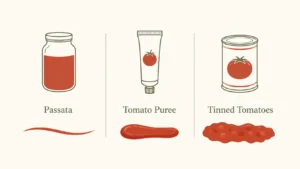
Passata is 100% strained tomatoes with no seeds or skins, giving it a smooth, pourable consistency straight out of the jar or carton. Tomato puree (in the US sense, a thicker paste-like product) is more concentrated and often needs thinning with water before it works as a pizza sauce. Tinned chopped or whole plum tomatoes contain more liquid and larger pieces, so they usually need to be blended or reduced first.
For pizza specifically, passata is generally preferred because:
- It has a naturally thin, spreadable texture that doesn’t need blending
- Its lower water content compared to chopped tomatoes reduces the risk of a soggy crust
- It has a milder, rounder flavor than tomato puree, which can taste sharp or metallic when used undiluted
If passata isn’t available, chopped tomatoes blended smooth and drained briefly are the closest substitute; diluted tomato puree is a workable backup but benefits from a pinch of sugar to balance its acidity.
No-Cook Passata Pizza Sauce
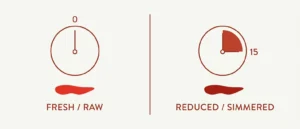
A no-cook passata pizza sauce is the fastest option and is favored by many home pizza makers because the oven does all the cooking. To make it, passata is simply mixed with olive oil, crushed garlic, salt, and dried oregano or basil, then spread thinly on the dough before baking.
The advantage of the no-cook method is a fresher, more tomato-forward flavor, since the sauce hasn’t lost any volatile aromatics to prior heat. The tradeoff is a slightly thinner, more watery texture, which is why the sauce should be spread in a thin, even layer rather than a thick pool — a thick layer of uncooked passata won’t reduce during the short bake time of a home pizza and can leave the center of the pizza wet.
Classic Cooked Passata Pizza Sauce
Cooking the passata briefly before it goes on the pizza produces a thicker, more concentrated sauce with a deeper, sweeter flavor. This method involves gently sautéing garlic in olive oil, adding the passata, and simmering for 10–15 minutes until it reduces slightly and the raw tomato edge softens.
Simmering matters here for a specific reason: heat breaks down some of the tomato’s acidity and converts a portion of its natural sugars, which is why a cooked sauce tastes rounder and less sharp than a raw one. Skipping this step isn’t wrong — it simply shifts the balance toward a brighter, more acidic result, which some cooks prefer on a well-charred, high-heat crust that can handle sharper flavors.
How to Make Passata Pizza Sauce with Fresh Tomatoes
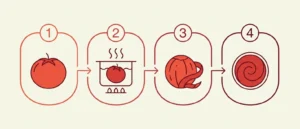
Passata can also be made at home from fresh tomatoes when a jarred version isn’t on hand, which is essentially how commercial passata is produced in the first place. Ripe plum or Roma tomatoes work best because of their lower water content and fewer seeds compared with beefsteak varieties.
The basic process:
- Blanch tomatoes in boiling water for 30–60 seconds, then transfer to ice water to loosen the skins.
- Peel and roughly chop the tomatoes, removing the core.
- Blend or pass the tomatoes through a food mill to remove seeds and skin fragments, producing a smooth puree — this straining step is what technically makes it “passata” rather than a chunky tomato sauce.
- Season with olive oil, salt, and garlic, and use it raw or simmer briefly, following the same steps as jarred passata.
Using fresh tomatoes gives more control over sweetness and acidity, since the ripeness of the tomatoes directly affects the final flavor, but it also introduces more variability than a consistent jarred passata.
Italian-Style Passata Pizza Sauce
A traditional Italian approach favors restraint over complexity. Neapolitan pizza sauce, in particular, is typically nothing more than passata, a drizzle of good olive oil, a little salt, and sometimes fresh basil added after baking rather than before, so the leaves don’t scorch in the high heat of a wood-fired oven.
Garlic is used sparingly or omitted entirely in many traditional versions, since the goal is to let the natural sweetness and acidity of the tomatoes carry the flavor rather than layering on aromatics. Well-known Italian tomato brands such as Mutti and Cento produce passata that’s widely used for this exact purpose because of its consistent smoothness and balanced acidity.
Storage and Shelf Life
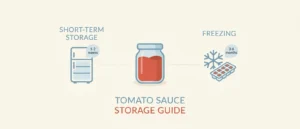
Once opened, passata pizza sauce should be stored in an airtight container in the refrigerator and used within 3–5 days. If mixed with olive oil and garlic, the shelf life stays roughly the same, though the flavor of raw garlic can intensify and turn slightly bitter after a couple of days, so many cooks prefer to add fresh garlic just before use rather than mixing it in for storage.
For longer storage, passata pizza sauce freezes well for up to three months in a sealed container or ice cube tray, which is a convenient way to portion out just enough for one pizza at a time.
Conclusion
Passata pizza sauce is valued for its simplicity: a smooth, already-strained tomato base that needs little more than oil, salt, and garlic to become a reliable pizza topping. Whether used raw for a brighter, fresher taste or briefly cooked for a deeper, rounder flavor, the choice comes down to personal preference and how the pizza will be baked. Compared with puree or tinned tomatoes, passata’s smooth texture and moderate water content make it the most straightforward option for achieving an even, well-balanced sauce without extra prep.
FAQ
Is passata the same as pizza sauce?
Not exactly — passata is a strained tomato base, while pizza sauce usually refers to passata seasoned with oil, salt, garlic, and herbs. Passata can be used as pizza sauce, but plain passata on its own is unseasoned.
Can I use passata straight from the jar without cooking it?
Yes. Uncooked passata works well as a pizza sauce when spread thinly, since the pizza’s baking time is usually enough to cook off excess moisture and meld the flavors.
Should I use passata or chopped tomatoes for pizza sauce?
Passata is generally easier to use since it’s already smooth, while chopped tomatoes need to be blended and often drained to avoid excess liquid on the crust.
Why does my passata pizza sauce taste too acidic?
This usually happens with raw, unsimmered sauce or lower-quality passata. A short simmer, a pinch of sugar, or extra olive oil can help balance the acidity.