Introduction
Thịt kho is a Vietnamese braised pork dish simmered slowly in a caramel-and-fish-sauce broth until the meat turns deep amber and meltingly tender. It’s one of the most-cooked dishes in Vietnamese households, especially around Tết (Lunar New Year), where a pot of thịt kho trứng — pork braised with whole eggs — often sits on the stove for days, growing more flavorful with each reheating. Understanding thịt kho means understanding a technique as much as a recipe: the balance of sugar caramelization, salty fish sauce, and slow braising liquid is what defines the dish, far more than any single ingredient list.
Quick Summary
Thịt kho is pork belly (or a mix of pork belly and pork shoulder) braised in a caramel sauce made from sugar, fish sauce, and often coconut water, until the meat is tender and the sauce reduces into a glossy, savory-sweet glaze. Common additions include hard-boiled eggs (thịt kho trứng), cracked black pepper (thịt kho tiêu), or a Chinese-style five-spice base (thịt kho tàu). The dish takes 60–90 minutes on the stovetop, or about 35–40 minutes under pressure in an Instant Pot, and keeps well in the refrigerator for up to five days.
What Is Thịt Kho?
“Kho” is a Vietnamese cooking method meaning to braise or simmer in a seasoned liquid over low heat, and it applies to fish, tofu, and vegetables as well as meat. “Thịt kho” specifically refers to the pork version, and it’s considered a cornerstone of Vietnamese home cooking. The dish sits in the same family as other Southeast Asian braises, but its identity comes from nước màu — a homemade caramel sauce created by cooking sugar past the point of simple syrup until it turns a deep amber-brown, just before it would taste burnt. This caramel gives thịt kho its signature reddish-brown color and a bittersweet depth that plain sugar can’t replicate.
Core Ingredients and What Each One Does
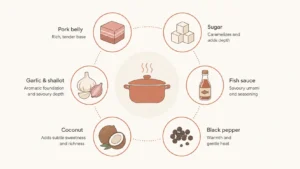
A traditional thịt kho recipe relies on a small set of ingredients, each playing a specific structural role:
- Pork belly or pork shoulder: Pork belly’s fat layers render slowly during the braise, keeping the meat moist and adding richness to the sauce; leaner shoulder cuts hold their shape better but need closer attention to avoid drying out.
- Sugar: Used first to make nước màu (caramel), then again to balance saltiness later in the braise.
- Fish sauce: Supplies the primary savory, salty backbone; its fermented depth is what separates thịt kho from a simple sweet glaze.
- Garlic and shallots: Aromatics that are typically sautéed before the pork is added, forming the flavor base of the braising liquid.
- Coconut water: A common braising liquid that adds natural sweetness and helps tenderize the pork without the syrupy heaviness plain sugar water can create.
- Black pepper: Used generously in the tiêu-style version, added near the end so its aroma stays sharp rather than mellowing into the sauce.
- Hard-boiled eggs: Optional but traditional, added toward the end of cooking so they absorb the braising liquid and darken over time.
Substituting chicken stock or plain water for coconut water is possible, but the sauce will taste flatter and slightly more one-dimensional, since coconut water contributes a subtle sweetness that plain water can’t replace.
How to Make Thịt Kho (Step-by-Step)
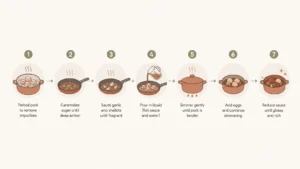
- Cut and parboil the pork. Cut pork belly into 1.5–2 inch cubes and blanch briefly in boiling water. This step removes surface impurities and prevents a cloudy, off-tasting braising liquid.
- Make the caramel (nước màu). Melt sugar in a dry pan over medium heat until it turns deep amber, then carefully add a small amount of water to stop the cooking and create a stable syrup. Stopping too early leaves the sauce pale and overly sweet; letting it go too far turns it bitter.
- Sauté aromatics. Cook garlic and shallots in oil until fragrant, then add the pork and sear briefly to build a flavor base.
- Add liquid and seasoning. Pour in coconut water (or water), fish sauce, and the caramel sauce. Bring to a boil, then reduce to a bare simmer.
- Braise low and slow. Cover and simmer for 45–60 minutes, checking occasionally. Low heat is essential here — a rolling boil breaks down the fat too quickly and can leave the meat tough rather than tender.
- Add eggs, if using. Peeled hard-boiled eggs go in during the last 20–30 minutes so they soak up color and flavor without overcooking.
- Reduce the sauce. Uncover for the final stretch to let the liquid thicken into a glossy glaze that coats the meat.
Why Coconut Water Matters
Coconut water is favored over plain water in many households because its natural sugars support the caramelization already happening from the nước màu, rounding out the sauce’s sweetness without needing extra refined sugar. It also carries a faint, slightly nutty aroma that plain water lacks, which becomes more noticeable the longer the dish braises or sits overnight. Cooks who skip coconut water often compensate with a touch more sugar, but the resulting flavor tends to read as sweet rather than complex.
Popular Variations: Trứng, Tiêu, and Tàu
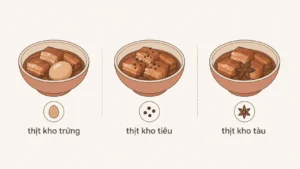
- Thịt kho trứng: The most iconic version, pairing braised pork with whole hard-boiled eggs (sometimes quail eggs for a smaller, bite-sized option). It’s the version most associated with Tết celebrations.
- Thịt kho tiêu: A peppery variation with little to no coconut water, relying on a generous amount of cracked black pepper added near the end for a sharper, spicier finish.
- Thịt kho tàu: Reflects Chinese culinary influence, often incorporating five-spice powder and a slightly heavier caramel sauce, giving it a deeper, more layered sweetness.
These variations share the same braising method but shift the balance of sweetness, spice, and aromatics, which is why home cooks often adjust the base recipe rather than starting from scratch each time.
Thịt Kho vs. Adobo: What’s the Difference?
Thịt kho and Filipino adobo are frequently compared because both are braised, soy- or fish-sauce-based meat dishes with a glossy, dark sauce. The key differences: adobo relies on vinegar and soy sauce as its primary flavor drivers, giving it a tangy, sharper profile, while thịt kho leans on caramelized sugar and fish sauce, producing a sweeter, more mellow depth without acidity. Adobo also typically skips the caramel-making step entirely, whereas nước màu is essentially non-negotiable in an authentic thịt kho.
Calories and Nutrition

A typical serving of thịt kho (roughly 150 grams of pork with sauce) contains approximately 350–450 calories, with the range depending heavily on the pork belly’s fat content and how much sugar is used in the braise. Using leaner pork shoulder instead of belly, and trimming excess fat before cooking, are the most effective ways to reduce the calorie count without changing the core flavor profile.
Storage and Reheating
Thịt kho stores exceptionally well, which is part of why it’s a Tết staple — many families intentionally make a large batch to eat over several days. Refrigerated in an airtight container, it keeps for four to five days, and the flavor generally deepens with each reheating as the meat continues to absorb the sauce. It also freezes well for up to three months; thawing overnight in the refrigerator before reheating gently on the stovetop preserves the texture better than microwaving from frozen.
Making Thịt Kho in an Instant Pot
For a faster version, a pressure cooker cuts total cooking time significantly. After searing the pork and aromatics using the sauté function, add the braising liquid and cook on high pressure for 20–25 minutes, followed by a natural release of about 10 minutes. The sauce will be thinner immediately after pressure cooking, so a final few minutes of sautéing with the lid off is usually needed to reduce it to the traditional glossy consistency.
Thịt Kho in Vietnamese Food Culture
Thịt kho belongs to a broader category of Vietnamese braised dishes served alongside plain steamed rice and often a side of pickled vegetables (dưa chua) to cut through the richness. It’s commonly listed among the most recognizable traditional Vietnamese meals, alongside phở, bún chả, and cơm tấm, and represents the “kho” braising tradition that also produces dishes like cá kho (braised fish) and đậu hũ kho (braised tofu). Its presence on Tết tables specifically reflects its practicality as a make-ahead dish that feeds a family over several days of celebration.
Conclusion
Thịt kho is less a single fixed recipe than a technique — a caramel-based braise that adapts to whatever a household has on hand, from whole eggs to a heavier hand of black pepper. Its distinguishing feature is nước màu, the homemade caramel that gives the dish its color and bittersweet backbone, setting it apart from superficially similar braises like adobo. Whether made slowly on the stovetop or sped up in an Instant Pot, the dish rewards patience: a longer, gentler braise consistently produces more tender meat and a more balanced sauce than a fast, high-heat cook.
FAQ
Is thịt kho the same as caramelized pork? Thịt kho is a form of caramelized pork, but it’s specifically the Vietnamese braised version built around nước màu and fish sauce, distinguishing it from other caramelized pork preparations that may use different sauces or techniques.
Can I make thịt kho without coconut water? Yes — plain water or chicken stock works as a substitute, though the sauce will taste slightly less rounded and may need a small sugar adjustment to compensate.
What cut of pork is best for thịt kho? Pork belly is the traditional choice for its fat content and tenderness after braising, though a mix of pork belly and pork shoulder is common for a slightly leaner result.
Why did my nước màu turn bitter? The sugar was cooked past the ideal point before water was added to stop the caramelization; removing it from heat slightly earlier, once it reaches a deep amber color, prevents this.
Can thịt kho be made ahead of time? Yes, and many cooks prefer it that way — the flavor improves after a day or two in the refrigerator as the pork continues absorbing the braising liquid.