Introduction
A Vietnamese dipping sauce is a small bowl of flavor that quietly holds an entire meal together. Whether it’s the bright, tangy nuoc cham served alongside spring rolls or the rich, nutty peanut sauce that pools around a stack of rice paper rolls, these sauces are built on the same idea: balance. Sweet, sour, salty, and often a touch of heat all meet in one dish, and the ratio between them determines the character of the sauce. This guide breaks down the two most common Vietnamese dipping sauces, explains the role each ingredient plays, and covers how to adjust a sauce for different dishes, dietary needs, and taste preferences.
Quick Summary
- Nuoc cham is the everyday Vietnamese dipping sauce, made from fish sauce, lime juice, sugar, water, garlic, and chili.
- Vietnamese peanut dipping sauce is thicker and richer, typically built on hoisin sauce, peanut butter, and a splash of water or coconut milk.
- Both sauces balance sweet, sour, salty, and spicy elements, and small adjustments to any one ingredient shift the whole flavor profile.
- Nuoc cham suits fresh rolls, spring rolls, and vermicelli bowls, while peanut sauce is favored for heartier fried spring rolls and rice paper rolls.
- Fresh, homemade sauce keeps in the fridge for about a week; bottled versions last months unopened but should be used within weeks after opening.
What Makes a Vietnamese Dipping Sauce
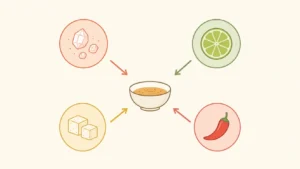
Most Vietnamese dipping sauces are built around a small set of core flavor categories rather than a fixed list of ingredients. Understanding these categories makes it easier to adjust any recipe to taste.
- Salty base: fish sauce is the traditional backbone, providing savoriness and depth (umami). Soy sauce is a common substitute for a vegetarian or vegan version.
- Acidity: fresh lime juice is standard, cutting through the richness of fried foods and balancing the saltiness of the fish sauce. Rice vinegar is an occasional substitute.
- Sweetness: sugar (white, palm, or brown) rounds out the sharp and salty notes. Reducing sugar makes a sauce taste sharper and more savory; increasing it mellows the sauce and suits milder palates.
- Heat: fresh red chili or chili flakes add warmth. This is usually the easiest element to adjust up or down without disrupting the overall balance.
- Aromatics: garlic is nearly universal, and sometimes shallot or ginger is added for extra complexity.
- Dilution: water thins the sauce to a pourable, dippable consistency, since the concentrated mix of fish sauce, lime, and sugar is too strong on its own.
Because each element plays a specific role, substitutions have predictable effects: swapping soy sauce for fish sauce softens the umami depth slightly, while using palm sugar instead of white sugar adds a faint caramel note.
Nuoc Cham: The Classic Vietnamese Dipping Sauce
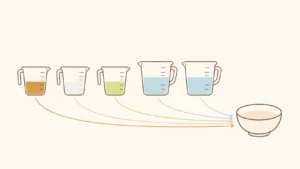
Nuoc cham (sometimes written nước chấm) is the sauce most people picture when they think of Vietnamese dipping sauce. It’s thin, clear to amber in color, and served in small individual bowls.
Typical ratio: a common starting point is 1 part fish sauce, 1 part sugar, 1 part lime juice, and 2–3 parts water, adjusted to taste, with minced garlic and chili stirred in at the end. Grated carrot or daikon is sometimes added for texture and a subtle sweetness, particularly when the sauce accompanies vermicelli noodle bowls.
Why the order matters: dissolving sugar in the fish sauce or warm water before adding lime juice and garlic helps the sugar incorporate fully rather than settling at the bottom of the bowl. Adding garlic and chili last preserves their sharp, fresh aroma, since prolonged sitting in acid can mute their bite.
Common adjustments:
- More lime juice makes the sauce brighter and more refreshing, better suited to fried or fatty foods.
- More fish sauce increases depth and saltiness, which pairs well with plain steamed vegetables or rice.
- Less water creates a stronger, more concentrated dip; more water makes it lighter, closer to a broth used for dressing noodle salads.
Vietnamese Peanut Dipping Sauce
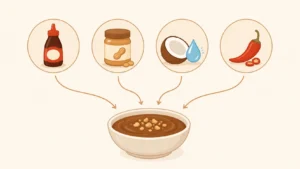
Vietnamese peanut dipping sauce takes a different structural approach. It’s thicker, sweeter, and often used where a more substantial, coating sauce is preferred over a thin, sharp one.
Typical base: hoisin sauce provides sweetness and a malty depth, peanut butter adds richness and body, and water, coconut milk, or a splash of rice vinegar thins it to a dippable consistency. Crushed roasted peanuts are often sprinkled on top for texture, and a small amount of chili garlic sauce or sriracha is stirred in for heat.
Why texture matters: because this sauce is thicker, it clings to fried spring rolls and rice paper rolls rather than running off, which is part of why it’s the preferred pairing for heartier, fried appetizers rather than delicate fresh rolls.
Adjusting the recipe: adding more water or coconut milk loosens the sauce for drizzling over noodle salads, while using less liquid keeps it thick enough for dipping whole spring rolls. A squeeze of lime juice at the end brightens the sauce and offsets the richness of the peanut butter and hoisin.
Choosing a Sauce for Spring Rolls, Summer Rolls, and Rice Paper Rolls
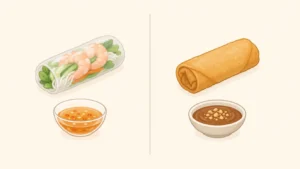
The names “spring roll,” “summer roll,” and “rice paper roll” often overlap, but the sauce pairing generally follows the cooking method rather than the name itself.
- Fresh, uncooked rolls (often called summer rolls or fresh rice paper rolls), packed with herbs, vermicelli, and shrimp or tofu, are traditionally served with nuoc cham. The thin, tangy sauce complements the fresh, light filling without overwhelming it.
- Fried spring rolls or egg rolls, with a crisp exterior and cooked filling, are more commonly paired with peanut dipping sauce, since its richness matches the fried texture, though nuoc cham is also a widely used option for fried rolls.
- Vermicelli noodle bowls typically use a thinner, more diluted version of nuoc cham that acts as a dressing rather than a dip, poured over the whole bowl rather than served on the side.
There’s no strict rule; both sauces are commonly served with either roll type, and pairing often comes down to personal preference or regional tradition.
Buying Ready-Made Vietnamese Dipping Sauce
For those short on time, bottled Vietnamese dipping sauces are widely available at major supermarkets and Asian grocery stores. Look for options labeled “nuoc cham,” “Vietnamese dipping sauce,” or “spring roll sauce” in the international or Asian foods aisle, alongside other condiments like hoisin and fish sauce. Brands vary in sweetness, saltiness, and chili level, so it’s worth checking the ingredient list against the flavor balance described above to find one that suits your taste, and a squeeze of fresh lime or a pinch of chili can help adjust a bottled sauce that tastes flat or overly sweet.
Storage and Shelf Life
Homemade nuoc cham keeps well in an airtight container in the refrigerator for up to one week; the flavor is often best within the first two to three days, before the garlic and chili become more pronounced. Homemade peanut dipping sauce, because it contains peanut butter and sometimes coconut milk, also keeps for about a week refrigerated, though it may thicken and need a splash of water stirred in before serving. Unopened bottled sauces typically last several months at room temperature per the manufacturer’s date; once opened, refrigerate and use within a few weeks for best quality.
Conclusion
Vietnamese dipping sauces are simple in ingredient count but precise in balance. Nuoc cham delivers a bright, salty-sour hit that suits fresh rolls and noodle bowls, while peanut dipping sauce brings richness and body that pairs naturally with fried appetizers. Once the underlying ratio of salty, sour, sweet, and spicy is understood, both sauces are easy to adjust to personal taste, whether that means more chili, less sugar, or a thicker or thinner consistency.
FAQ
What is Vietnamese dipping sauce made of?
The two most common types are nuoc cham (fish sauce, lime juice, sugar, water, garlic, and chili) and peanut dipping sauce (hoisin sauce, peanut butter, water or coconut milk, and chili).
What is the difference between nuoc cham and Vietnamese peanut sauce?
Nuoc cham is thin, tangy, and fish sauce-based, typically served with fresh rolls, while peanut sauce is thick, sweet, and nut-based, typically served with fried rolls.
Can Vietnamese dipping sauce be made vegetarian or vegan?
Yes; substituting soy sauce or a mushroom-based seasoning sauce for fish sauce in nuoc cham, and checking that the hoisin sauce is vegan-friendly for peanut sauce, makes both versions plant-based.
How long does homemade Vietnamese dipping sauce last?
Refrigerated in an airtight container, both nuoc cham and peanut dipping sauce typically last about a week.
What sauce goes with rice paper rolls?
Nuoc cham is the traditional pairing for fresh rice paper rolls, though peanut dipping sauce is also commonly served alongside them.