Introduction
Vietnamese dipping sauce is the small bowl that makes an entire meal work. Whether it’s spooned over vermicelli noodles, drizzled onto grilled pork, or used for dunking rice paper rolls, it balances five tastes — salty, sour, sweet, spicy, and savory — in a way that ties every other component of the dish together. There isn’t just one Vietnamese dipping sauce; there are several, built around different bases like fish sauce or peanuts, and each one is suited to specific foods. This guide breaks down the main types, how to make them from scratch, and how to match the right sauce to the right dish.
Quick Summary
- The most common Vietnamese dipping sauce is nuoc cham, a fish-sauce-based mixture of lime juice, sugar, water, garlic, and chili.
- Vietnamese peanut dipping sauce is a separate, thicker sauce built on hoisin, peanut butter, and often coconut milk — typically used for grilled meats and some rice paper rolls.
- Fresh lime juice, good fish sauce, and a balance of sweet and sour are what separate a great sauce from a flat one.
- Nuoc cham can be made in under five minutes with pantry staples and stored in the fridge for up to a week.
What Is Vietnamese Dipping Sauce?
“Vietnamese dipping sauce” is an umbrella term covering several condiments used across Vietnamese cuisine, most of which share a foundation of contrasting flavors rather than a single recipe. The two most searched-for versions are nuoc cham (a thin, fish-sauce-based sauce) and Vietnamese peanut sauce (a thicker, nut-based sauce). Both are designed to be dipped into or poured over food rather than cooked into it, which means the balance of the raw ingredients matters more than technique.
Core Vietnamese Dipping Sauce Ingredients
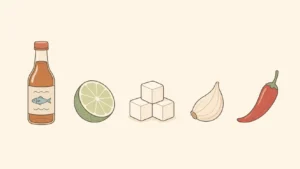
A traditional nuoc cham relies on five ingredients that each serve a distinct role:
- Fish sauce — the salty, umami backbone of the sauce
- Fresh lime juice — the sour component; rice vinegar can substitute in a pinch
- Sugar — balances the sourness and salt; palm sugar gives a rounder sweetness than white sugar
- Garlic — adds sharpness and aroma, usually minced or finely grated
- Chili — fresh red chili or Thai bird’s eye chili for heat, adjustable to taste
Water is added to dilute the sauce so it isn’t overpoweringly salty, and this is the step home cooks most often skip, resulting in a sauce that’s too strong.
For Vietnamese peanut dipping sauce, the base ingredients shift entirely: hoisin sauce, peanut butter, garlic, and water or coconut milk, sometimes finished with crushed peanuts and chili for texture and heat.
Classic Nuoc Cham Recipe
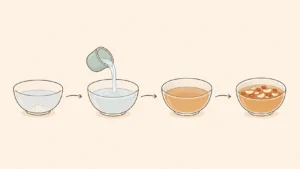
This is the everyday version used for spring rolls, noodle bowls, and grilled dishes.
Ingredients (makes about 1 cup):
- 3 tablespoons fish sauce
- 3 tablespoons fresh lime juice
- 2–3 tablespoons sugar
- 1/2 cup warm water
- 1–2 cloves garlic, minced
- 1 small red chili, finely sliced (or 1/2 teaspoon chili flakes)
Method:
- Dissolve the sugar in warm water first — this prevents grainy sauce.
- Stir in the fish sauce and lime juice.
- Add the minced garlic and chili last, so they float rather than sink and clump.
- Taste and adjust: more lime for sourness, more sugar for sweetness, more fish sauce for saltiness.
The order matters here — adding garlic and chili before the liquids are balanced makes it harder to judge the final taste, since raw garlic and chili heat intensify over time.
Vietnamese Peanut Dipping Sauce
Peanut dipping sauce is thicker and richer, and is the go-to for grilled pork skewers, some rice paper rolls, and banh xeo.
Ingredients (makes about 3/4 cup):
- 3 tablespoons peanut butter (smooth, unsweetened preferred)
- 2 tablespoons hoisin sauce
- 1 small garlic clove, minced
- 3–4 tablespoons water or coconut milk, to thin
- Crushed roasted peanuts and chili, for topping
Method:
- Whisk the peanut butter and hoisin together until smooth.
- Add liquid gradually, whisking, until the sauce reaches a pourable but still thick consistency.
- Stir in the garlic.
- Top with crushed peanuts and chili before serving.
Using coconut milk instead of water gives a rounder, slightly sweet finish; water keeps the sauce lighter and more savory.
Choosing the Right Sauce for Spring Rolls, Summer Rolls, and Rice Paper Rolls
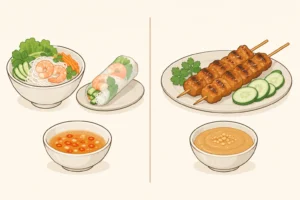
These terms often get used interchangeably, but the sauce pairing can differ:
- Fresh rice paper rolls / summer rolls (uncooked, filled with herbs, vermicelli, shrimp) pair best with nuoc cham for its lightness, or peanut sauce when the filling includes richer proteins like pork.
- Fried spring rolls / egg rolls (cooked, crispy wrapper) are typically served with nuoc cham, since the acidity cuts through the fried texture; a thick peanut sauce can feel heavy against oil.
- Vermicelli noodle bowls almost always use nuoc cham, poured generously over the dish rather than served on the side.
As a general rule: lighter, fresher dishes call for nuoc cham; richer, grilled, or nuttier dishes suit peanut sauce.
Common Substitutions and How They Change the Result
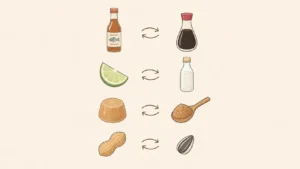
- No fish sauce (vegetarian/vegan): Substitute soy sauce or a mushroom-based vegan fish sauce. The result is less funky and slightly sweeter, but still balances the other four flavors.
- No fresh lime: Rice vinegar works, though it lacks the floral note lime provides — start with slightly less, as vinegar reads sharper than lime juice.
- No palm sugar: White or brown sugar both work; brown sugar adds a faint caramel note closer to palm sugar’s flavor.
- Peanut allergy: Sunflower seed butter can replace peanut butter in the peanut dipping sauce with a similar texture, though the flavor is milder and less sweet.
Storage and Make-Ahead Tips
Nuoc cham keeps well in an airtight container in the refrigerator for up to one week; the garlic and chili may settle, so stir before serving. It’s best made ahead, since the flavors meld over a few hours. Peanut dipping sauce keeps for about 5 days refrigerated and tends to thicken as it sits — thin it with a splash of warm water before serving. Neither sauce freezes well, as the texture and balance of fresh ingredients like garlic and lime degrade.
Conclusion
Vietnamese dipping sauce isn’t a single recipe but a small family of sauces, each built to complement specific dishes. Nuoc cham brings brightness and acidity to noodles, fried spring rolls, and fresh rice paper rolls, while peanut dipping sauce adds richness to grilled meats and heartier rolls. Once the core ratios are understood — salty, sour, sweet, and spicy in balance — both sauces are easy to adjust to taste and make well ahead of time.
FAQ
What is nuoc cham made of?
Fish sauce, lime juice, sugar, water, garlic, and chili, combined to create a balanced salty-sour-sweet-spicy sauce.
Is Vietnamese dipping sauce the same as peanut sauce?
No. Nuoc cham is a thin, fish-sauce-based sauce, while Vietnamese peanut dipping sauce is a thicker sauce based on peanut butter and hoisin. They’re used for different dishes.
What dipping sauce is best for spring rolls?
Nuoc cham is the most common choice for both fried spring rolls and fresh rice paper rolls, though peanut sauce is also used for richer, pork-filled versions.
Can I make Vietnamese dipping sauce without fish sauce?
Yes — soy sauce or a vegan fish sauce alternative can replace it, resulting in a milder, less pungent sauce.
How long does homemade Vietnamese dipping sauce last?
Nuoc cham lasts about a week refrigerated; peanut dipping sauce lasts about 5 days and may need thinning before reuse.