Introduction
A passionfruit sour is a cocktail built on the classic “sour” template — a spirit, citrus juice, sweetener, and often egg white or aquafaba — with passionfruit added as the signature fruit component. The tropical, tart-sweet pulp of passionfruit gives the drink its distinctive perfume and a natural acidity that plays well with the citrus base already present in most sour recipes. It’s a flexible format: it works with gin, vodka, whiskey, pisco, rum, tequila, amaretto, or aperol, and it also appears in non-cocktail forms, including passionfruit sour beers and alcohol-free mocktails.
Quick Summary
A passionfruit sour combines a base spirit, fresh lime or lemon juice, simple syrup, and passionfruit pulp or purée, typically shaken with ice and sometimes egg white for texture. The passionfruit adds fruity acidity and aromatic depth rather than sweetness alone — passionfruit itself is more tart than sweet when eaten on its own. The same flavor profile has been adapted into sour-style beers, where brewers use passionfruit alongside soured wort to create a tart, fruit-forward beer, and into mocktails using soda water or a citrus-based syrup in place of alcohol.
What Is a Passionfruit Sour?
The “sour” is one of the oldest cocktail families, defined by a three-part structure: base spirit, sour element (citrus juice), and sweetener. A passionfruit sour adapts this structure by introducing passionfruit as an additional flavoring agent, either as fresh pulp, strained juice, or purée. This addition changes the drink’s aromatic profile substantially — passionfruit contributes floral, musky, and tropical notes that citrus alone cannot provide, while still reinforcing the tartness that defines the sour category.
Because the base template is so adaptable, “passionfruit sour” functions less as a single fixed recipe and more as a flavor concept that can be layered onto nearly any spirit-based sour.
Is Passionfruit Sour or Sweet?
Passionfruit, eaten raw, leans tart rather than sweet. The pulp contains a high concentration of citric and other organic acids, which is why it’s often compared to a cross between citrus and tropical fruit rather than to sweeter fruits like mango or banana. Ripeness affects this balance: a very ripe, wrinkled passionfruit will taste sweeter and less acidic than a firm, smooth-skinned one, which will taste noticeably more sour. This is also why passionfruit pairs so naturally with the sour cocktail format — its inherent acidity reinforces, rather than fights, the citrus already in the drink.
Core Ingredients Explained
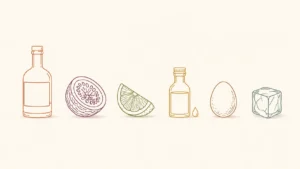
A standard passionfruit sour relies on a small set of components, each serving a specific function:
- Base spirit — provides the alcoholic backbone and shapes the overall character (botanical with gin, neutral with vodka, oaky with whiskey or bourbon, grape-forward with pisco).
- Passionfruit pulp or purée — the defining flavor element, contributing tartness, aroma, and a distinctive seedy texture if pulp is used unstrained.
- Citrus juice — usually fresh lime or lemon, reinforcing acidity and balancing the drink’s sweetness.
- Sweetener — simple syrup or sugar syrup, adjusted to offset the combined tartness of the citrus and passionfruit.
- Egg white or aquafaba (optional) — whipped into the shake to create the characteristic frothy, silky texture found in classic sours.
- Ice — used for both dilution and chilling during shaking.
Substituting or omitting any one of these changes the result: skipping egg white produces a thinner, less textured drink; using bottled passionfruit juice instead of fresh pulp reduces aromatic intensity; and reducing syrup without adjusting citrus can make the drink taste sharply acidic rather than balanced.
Classic Passionfruit Sour Recipe
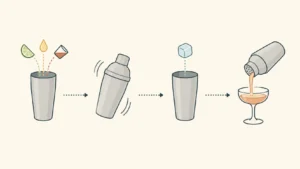
A base ratio that works across most spirits:
- 2 oz base spirit
- 0.75 oz fresh lime or lemon juice
- 0.5–0.75 oz simple syrup (adjust to passionfruit sweetness)
- 1 oz fresh passionfruit pulp (from about 2 passionfruit)
- 0.5 oz egg white or aquafaba (optional)
Method: Combine all ingredients in a shaker without ice first and shake vigorously for about 15 seconds (a “dry shake”) if using egg white — this builds foam. Add ice and shake again for another 15 seconds to chill and dilute. Strain into a chilled coupe or rocks glass. If pulp with seeds is used, a double strain through a fine mesh gives a smoother texture, though many bartenders leave a few seeds for visual contrast and texture.
Spirit Variations: Gin, Vodka, Whiskey, Pisco, and More
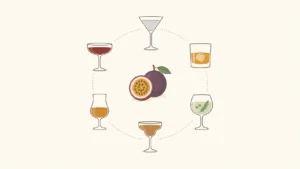
The same sour structure adapts across spirit categories, with the base spirit shifting the drink’s character:
- Gin passionfruit sour — botanical gin notes (juniper, citrus peel) complement passionfruit’s floral side; a common and widely made variation.
- Vodka passionfruit sour — a neutral base that lets the passionfruit and citrus flavors dominate without competing botanicals.
- Whiskey or bourbon passionfruit sour — the oak and caramel notes of whiskey provide contrast against the tart fruit, producing a heavier, more layered drink.
- Pisco passionfruit sour — builds on the classic pisco sour template, where pisco’s grape-brandy character pairs naturally with tropical fruit.
- Amaretto passionfruit sour — almond-forward sweetness from amaretto softens the tartness, shifting the drink toward dessert territory.
- Tequila or rum passionfruit sour — agave or molasses notes add an earthy or caramelized layer beneath the fruit.
- Aperol passionfruit sour — combines bitter-orange complexity with passionfruit, producing a more bittersweet profile than spirit-only versions.
Across all variations, the ratio of citrus to syrup is typically adjusted slightly depending on how sweet or bitter the base spirit is.
Passionfruit Sour Beer
Passionfruit sour beer is a distinct category from the cocktail: it’s a beer style, usually a kettle sour or fruited sour ale, brewed with a bacterial culture (commonly Lactobacillus) that acidifies the wort before or during fermentation, then conditioned with passionfruit purée or juice. The result is a beer with pronounced tartness and tropical fruit aroma rather than the bitterness typical of hop-forward styles. Because the fermentation process itself generates much of the sourness, these beers can taste noticeably more acidic than a standard fruited ale, even before the passionfruit is added.
Passionfruit Sour Mocktail Version
A non-alcoholic passionfruit sour follows the same structural logic without a base spirit:
- 1 oz fresh passionfruit pulp
- 0.75 oz lime juice
- 0.5–0.75 oz simple syrup
- 0.5 oz aquafaba (for foam, optional)
- Soda water or extra citrus to fill
Shaking the non-alcoholic ingredients together (with aquafaba, if used) still produces the frothy texture associated with a sour, since aquafaba whips similarly to egg white regardless of alcohol content.
Why Is My Passionfruit Sour Too Sour (or Not Sour Enough)?

Several variables affect the final balance:
- Passionfruit ripeness — under-ripe fruit is significantly more acidic than fully ripe, wrinkled fruit.
- Citrus-to-syrup ratio — too much lime or lemon relative to syrup pushes the drink toward excessive tartness.
- Type of passionfruit product — concentrated purées are more intensely sour than fresh pulp diluted with juice from the same fruit.
- Dilution level — under-shaking or using too little ice reduces dilution, concentrating the sourness; over-shaking or over-diluting can flatten the flavor entirely.
Adjusting syrup in small increments (a quarter-ounce at a time) while tasting is the most reliable way to correct an overly sour batch without overcorrecting into excessive sweetness.
Conclusion
The passionfruit sour is best understood as a flexible flavor framework rather than one fixed drink: the sour cocktail structure (spirit, citrus, sweetener) stays consistent, while passionfruit adds tropical acidity and aroma across gin, vodka, whiskey, pisco, and other bases. The same tart-fruit-forward profile extends beyond cocktails into sour beer styles and alcohol-free mocktails, with ripeness and ratio balance determining how sour or sweet any given version turns out.
FAQ
Is passionfruit naturally sour or sweet?
It leans tart, with sweetness increasing as the fruit ripens and its skin wrinkles.
What alcohol goes best in a passionfruit sour?
Gin, vodka, whiskey, pisco, and rum are all common bases; each shifts the drink’s character rather than changing its core structure.
Can I make a passionfruit sour without egg white?
Yes — omitting egg white or aquafaba removes the foam texture but doesn’t change the core flavor.
Is passionfruit sour beer the same as a passionfruit sour cocktail?
No — the beer is a fermented, kettle-soured style, while the cocktail is a mixed drink built on a spirit-and-citrus base.