Introduction
A bloody sour is a gin sour built on bloody shiraz gin — a style of gin that has been macerated or redistilled with fresh red-wine grapes, most famously shiraz. The grape maceration turns the spirit a deep garnet red and layers dark berry, spice, and light tannin notes over the base juniper character, which is why the cocktail carries the “bloody” name even though it contains no tomato juice or savory ingredients at all. Built in the classic sour format — spirit, citrus, sweetener, and often egg white — the bloody sour balances the wine-forward color and fruitiness of bloody shiraz gin against crisp lemon acidity and a silky, shaken texture.
Quick Summary
A bloody sour is made with bloody shiraz gin (such as Four Pillars Bloody Shiraz Gin), fresh lemon juice, simple syrup, and optional egg white, shaken and strained into a coupe or rocks glass. It sits in the same family as a gin sour and an amaretto sour but gets its signature deep red hue and dark-fruit flavor from grape-macerated gin rather than from tomato, cranberry, or grenadine.
What Is a Bloody Sour?
The “bloody” in bloody sour refers to bloody shiraz gin, a seasonal gin style pioneered by Australian distillers, in which juniper-forward gin is rested on fresh shiraz grape skins or redistilled with shiraz must. The process pulls color, tannin, and dark-fruit character from the grapes into the spirit, producing a gin that pours a deep ruby-red and tastes noticeably fruitier and softer than a standard London Dry style. When that gin is used in a sour — the family of cocktails built from spirit, citrus, and sweetener — the result is called a bloody sour, sometimes labeled a bloody shiraz gin sour on menus.
This is a distinct drink from a Bloody Mary, which is built on vodka, tomato juice, and savory seasonings. The overlapping name causes some confusion, but the two cocktails share nothing beyond color and the word “bloody” — one is a savory brunch cocktail, the other is a citrus-forward sour.
Key Ingredients in a Bloody Sour
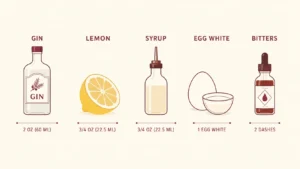
A standard bloody sour recipe uses:
- Bloody shiraz gin (2 oz) — the defining ingredient; its grape maceration supplies both color and fruit-forward flavor.
- Fresh lemon juice (0.75 oz) — supplies the acidity that balances the gin’s sweetness and rounds out the wine notes.
- Simple syrup (0.5–0.75 oz) — balances the citrus; ratio can be adjusted to taste.
- Egg white (optional, about 0.5 oz or one small egg white) — creates the signature silky foam and softens sharp edges from the citrus.
- Angostura or orange bitters (2 dashes, optional) — adds aromatic depth and a decorative finish on the foam.
- Ice — for shaking and, if double-strained, for serving.
Because bloody shiraz gin already carries fruit and tannin, bartenders typically use less added sweetener than in a standard gin sour, letting the gin’s own character carry more of the flavor.
Bloody Sour vs. Classic Gin Sour
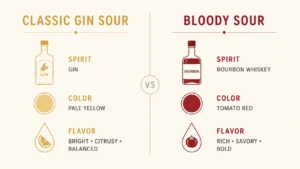
A classic gin sour uses a standard dry gin, so the citrus and sweetener do most of the flavor work, and the drink leans clean, juniper-forward, and pale gold once shaken with egg white. A bloody sour swaps in bloody shiraz gin, which changes the drink in three ways: the color shifts from pale straw to deep rose-red, the flavor gains dark berry and light tannic grip from the grape skins, and the gin itself already provides some natural sweetness and body, so less added syrup is usually needed. If you already know how to make a gin sour, making a bloody sour is simply a matter of substituting the base spirit and adjusting sweetness slightly downward.
Bloody Sour vs. Amaretto Sour
An amaretto sour replaces gin with amaretto, an almond-flavored liqueur, and is typically built with lemon juice, a small amount of bourbon (in modern “New York sour” style versions), and egg white for foam. Amaretto sours are sweeter and nuttier by nature since amaretto itself is a sweetened liqueur, so they need less additional syrup — sometimes none. A bloody sour, by contrast, stays in savory-adjacent gin territory: it is drier, more citrus-forward, and gets its richness from grape tannin rather than almond sweetness. Both drinks share the sour cocktail structure — spirit, citrus, sweetener, egg white — but land at very different flavor profiles: nutty and dessert-like for amaretto sour, fruity and botanical for bloody sour.
How to Make a Bloody Sour (Step-by-Step)
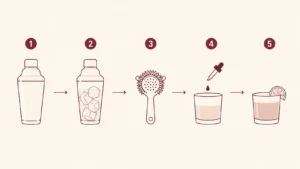
- Dry shake first. Add the bloody shiraz gin, lemon juice, simple syrup, and egg white (if using) to a shaker without ice and shake hard for 15–20 seconds. This emulsifies the egg white before dilution begins, which is what produces a thick, stable foam.
- Add ice and shake again. Fill the shaker with ice and shake for another 15 seconds to chill and dilute the drink.
- Double strain. Strain through both a Hawthorne strainer and a fine mesh strainer into a chilled coupe glass to remove ice shards and any egg white lumps, leaving a smooth foam layer on top.
- Add bitters. Dot 2 dashes of Angostura or orange bitters onto the foam and drag a toothpick through them for a decorative pattern.
- Serve immediately while the foam is at its freshest.
Common Substitutions and Their Effects
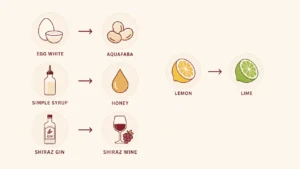
- No bloody shiraz gin available: Substitute a standard dry gin plus a splash (about a teaspoon) of red wine or a few drops of grenadine to approximate the color and fruit note, though the tannin structure won’t fully replicate the real thing.
- Egg white omitted (vegan or allergy-friendly): Aquafaba (chickpea brine) in the same quantity reproduces the foam texture almost identically, since both are protein-rich liquids that whip into stable foam. Skipping the foaming agent entirely gives a clear, still drink with a thinner mouthfeel and sharper citrus bite.
- Simple syrup swapped for honey syrup: Adds floral warmth but also a slightly heavier body, which can mute some of the gin’s fruit notes.
- Lemon swapped for lime: Produces a sharper, more tart profile and a slightly different color balance, since lime juice is more acidic and less rounded than lemon.
Tips for the Perfect Sour Texture
Foam height and stability depend almost entirely on the dry shake step — skipping it, or under-shaking it, is the single most common reason a sour comes out flat instead of frothy. A firm, tight seal on the shaker also matters, since a leaking shaker loses the pressure that helps whip the egg white. Chilling the coupe glass beforehand keeps the foam from collapsing as quickly once poured.
Serving and Garnishing
Serve a bloody sour in a chilled coupe or a rocks glass over a single large ice cube. A dehydrated lemon wheel, a few drops of bitters dragged into a pattern on the foam, or a single skewered grape (echoing the shiraz grape origin) all work as garnishes that reinforce the drink’s wine-and-citrus identity without overcomplicating it.
Storage and Make-Ahead Tips
Bloody sours are not make-ahead cocktails once shaken — the foam and dilution are only at their best in the minutes right after shaking. However, the components can be prepped in advance: pre-measure the gin and lemon juice into a bottle and refrigerate for up to 24 hours, keep simple syrup refrigerated for up to a month, and separate egg whites just before service for food-safety reasons rather than storing them separately in advance.
Conclusion
A bloody sour is, at its core, a gin sour that swaps a standard dry gin for bloody shiraz gin, letting grape maceration do the work of adding color, fruit, and light tannin structure that a citrus-and-syrup sour wouldn’t otherwise have. Understanding it as a variation on the gin sour — rather than confusing it with a Bloody Mary — makes it easy to build, adjust, and substitute with confidence, whether you’re matching it against an amaretto sour on a cocktail menu or making it at home with whatever gin is on your shelf.
FAQ
What is a bloody sour made of? Bloody shiraz gin, fresh lemon juice, simple syrup, and optionally egg white and bitters, shaken and strained into a coupe glass.
Is a bloody sour the same as a Bloody Mary? No. A Bloody Mary is a savory vodka-and-tomato-juice cocktail; a bloody sour is a citrus-forward gin sour made with grape-macerated gin. They share only the word “bloody” and a reddish color.
What is amaretto sour? Amaretto sour is a sour cocktail made with amaretto liqueur, lemon juice, and often egg white, sometimes topped with a bourbon float. It’s sweeter and nuttier than a bloody sour, which is built on gin instead of almond liqueur.
Can you make a gin sour without egg white? Yes. Omitting egg white produces a clear, still drink with a thinner texture and sharper citrus edge; aquafaba is a common vegan substitute that mimics the foam.
What gin is used in a bloody sour? Bloody shiraz gin — gin macerated or redistilled with fresh shiraz grapes — is the defining spirit, with Four Pillars Bloody Shiraz Gin being a well-known example of the style.