Introduction
Hobz biz zejt is one of the simplest and most recognizable dishes in Maltese cuisine, built from crusty bread, olive oil, ripe tomato, and a handful of pantry staples. Despite its humble ingredient list, it carries centuries of Mediterranean food tradition and remains a daily staple across Malta and Gozo. This guide explains what the dish is, how to say its name correctly, what goes into it, how to prepare it at home, and where to find it when visiting the islands.
Quick Summary
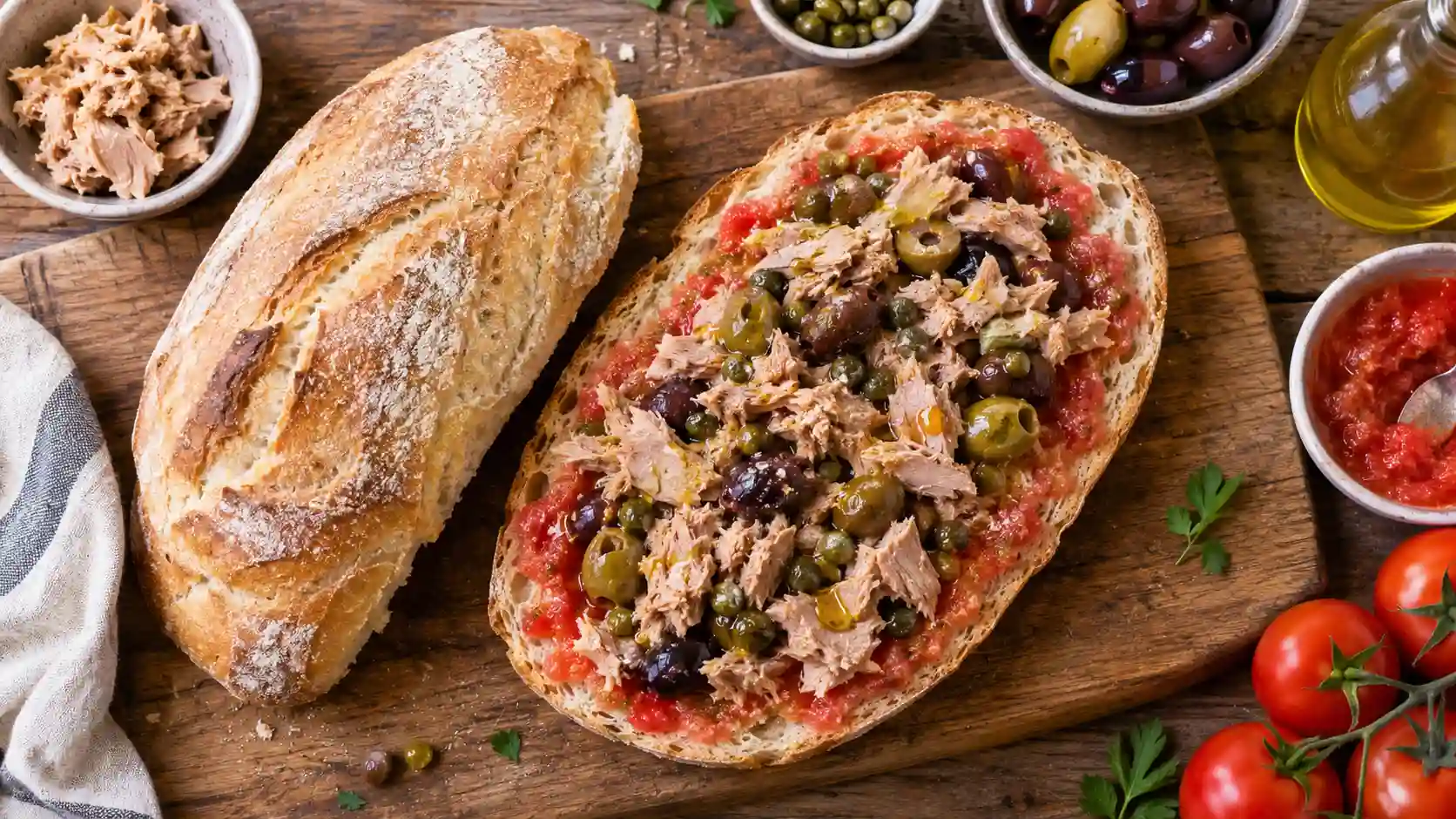
Hobz biz zejt (pronounced roughly “hobz bee zeyt”) translates to “bread with oil” in Maltese. The traditional version rubs crusty Maltese bread with ripe tomato, drizzles it with olive oil, and layers it with kunserva (Maltese tomato paste), tuna, capers, olives, and onion. It is closely related to ftira, a wider, ring-shaped Maltese bread often used as the base for the same filling. The dish can be made at home in under fifteen minutes and is widely available at bakeries, delis, and cafes throughout Malta, Gozo, and Valletta.
What Is Hobz Biz Zejt?
Hobz biz zejt literally means “bread with oil” in the Maltese language. At its core, it is a rustic open or closed sandwich made with dense, crusty sourdough-style Maltese bread rubbed generously with fresh tomato and finished with a layer of extra virgin olive oil. From that simple base, the dish is customized with a range of toppings that reflect Malta’s layered culinary history, shaped by Sicilian, North African, and British influences.
The dish sits firmly within the category of traditional Maltese food, alongside dishes like qassatat (savory stuffed pastries), pea pies, and ftira. Many food writers and cultural sources refer to hobz biz zejt informally as a contender for the national food of Malta, since it appears in homes, bakeries, and festas across the islands regardless of region or season.
How to Pronounce Hobz Biz Zejt
For English speakers, hobz biz zejt is pronounced approximately as “HOBZ bees ZAYT” or “hobz bee zeyt.” Breaking it down:
- Hobz (bread) sounds like “hobz,” with a soft “o” and a voiced “z” at the end.
- Biz (with) is pronounced “bees,” similar to the English word “peas” but starting with a “b.”
- Zejt (oil) is pronounced “zeyt,” rhyming with the English word “late” but starting with a “z” sound.
Maltese pronunciation follows fairly consistent phonetic rules, so once each syllable is understood individually, the full phrase becomes easier to say naturally.
Traditional Ingredients
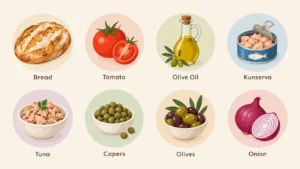
A classic hobz biz zejt recipe relies on a short list of ingredients, each contributing a distinct layer of flavor and texture:
- Maltese bread (hobz tal-Malti): A crusty, chewy sourdough loaf with a dense crumb that holds up to oil and moisture without falling apart.
- Ripe tomato: Halved and rubbed directly onto the bread, or crushed and spread, to add acidity and moisture.
- Extra virgin olive oil: Drizzled generously; this is the ingredient that gives the dish its name.
- Kunserva: A concentrated Maltese tomato paste that adds a deep, slightly sweet umami base.
- Tuna: Typically oil-packed and flaked, forming the primary protein in the most popular version of the dish.
- Capers and olives: Contribute briny, salty contrast.
- Red onion: Adds sharpness and crunch.
- Salt, pepper, and sometimes ġbejna (Maltese sheep’s cheese): Used to round out the flavor profile.
Each ingredient serves a functional purpose: the tomato and oil moisten the dense bread, kunserva intensifies the tomato flavor without adding excess liquid, and the tuna, capers, and olives provide protein and salinity that balance the bread’s neutral base.
How to Make Hobz Biz Zejt (Step-by-Step)
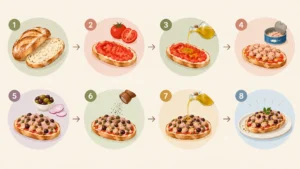
- Start with the right bread. Use a crusty, open-textured Maltese loaf or a similar rustic sourdough. A dense crumb prevents the sandwich from becoming soggy once the oil and tomato are added.
- Rub with tomato. Cut a ripe tomato in half and rub it directly onto the cut side of the bread, or spread crushed tomato flesh evenly. This step hydrates the bread and adds natural acidity before any oil is added.
- Drizzle with olive oil. Apply a generous layer of extra virgin olive oil across the tomato-rubbed surface. Skipping this step, or using too little oil, results in a drier sandwich that lacks the dish’s signature richness.
- Spread kunserva. A thin layer of kunserva deepens the tomato flavor. Because it is concentrated, only a small amount is needed to avoid overpowering the other ingredients.
- Add the tuna. Flake oil-packed tuna evenly across the bread. Draining excess oil from the tuna first helps prevent the sandwich from becoming overly greasy.
- Layer capers, olives, and onion. Distribute these evenly so each bite gets a balance of briny and sharp flavors.
- Season and close. Add salt and pepper to taste, then top with a second slice of bread if making a closed sandwich, or leave open-faced.
- Serve immediately. Hobz biz zejt is best eaten fresh, since the bread will continue to absorb moisture from the tomato and oil the longer it sits.
Substituting canned tomato for fresh will produce a wetter, less textured result, while omitting kunserva removes much of the dish’s characteristic depth.
The Role of Kunserva and Tuna
Kunserva is central to why hobz biz zejt tastes distinct from a plain tomato-and-oil sandwich. It is a thick, sun-concentrated tomato paste common in Maltese pantries, and it functions similarly to sun-dried tomato paste in other Mediterranean cuisines, delivering concentrated flavor without added liquid. Tuna, meanwhile, became a standard filling in the twentieth century as canned fish grew widely available in Malta, and it remains the most common protein used today, giving rise to the popular “hobz biz zejt tuna” variation referenced across recipe searches. Variations exist using ġbejna, boiled egg, or roasted vegetables for those who prefer a vegetarian version.
Hobz Biz Zejt vs. Ftira
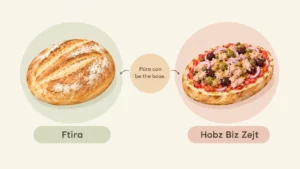
Ftira and hobz biz zejt are closely related but not identical. Ftira refers specifically to a distinctively shaped Maltese bread, typically flat and ring-like with a dimpled surface, that is baked to be denser and slightly chewier than standard loaf bread. Hobz biz zejt is the name of the filled dish itself, which can be made using either standard Maltese bread or a split ftira as its base. In everyday use on the islands, “ftira” sometimes refers to the finished filled sandwich when ftira bread is used, which is why the two terms are often mentioned together, and why some sources use “ftira hobz biz zejt” to describe the same combination.
Where to Find Authentic Hobz Biz Zejt in Malta and Gozo
Hobz biz zejt is sold throughout Malta at bakeries, cafes, delis, and street-food stalls, making it one of the easiest traditional dishes for visitors to try. In Valletta, small bakeries and lunch counters near the main shopping streets typically prepare it fresh to order. In Gozo, village bakeries and local snack bars often serve their own versions, sometimes using homemade kunserva. Because the dish is prepared fresh rather than mass-produced, quality and ingredient ratios can vary meaningfully between vendors, so asking locally for a well-regarded bakery is often more reliable than searching generically for “hobz biz zejt near me.”
Storage, Make-Ahead, and Serving Tips
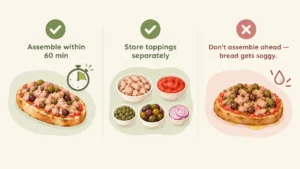
Because the bread absorbs moisture quickly, hobz biz zejt does not store well once fully assembled. For best results:
- Prepare the tomato-and-oil base and store toppings separately if making ahead.
- Assemble no more than 30–60 minutes before serving.
- If packing for travel, wrap the bread and toppings separately and combine just before eating.
- Leftover assembled sandwiches can be refrigerated briefly, but the bread will soften noticeably within a few hours.
Conclusion
Hobz biz zejt represents Maltese food culture in its most accessible form: simple ingredients, prepared with care, that reflect the islands’ Mediterranean identity. Whether made at home with crusty bread, ripe tomato, and kunserva, or bought fresh from a bakery in Valletta or Gozo, the dish offers an easy entry point into traditional Maltese cuisine alongside other staples like ftira and qassatat.
FAQ
What does hobz biz zejt mean in English? It translates literally to “bread with oil,” referring to the olive oil that coats the tomato-rubbed bread base.
What is traditionally in hobz biz zejt? The traditional filling includes tomato, olive oil, kunserva, tuna, capers, olives, and onion, sometimes with ġbejna or boiled egg as additions.
Is hobz biz zejt the same as ftira? Not exactly. Ftira is a specific type of Maltese bread, while hobz biz zejt is the name of the filled dish, which can be made with ftira or regular Maltese bread.
Where can I buy hobz biz zejt in Malta? It is widely available at bakeries, cafes, and delis across Malta and Gozo, including in Valletta, with quality varying by vendor since it is typically made fresh to order.
How do you pronounce hobz biz zejt? Approximately “hobz bee zeyt,” with each of the three Maltese words pronounced individually.