Introduction
Flank steak is a long, flat cut taken from the abdominal muscles of the cow, prized for its beefy flavor but notorious for turning tough if handled the wrong way. Because the muscle fibers run in long, visible strands, flank steak rewards specific techniques: a acid- or enzyme-based marinade, high, fast heat, and precise slicing against the grain. Once you understand why each step matters, flank steak becomes one of the easiest cuts to cook well, whether you’re working in a cast iron skillet, an oven, a grill, or an air fryer.
Quick Summary
- Flank steak cooks best with high heat for a short time — searing or grilling, not slow roasting.
- Marinating for 30 minutes to 8 hours breaks down surface fibers and adds flavor, but longer isn’t always better.
- Internal temperature of 130–135°F (medium-rare) keeps the cut tender; well-done flank steak turns chewy.
- Resting for 5–10 minutes after cooking redistributes juices before slicing.
- Always slice thinly against the grain — this is the single most important step for tenderness.
What Makes Flank Steak Different From Other Cuts
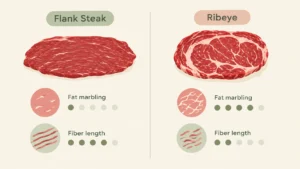
Flank steak comes from a well-exercised muscle, which gives it deep beef flavor but also long, tough muscle fibers arranged in one clear direction. Unlike a ribeye or filet, which have more intramuscular fat and shorter fibers, flank steak has almost no marbling. That lack of fat means it dries out quickly under prolonged or low heat, so the cooking method has to compensate with either speed (searing, grilling) or moisture (marinating). Skirt steak and flap steak are similar in texture and are often substituted in the same recipes, though flank steak is thicker and slightly less fibrous.
How to Marinate Flank Steak for Tenderness
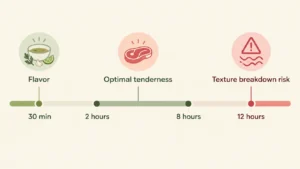
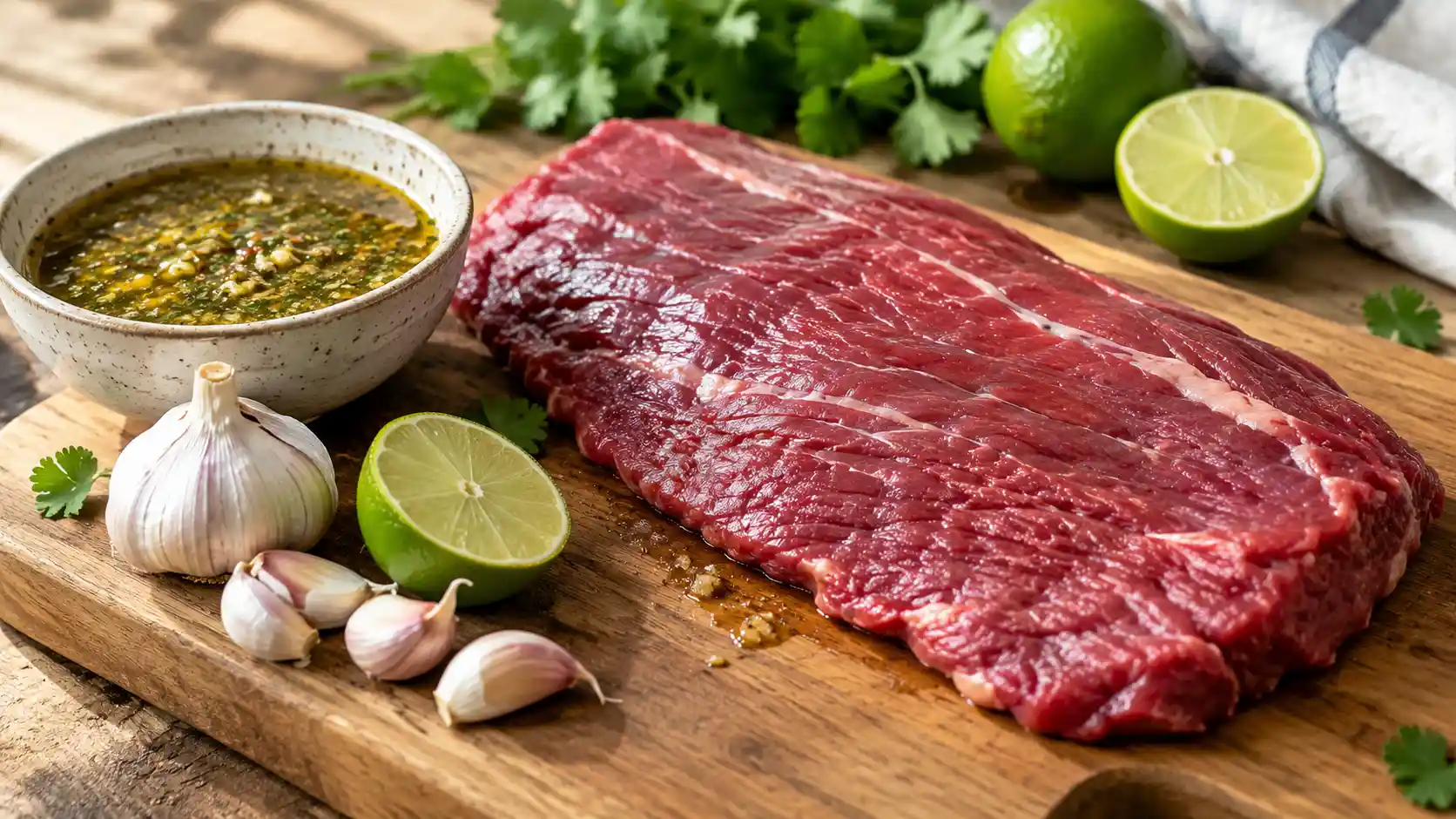
Marinating serves two purposes: flavor penetration and tenderizing. Acidic ingredients like citrus juice or vinegar, and enzymatic ingredients like pineapple or papaya, break down some of the surface proteins in the muscle fibers, softening the exterior texture. A basic effective marinade combines an acid, an oil, and aromatics — for example, lime juice, olive oil, garlic, and cumin.
Timing matters: 30 minutes is enough for flavor, while 2–8 hours improves tenderness noticeably. Beyond 8–12 hours, the acid can start to break down the surface into a mushy texture rather than a tender one, so longer is not automatically better. Always marinate in the refrigerator, and pat the steak dry before cooking so it sears instead of steaming.
How to Cook Flank Steak in a Pan or Cast Iron
Cast iron is one of the most reliable methods because it holds high, even heat and creates a strong sear. Heat the pan until it’s very hot, add a high-smoke-point oil, and sear the steak for 3–4 minutes per side for a 1- to 1.5-inch-thick steak, adjusting for thickness. The goal is a deep brown crust, which develops flavor through the Maillard reaction — a chemical browning process that doesn’t occur at lower temperatures. A stainless steel pan works the same way, though cast iron retains heat more consistently once the steak is added, which helps maintain the sear.
How to Cook Flank Steak in the Oven
Oven cooking works best as a finishing step rather than the sole method, since flank steak’s thinness means it can overcook before it browns in dry oven heat alone. A common approach is to sear the steak in an oven-safe skillet on the stovetop for 2–3 minutes per side, then transfer the entire pan to a preheated 400°F oven for 6–10 minutes, depending on thickness, until it reaches 130–135°F internally. Cooking flank steak in the oven without a broiler still works with this sear-then-finish method; a broiler simply speeds up the initial browning if you skip the stovetop sear.
How to Cook Flank Steak on the Grill
Grilling suits flank steak’s shape well because the thin, wide cut cooks quickly over direct heat. Preheat the grill to high, oil the grates, and cook the steak for 4–6 minutes per side over direct heat, flipping once. Because flank steak varies in thickness from end to end, the thinner sections will finish before the thicker center — checking temperature at the thickest point prevents overcooking the rest. A charcoal or gas grill both work, and a flat-top griddle like a Blackstone follows the same timing as a hot cast iron pan.
How to Cook Flank Steak in an Air Fryer
An air fryer works as a compact alternative to a grill or broiler, circulating hot air around the steak for even browning without needing a stovetop sear first. Preheat the air fryer to 400°F, place the marinated and dried steak in a single layer, and cook for 7–10 minutes, flipping halfway through. Because air fryers vary in wattage and basket size, checking internal temperature with a thermometer is more reliable than relying on time alone.
How Long to Cook Flank Steak (Timing Guide)
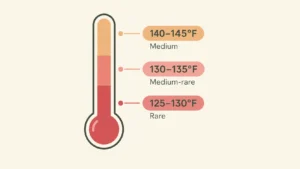
Cooking time depends more on thickness and desired doneness than on the method itself. As a general guide, for a 1- to 1.5-inch-thick flank steak:
- Grill or cast iron (direct high heat): 4–6 minutes per side for medium-rare
- Stovetop sear + 400°F oven finish: 2–3 minutes per side searing, then 6–10 minutes in the oven
- Air fryer at 400°F: 7–10 minutes total, flipping halfway
- Broiler: 4–5 minutes per side, watching closely since broilers cook fast
Across all methods, the safest indicator is internal temperature, not the clock: 125–130°F for rare, 130–135°F for medium-rare, and 140–145°F for medium. Because flank steak has little fat to keep it moist, cooking past medium significantly increases the risk of a chewy result.
How to Slice and Serve Flank Steak
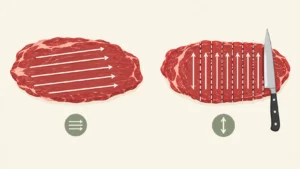
After cooking, let the steak rest for 5–10 minutes, tented loosely with foil. Resting allows juices that have moved toward the center during cooking to redistribute, so they stay in the meat rather than spilling out when cut. Look closely at the steak’s surface to identify the direction the muscle fibers run, then slice thinly — about ¼ inch thick — perpendicular to those fibers. Cutting against the grain shortens the muscle fibers in each bite, which is what makes flank steak taste tender despite being a naturally lean, fibrous cut. This same slicing method applies whether the steak is destined for fajitas, tacos, or a simple sliced steak plate.
Conclusion
Flank steak rewards a small number of deliberate choices: a short marinade for flavor and surface tenderness, high heat for a fast sear rather than slow cooking, an internal temperature that stops at medium-rare, and thin slicing against the grain. The specific method — pan, oven, grill, or air fryer — matters less than applying these same underlying principles, which is why the same cut can succeed as a weeknight skillet dinner or a backyard grill centerpiece.
FAQ
Is flank steak the same as skirt steak? No. They come from different parts of the cow and have different thicknesses, though they share a similar grain structure and are often used interchangeably in recipes like fajitas.
Why is my flank steak tough? Overcooking past medium and slicing with the grain instead of against it are the two most common causes of tough flank steak.
Do I need to marinate flank steak? It’s not strictly required, but a marinade improves both flavor and surface tenderness, especially for a lean cut with little fat.
What temperature should flank steak be cooked to? 130–135°F internal temperature for medium-rare is generally recommended for the best texture.