Introduction
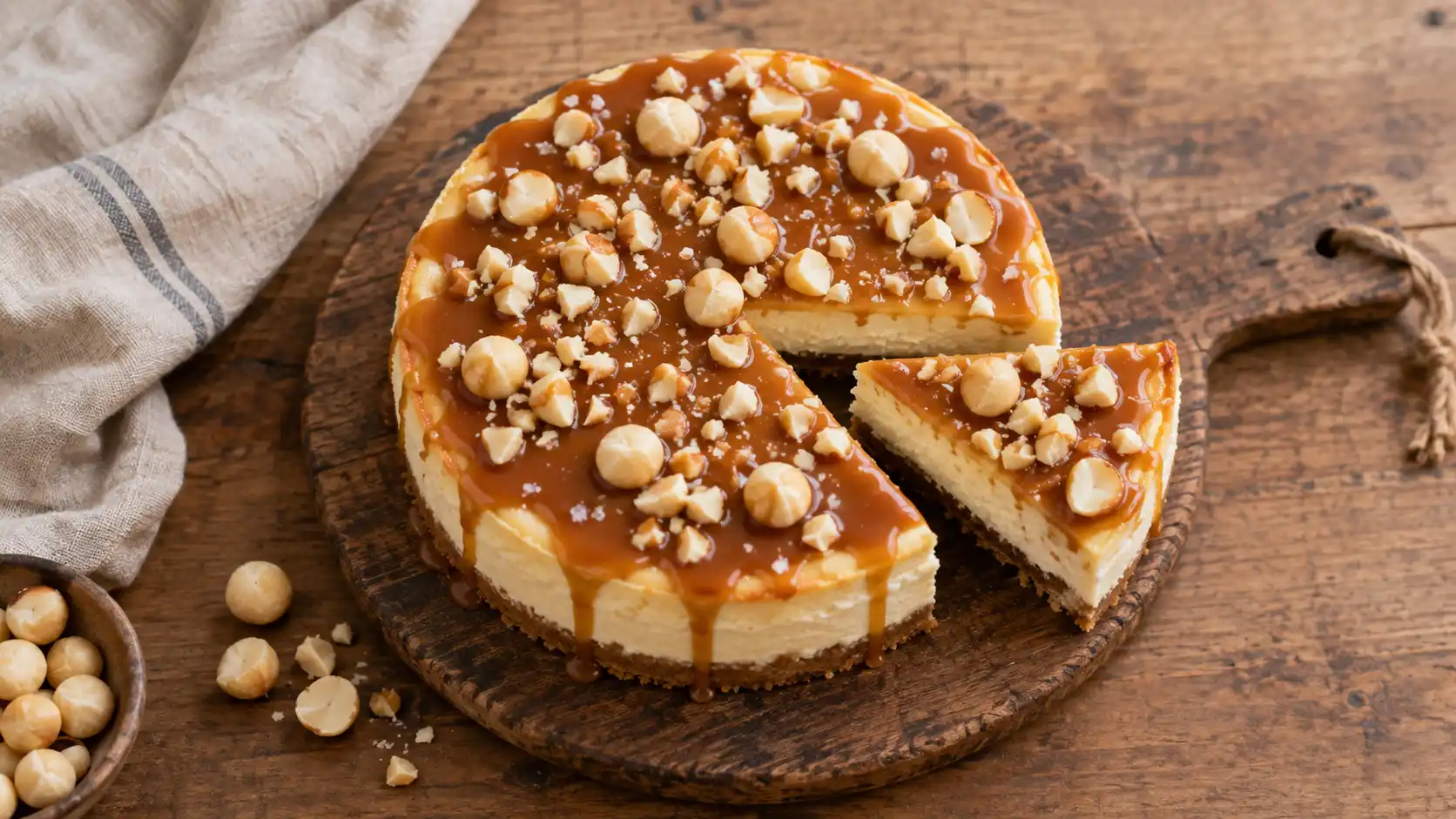
Caramel macadamia cheesecake pairs a rich, buttery nut with deep caramel sweetness and a tangy, creamy filling. It’s a dessert built on contrast: the crunch of toasted macadamias against the smoothness of cream cheese, and the bittersweet edge of caramel against the mild acidity of the base. Whether made as a classic baked cheesecake or a chilled no-bake version, the technique hinges on balancing texture and sweetness so no single element overwhelms the others.
Quick Summary
A caramel macadamia cheesecake typically combines a biscuit or macadamia-nut crust, a cream cheese filling (often made with Philadelphia-style cream cheese), and a caramel-macadamia topping. No-bake versions set in the refrigerator using gelatin or a firm ratio of cream cheese to cream, while baked versions rely on a water bath and slow cooling to prevent cracking. The dessert can be made at home with common ingredients, though bakery and supermarket versions are also widely available for those who prefer not to bake.
What Makes This Cheesecake Different
Macadamia nuts have a higher fat content than almonds or walnuts, which gives the crust a softer, more buttery texture than a standard biscuit base. When paired with caramel, that fat content helps carry the caramel’s flavor without making the dessert taste greasy, because the nut’s natural oils and the caramel’s sugar structure bind together during baking or setting rather than separating.
Some bakery-style versions draw inspiration from chef-driven recipes that use brown butter or extra egg yolks in the filling for a denser, more custard-like texture, rather than the lighter, more mousse-like texture found in many no-bake home recipes.
Baked vs. No-Bake: Choosing Your Method
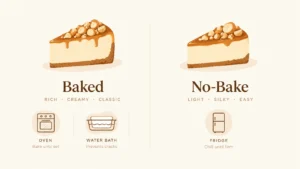
The two main preparation styles produce noticeably different results, and the right choice depends on texture preference and available time.
- Baked cheesecake: Uses eggs to set the filling through gentle, low-temperature cooking, usually in a water bath. This produces a dense, custard-like texture and requires a resting period in the oven with the door ajar to cool gradually, which prevents the surface from cracking.
- No-bake cheesecake: Relies on refrigeration and a firm cream cheese-to-cream ratio, sometimes with gelatin, to set the filling. It has a lighter, mousse-like texture and is typically ready to serve after four to six hours of chilling, though overnight setting gives cleaner slices.
Choosing baked over no-bake is mostly a texture decision: baked versions taste richer and more traditional, while no-bake versions are quicker and better suited to warm weather since they avoid oven use entirely.
Core Ingredients and Why They Matter
- Cream cheese: Full-fat, block-style cream cheese (such as Philadelphia) is preferred over spreadable tub varieties because it holds more structure and contains less water, which matters directly for how firmly the cheesecake sets.
- Macadamia nuts: Raw or roasted, unsalted macadamias work best because their fat content is high enough to bind a crust without needing much added butter. Toasting them first deepens their flavor and reduces the raw, waxy taste that can otherwise come through.
- Caramel: Can be made from scratch by cooking sugar to a deep amber stage, or from store-bought caramel sauce for convenience. Homemade caramel gives more control over bitterness and salt level, which is why many recipes lean toward a salted caramel variation to offset the dessert’s overall sweetness.
- Eggs: Used only in baked versions, eggs are the setting agent responsible for the custard-like texture; they are one reason baked and no-bake versions cannot use identical ratios of the other ingredients.
Building the Macadamia Base
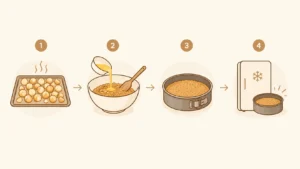
A macadamia base is typically made by pulsing toasted macadamias with crushed biscuits, melted butter, and a small amount of sugar until the mixture resembles coarse, damp sand. Pressing the base firmly and evenly into the tin—using the back of a spoon or the base of a glass—matters because uneven pressing creates weak spots that crumble when the cheesecake is sliced. Chilling the base for at least 20 minutes before adding the filling helps it hold together once the finished cheesecake is cut.
Making the Caramel Layer
Caramel can be incorporated in two ways: swirled through the filling before it sets, or poured as a distinct layer either between the crust and filling or on top after setting. A swirled caramel gives a marbled appearance and a more even flavor distribution in every bite, while a separate caramel layer creates a more dramatic visual contrast and a stronger caramel flavor concentrated in one area. Adding a pinch of salt to the caramel is common because salt counteracts the sweetness of both the caramel and the cream cheese filling, keeping the overall dessert from tasting one-dimensional.
The Cheesecake Filling
The filling generally combines softened cream cheese, sugar, vanilla, and either eggs (baked) or whipped cream and a setting agent (no-bake). Cream cheese must be fully softened before mixing, because cold cream cheese leaves lumps that no amount of extended beating can fully smooth out. Overbeating the mixture, particularly once eggs are added, incorporates excess air that can cause a baked cheesecake to puff up too quickly in the oven and then collapse and crack as it cools.
Assembly and Setting
Once the base has chilled and the filling is prepared, the filling is poured over the crust and, if using a swirl technique, caramel is added in a few spoonfuls before dragging a skewer through the top to create a marbled pattern. Baked versions go into a water bath at a moderate oven temperature and are left to cool gradually inside the switched-off oven to prevent temperature shock. No-bake versions go directly into the refrigerator, ideally on a flat, stable shelf to prevent uneven setting.
Common Mistakes and How to Avoid Them
- Cracking on top (baked versions): Usually caused by overbaking, overbeating, or cooling too quickly; a water bath and gradual oven cooling largely prevent this.
- A soggy or crumbly base: Comes from underbaking or under-pressing the crust, or from using melted butter in excess of what the nut-to-biscuit ratio can absorb.
- A filling that never fully sets (no-bake versions): Typically the result of using low-fat cream cheese, too little setting agent, or not chilling for long enough before serving.
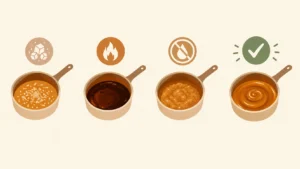
- Caramel that seizes or turns grainy: Happens when sugar crystallizes during cooking, often from stirring too early or introducing sugar crystals from the sides of the pan; using a wet pastry brush to clean the pan’s sides during cooking helps prevent this.
Storage and Make-Ahead Tips
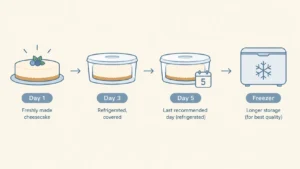
Caramel macadamia cheesecake keeps well in the refrigerator, tightly covered, for up to four to five days, which makes it a practical make-ahead dessert for entertaining. It can also be frozen, ideally without the caramel topping added until after thawing, since caramel can become sticky or separate slightly during freezing and defrosting. Slicing the cheesecake with a knife warmed under hot water and wiped clean between cuts gives cleaner slices, particularly for the denser baked version.
Conclusion
Caramel macadamia cheesecake succeeds when its core tension—rich, buttery nuts and sweet caramel against tangy, creamy filling—is kept in balance rather than letting any one element dominate. The choice between baked and no-bake comes down to texture and convenience rather than one method being objectively better, and small technique details, like fully softened cream cheese and properly toasted macadamias, matter more to the final result than any single ingredient swap.
FAQ
Can I use a different nut instead of macadamia? Yes, though macadamias contribute a higher fat content than most alternatives, so nuts like cashews or pecans will produce a firmer, less buttery crust unless extra butter is added.
Do I need gelatin for a no-bake version? Not always. A high enough ratio of cream cheese and whipped cream can set firmly enough without gelatin, though gelatin gives a more stable, sliceable result, especially in warmer conditions.
Why did my caramel turn grainy? This usually happens when sugar crystals form during cooking, often from stirring the caramel too soon or too vigorously before it fully melts.
Can I make this dessert ahead of a party? Yes. It stores well covered in the refrigerator for several days, making it one of the more practical make-ahead desserts for entertaining.
What’s the difference between homemade and store-bought caramel macadamia cheesecake? Store-bought versions are convenient and consistent, while homemade versions allow control over sweetness, salt level, and the ratio of nuts to caramel, which many home bakers adjust to suit personal taste.