Introduction
Walnut cake is a dense, nutty baked dessert built around ground or chopped walnuts, prized for the deep, toasty flavor and moist crumb the nuts provide. It spans a wide range of styles, from old-fashioned spice-forward loaves to delicate coffee-glazed layer cakes, and appears in baking traditions across Britain, Greece, France, Italy, and Korea. Because walnuts contribute both fat and structure, the cake behaves differently from standard flour-based cakes, which is why understanding the role of each ingredient matters more here than in most other desserts.
Quick Summary
Walnut cake gets its moisture and flavor from ground or finely chopped walnuts, which add natural oils and a coarse, tender crumb. Classic variations include coffee and walnut, date and walnut, banana walnut, carrot walnut, and chocolate walnut, while regional versions like Greek karydopita and Korean hodu-gwaja reflect local spices, syrups, and shapes. A true 3-ingredient walnut cake relies on eggs and sugar to bind ground walnuts without flour, making it naturally gluten-free. Proper storage in an airtight container keeps most walnut cakes fresh for three to five days at room temperature, longer when refrigerated.
What Is Walnut Cake?
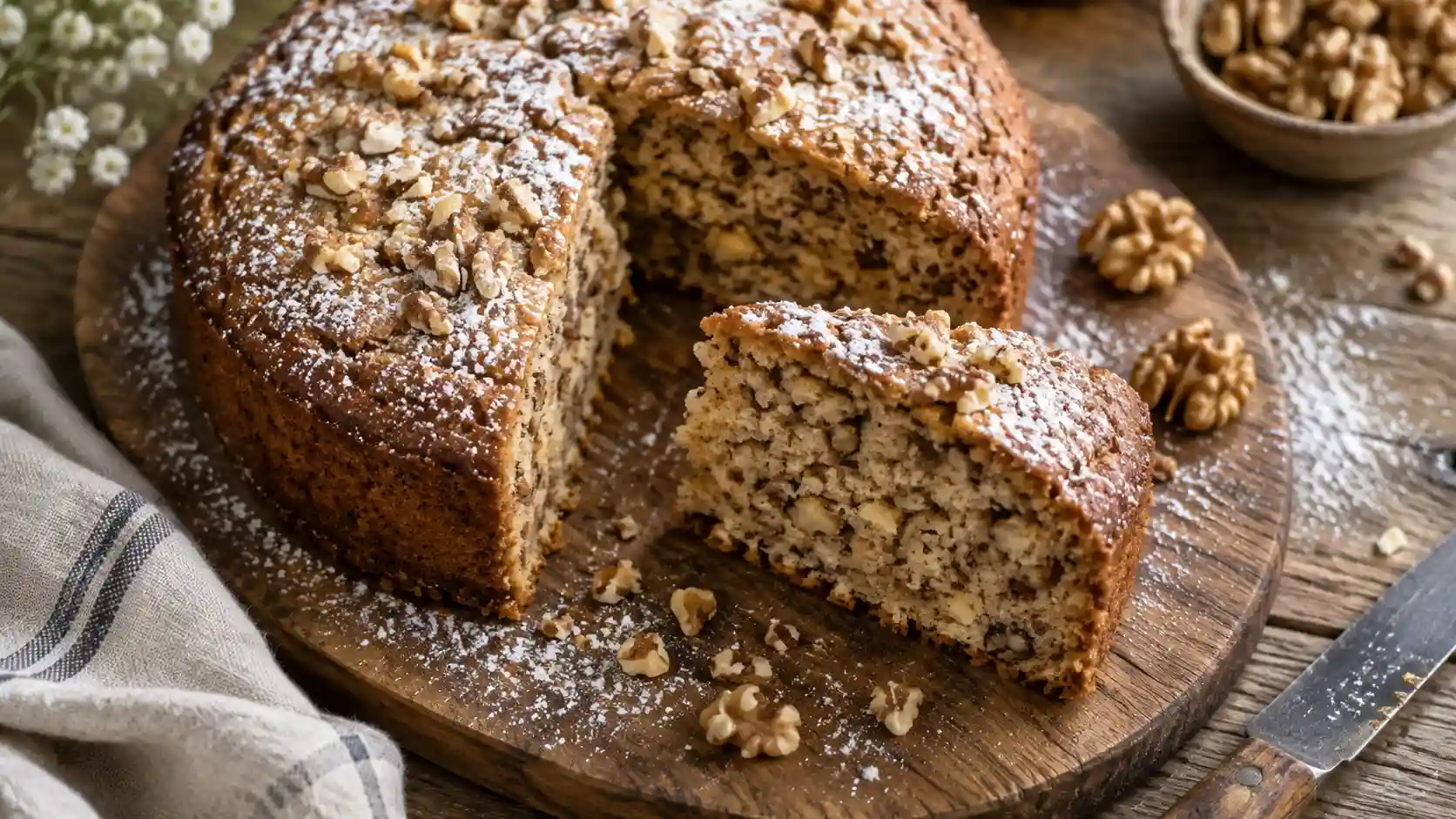
Walnut cake refers to any cake in which walnuts serve as a primary structural and flavor ingredient rather than a garnish. The nuts can be finely ground into a near-flour consistency, coarsely chopped for texture, or used both ways within the same batter. This distinguishes walnut cake from cakes that simply top a batter with walnut pieces, since here the nuts directly affect the density, moisture, and rise of the final product.
Because walnuts contain a high percentage of natural oil, cakes built around them tend to be denser and moister than cakes leaning primarily on butter or vegetable oil. This is also why many walnut cake recipes use less added fat than a standard sponge, letting the nuts themselves carry much of the richness.
Key Ingredients for a Moist Walnut Cake
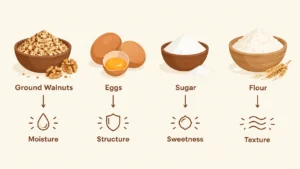
A moist walnut cake depends on the balance between ground walnuts, eggs, sugar, and a modest amount of flour or, in flourless versions, no flour at all. Ground walnuts release oil as they’re mixed and baked, which keeps the crumb tender and helps the cake stay moist for several days after baking, an effect that dry, flour-heavy cakes don’t share.
Eggs matter just as much: they trap air during whisking and set around the ground nuts during baking, giving the cake enough structure to hold together despite having little or no gluten. Brown sugar, honey, or golden syrup are common sweetener choices because they add moisture-retaining properties that plain white sugar lacks. A small amount of oil or melted butter can round out the texture, but too much will make the cake greasy rather than moist, since the walnuts are already contributing fat.
Old-Fashioned vs. Easy Walnut Cake: What’s the Difference
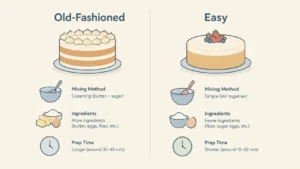
Old-fashioned walnut cake recipes typically call for creaming butter and sugar by hand, folding in finely chopped walnuts with warm spices like cinnamon or nutmeg, and baking in a single deep tin for a dense, homestyle result. These recipes often skip modern shortcuts like pre-ground nut flour, relying instead on freshly chopped walnuts for a coarser bite.
Easy walnut cake recipes streamline this process by using one-bowl mixing methods, pre-ground walnuts, and simplified leavening with baking powder rather than whipped egg whites. The trade-off is a slightly less complex texture in exchange for significantly less prep time, making easy versions better suited for weeknight baking rather than special occasions.
Popular Walnut Cake Variations
Coffee and walnut cake pairs a coffee-flavored sponge with chopped walnuts folded into the batter, typically finished with a coffee buttercream and walnut halves on top; it’s one of the most widely made walnut cake styles in British baking.
Date and walnut cake combines softened, chopped dates with walnuts in a spiced batter, where the dates add natural sweetness and moisture alongside the nuts’ texture.
Banana walnut cake uses mashed ripe bananas as the moisture base, with walnuts adding crunch and a contrasting flavor to the banana’s sweetness.
Carrot and walnut cake incorporates grated carrot for moisture and mild sweetness, with walnuts folded into the batter and often used to decorate a cream cheese frosting.
Chocolate walnut cake blends cocoa or melted chocolate into the batter, with walnuts providing textural contrast to the smooth, rich crumb.
Apple walnut cake layers grated or diced apple through the batter, where the apple’s moisture pairs with the walnuts’ density for a fall-leaning dessert.
Black walnut cake substitutes black walnuts, which have a stronger, more bitter and earthy flavor than common English walnuts, for a more assertive, distinctive taste.
Walnut Cake Around the World
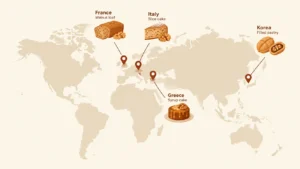
Greek walnut cake, known as karydopita, is a spiced semolina-and-walnut cake soaked in a sugar or honey syrup after baking, giving it a signature dense, syrup-soaked texture rather than a light crumb.
French walnut cake, often associated with the Périgord and Grenoble regions where walnuts are grown extensively, tends toward simpler, buttery formulations that let the walnut flavor stand on its own, sometimes paired with a light glaze or dusting of powdered sugar.
Italian walnut cake frequently uses ground walnuts in place of some or all of the flour, similar to a torta di noci, producing a naturally dense, nutty cake often served with a light dusting of sugar rather than heavy frosting.
Korean walnut cake, commonly sold as hodu-gwaja or hodu-kwaja, differs structurally from Western versions: it’s a small, walnut-shaped pastry filled with sweet red bean paste and a whole walnut piece, cooked in a specialized mold rather than baked as a full-size cake.
Understanding the 3-Ingredient Walnut Cake
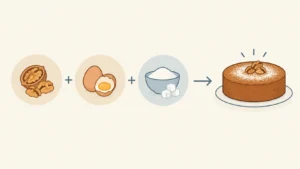
A 3-ingredient walnut cake typically relies on just ground walnuts, eggs, and sugar, omitting flour and butter entirely. The eggs are usually whisked with sugar until thick and pale, then folded with finely ground walnuts, which act as both the flour substitute and the primary source of structure and moisture.
This method works because ground walnuts contain enough natural fat and protein-adjacent structure to bind the batter once the eggs set during baking. The result is a naturally gluten-free cake with a dense, slightly fudgy texture, though it will be less airy than a flour-based cake since there’s no gluten network to trap rising gas.
Storage and Shelf Life
Most walnut cakes stay fresh for three to five days at room temperature when kept in an airtight container, thanks to the moisture-retaining oils in the walnuts. Cakes with cream cheese frosting or fresh fruit, such as carrot walnut or apple walnut versions, should be refrigerated and are best eaten within four to five days.
For longer storage, unfrosted walnut cake freezes well for up to three months when wrapped tightly in plastic wrap and foil. Frosted cakes can also be frozen, though the frosting’s texture may change slightly once thawed.
Common Substitutions and Their Effects
Replacing walnuts with pecans produces a milder, sweeter flavor and a slightly softer texture, since pecans contain more fat than walnuts. Swapping in almonds results in a firmer, less oily crumb, since almonds are lower in fat than walnuts.
Using oil instead of butter tends to keep the cake moister for longer, since oil stays liquid at room temperature while butter solidifies, though it sacrifices some of butter’s flavor. Substituting a gluten-free flour blend for standard flour generally works well in walnut cake, given that the ground nuts already provide much of the structure, but the crumb may end up slightly denser.
Conclusion
Walnut cake’s defining feature is the role walnuts play beyond flavor: they shape moisture, density, and structure in ways few other ingredients can replicate. Whether it’s a syrup-soaked Greek karydopita, a British coffee and walnut sponge, or a flourless 3-ingredient version, the underlying principle stays the same, letting the natural oils and texture of walnuts do most of the work. Understanding these mechanics makes it easier to adapt any walnut cake recipe, substitute ingredients confidently, and troubleshoot texture issues.
FAQ
Is walnut cake naturally moist?
Yes, because ground or chopped walnuts release natural oils during mixing and baking, which keeps the crumb tender and helps the cake retain moisture longer than many flour-based cakes.
Can walnut cake be made without flour?
Yes, flourless walnut cakes are common and typically rely on finely ground walnuts combined with eggs and sugar, which provide enough structure to bind the batter without gluten.
What’s the difference between coffee and walnut cake and regular walnut cake?
Coffee and walnut cake includes coffee flavoring in the sponge and usually a coffee buttercream, while a regular walnut cake may use no coffee at all and instead rely on spices, fruit, or chocolate for flavor.
Does black walnut cake taste different from regular walnut cake?
Yes, black walnuts have a stronger, more bitter and earthy flavor than common English walnuts, giving black walnut cake a more assertive, less sweet nut flavor overall.
How long does walnut cake last?
Most unfrosted walnut cakes stay fresh for three to five days at room temperature in an airtight container, while frosted or fruit-based versions should be refrigerated and eaten within four to five days.
Is Korean walnut cake the same as Western walnut cake?
No, Korean walnut cake (hodu-gwaja) is a small, walnut-shaped filled pastry made with a specialized mold, distinct from the full-size baked sponge or loaf cakes typical in Western baking.