Introduction
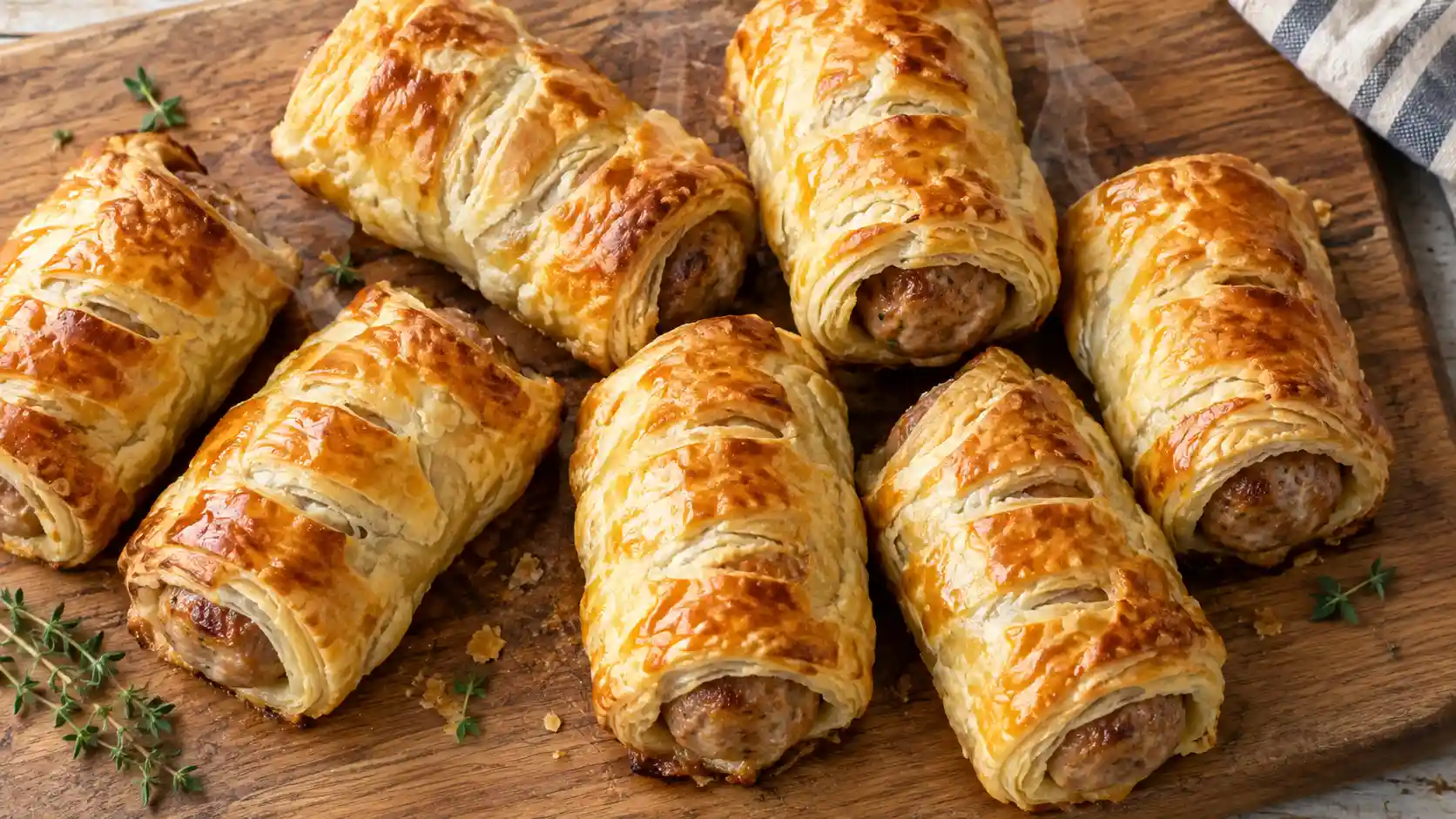
Chicken sausage rolls are a savory pastry made by wrapping seasoned chicken mince in puff pastry and baking it until golden and crisp. They’re a lighter alternative to traditional pork sausage rolls, offering a milder flavor and slightly leaner texture while keeping the same flaky, buttery exterior. Popular as party food, lunchbox fillers, and freezer staples, chicken sausage rolls work equally well as a quick weeknight dinner or make-ahead snack for gatherings.
Quick Summary
- Base: chicken mince, breadcrumbs, egg, seasoning, wrapped in puff pastry
- Cook time: 25–30 minutes at 200°C (400°F)
- Best texture: moist filling, crisp shattering pastry
- Common additions: leek, feta, spinach, curry spices, bacon, vegetables
- Storage: freezes well raw or cooked, up to 3 months
Key Ingredients and Why They Matter
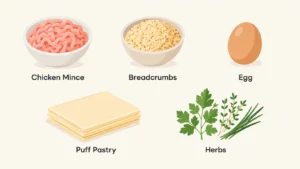
The quality of chicken sausage rolls depends on the balance between the filling and the pastry.
Chicken mince forms the base. Because chicken is leaner than pork, it releases less fat during baking, which means the filling can dry out if not handled correctly. This is why most recipes add a binding and moisture agent.
Breadcrumbs or panko absorb moisture from the meat and egg, holding the filling together so it doesn’t shrink away from the pastry as it cooks. Using stale bread or panko rather than fresh soft breadcrumbs produces a firmer, more sliceable roll.
Egg acts as a binder, linking the meat and breadcrumbs into a cohesive mixture that holds its shape when sliced. Skipping the egg tends to produce a crumbly filling that falls apart.
Aromatics such as onion, garlic, and herbs add moisture and flavor depth. Grating rather than dicing onion helps it cook down into the mixture rather than staying crunchy inside the pastry.
Puff pastry provides the signature flaky exterior. Because chicken mixtures are wetter than pork ones, pastry should be kept cold until the moment of assembly — this prevents the butter layers from melting prematurely and losing their lift in the oven.
How to Make Chicken Sausage Rolls (Step-by-Step)
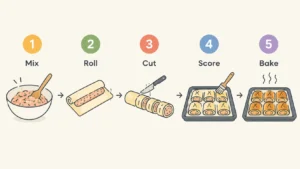
- Prepare the filling. Combine chicken mince, breadcrumbs, egg, grated onion, garlic, and seasoning in a bowl. Mix just until combined — overmixing compresses the meat and produces a dense, rubbery texture rather than a light one.
- Roll and shape. Lay puff pastry sheets flat and pipe or spoon the filling in a log along one edge. Roll the pastry around the filling, sealing the seam with a light egg wash. Sealing seam-side down when placing on the tray helps prevent the roll from splitting open during baking.
- Cut to size. Slice into individual rolls using a sharp knife. A clean cut, rather than a sawing motion, keeps the pastry layers intact so they puff evenly.
- Score and glaze. Cut two or three shallow slits on top of each roll to let steam escape — without this, trapped steam can cause the pastry to split unevenly — then brush with egg wash for color and shine.
- Bake. Cook at 200°C (400°F) for 25–30 minutes, until the pastry is deep golden and the internal temperature of the filling reaches 74°C (165°F). Baking on a wire rack rather than directly on a tray allows air to circulate underneath, keeping the base crisp instead of soggy.
Old-Fashioned vs. Modern Chicken Sausage Rolls
Old-fashioned versions typically rely on simple seasoning — salt, pepper, and sage — letting the chicken and pastry speak for themselves. Modern recipes often build in extra moisture and flavor layers, such as grated zucchini, feta, or curry paste, partly because leaner modern chicken mince benefits from added fat and seasoning to avoid drying out. Neither approach is more “correct”; the choice affects flavor intensity and moisture level rather than technique.
Easy 4-Ingredient Version
A stripped-back version uses just chicken mince, a packet of stuffing mix or seasoned breadcrumbs, an egg, and pre-rolled puff pastry. The stuffing mix does double duty — it seasons the meat while also absorbing moisture, replacing the need for separately added herbs, onion, or breadcrumbs. This method suits busy weeknights, as it removes prep steps without significantly compromising texture.
Popular Flavor Variations

Because chicken has a mild base flavor, it adapts well to different flavor profiles:
- Chicken and leek: leek adds sweetness and moisture as it softens during baking, pairing naturally with chicken’s mild taste.
- Chicken, feta, and spinach: spinach must be wilted and well-drained first, since raw spinach releases water during baking that can make the pastry soggy.
- Chicken and bacon: bacon contributes smokiness and extra fat, helping counteract the leanness of the chicken mince.
- Thai chicken sausage rolls: lemongrass, ginger, chili, and fish sauce shift the filling toward a South East Asian flavor profile, usually served with a dipping sauce like sweet chili.
- Chicken curry sausage rolls: mild curry powder or paste, sometimes with sultanas or apple, adds warmth without overwhelming the pastry’s buttery flavor.
- Chicken and vegetable: grated carrot, zucchini, or corn increases moisture and nutritional bulk, useful for family-friendly or lunchbox versions.
- Chicken and stuffing: prepared stuffing mix adds herby depth and binds the filling similarly to breadcrumbs.
Healthy Adaptations
To make chicken sausage rolls lighter, several ingredient swaps are common. Using filo pastry instead of puff pastry significantly reduces butter and overall fat content, though it produces a crisper, less flaky texture. Increasing the ratio of grated vegetables to meat lowers the calorie density while adding fiber. Reducing added salt and relying more on fresh herbs and citrus zest can cut sodium without sacrificing flavor. These adjustments affect texture and richness but don’t require changing the core method.
Storage and Reheating
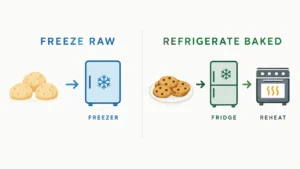
Unbaked chicken sausage rolls freeze well for up to three months; freezing them on a tray before transferring to a bag prevents them from sticking together. They can be baked directly from frozen, adding roughly 10 minutes to the cook time. Already-baked rolls store in the fridge for up to three days and reheat best in an oven or air fryer rather than a microwave, since dry heat re-crisps the pastry instead of turning it soft.
Conclusion
Chicken sausage rolls offer a lighter, adaptable take on a classic savory pastry, with results shaped by how moisture, seasoning, and pastry temperature are managed. Whether made with a simple four-ingredient method or built up with additions like feta, leek, or curry spice, the core technique — a well-bound filling wrapped in cold, flaky pastry — stays the same. Understanding why each ingredient and step matters makes it easier to adapt the recipe to different tastes without losing the texture that makes sausage rolls worth making at home.
FAQ
Why do my chicken sausage rolls turn out dry?
Chicken mince has less fat than pork, so filling can dry out without enough binding and moisture — breadcrumbs, egg, and grated vegetables all help retain moisture during baking.
Can I use chicken breast instead of chicken mince?
Ground chicken breast alone tends to be very lean and can result in a drier, denser filling; blending in thigh mince or adding extra moisture-rich ingredients helps offset this.
Why did my pastry split during baking?
Splitting usually happens when steam builds up inside without an escape route, or when the pastry wasn’t cold enough before baking, causing uneven puffing.
Can chicken sausage rolls be made ahead of time?
Yes — they can be assembled and frozen raw, then baked straight from frozen, making them convenient for entertaining or meal prep.
What’s the best dipping sauce for chicken sausage rolls?
Tomato relish, sweet chili sauce, and aioli are common pairings, with sweet chili suiting spiced or Thai-style versions particularly well.