Introduction
Cơm tấm is one of Vietnam’s most recognizable rice dishes, built around a simple but distinctive foundation: broken rice grains instead of whole ones. Found on street corners in Saigon and in Vietnamese restaurants around the world, it pairs fractured, slightly nutty-tasting rice with grilled pork, a savory egg custard, and a handful of accompaniments that balance salty, sweet, sour, and fresh flavors on a single plate.
Quick Summary
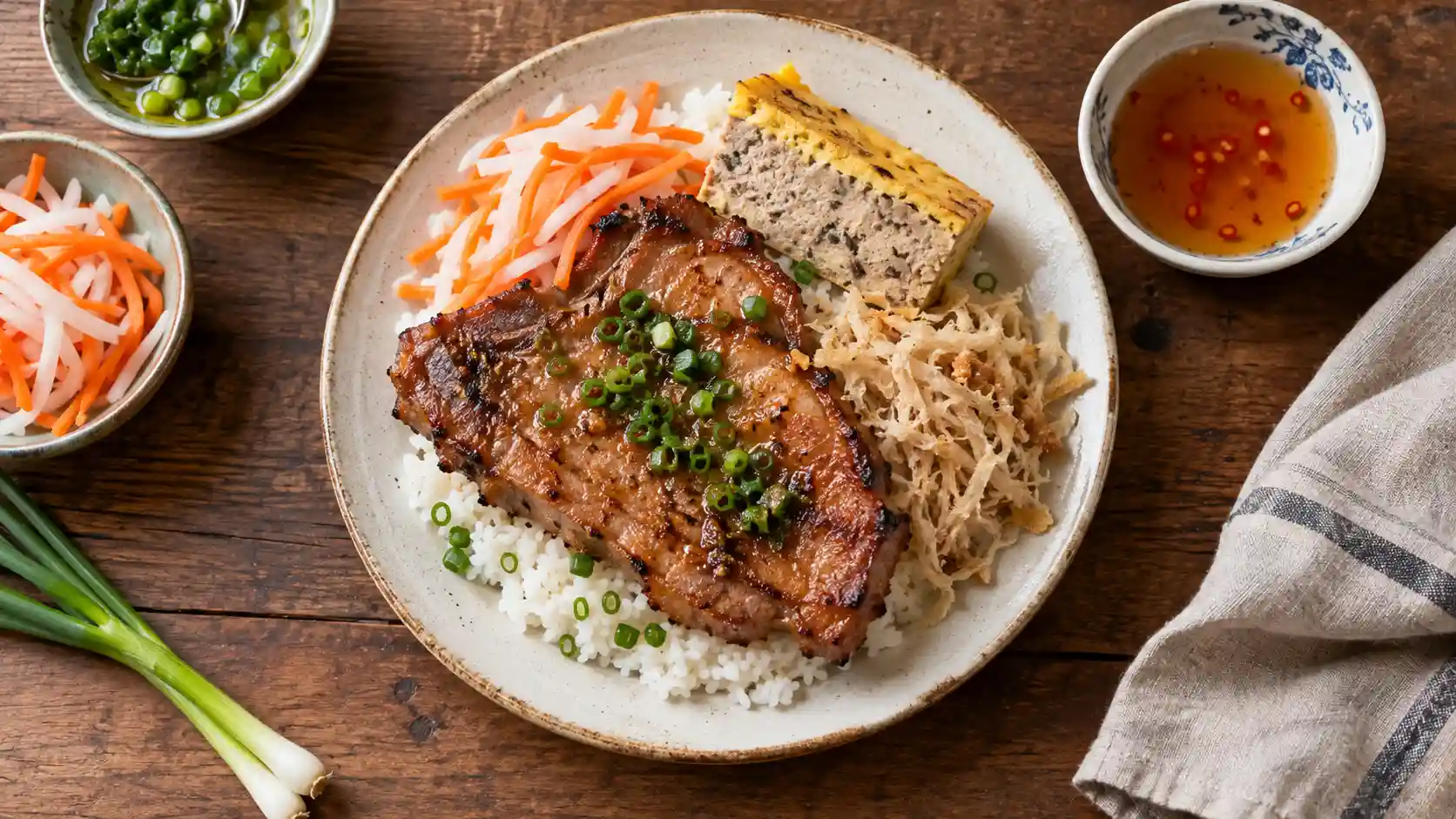
Cơm tấm translates to “broken rice” in English and refers to both the rice itself and the full rice plate built around it. The dish typically combines broken rice with grilled pork chop, shredded pork skin, a steamed egg meatloaf called chả trứng, pickled vegetables, and a diluted fish sauce dressing called nước mắm pha. A single serving generally falls between 500 and 800 calories depending on portion size and toppings.
What Is Cơm Tấm?
Cơm tấm literally means “broken rice” in Vietnamese. The name refers to rice grains that fracture during the milling process rather than staying whole. These broken grains were historically considered a lower-value byproduct of rice production, since they cook up shorter and less uniform than intact long-grain rice.
Over time, cooks in southern Vietnam, especially around Saigon, began building full meals around this inexpensive rice. What started as a practical, working-class dish evolved into one of the most popular comfort foods in the country, now served everywhere from roadside stalls to upscale restaurants.
Today, “cơm tấm” refers to two related things: the broken rice itself, and the complete plate of rice served with grilled meat and side dishes.
The History and Origin of Broken Rice
Broken rice became a staple in southern Vietnam because it was cheaper than whole-grain rice. Mills would separate the fractured grains from intact ones, and the broken portion was often sold at a discount or given away. Home cooks and small vendors in Saigon started serving this rice with whatever proteins and vegetables were on hand, and the combination caught on.
The texture of broken rice actually works in the dish’s favor. Because the grains are smaller and less structurally intact, they cook up with a slightly drier, more separated texture than standard rice. This makes them especially good at absorbing the juices from grilled meat and the diluted fish sauce dressing that’s poured over the top, rather than turning mushy or clumping together.
Key Ingredients in a Traditional Cơm Tấm Plate
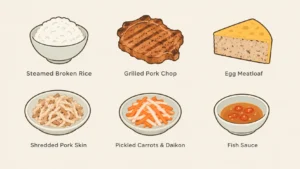
A classic cơm tấm plate is built from several components that each play a specific role:
- Broken rice (gạo tấm): The base of the dish. It’s steamed rather than boiled, which keeps the grains from becoming too soft.
- Grilled pork chop (sườn nướng): Thin pork chops marinated in a mixture typically including fish sauce, garlic, sugar, and sometimes lemongrass, then grilled over charcoal for a smoky char.
- Steamed egg meatloaf (chả trứng or chả trứng hấp): A custard-like mixture of eggs, ground pork, wood ear mushroom, and glass noodles, steamed until firm.
- Shredded pork skin (bì): Thin strips of pork skin and meat tossed with toasted rice powder, adding a chewy texture and nutty flavor.
- Pickled vegetables (đồ chua): Julienned carrots and daikon pickled in a vinegar-sugar brine, used to cut through the richness of the meat.
- Fried egg (optional): A sunny-side-up egg is a common addition in many regional versions.
- Scallion oil (mỡ hành): Chopped scallions cooked briefly in hot oil, drizzled over the rice for aroma and a glossy finish.
- Diluted fish sauce (nước mắm pha): A thinned, slightly sweetened fish sauce dressing poured over the entire plate just before eating, tying all the components together.
How Cơm Tấm Is Traditionally Prepared
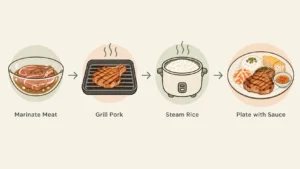
Cơm tấm is less a single recipe than an assembly of several smaller preparations that come together on one plate.
The rice is steamed separately, usually with a bit less water than regular rice would need, since the broken grains absorb liquid differently and can turn gummy if overcooked. The pork chops are marinated for at least 30 minutes, ideally several hours, so the fish sauce and aromatics penetrate the meat before grilling over high, direct heat. Grilling matters here: the char and smokiness from an open flame are part of what distinguishes restaurant-quality cơm tấm from a pan-fried version, since dry heat caramelizes the marinade’s sugars in a way a skillet doesn’t replicate as well.
The egg meatloaf is steamed in a shallow dish until just set, then sliced into wedges. The pickled vegetables need time to rest in the brine, generally at least 30 minutes, so they soften slightly while staying crisp. If they’re used too fresh, they taste sharply vinegary rather than balanced.
Everything is plated together, and the fish sauce dressing is added last. Because the rice, meat, and toppings are cooked separately, timing them to finish close together is one of the more challenging parts of assembling a full plate at home; the dish is designed to be modular so that any one component can be swapped or scaled without disrupting the rest.
Cơm Tấm Đặc Biệt: The “Special” Combination Plate
“Cơm tấm đặc biệt” translates to “special broken rice” and refers to a combination plate that includes most or all of the classic toppings at once, rather than just one or two. A typical đặc biệt plate includes grilled pork chop, shredded pork skin, steamed egg meatloaf, and often a fried egg, giving diners a sampling of every major texture and flavor the dish offers in one sitting. It’s the most common way cơm tấm is served in restaurants, since it lets a kitchen showcase its full range of toppings.
Nutrition and Calories
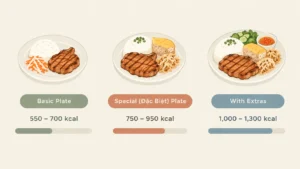
Calorie counts for cơm tấm vary significantly depending on portion size, the cut of pork used, and how many toppings are included. As a general range:
- A basic plate with rice and grilled pork chop alone typically falls between 450 and 600 calories.
- A đặc biệt (special combination) plate with multiple proteins, a fried egg, and pickled vegetables can range from 650 to 900 calories.
- The fish sauce dressing and scallion oil add modest additional calories from sugar and fat, usually 50 to 100 calories combined.
The dish’s calorie profile is driven mainly by the grilled meat and any fried components, while the rice and pickled vegetables contribute relatively little on their own.
Common Variations and Substitutions
Regional and personal variations of cơm tấm are common:
- Grilled chicken or shrimp sometimes replace or supplement the traditional pork chop for those who don’t eat pork.
- Grilled pork ribs (sườn cọng) are used in place of thin-cut chops in some versions, offering a meatier bite.
- Omitting the egg meatloaf or pork skin is common for lighter versions of the dish, since both are calorie-dense.
- Brown or unpolished broken rice appears in some health-focused versions, though it changes the texture significantly from the traditional white broken rice.
- Extra chili or chili oil is frequently added tableside for those who want more heat, since the base dish itself is not spicy.
Each substitution changes the dish’s flavor balance: removing the fatty pork skin, for instance, shifts the plate toward a leaner, less rich profile, while swapping in shrimp adds a lighter, slightly sweeter protein note in place of the char and smokiness of grilled pork.
How to Pronounce “Cơm Tấm”
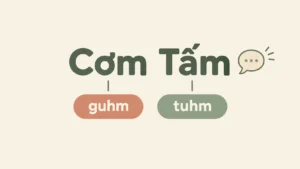
“Cơm tấm” is pronounced roughly as “gum tuhm,” with a short, clipped tone on both syllables. In Vietnamese, “cơm” (rhyming loosely with “gum” but with a rounder vowel) means “rice,” and “tấm” refers to the broken or fragmented grains. The tone marks in Vietnamese affect pitch rather than just vowel sound, so native pronunciation carries a rising inflection on “tấm” that’s difficult to convey in English spelling alone.
Conclusion
Cơm tấm turned an inexpensive milling byproduct into one of Vietnam’s most beloved comfort foods, built on the contrast between fractured, absorbent rice and a plate of richly flavored grilled and steamed toppings. Whether served as a simple pairing of rice and pork chop or as a fully loaded đặc biệt plate, its appeal comes from the balance of textures and the way each component, from the pickled vegetables to the fish sauce dressing, is designed to offset the richness of the others.
FAQ
What does “cơm tấm” mean in English?
It translates to “broken rice,” referring to fractured rice grains left over from milling.
Is cơm tấm the same as regular fried rice?
No. Cơm tấm is steamed rice made from broken grains and served with separate grilled and steamed toppings, not stir-fried rice.
Why is the rice “broken”?
The grains fracture during the milling process. They were historically sold cheaply because they weren’t considered as visually appealing as whole grains.
Is cơm tấm spicy?
Not inherently. The base dish is mild, though chili or chili oil is often available as an optional add-on.
What’s the difference between cơm tấm and cơm tấm đặc biệt?
A standard plate usually includes one main protein, while “đặc biệt” (special) plates combine multiple toppings, such as pork chop, pork skin, and egg meatloaf, on one plate.