Introduction
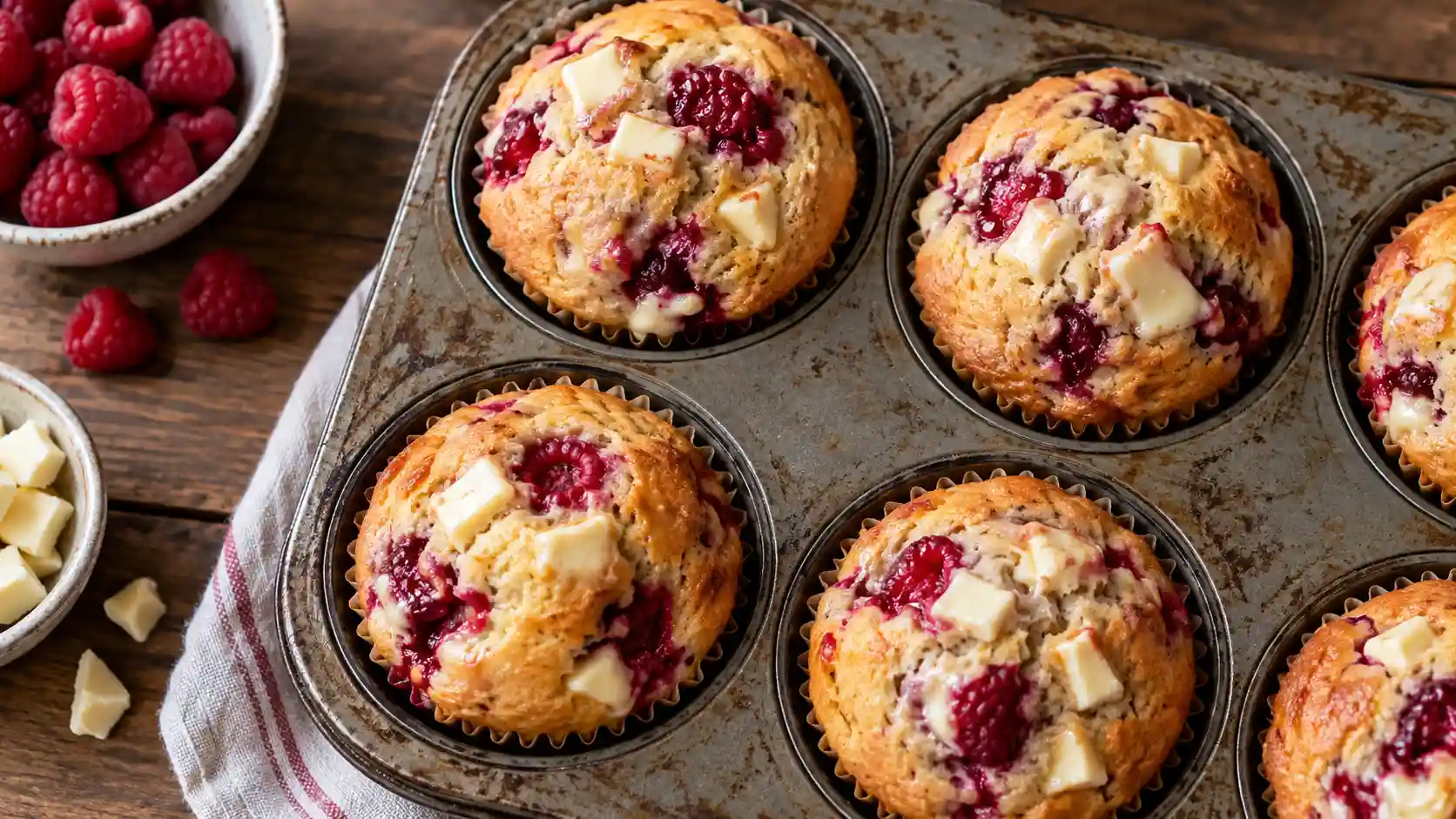
Raspberry and white chocolate muffins pair tart, juicy fruit against sweet, creamy chocolate inside a soft, tender crumb. The combination works because raspberries bring acidity and moisture that balance the richness of white chocolate, which is naturally high in sugar and cocoa butter but contains no cocoa solids. Understanding how these two ingredients interact — and how basic muffin chemistry (fat, moisture, leavening, and mixing method) affects texture — makes it possible to adapt any recipe, whether it follows a classic British style like Mary Berry’s or a simpler, egg-forward approach like Jamie Oliver’s.
Quick Summary
- Raspberries add moisture and tartness; white chocolate adds sweetness and creaminess — the pairing balances rather than competes.
- A muffin batter should be mixed minimally to stay tender; overmixing develops gluten and produces a tough, peaked result.
- Butter-based batters give a denser, richer crumb; yogurt or buttermilk versions give a lighter, more tender one.
- Frozen raspberries, tossed in flour before folding in, reduce streaking and sinking.
- A crumble or streusel topping adds textural contrast and is achievable with just flour, butter, and sugar.
What Makes These Muffins Work
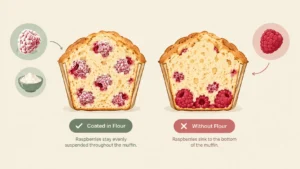
Muffins rely on a simple relationship: fat coats flour proteins and limits gluten formation, while liquid activates the leavening agent (usually baking powder) to create rise. Raspberries introduce extra liquid as they bake and release juice, so batters with fresh or frozen raspberries typically need slightly more structure — either from a higher proportion of flour or a binding ingredient like yogurt — to avoid a soggy centre. White chocolate, meanwhile, melts at a lower temperature than milk or dark chocolate because of its higher fat content, so it tends to soften and pool rather than hold sharp chunks; chopping it slightly larger than the recipe calls for helps it survive the oven’s heat without disappearing entirely into the batter.
Ingredients and Why Each One Matters
- Flour provides the structural framework; plain (all-purpose) flour is standard, while self-raising flour reduces the need for separate baking powder.
- Raspberries (fresh or frozen) supply moisture and acidity; frozen berries should be added while still frozen to prevent them from bleeding colour through the batter.
- White chocolate contributes sweetness and a creamy melt; chopped chunks perform better than chips, which are formulated to hold their shape and can taste waxy.
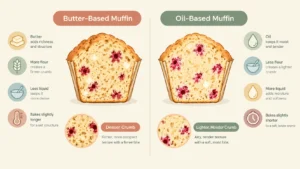
- Butter or oil determines richness and crumb density — butter gives flavour and a slightly firmer texture, while oil produces a moister, softer crumb that stays fresh longer.
- Sugar sweetens and also tenderizes by competing with flour for moisture, which softens the final texture.
- Eggs bind the batter and add structure, while also contributing to a lighter, more aerated rise.
- Baking powder is the primary leavening agent in most versions and should be fresh, since it loses potency over time and can result in flat, dense muffins.
- Milk, buttermilk, or yogurt thin the batter and add tenderness; buttermilk and yogurt also add acidity, which reacts with baking powder for extra lift.
Step-by-Step Method
- Preheat the oven to around 200°C (400°F) — a hotter start helps muffins rise quickly and develop a domed top before the structure sets.
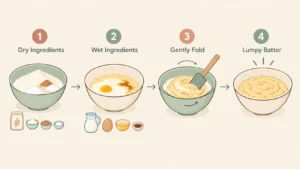
- Whisk together the dry ingredients (flour, baking powder, sugar, salt) in one bowl.
- In a separate bowl, combine the wet ingredients (melted butter or oil, eggs, milk or yogurt).
- Pour the wet mixture into the dry ingredients and fold gently until just combined — a few visible streaks of flour are fine and prevent overmixing.
- Fold in the raspberries and chopped white chocolate last, using as few strokes as possible to avoid crushing the fruit and streaking the batter pink.
- Divide the batter evenly among muffin cases, filling each about three-quarters full to allow room for rise.
- Bake for 18–22 minutes, or until a skewer inserted into the centre comes out clean or with a few moist crumbs (not wet batter).
- Cool in the tin for 5 minutes before transferring to a wire rack, which prevents the base from becoming soggy from trapped steam.
Common Variations (Mary Berry, BBC Good Food, and No-Yogurt Versions)
Mary Berry’s approach typically favours an all-in-one method using softened butter, resulting in a slightly denser, richer muffin closer to a cupcake in texture. BBC Good Food–style recipes often use oil instead of butter for a lighter, more consistently moist crumb that keeps well over several days. Recipes without yogurt rely on milk or buttermilk alone for moisture; the result is slightly less tender but simpler, since yogurt’s thickness can require adjusting other liquid quantities to keep the batter from becoming too heavy.
Achieving a Bakery-Style Crumble Top
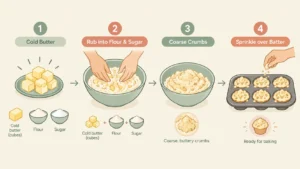
A crumble (streusel) topping is made by rubbing cold butter into flour and sugar until it forms coarse, pea-sized clumps, then sprinkling it over the batter before baking. The key is keeping the butter cold until it goes into the oven; if it softens too much beforehand, the topping melts into the batter instead of baking into a crisp, textured layer. This topping also helps disguise any unevenness from berries poking through the surface.
Storage and Freezing
Raspberry and white chocolate muffins keep at room temperature in an airtight container for 2–3 days. Refrigeration is not usually recommended, since it tends to dry muffins out faster than it preserves them. For longer storage, muffins freeze well for up to 3 months — individually wrapping them before freezing prevents freezer burn and allows single portions to be thawed as needed, either at room temperature or briefly warmed in a low oven to restore softness.
Nutrition and Calories
A standard-sized raspberry and white chocolate muffin typically falls between 250–350 calories, depending on the ratio of butter to oil, the amount of white chocolate, and portion size. White chocolate is the primary driver of both sugar and fat content, so reducing the quantity or switching to a higher-cocoa-butter, lower-sugar white chocolate can noticeably lower the calorie count without significantly changing texture.
Troubleshooting Common Problems
- Sunken berries: Toss raspberries in a tablespoon of flour before folding them in; this helps suspend them in the batter rather than sinking to the bottom.
- Dense, tough muffins: Usually caused by overmixing, which overdevelops gluten; stop folding as soon as the flour disappears.
- Pink-streaked batter: Caused by crushing berries during mixing; using frozen berries and folding gently minimizes bleeding.
- Melted-away chocolate: Chop chocolate into larger chunks and toss in flour alongside the berries to help it stay suspended.
Conclusion
Raspberry and white chocolate muffins succeed when the balance between moisture (from raspberries) and richness (from white chocolate) is respected, and when the batter is handled gently to preserve tenderness. Once the underlying principles — fat’s role in tenderness, minimal mixing, and how added moisture from fruit affects structure — are understood, the recipe becomes easy to adapt across styles, whether richer and butter-based or lighter and oil-based, with or without a crumble top.
FAQ
Can I use frozen raspberries instead of fresh?
Yes — frozen raspberries work well and are less likely to bleed into the batter if added while still frozen, right before baking.
Why did my muffins turn out dense?
Overmixing the batter is the most common cause, as it overdevelops gluten and produces a heavier, tougher crumb.
Can I make these without yogurt?
Yes — milk or buttermilk alone can replace yogurt, though the muffins may be slightly less tender since yogurt adds extra moisture and acidity.
How do I stop the white chocolate from melting completely?
Use larger chopped chunks rather than chips, and toss them in flour before folding into the batter to help them stay in place.