Introduction
Pear salad pairs the soft sweetness of ripe pears with crisp greens, sharp cheese, and a tangy dressing, creating a dish that works as an appetizer, a side, or a light main course. Because pears bring natural sugar and a delicate texture that few other fruits match, they’ve become a staple in both home kitchens and restaurant menus, especially during fall and winter when pears are at their peak. This article breaks down what makes a pear salad successful, from ingredient pairing to dressing chemistry to regional variations, so you can build one with confidence.
Quick Summary
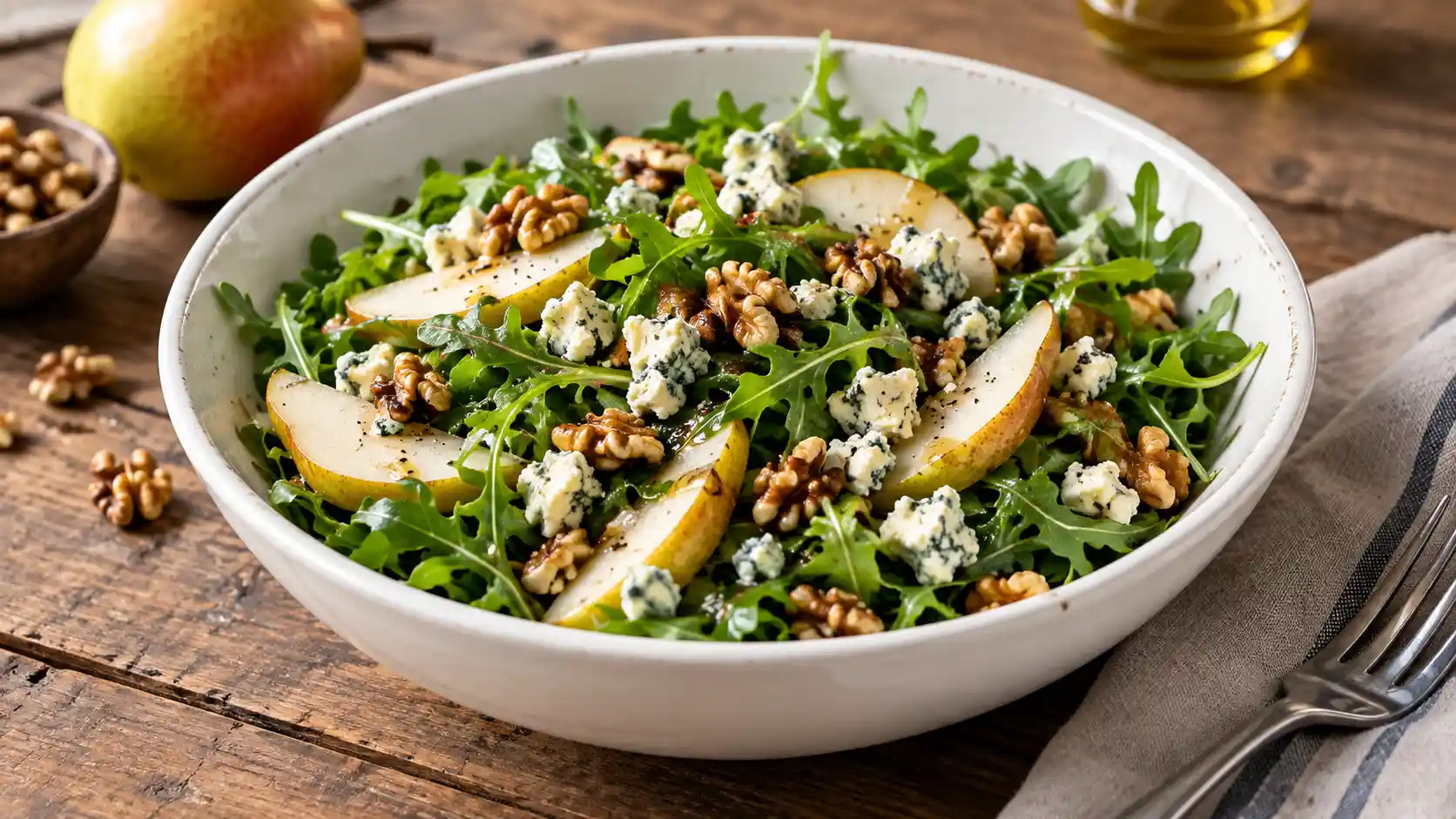
A well-made pear salad balances four elements: a base of greens (arugula, spinach, or mixed greens), sliced or roasted pears, a textural component (walnuts, pecans, or pepitas), and a creamy or tangy element (blue cheese, goat cheese, or feta), tied together with a vinaigrette that echoes the pear’s sweetness — commonly honey mustard, balsamic, or a light citrus dressing.
What Makes a Great Pear Salad
The defining feature of pear salad is contrast. Pears are soft and mildly sweet, so the rest of the dish needs to introduce crunch, acidity, and salt to keep each bite balanced. Arugula and spinach are popular bases because their slight bitterness offsets the pear’s sweetness, while nuts like walnuts or pecans add both crunch and a mild bitterness of their own that plays well against the fruit. Cheese is the third pillar: blue cheese and gorgonzola bring sharp, salty depth, while goat cheese offers a creamier, tangier counterpoint. Skipping any one of these components tends to produce a flatter salad — for example, a pear salad without a textural element like nuts often reads as mushy, since there’s nothing to contrast the pear’s softness.
The Origin of Pear Salad
Fruit-and-greens combinations have roots in European and American home cooking, where seasonal produce was often paired with whatever cheese or nuts were on hand. Pears specifically rose in popularity as a salad ingredient in the mid-20th century United States, particularly through congealed gelatin salads that combined canned pear halves with cottage cheese or cream cheese — a dish still remembered fondly as “old fashioned pear salad” in many Southern households. Modern pear salad recipes moved away from gelatin toward fresh greens, reflecting broader shifts in American salad culture toward lighter, produce-forward dishes.
Choosing and Preparing Pears for Salad
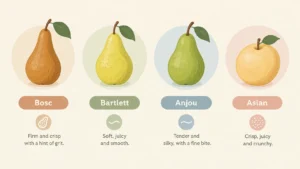
The variety of pear you choose changes the texture and flavor of the finished salad. Bosc pears hold their shape well when sliced and work nicely in salads that need firm bites, while Bartlett and Anjou pears are softer and juicier, better suited to salads eaten shortly after assembly. Asian pears offer a crisp, apple-like bite and a milder sweetness, making them a good choice for salads that want less overt fruitiness. Because pear flesh browns quickly once cut, tossing sliced pears in a small amount of lemon juice before adding them to the salad prevents oxidation and keeps the color and texture appealing.
Best Pear Salad Dressings
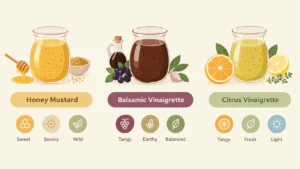
Dressing choice is where most of a pear salad’s flavor identity comes from. A honey mustard dressing — typically Dijon mustard, honey, olive oil, and vinegar — adds a sweet-tangy note that complements pear without overwhelming it, making it one of the most common dressings paired with pear salad. Balsamic vinaigrette is another frequent pairing, especially in walnut and blue cheese versions, since balsamic’s acidity cuts through the richness of the cheese. Lighter dressings, such as a simple lemon-olive oil vinaigrette, work better with delicate greens like spinach or when the pear itself is very ripe and sweet, since a heavier dressing can mask the fruit’s natural flavor.
Classic Pear Salad Combinations
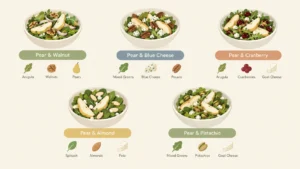
Several ingredient pairings have become established pear salad “formulas,” each built around the same principle of balancing sweet, tangy, and crunchy:
- Pear, arugula, and blue cheese: peppery greens plus sharp cheese, often finished with candied or toasted walnuts and balsamic vinaigrette.
- Pear, goat cheese, and pecans: a milder, creamier combination that pairs well with a citrus-based dressing.
- Apple and pear salad: combining both fruits adds a firmer, tarter counterpoint to the pear’s softness, and works well with a honey mustard dressing.
- Pear, spinach, and feta: a lighter option where feta’s saltiness stands in for blue cheese’s sharper bite.
- Beet and pear salad: earthy roasted beets add color and a mineral depth that balances the pear’s sweetness, often paired with goat cheese.
Roasted and Poached Pear Variations
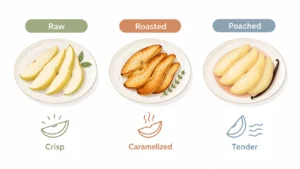
Cooking the pear changes the salad substantially. Roasting pear slices at a moderate oven temperature caramelizes their natural sugars, concentrating sweetness and softening the texture further, which pairs particularly well with warm dressings or heartier greens like kale. Poaching pears — typically in wine, water, or a light sugar syrup with spices like cinnamon or star anise — infuses them with additional flavor while keeping the flesh tender, and is a common technique in more formal or dinner-party versions of pear salad. Both methods trade the raw pear’s crispness for a softer bite, so recipes using roasted or poached pears often lean more heavily on nuts or croutons for texture.
Regional Styles: Old-Fashioned and Southern Pear Salad
Southern pear salad traditionally refers to the gelatin-based version: canned pear halves suspended in lime or lemon gelatin, layered with cream cheese and sometimes chopped pecans, then chilled and sliced. This style is less a green salad and more a molded side dish, commonly served at potlucks and holiday meals. It differs sharply from the fresh, greens-based pear salads more common today, but it remains a recognizable regional dish, particularly across the American South, and is often what people mean when they search for “old fashioned pear salad.”
Storage and Make-Ahead Tips
Pear salad is best assembled shortly before serving, since dressed greens wilt and cut pears begin to brown within a few hours. If preparing ahead, store the components separately: keep greens dry and refrigerated, hold sliced pears in a small amount of lemon water, and store the dressing in a sealed container. Combine everything just before serving. Roasted or poached pears can be made a day in advance and refrigerated, since their texture holds up better than raw pear slices.
Conclusion
Pear salad succeeds when it balances the fruit’s natural sweetness against acidity, salt, and crunch — whether that means a simple arugula and blue cheese combination, a Southern-style gelatin mold, or a warm roasted pear version with pecans. Understanding the role each ingredient plays, from the greens’ bitterness to the dressing’s acidity, makes it easy to adapt the basic formula to whatever pears, cheese, or greens you have on hand.
FAQ
What is the best dressing for pear salad?
Honey mustard and balsamic vinaigrette are the two most common choices, since both provide the acidity and sweetness needed to balance the pear’s softness.
Which pears work best in salad?
Bosc pears hold their shape best for slicing, while Bartlett and Anjou are softer and sweeter; Asian pears offer a crisper, milder alternative.
How do you keep pears from browning in a salad?
Toss sliced pears in a small amount of lemon juice before adding them to the salad to slow oxidation.
What cheese goes best with pear salad?
Blue cheese and gorgonzola offer a sharp contrast, while goat cheese and feta provide a milder, creamier option.
Can pear salad be made ahead of time?
Yes, but the components should be stored separately and combined just before serving to prevent wilting and browning.