Introduction
Vietnamese duck occupies a distinctive place in Southeast Asian cooking, built on a layered use of fish sauce, star anise, ginger, and citrus that sets it apart from other regional duck traditions. Whether roasted whole for a family gathering, simmered into a fragrant noodle soup, or seared as duck breast with a tangy glaze, Vietnamese duck dishes share a common thread: balancing rich, fatty meat against acidic, herbal, or spicy counterpoints. This guide covers the full landscape of Vietnamese duck cooking, from selecting and preparing duck breast to building the sauces, soups, salads, and curries that define the cuisine.
Quick Summary
Vietnamese duck recipes typically combine duck (whole bird, breast, or leg) with a marinade or braising liquid built from fish sauce, garlic, ginger, five-spice or star anise, and a touch of sugar or honey for caramelization. The meat is prepared through roasting, braising, or pan-searing, then served with rice, noodles, or fresh herbs, often alongside a dipping sauce that balances sweet, sour, salty, and spicy elements. Popular formats include crispy roast duck, duck breast with tamarind or orange glaze, duck noodle soup (a slow-simmered broth similar in spirit to pho), duck salad with herbs and nuoc cham dressing, and duck curry enriched with coconut milk and lemongrass.
What Makes Vietnamese Duck Different
Vietnamese duck cooking draws on both indigenous techniques and centuries of culinary exchange with China, which explains why some dishes labeled “Vietnamese duck” show clear lineage to Chinese roast duck and Peking duck styles. The key distinguishing factor is the seasoning base: where Chinese preparations often rely on hoisin, soy sauce, and five-spice alone, Vietnamese versions almost always introduce fish sauce and fresh aromatics like lemongrass, ginger, and Vietnamese coriander. This shift changes the flavor profile from purely savory-sweet to something brighter and more herbal, which is why a Vietnamese duck recipe tends to finish with a squeeze of lime or a scattering of fresh herbs even when the base marinade resembles a Chinese one.
Vietnamese Duck Breast: Selection and Preparation
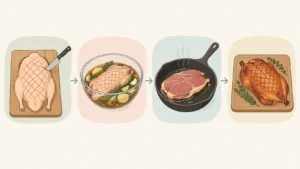
Duck breast is the most approachable cut for home cooks attempting Vietnamese duck breast recipes because it cooks quickly and delivers a high fat-to-meat ratio that renders into a self-basting layer of crisp skin. When selecting duck breast, look for a thick, even layer of fat and skin that has not been over-trimmed, since this fat is essential for both flavor and the crisping technique.
Preparation typically follows these steps:
- Score the skin in a crosshatch pattern without cutting into the meat, which allows fat to render evenly and prevents the skin from curling.
- Marinate for at least 30 minutes (up to overnight) in a mixture of fish sauce, garlic, five-spice powder, and a sweetener such as honey or palm sugar.
- Sear skin-side down in a cold, dry pan, then gradually increase heat, which renders fat slowly instead of scorching the surface.
- Rest the meat for five minutes after cooking to redistribute juices before slicing against the grain.
Skipping the rest period causes juices to escape onto the cutting board rather than staying in the meat, resulting in a drier bite even if the cooking itself was done correctly.
Classic Vietnamese Duck Recipes
Several dishes recur across Vietnamese duck recipe collections, each built around a different cooking method:
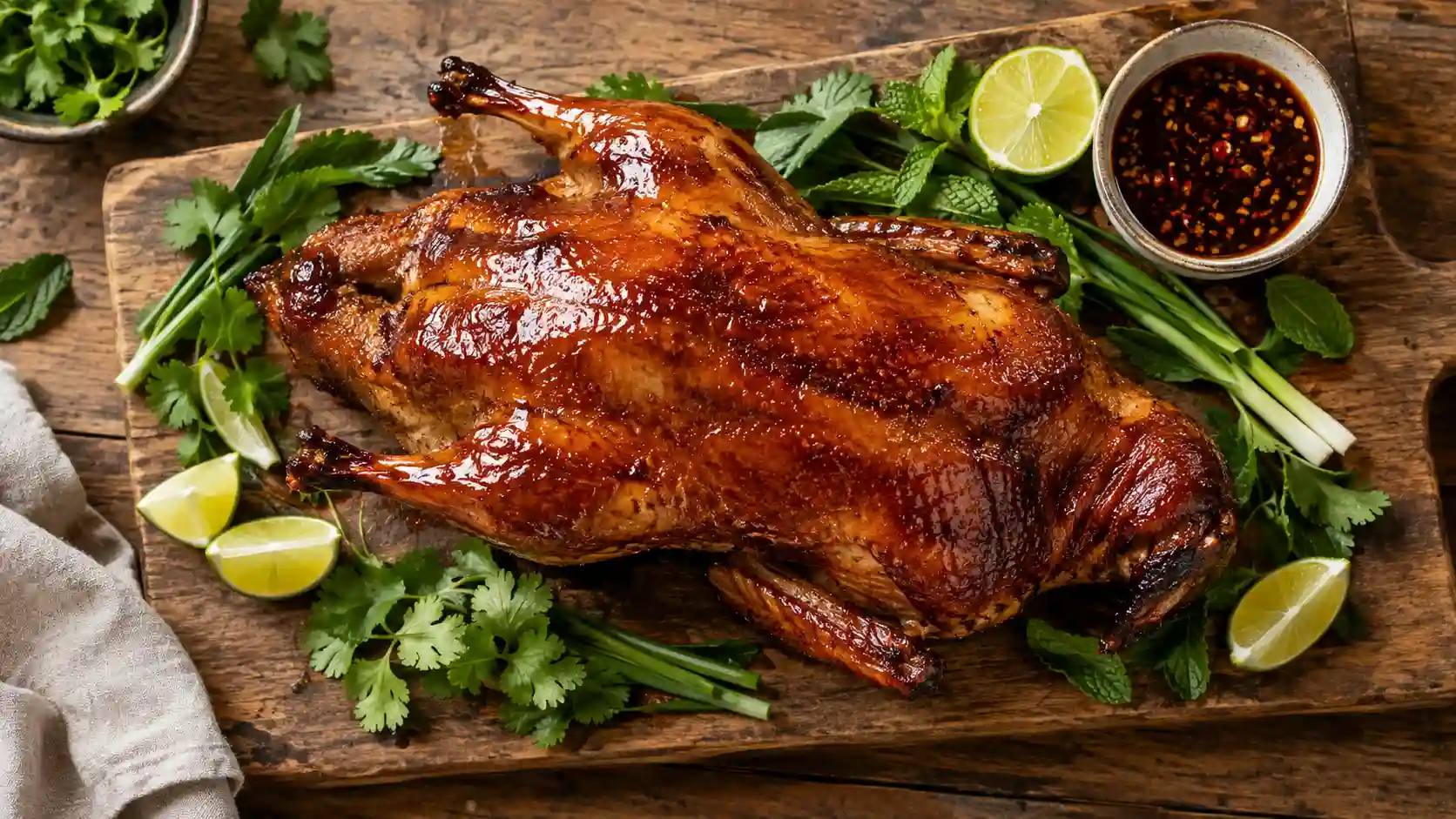
- Vietnamese roast duck (vịt quay): A whole duck marinated in a fish sauce and five-spice mixture, then roasted until the skin turns deeply browned and crackling. This is the dish most often described as vietnamese crispy duck.
- Braised duck with ginger and fish sauce: A one-pot preparation where duck pieces are browned, then simmered in a caramel-fish sauce liquid with fresh ginger until tender.
- Grilled duck breast with citrus glaze: A quicker, easy vietnamese duck recipe that pairs seared duck breast with a glaze built from lime or orange juice, fish sauce, and chili.
- Duck and taro stew: A homestyle dish combining duck with taro root, coconut water, and aromatics, closer to a curry in consistency.
Vietnamese Crispy Duck: Technique Breakdown
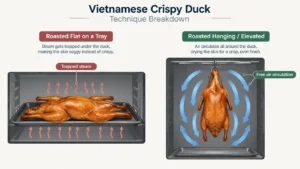
Achieving crispy skin on Vietnamese roast duck depends on managing moisture before heat is applied. Traditional methods air-dry the duck, uncovered, in a refrigerator for several hours or overnight after an initial parboiling or scalding step. This scalding process tightens the skin and removes surface fat, which is what allows the skin to blister and crisp rather than turn rubbery during roasting. A hanging or elevated roasting setup, where hot air circulates around the entire bird, further improves crispness compared to roasting flat on a tray, since trapped steam beneath the duck would otherwise soften the skin from underneath.
Vietnamese Duck Sauce and Dipping Condiments
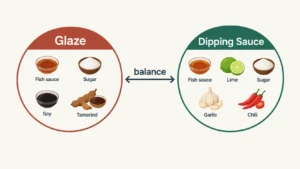
Vietnamese duck sauce differs by dish but generally falls into one of two categories: a savory-sweet glaze brushed onto the duck during cooking, or a fresh dipping sauce served alongside the finished dish. Glazes are usually reductions of fish sauce, sugar, and soy sauce, sometimes with tamarind or orange juice added for acidity. Dipping sauces more often resemble nuoc cham, a mixture of fish sauce, lime juice, sugar, garlic, and chili, which cuts through the richness of duck fat with sharp acidity. Using a glaze without an accompanying acidic dip can leave the dish tasting one-dimensional, since the caramelized sugars in the glaze need a sour counterpoint to avoid feeling heavy.
Vietnamese Duck Noodles and Soups
Vietnamese duck noodle soup applies the slow-simmered broth principles found in pho to duck instead of beef or chicken. The duck carcass and bones are simmered for several hours with charred ginger, onion, and warming spices like star anise and cinnamon, producing a broth that is lighter than beef pho but still deeply savory. Rice noodles, shredded duck meat, and fresh herbs such as cilantro and scallion are added just before serving, since prolonged cooking would cause the noodles to turn mushy and the herbs to lose their fresh aroma. Duck noodle soup is commonly served with a side of chili-vinegar or fermented shrimp paste, depending on regional preference.
Vietnamese Duck Salad
Vietnamese duck salad, sometimes labeled duck salad Vietnamese-style, combines shredded roast or poached duck with cabbage, carrot, herbs like mint and Vietnamese coriander, and a nuoc cham-based dressing. The dish works because the acidity and crunch of the raw vegetables offset the richness of the duck fat, and because the dressing is applied close to serving time so the cabbage retains its crispness rather than wilting. Fried shallots and crushed peanuts are typically added last for texture contrast.
Vietnamese Duck Curry
Vietnamese duck curry sets itself apart from Thai or Indian curries through its use of a lighter curry powder blend combined with coconut milk, lemongrass, and often taro or sweet potato. The duck is usually browned first to render excess fat, which is then used to bloom the curry spices before the coconut milk is added; skipping this browning step results in a curry where the duck fat floats on the surface rather than integrating into the sauce.
Vietnamese Duck vs. Chinese Duck
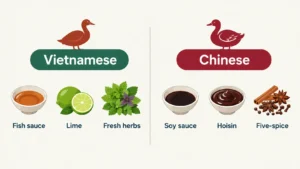
Because Vietnamese duck cooking shares historical roots with Chinese duck preparation, including Peking duck-style presentations, the two are frequently compared. The clearest distinction is aromatic: Vietnamese versions foreground fish sauce, fresh herbs, and citrus, while Chinese versions typically foreground soy-based glazes, hoisin, and dry five-spice without the same reliance on fresh acid. Cooks referencing “Vietnamese duck Chinese” style dishes are usually describing a roast duck that borrows the lacquered, hung-roasting technique from Chinese cooking but finishes with a Vietnamese dipping sauce or herb garnish.
Conclusion
Vietnamese duck cooking rewards attention to two things: rendering the fat properly, whether on a whole roasted bird or a single seared breast, and balancing that richness with acid, herbs, and chili. From crispy roast duck and duck breast recipes to noodle soups, salads, and curries, the through-line across Vietnamese duck dishes is the pairing of fish-sauce-driven savoriness with bright, fresh counterpoints. Understanding this balance makes it possible to adapt any Vietnamese duck recipe with confidence, adjusting sweetness, acidity, or spice to taste.
FAQ
Is Vietnamese duck the same as Peking duck? No. Vietnamese roast duck shares some technique with Peking duck, such as air-drying the skin before roasting, but it is typically seasoned with fish sauce, ginger, and five-spice rather than the maltose glaze and hoisin pairing associated with Peking duck.
What is the best cut for a quick Vietnamese duck recipe? Duck breast is the most practical choice for a fast, easy Vietnamese duck recipe since it cooks in under 20 minutes and doesn’t require the extended drying time whole roast duck needs for crispy skin.
What sauce is traditionally served with Vietnamese duck? A nuoc cham-style dipping sauce made from fish sauce, lime juice, sugar, garlic, and chili is the most common accompaniment, used to cut through the richness of the duck fat.
Can Vietnamese duck noodle soup be made ahead? The broth can be made a day or two in advance and refrigerated, but noodles and fresh herbs should be added only when serving to prevent the noodles from becoming soft and the herbs from wilting.