Introduction
Chilli oil built from infused aromatics and dried chilli flakes has become one of the most searched homemade condiments in Australia, largely thanks to Melbourne home cook Jessica Nguyen, known online for her “Chilli Oil on Everything” recipe. Her method — steeping whole spices and fresh aromatics in hot oil before combining it with chilli flakes — produces a fragrant, restaurant-style oil without specialty equipment. This guide breaks down the technique, explains why each step matters, and compares it with other popular styles, including Jamie Oliver’s version, classic Italian chilli oil, and Vietnamese-style chilli oil.
Quick Summary
- Jessica Nguyen’s chilli oil is built on a two-stage infusion: whole spices and fresh aromatics first, then dried chilli flakes.
- A neutral oil with a high smoke point (vegetable, canola, or peanut) works best because it won’t compete with the chilli and aromatics.
- The oil must cool slightly before it touches the chilli flakes, or the flakes will scorch and turn bitter instead of developing rich color and flavor.
- Sterilized jars and full oil coverage of the solids are the two biggest factors in shelf life and food safety.
- Whole-chilli versions prioritize visual heat and texture, while flake-based versions prioritize even flavor distribution.
What Makes Jessica Nguyen’s Chilli Oil Recipe Different
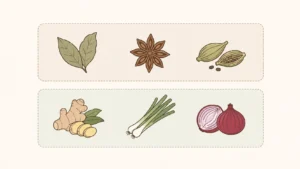
Where many simple chilli oil recipes just heat oil and pour it over flakes, Jessica Nguyen’s approach layers in dry aromatics — bay leaves, star anise, and crushed cardamom — before adding fresh aromatics like ginger, spring onion, and red onion. This two-tier infusion builds complexity: the dry spices release warm, slightly sweet background notes, while the fresh aromatics contribute brightness and pungency. The result reads closer to a Sichuan-style chilli crisp in complexity, though it uses a distinctly Southeast Asian–Australian aromatic blend rather than the Sichuan peppercorns and star anise combinations typical of chilli crisp.
Core Ingredients and Why Each One Matters
Neutral oil (vegetable, canola, or peanut): A high smoke point lets you heat the oil hot enough to properly infuse the aromatics without the oil itself burning or imparting a strong competing flavor, as olive oil would.
Bay leaves, star anise, cardamom pods: These dry spices need direct contact with hot oil to release their essential oils. Crushing the cardamom pods first exposes more surface area, which speeds up infusion.
Ginger, spring onion, red onion: Added after the dry spices because they contain more water and burn faster. A few minutes of gentle cooking is enough to draw out their aromatic compounds without scorching them.
Dried chilli flakes: These are added only once the oil has cooled slightly. Chilli flakes contain compounds that turn bitter and acrid when exposed to oil that’s still near smoking point — this is the single most common mistake in home versions.
Step-by-Step Method
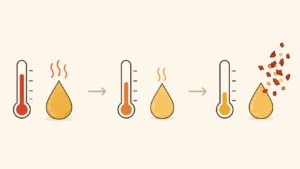
- Heat the oil. Warm about a litre of neutral oil in a saucepan over medium-high heat until it shimmers.
- Infuse dry aromatics. Add whole bay leaves, star anise, and crushed cardamom pods. Let them sit in the hot oil for about two minutes.
- Add fresh aromatics. Stir in sliced ginger, chopped spring onion, and roughly chopped red onion. Cook on medium-low for around five minutes so the flavors steadily transfer into the oil rather than frying too aggressively.
- Cool briefly. Remove the pan from heat and let the oil rest for about five minutes. This cooling window is what protects the chilli flakes from burning in the next step.
- Strain. Pass the oil through a sieve into a heatproof bowl, separating out the spent aromatics.
- Combine with chilli flakes. Slowly pour the warm (not hot) oil over dried chilli flakes, stirring as you go. The residual heat is enough to bloom the chilli’s color and aroma without scorching it.
- Jar and store. Once fully cooled, spoon the mixture into sterilized glass jars, making sure the chilli flakes stay fully submerged in oil.
Whole Chilli vs. Chilli Flake Oil: Choosing Your Style
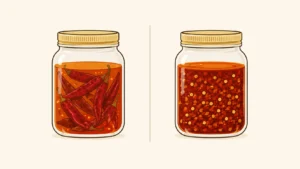
A whole chilli oil recipe uses dried whole chillies — often left intact or roughly torn — steeped directly in the hot oil. This produces a milder, more visually dramatic oil with distinct pods floating in the jar, and it’s easier to adjust heat level by removing chillies before serving. A flake-based approach, like Jessica Nguyen’s, distributes heat and color more evenly through every spoonful, which is why it performs better spooned over rice, eggs, or noodles where you want consistent seasoning rather than isolated pockets of heat.
Regional Variations: Australian, Italian, and Vietnamese Approaches
Australian home-cook style (the category Jessica Nguyen’s recipe sits in) tends to borrow pantry staples — bay leaves, star anise, cardamom — that reflect broader Southeast Asian-Australian home cooking rather than a single national tradition.
Jamie Oliver’s chilli oil recipes typically lean Mediterranean, built around good olive oil, fresh red chillies, and sometimes garlic, positioned more as a finishing drizzle for pasta or grilled vegetables than an all-purpose condiment.
Italian chilli oil (olio santo) is traditionally simple: dried chillies steeped in olive oil, sometimes with garlic, used sparingly as a table condiment for pizza and pasta rather than cooked into dishes.
Vietnamese chilli oil often incorporates garlic, shallots, and sometimes fish sauce or shrimp paste for umami depth, giving it a saltier, more savory profile than the Australian version.
Storage, Shelf Life, and Safety

Homemade chilli oil with fresh aromatics like garlic, ginger, or onion carries a real botulism risk if stored improperly, because these ingredients can introduce moisture and bacteria into an anaerobic, oil-covered environment. To store safely: use fully dried or dehydrated aromatics where possible, sterilize jars by boiling them, keep solids fully submerged in oil, refrigerate rather than pantry-store if any fresh (non-dried) aromatics remain in the jar, and use the oil within two to three weeks if refrigerated. Oils made purely with dried chilli flakes and dried spices, with no fresh garlic or onion left in the jar, keep longer at room temperature than versions where fresh aromatics are strained out but trace moisture remains.
Ways to Use Chilli Oil on Everything
- Spooned over steamed dumplings or wontons
- Drizzled on fried or scrambled eggs
- Mixed into avocado on toast
- Stirred through instant or fresh noodles
- Added to congee, fried rice, or grain bowls
- Used as a marinade base for grilled meats or tofu
Conclusion
Jessica Nguyen’s chilli oil recipe stands out for its layered infusion method — dry spices first, fresh aromatics second, chilli flakes last — which builds more depth than a single-step chilli-and-oil combination. Understanding why each stage matters (heat control, timing, and moisture management) means you can adapt the base method into whole-chilli, Italian, or Vietnamese-style variations while still avoiding the common pitfalls of bitterness or unsafe storage.
FAQ
Is Jessica Nguyen’s chilli oil recipe spicy?
It’s moderately spicy rather than fiery, since the chilli flakes are balanced by sweet and savory aromatics like star anise, cardamom, and onion.
What oil is best for chilli oil?
A neutral, high-smoke-point oil such as vegetable, canola, or peanut oil is best, since it won’t overpower the chilli and aromatic flavors.
Can I make chilli oil with fresh chillies instead of flakes?
Yes — fresh chillies can be used, though they introduce more moisture, which shortens shelf life and increases the need for refrigeration and quicker use.
How long does homemade chilli oil last?
Refrigerated chilli oil made with any fresh aromatics typically lasts two to three weeks; versions made entirely from dried ingredients can last longer at room temperature.
Why did my chilli oil turn out bitter?
Bitterness almost always comes from adding chilli flakes to oil that’s still too hot, which scorches the flakes instead of gently blooming them.