Introduction
Leftover chicken curry recipes turn already-cooked chicken into a fast, flavorful meal without the need for extra roasting or frying time. Because the chicken is already cooked, the focus shifts entirely to building a rich sauce base, so the dish comes together in roughly 20–30 minutes. This makes leftover chicken curry one of the most efficient ways to use up roast, rotisserie, grilled, or even fried chicken that would otherwise go to waste.
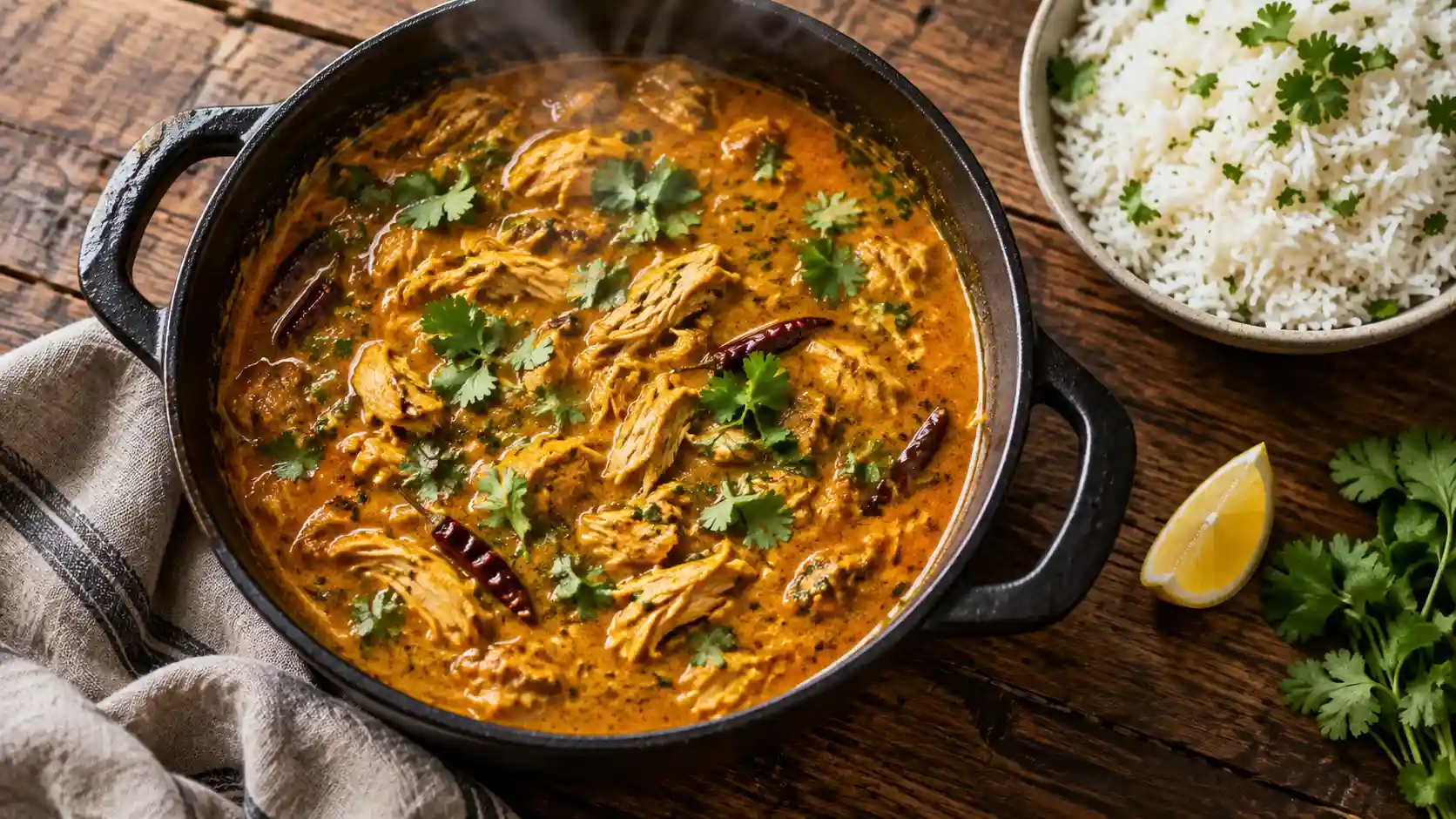
[Banner image placement: directly beneath the Introduction. Prompt: “An overhead shot of a bubbling chicken curry in a dark cast-iron pot, shredded chicken pieces visible in a golden-orange sauce, fresh coriander leaves scattered on top, steam rising, warm kitchen lighting, no text on image.”]
Quick Summary
- Leftover chicken curry works with any pre-cooked chicken: roast, rotisserie, BBQ, grilled, or poached.
- A basic curry sauce needs onion, garlic, ginger, curry powder or paste, and a liquid base (tomato, coconut milk, or stock).
- Coconut milk creates a creamier, milder curry; tomato-based sauces create a sharper, tangier one.
- Because the chicken is already cooked, it should be added at the end to prevent it from drying out or becoming rubbery.
- Slow cookers work well for batch-cooking but require less liquid reduction time since the chicken doesn’t need long cooking.
- Leftover chicken curry keeps for 3–4 days refrigerated or up to 3 months frozen.
Why Leftover Chicken Is Perfect for Curry
Cooked chicken has already released much of its natural moisture during initial cooking, which changes how it behaves in a curry. Unlike raw chicken, which needs 15–20 minutes of simmering to cook through safely, leftover chicken only needs enough time to reheat and absorb flavor — typically 5–10 minutes. Simmering it any longer causes the proteins to tighten further, resulting in a dry, stringy texture.
This is why the sauce itself carries most of the cooking time. Building a deeply flavored base — through properly softened onions, toasted spices, and a well-reduced liquid — matters more in leftover chicken curry than in a curry made with raw meat, because the sauce is doing the flavor work that the chicken can no longer absorb through long-slow cooking.
Essential Ingredients for Leftover Chicken Curry
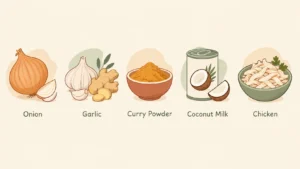
A simple leftover chicken curry recipe typically relies on a small set of core components:
- Aromatics: onion, garlic, and ginger form the flavor foundation for nearly all chicken curry styles, whether Indian, Thai-influenced, or British home-style.
- Spice base: curry powder is the fastest route to flavor, since it’s a pre-blended mix of turmeric, coriander, cumin, and chili. Curry paste (red, green, or Madras-style) delivers a more concentrated, complex flavor.
- Liquid base: tomatoes (fresh, tinned, or passata) create an acidic, tangy sauce; coconut milk creates a rounder, creamier one; stock alone produces a lighter, brothier curry.
- Thickener: a small amount of flour, cornflour, or simmered-down liquid gives the sauce body without needing extra cooking time.
- Leftover chicken: roast, rotisserie, grilled, BBQ, or poached chicken all work, though drier cooking methods (like roasting) benefit from a slightly wetter sauce to compensate for lost moisture.
[Infographic 1 placement: end of this section. Prompt: “Minimalist flat-lay infographic showing five labeled ingredient icons — onion, garlic and ginger, curry powder, coconut milk, and shredded chicken — arranged in a clean row with simple line-art style, muted color palette, no photographic elements.”]
Simple Leftover Chicken Curry (Basic Method)
A simple leftover chicken curry recipe follows a consistent structure regardless of the specific spices used:
- Soften diced onion in oil over medium heat until translucent, about 5–7 minutes — this step is what gives the sauce sweetness and body, so rushing it results in a thinner, sharper-tasting curry.
- Add minced garlic and ginger, cooking for 1 minute until fragrant.
- Stir in curry powder or paste and cook for 30–60 seconds. This step, called blooming the spices, releases their essential oils into the oil, intensifying flavor compared to adding spices directly to a wet sauce.
- Add the liquid base (tomatoes, coconut milk, or stock) and simmer for 10–15 minutes until slightly thickened.
- Add the shredded or chopped leftover chicken and simmer for 5–8 minutes, just until heated through.
- Season with salt, and finish with fresh coriander or a squeeze of lemon juice for brightness.
Leftover Chicken Curry with Coconut Milk
Coconut milk changes both the texture and flavor balance of leftover chicken curry. Its fat content coats the chicken pieces, which helps offset the slight dryness that can occur in leftover meat, particularly leftover roast chicken. Full-fat coconut milk produces a richer, thicker sauce, while light coconut milk creates a thinner, more delicate one that may need a cornflour slurry to thicken properly.
Because coconut milk can separate or become grainy if boiled too aggressively, it should be added after the spice base is cooked and kept at a gentle simmer rather than a rolling boil.
Indian-Style Leftover Chicken Curry
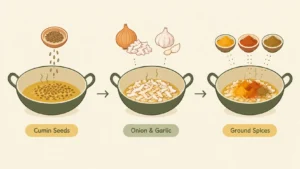
Indian-style leftover chicken curry recipes typically layer spices individually rather than relying on a single pre-mixed curry powder. A common approach uses cumin seeds bloomed in oil first, followed by onion, garlic, ginger, and then ground spices such as turmeric, coriander, cumin, and garam masala added in stages. This layered method builds more complexity than a one-step curry powder, though it takes slightly longer.
Tomato-based Indian curries (similar to a simplified butter chicken or curry-house-style sauce) pair particularly well with leftover roast chicken, since the acidity in the tomatoes helps cut through the richness of roasted skin and fat.
[Infographic 2 placement: end of this section. Prompt: “Simple line-art infographic depicting the layered spice-blooming process: a pan icon with sequential arrows showing cumin seeds, then onion, then ground spices being added in stages, minimalist flat design, two-tone color scheme, no realistic textures.”]
Slow Cooker Leftover Chicken Curry
Slow cooker leftover chicken curry recipes require a different approach than stovetop versions because leftover chicken doesn’t need hours of cooking to become tender — it’s already tender. Adding it at the start of a long slow-cook cycle risks breaking it down until it disintegrates into the sauce.
The most effective method is to slow-cook the sauce base — onions, spices, tomatoes or coconut milk, and stock — on low for 3–4 hours to let the flavors deepen, then stir in the leftover chicken during the final 20–30 minutes, just long enough for it to warm through and absorb flavor without overcooking.
Using Roast, Rotisserie, or BBQ Chicken
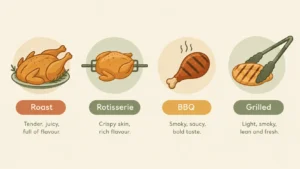
Different leftover chicken sources bring different qualities to a curry:
- Roast chicken tends to be drier, especially breast meat, so pairing it with a wetter, richer sauce (coconut milk or extra stock) helps restore moisture.
- Rotisserie chicken is often well-seasoned already, so it’s worth tasting the sauce before adding extra salt.
- BBQ chicken carries smoky, sometimes sweet notes from sauce or rub, which work well in curries built around tomato and warming spices like cumin and smoked paprika, but can clash with coconut-based sauces that lean toward sweetness already.
- Grilled or poached chicken is the most neutral option and adapts easily to any curry style.
[Infographic 3 placement: end of this section. Prompt: “Minimalist infographic comparing four chicken types — roast, rotisserie, BBQ, and grilled — each represented by a simple icon with a short descriptor line beneath, arranged in a horizontal grid, flat vector style, muted earthy palette.”]
Healthy Leftover Chicken Curry Tips
A few adjustments make leftover chicken curry noticeably lighter without sacrificing flavor:
- Use light coconut milk or a coconut milk-and-stock blend instead of full-fat coconut milk.
- Increase the ratio of vegetables (spinach, peas, cauliflower, or bell peppers) to reduce the proportion of sauce and chicken per serving.
- Skip added sugar or sweetened curry pastes, which some jarred products include to balance spice.
- Remove visible skin from roast or rotisserie chicken before adding it to the curry, since skin holds a disproportionate amount of fat.
Storage and Reheating
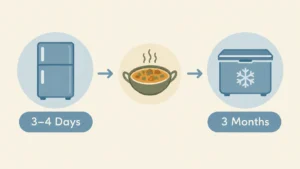
Leftover chicken curry keeps well because the flavors continue to develop after cooking. Refrigerated in an airtight container, it stays fresh for 3–4 days. For longer storage, it freezes well for up to 3 months, though coconut-based curries can separate slightly on thawing and may need a brief whisk or stir while reheating to recombine.
When reheating, gentle heat is important: reheating leftover chicken curry too quickly or at too high a temperature risks overcooking the chicken a second time, making it tougher than it was originally.
[Infographic 4 placement: end of this section. Prompt: “Clean minimalist infographic showing a refrigerator icon labeled ‘3-4 days’ and a snowflake icon labeled ‘3 months,’ connected by a simple curry-bowl icon in the center, flat two-color design, no text beyond the labels shown.”]
Conclusion
Leftover chicken curry recipes offer a practical, low-effort way to transform already-cooked chicken into a completely different meal. The key principles — building flavor through a well-cooked sauce base, adding chicken only at the end, and matching the liquid base (tomato, coconut milk, or stock) to the type of leftover chicken being used — apply across nearly every variation, from simple weeknight versions to slow cooker batches and Indian-style layered curries. With these fundamentals in place, leftover chicken curry becomes a reliable, adaptable recipe rather than a one-off way to avoid food waste.
FAQ
Can I use any type of leftover chicken for curry?
Yes. Roast, rotisserie, BBQ, grilled, and poached chicken all work, though drier types like roast chicken benefit from a richer, wetter sauce.
Do I need to cook the chicken again in the curry?
No extensive cooking is needed — leftover chicken should only be simmered for 5–10 minutes, just enough to heat through and absorb flavor.
Is coconut milk or tomato better for leftover chicken curry?
Neither is objectively better; coconut milk produces a creamier, milder curry, while tomato creates a tangier, sharper one. The choice depends on preference and the type of leftover chicken used.
Can leftover chicken curry be made in a slow cooker?
Yes, but the chicken should be added in the final 20–30 minutes of cooking rather than at the start, since it doesn’t need long cooking and can overcook if added too early.
How long does leftover chicken curry last in the fridge?
It stays fresh for 3–4 days when stored in an airtight container, and up to 3 months in the freezer.