Introduction
A good pizza sauce is the foundation of a good pizza, and making it in the Thermomix takes a fussy stovetop job down to a few minutes of blending and simmering. Instead of standing over a pot stirring and scraping, the Thermomix handles the chopping, blending, and gentle cooking in one bowl, which means less cleanup and a smoother, more consistent sauce every time. This guide walks through exactly how to make pizza sauce in the Thermomix, why each step matters, and how to adapt the base recipe to different tastes.
Quick Summary
Thermomix pizza sauce typically combines tomatoes (fresh or tinned), garlic, olive oil, a touch of sugar, and Italian herbs, blended briefly and cooked for 5–10 minutes at a low simmer speed. The result is a thick, spreadable sauce that clings to pizza dough rather than soaking into it. Fresh tomatoes give a brighter, lighter sauce; tinned tomatoes give a deeper, more concentrated one. The sauce keeps in the fridge for about a week or in the freezer for several months.
What Makes a Great Pizza Sauce in the Thermomix
Pizza sauce differs from pasta sauce in texture and moisture content. Where pasta sauce is often thinner and can simmer for a long time to develop depth, pizza sauce needs to be thicker so it doesn’t make the base soggy during baking. The Thermomix is well suited to this because it can chop the tomatoes finely, then cook off excess liquid at a controlled temperature without the risk of scorching that comes with stovetop cooking. A short cook time — generally under ten minutes — is usually enough, since the sauce will continue cooking once it’s on the pizza in the oven.
Ingredients You’ll Need
A simple, reliable base recipe uses:
- 400g tomatoes (fresh, peeled, or tinned crushed tomatoes)
- 1–2 garlic cloves
- 1 tablespoon olive oil
- 1 teaspoon dried oregano
- 1 teaspoon dried basil
- ½ teaspoon salt
- ½ teaspoon sugar (balances acidity)
- A pinch of black pepper
This is close to the style found in many Thermomix recipe community collections, including variations attributed to home cooks like Trish, and to independent recipe hubs such as Skinnymixers. The exact ratios shift slightly between versions, but the tomato-garlic-herb-oil base stays consistent because it mirrors traditional Italian pizzaiola sauce.
Step-by-Step Method
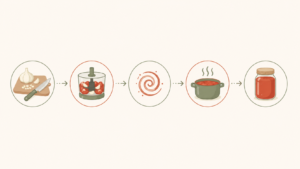
- Place garlic cloves into the Thermomix bowl and chop: 3 seconds, speed 7.
- Add tomatoes, olive oil, oregano, basil, salt, sugar, and pepper.
- Blend to the desired consistency: 10 seconds, speed 5 for a smoother sauce, or speed 3–4 for a chunkier one.
- Cook: 8 minutes, 100°C, speed 1, with the measuring cup off (or on the vented setting) to let steam escape and the sauce reduce.
- Check thickness. If the sauce is still watery, cook for a further 2–3 minutes.
- Let it cool slightly before spreading on pizza base, or transfer to a jar once fully cooled.
Cooking off the extra liquid matters because a wet sauce prevents the base from crisping and can lead to a soggy center, especially with fresh, high-moisture tomatoes.
Fresh Tomatoes vs Canned Tomatoes

Both work well, but they behave differently:
- Fresh tomatoes need to be peeled (a quick blanch in boiling water loosens the skins) and produce a lighter, brighter-tasting sauce with more visible seeds and pulp unless strained. They also carry more water, so the cook time usually needs to run a little longer to reach the same thickness.
- Tinned tomatoes are already partially cooked and consistently ripe, so they give a deeper, more concentrated flavor with less prep and a shorter cook time. This makes them the more reliable choice for a quick weeknight pizza sauce.
If a recipe specifically calls for fresh tomato pizza sauce, expect a slightly thinner result unless an extra few minutes of cooking is built in to compensate.
Flavor Variations
Garlic pizza sauce: increase garlic to 3–4 cloves and add it earlier in the blend so the flavor mellows during cooking rather than staying sharp.
BBQ pizza sauce: replace the herbs and half the tomato with a smoky barbecue sauce base, keeping the tomato for body. This works well as an alternative base for pulled pork or chicken pizzas rather than a classic Margherita.
White pizza sauce: skips tomatoes entirely in favor of a béchamel-style base (butter, flour, milk, garlic, parmesan), suited to pizzas topped with spinach, ricotta, or mushroom rather than red-sauce toppings.
Hidden veggie pizza sauce: blends in finely processed carrot, zucchini, or capsicum alongside the tomatoes. Because the Thermomix purées everything smoothly, the added vegetables disappear into the sauce’s texture and color without being detectable by taste, which is a common approach for family-friendly homemade pizza.
Common Mistakes and How to Avoid Them

- Skipping the cook-down step: leads to a runny sauce that soaks into the dough.
- Over-blending: can make the sauce too smooth and thin-feeling; a slightly coarser blend holds better on the base.
- Not balancing acidity: tomatoes vary in sweetness, so tasting and adjusting the sugar and salt at the end prevents an overly sharp or flat sauce.
- Using it too thick straight from the fridge: cold sauce can be harder to spread evenly; letting it sit at room temperature for a few minutes first helps.
Storage and Freezing

Pizza sauce keeps well in an airtight container in the fridge for up to a week. For longer storage, portion it into freezer bags or small containers — flattening bags before freezing makes them stack easily and thaw faster. Frozen sauce keeps well for around three months and can be thawed in the fridge overnight or gently warmed from frozen.
Homemade vs Store-Bought Sauce
Store-bought pizza sauces and pasta sauces, including those from supermarkets like Woolworths, are convenient but tend to be thinner, sweeter, or saltier than a homemade version, since they’re formulated for shelf stability rather than a specific bake. A Thermomix version allows full control over salt, sugar, and thickness, and it takes roughly the same amount of hands-on time as opening a jar, since the machine does the chopping and cooking itself.
Conclusion
Making pizza sauce in the Thermomix comes down to a handful of pantry staples, a quick blend, and a short cook to remove excess moisture. Once the base method is understood, it’s easy to branch into variations — garlicky, smoky, vegetable-boosted, or a tomato-free white sauce — without changing the underlying technique. Paired with a Thermomix pizza dough or base, it forms the foundation of a pizza made almost entirely from scratch.
FAQ
Can I make pizza sauce in the Thermomix without cooking it?
Yes, a raw blended sauce works, but it will be thinner and more watery on the pizza since none of the liquid has been reduced.
Why is my Thermomix pizza sauce too thin?
It usually needs a longer cook time to evaporate excess liquid, particularly if fresh tomatoes were used.
Can I use this sauce for pasta as well as pizza?
Yes, though pizza sauce is generally thicker; thinning it slightly with a splash of water or stock brings it closer to a pasta sauce consistency.
How long does homemade pizza sauce last in the fridge?
About five to seven days in an airtight container.
Can I double the recipe?
Yes, the Thermomix bowl can generally handle a doubled batch, though the cook time may need to increase slightly to reduce the larger volume.