Introduction
Pork rice paper rolls are a light, adaptable dish built from thin rice paper wrappers filled with cooked pork, fresh herbs, noodles, and vegetables. They can be served fresh and cool, like a Vietnamese summer roll, or fried until the wrapper turns golden and crackling. Because the wrapper itself is nearly flavorless, the dish takes on the character of whatever filling, herb mix, and dipping sauce it’s paired with, which is why so many regional and personal variations exist under the same name.
This guide covers the base technique, the most common variations (Vietnamese, Chinese-style, mince-based, fried, and sticky-glazed), and the small details—like water temperature and rolling tension—that determine whether a roll holds together or falls apart.
Quick Summary
- Rice paper needs a brief dip in warm (not hot) water to soften into a pliable wrapper.
- Cooked pork (sliced, minced, or shredded) is the standard protein; prawns are a common addition.
- Fresh rolls are served cold with herbs and rice noodles; fried rolls use a drier, more concentrated filling.
- A tight, even roll with the filling pushed close to one edge prevents air pockets and tearing.
- Dipping sauce—usually nuoc cham, peanut sauce, or a soy-vinegar blend—is essential to the dish, not optional.
What Are Pork Rice Paper Rolls?
Rice paper rolls (also called spring rolls or summer rolls depending on the region and whether they’re fried) are made from bánh tráng, a dried wrapper pressed from rice flour, water, and sometimes tapioca starch. When rehydrated, the wrapper becomes translucent, slightly chewy, and stretchy enough to fold around a filling without cooking further.
Pork is one of the most common fillings because it holds moisture well and pairs cleanly with the herbs typically used in the wrap—mint, Thai basil, cilantro, and perlla in Vietnamese versions. The dish sits at the intersection of Vietnamese and southern Chinese food traditions, which is why recipes labeled “Vietnamese” and “Chinese-style” often share the same core technique but differ in seasoning, herb selection, and sauce.
Ingredients You’ll Need
For the filling:
- Pork (thin-sliced pork loin or belly, or ground/minced pork)
- Rice vermicelli noodles, cooked and cooled
- Shredded lettuce or cabbage
- Julienned carrot and cucumber
- Fresh herbs: mint, Thai basil, cilantro
- Optional: peeled cooked prawns, bean sprouts
For the wrapper:
- Round rice paper sheets (22cm is a common size for rolls)
- Warm water in a shallow dish for softening
For the sauce:
- Fish sauce, lime juice, sugar, water, garlic, and chili for nuoc cham
- Or peanut butter, hoisin, and water for a peanut dipping sauce
How to Soften Rice Paper Without Tearing It
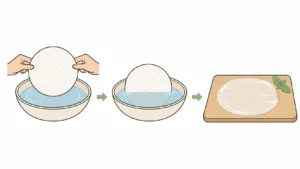
The most common failure point in this recipe is oversoaking the rice paper. Rice paper is starch-based, so it continues to absorb water even after it’s removed from the dish. If it’s left in water until fully soft, it becomes sticky, overstretched, and prone to tearing the moment a filling is added.
The fix is to dip the sheet in warm water (not hot) for only 2–3 seconds per side, then lay it flat on a clean, damp surface. It will still feel slightly firm at this point—that’s correct. It finishes softening over the next 20–30 seconds while you arrange the filling, reaching the right pliability exactly when you’re ready to roll.
Step-by-Step: Classic Fresh Pork Rice Paper Rolls
- Cook the pork (poach or pan-sear thin slices, or brown ground pork) and let it cool slightly.
- Cook rice vermicelli according to package instructions, rinse under cold water, and drain well.
- Dip one rice paper sheet in warm water for 2–3 seconds and lay it on a damp cutting board or plate.
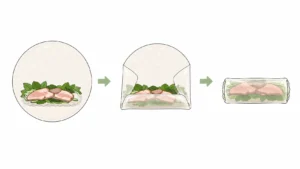
- Arrange a small amount of lettuce, noodles, pork, herbs, and vegetables in a line across the lower third of the wrapper, leaving space on both sides.
- Fold the bottom edge over the filling, fold in both sides, then roll upward firmly and evenly.
- Repeat with the remaining wrappers, keeping finished rolls covered with a damp towel so they don’t dry out.
- Serve immediately with dipping sauce, or refrigerate briefly under a damp cloth.
Rolling tightly matters more than it seems: a loose roll traps air pockets, which make the wrapper more likely to split when picked up.
Vietnamese-Style Pork Rice Paper Rolls (Nem Cuốn Variation)
The Vietnamese version—often called gỏi cuốn when it includes prawns—relies on a specific herb combination (mint, Thai basil, and sometimes perilla) and thin-sliced boiled pork belly or pork loin rather than ground pork. The pork is typically poached whole in water with a few aromatics, then sliced thinly once cooled, which keeps it tender and prevents it from drying out inside the roll.
Nuoc cham, a sauce built from fish sauce, lime juice, sugar, water, garlic, and fresh chili, is the standard pairing. Its acidity and saltiness balance the mild, starchy wrapper and the richness of the pork.
Pork Mince (Ground Pork) Rice Paper Rolls
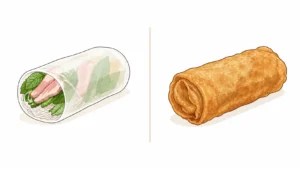
Using ground or minced pork instead of sliced pork changes both texture and technique. Mince needs to be cooked through and well-seasoned before rolling, usually with garlic, a little soy sauce or fish sauce, and black pepper, since it has more surface area exposed to the filling and can taste flat if under-seasoned.
Because mince is looser than sliced meat, it’s best drained of excess fat or liquid before rolling—otherwise the moisture can seep into the rice paper and weaken it. Mixing the cooked mince with a small amount of chopped vegetables (carrot, wood ear mushroom, or bean sprouts) also helps bind the filling into a cohesive line rather than crumbling loosely inside the wrap.
Pork and Prawn Rice Paper Rolls
Adding prawns alongside pork is a common Vietnamese-style combination. The prawns are usually halved lengthwise and placed against the rice paper first, cut-side up, so their pink color shows through the translucent wrapper once rolled. This is a presentation technique as much as a flavor one: the visible prawn signals the filling before the roll is even cut or bitten into.
Because prawns cook quickly and toughen if overdone, they’re typically poached separately and briefly—just until opaque—rather than cooked alongside the pork.
Fried and Crispy Pork Rice Paper Rolls
Fried rice paper rolls use the same wrapper but a drier, more concentrated filling, since excess moisture causes the wrapper to blister unevenly or absorb too much oil during frying. Ground pork mixed with wood ear mushroom, vermicelli, and minced onion is a standard fried filling.
For a crispy result, rolls are usually shallow- or deep-fried at a moderate temperature (around 160–170°C/320–340°F) rather than very high heat. Frying too hot browns the wrapper before the filling is heated through, while frying too cool lets the wrapper absorb excess oil and turn greasy rather than crisp. Letting fried rolls rest briefly on a wire rack, rather than paper towels, helps keep the underside from steaming and going soft.
Sticky Pork Rice Paper Rolls
“Sticky” pork rice paper rolls typically refer to rolls made with pork that’s been glazed in a reduced sauce—often a mix of soy sauce, brown sugar or honey, and garlic—before or after rolling. The sugar in the glaze caramelizes slightly as it cooks, giving the pork a glossy, tacky coating that contrasts with the neutral rice paper wrapper.
This style is usually served fresh rather than fried, since the sticky glaze already provides a concentrated flavor that doesn’t need additional crisping.
Dipping Sauces That Work Best
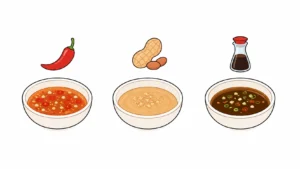
- Nuoc cham: fish sauce, lime juice, sugar, water, garlic, chili — the standard match for fresh Vietnamese-style rolls.
- Peanut sauce: peanut butter, hoisin sauce, water, and a touch of lime — pairs well with pork and vermicelli fillings.
- Soy-vinegar dip: soy sauce, rice vinegar, sesame oil, and scallion — common with Chinese-style or fried versions.
Matching the sauce to the filling matters: a heavier peanut sauce can overwhelm delicate herb-forward fresh rolls, while a light nuoc cham can taste thin against a rich, fried filling.
Storage, Make-Ahead, and Reheating
Fresh rice paper rolls are best eaten within a few hours of rolling. If storing, wrap each roll individually in plastic wrap or a damp paper towel and refrigerate for up to a day; without this protection, the wrappers dry out, stiffen, and can crack.
Fried rolls can be refrigerated for up to three days and reheated in an oven or air fryer at around 190°C (375°F) until the wrapper crisps again. Microwaving is not recommended, since it makes the fried wrapper chewy and soft rather than crisp.
Common Mistakes and How to Fix Them
- Tearing wrappers: usually caused by oversoaking. Reduce soak time and let the wrapper finish softening on the counter.
- Rolls falling apart: often from overfilling or rolling too loosely. Use less filling and roll with steady, even pressure.
- Soggy fried rolls: caused by excess moisture in the filling or oil that’s too cool. Drain fillings well and fry at a consistent moderate temperature.
- Bland filling: mince-based fillings especially need direct seasoning, since the wrapper itself adds no flavor.
Nutrition and Calories
Calorie content varies significantly by filling and cooking method. Fresh pork rice paper rolls with lean pork, vermicelli, and vegetables are relatively light, generally falling in a moderate calorie range per roll due to the thin wrapper and lack of added fat. Fried versions carry more calories per roll because of the oil absorbed during frying, and rolls made with fattier cuts like pork belly or sticky glazed pork will also run higher than those made with lean pork loin or mince.
Conclusion
Pork rice paper rolls are less a single fixed recipe than a flexible format: a soft rice paper wrapper around a pork-based filling, adaptable to fresh or fried preparation, sliced or minced pork, and a range of regional herb and sauce combinations. Once the core technique—brief soaking, restrained filling, and a tight roll—is solid, switching between Vietnamese, Chinese-style, mince-based, or fried versions is mostly a matter of changing the filling and sauce rather than relearning the method.
FAQ
Can I make pork rice paper rolls ahead of time? Fresh rolls can be made a few hours ahead if wrapped tightly in damp paper towels and refrigerated, but they’re best eaten the same day since the wrapper gradually dries or toughens in the fridge.
Why does my rice paper keep tearing? This almost always comes from soaking the wrapper too long. A 2–3 second dip is enough; the wrapper continues softening on the counter after you remove it from the water.
Can I use raw pork mince directly in the filling? No. The pork needs to be fully cooked before rolling, since fresh rice paper rolls aren’t cooked again after assembly.
What’s the difference between fresh and fried pork rice paper rolls? Fresh rolls use a moist filling and are served cold, while fried rolls use a drier, more concentrated filling to avoid sogginess and are cooked until the wrapper crisps.
Are pork rice paper rolls gluten-free? Rice paper itself is typically gluten-free, but always check the fish sauce, hoisin, and soy sauce used in fillings and dips, since some brands contain wheat.