Yes, a Thermomix can make thick, creamy mayonnaise. The key is to combine the egg and seasonings first, then add the oil gradually while the machine runs so that the oil can emulsify instead of remaining separate. A published Thermomix recipe uses one room-temperature egg, 250 g (about 1 cup plus 2 tablespoons and 1 teaspoon) of neutral oil, acid, and seasonings, mixed at speed 4 for 1 minute 30 seconds while the oil trickles through the lid. The method below follows that manufacturer-published reference. Kitchen Memo’s comparative batch results have not yet been supplied, so the article does not claim that a separate combination has been experimentally proven superior.
Quick Summary
- Can a Thermomix make mayonnaise? Yes. A manufacturer-published method produces approximately 300 g in about 5 minutes.
- What matters most? Add the oil gradually while the mixture is running. Do not pour the whole amount in at once.
- Which oil should you choose? Start with a mild oil, such as grapeseed, safflower, or sunflower oil.
- How do you rescue runny mayonnaise? Start a fresh emulsion with an additional egg and slowly incorporate the failed mayonnaise.
- How should you store it? Refrigerate promptly, use pasteurized eggs for uncooked mayonnaise, and do not assume that an acidic homemade recipe is automatically safe or keeps for weeks.
Can a Thermomix Make Mayonnaise, and Why Does It Sometimes Fail?
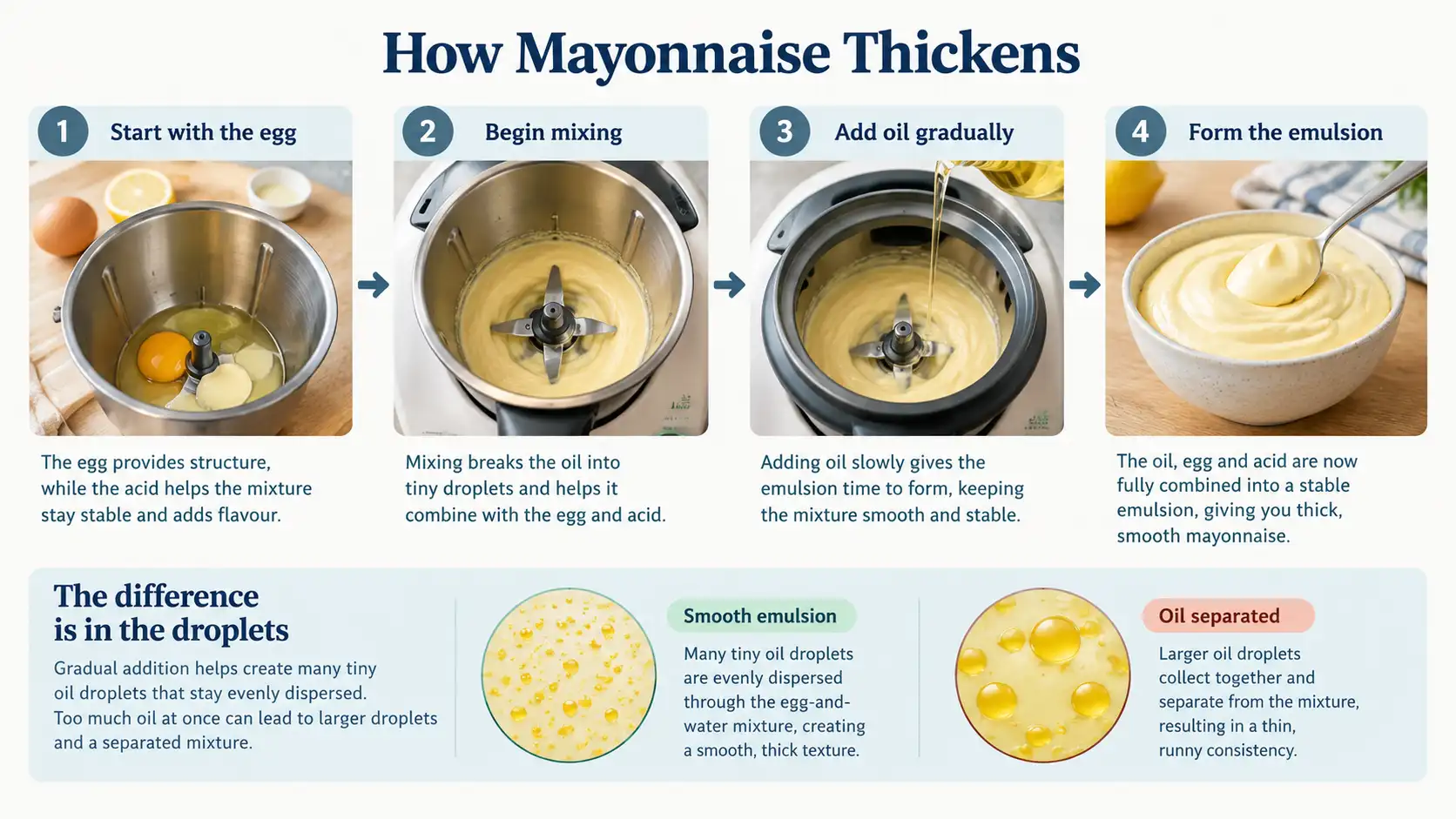
A Thermomix can emulsify egg, oil, acid, and seasonings into thick mayonnaise. Problems occur when the ingredients do not form a stable emulsion, the oil is introduced too quickly, or the proportions and technique are unsuitable for the chosen recipe.
Mayonnaise is an emulsion: tiny oil droplets are dispersed through a water-containing mixture. Egg yolk contains emulsifying compounds, including lecithin and proteins, that help these droplets remain dispersed. The blades break up and distribute the oil while the egg mixture helps stabilize it. Mississippi State University Extension’s explanation of food emulsions describes the role of egg yolk and why gradual oil incorporation matters.
If oil enters faster than the mixture can incorporate it, droplets can merge and the sauce may remain thin or split. A fast pour is a likely cause, but it is not the only possibility; ingredient ratios, the recipe version, and the machine setup can also affect the result.
What creamy mayonnaise should look like
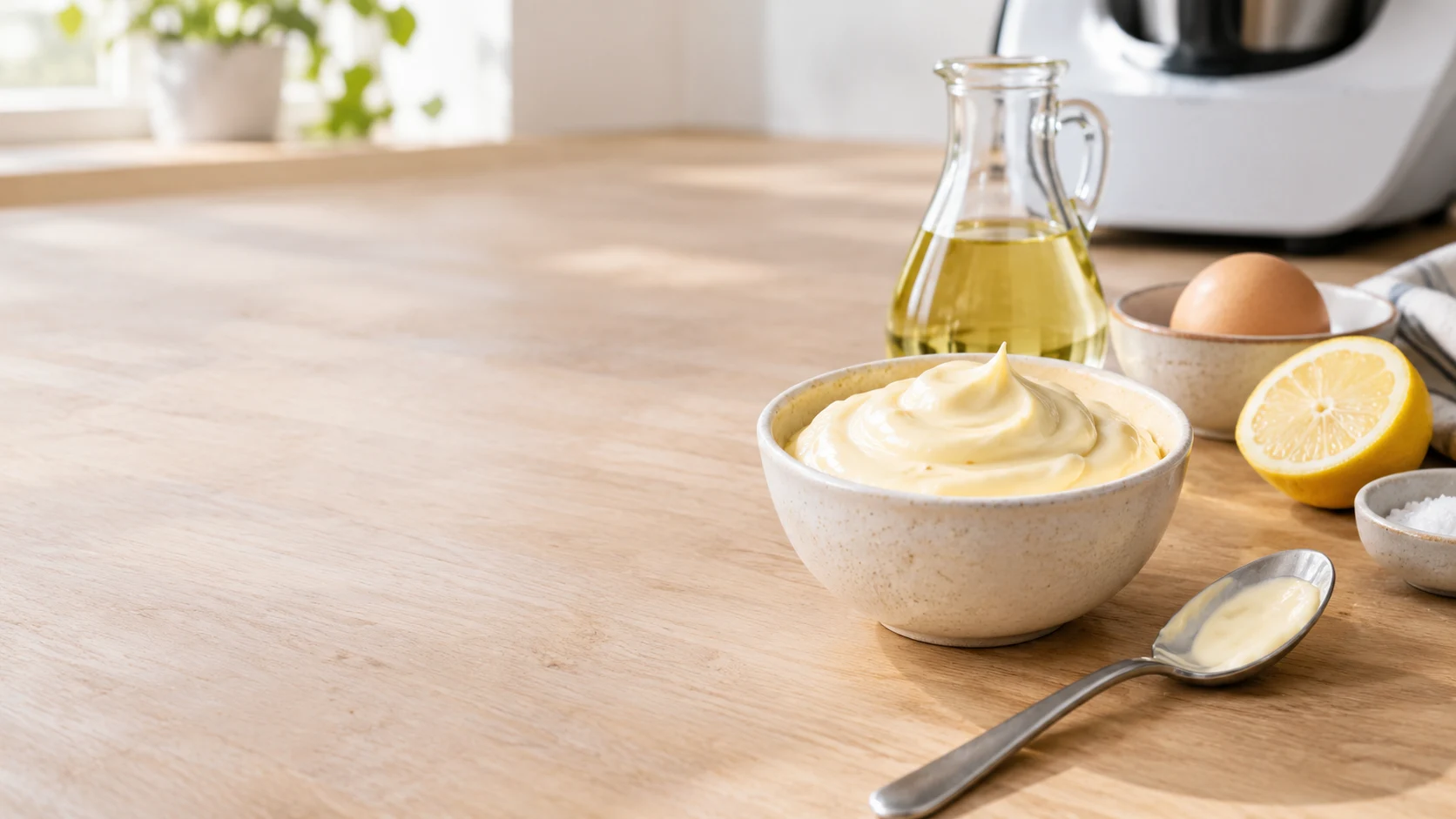
Successfully emulsified mayonnaise is opaque, glossy, and thick enough to cling to a spoon or spatula. It should not look like a layer of oil floating over a thin yellow liquid. When you draw a spoon through it, the trail should remain visible briefly rather than immediately filling with liquid.
These are useful visual cues, not a substitute for a documented Kitchen Memo test photograph. A real close-up of the finished batch would show the consistency more reliably than a generated image presented as proof of a tested result.
Likely causes at a glance
- Oil added too quickly: the most important technique issue to investigate first.
- Different egg proportions: a whole egg and an egg yolk do not contribute the same quantities of water, fat, and emulsifying compounds.
- Different ingredient temperatures: published Thermomix guidance recommends room-temperature ingredients for its reference method.
- Different mixing arrangements: the machine model, selected recipe, and use of a butterfly whisk can alter the mixing process.
- An unsuitable ingredient ratio: changing the oil, egg, or liquid quantities can change the consistency.
Treat these as possible causes, not confirmed results of Kitchen Memo’s B1–B5 experiments. The supplied outline does not include the corresponding batch observations, so it would be premature to assign each failed batch to a single cause.
Whole Egg, Heat, Butterfly: What Actually Changes the Result
Different mayonnaise recipes may use whole eggs or yolks, room-temperature or chilled ingredients, and different mixing arrangements. They can all produce mayonnaise when their proportions and technique work together. However, changing one variable in a recipe does not guarantee a particular improvement.
The most useful comparison separates ingredient effects from equipment and technique effects. For a fair comparison, keep the oil quantity, acid, mixing duration, oil type, and other conditions consistent while changing only the variable being tested.
Whole egg vs egg yolk
A whole egg contains both yolk and white. Using only the yolk changes the amount of water, fat, protein, and emulsifying compounds contributed by the egg.
A yolk-only formula may produce a different color, flavor, and texture, but the result also depends on the amount of oil and other liquid. It is not a direct one-for-one substitution that can be assumed to perform identically.
The manufacturer-published reference recipe used here calls for one whole egg. A yolk-only version should be tested as a separate formula before Kitchen Memo identifies it as the better option.
Heated to 37°C vs unheated
Some recipes introduce gentle heat, while the published reference method below does not specify a heating step. Heating can change ingredient temperature and may affect the behavior of a mixture, but there is no supplied Kitchen Memo result demonstrating that 37°C produces thicker or more stable mayonnaise.
Important: Heating an egg mixture to 37°C is not a validated pasteurization step. Do not use that temperature as a food-safety measure for raw-egg mayonnaise.
For a repeatable starting point, follow the specified method rather than adding heat simply because another recipe uses it.
With vs without the butterfly
A butterfly whisk changes the way the Thermomix moves the mixture. However, whether it improves mayonnaise depends on the model, recipe, and mixing conditions.
The linked Thermomix Australia mayonnaise recipe uses speed 4 without specifying a butterfly attachment. Follow the accessory instructions for the exact recipe and machine model rather than assuming that an extra attachment will make every emulsion more reliable.
Cold vs room-temperature ingredients
The published reference method recommends room-temperature ingredients and a room-temperature mixing bowl. This is the appropriate starting point when reproducing that method.
Cold ingredients may behave differently, but the outline does not provide results from the planned cold-ingredient batch. Until that comparison is recorded, it is more accurate to follow the manufacturer’s temperature guidance than to claim that cold ingredients always fail.
Why top recipes contradict each other
Mayonnaise recipes vary in egg size, oil quantity, acid, mustard, oil type, temperature, and mixing duration. Some published recipes use lemon juice or vinegar; others combine the two. Those changes mean that two methods cannot be compared fairly by looking at one instruction in isolation.
A recipe developed for a different food processor or a different Thermomix version also may not transfer perfectly. The most reliable comparison changes one factor at a time while keeping the rest of the formula consistent.
Kitchen Memo test comparison: The supplied outline identifies B0 as the baseline, B1 as yolk-only, B2 as heated to 37°C, B3 as no butterfly, and B4 as cold ingredients. It does not contain the actual test measurements. The table below should be completed from the batch log before any variation is declared the winner.
| Variable | Baseline and variant | Time to thicken | Texture | 24-hour / 3-day / 7-day observations | Verdict |
| Egg | B0 baseline vs B1 yolk-only | Not recorded in supplied results | Not recorded | Not recorded | No winner established |
| Temperature | B0 baseline vs B2 at 37°C | Not recorded in supplied results | Not recorded | Not recorded | No winner established |
| Butterfly | B0 baseline vs B3 without butterfly | Not recorded in supplied results | Not recorded | Not recorded | No winner established |
| Ingredient temperature | B0 baseline vs B4 cold ingredients | Not recorded in supplied results | Not recorded | Not recorded | No winner established |
For the 7-day observation, assess old samples by appearance and texture only. Do not taste mayonnaise beyond the established safe consumption window to complete a comparison.
Best Oil and Acid for Thermomix Mayonnaise
Choose an oil that tastes pleasant on its own because oil makes up most of the finished mayonnaise. A mild oil gives the egg, acid, and seasonings room to contribute flavor without making the sauce overly pronounced.
A small amount of acid provides brightness and balances the oil’s richness. However, adding lemon juice or vinegar for flavor does not automatically make a raw-egg mixture microbiologically safe.
Comparing oils
| Oil | Flavor | Likely color | Practical recommendation |
| Grapeseed | Mild and relatively neutral | Pale yellow | Good starting option |
| Safflower | Mild and neutral | Pale yellow | Good starting option |
| Sunflower | Mild, depending on the product | Pale yellow to gold | A common option in published Thermomix recipes |
| Light olive oil | Milder than many extra-virgin varieties | Yellow to light gold | Useful when you want a restrained olive flavor |
| Avocado oil | Varies between refined and unrefined products | Pale gold to greenish | Check the flavor of the particular oil |
| Extra-virgin olive oil | Can be fruity, peppery, grassy, or bitter | Often deeper yellow or greenish | Use only when you want its distinct flavor |
Strong extra-virgin olive oil can taste overpowering or bitter in mayonnaise, but that is not true of every bottle. Oil variety and flavor profile matter, so test a small amount before making a full batch.
The outline identifies B6 as the second-oil comparison, but its taste and color observations were not supplied. The table therefore describes general ingredient characteristics; it does not represent Kitchen Memo’s B6 results.
Vinegar and lemon: which should you use?
| Acid | Flavor | Best use |
| Lemon juice | Fresh and citrusy | A brighter, fresher-tasting mayonnaise |
| Distilled white vinegar | Clean and sharp | A more neutral acidic note |
| White-wine vinegar | More rounded and aromatic | A mayonnaise with a little additional flavor |
| Apple-cider vinegar | Mellow, with fruity notes | A mayonnaise where that flavor suits the dish |
Start with the acid quantity in the chosen recipe. Adding substantially more can change the flavor and consistency. Do not reduce or increase acid and then assume the same food-safety guidance still applies.
Why restaurant mayo tastes better
The difference may come from fresh preparation, a well-balanced amount of salt and acid, the flavor of the oil, or the addition of mustard and other seasonings. Some professional kitchens also use commercial or pasteurized egg products.
Restaurant mayonnaise is not automatically better or safer because it is made professionally. Ingredients, preparation controls, storage, and the specific recipe all matter.
The healthiest way to make it
There is no single healthiest oil for every person or dietary need, and this method has not been nutritionally assessed by Kitchen Memo. Choose an oil that suits your flavor preference, measure seasonings deliberately, and use mayonnaise in portions appropriate to your needs.
Homemade mayonnaise gives you control over its ingredients, but it remains an oil-rich condiment. Avoid describing one variation as healthier without a clearly defined basis and suitable nutritional evidence.
Thermomix Mayonnaise Recipe: The Recommended Method
This practical starting recipe follows a published Thermomix method. It is not presented as the experimentally proven winner of Kitchen Memo’s B0–B6 tests.
Ingredients and quantities
| Ingredient | Metric amount | Approximate US measure | Role |
| Grapeseed or safflower oil | 250 g | About 1 cup plus 2 tbsp and 1 tsp | Main body of the mayonnaise |
| Egg | 1, about 50 g without shell for a large egg | 1 large egg | Emulsifying ingredients |
| Lemon juice or vinegar | 1 tsp (5 ml) | 1 tsp | Acidity and flavor |
| Mustard, optional | 1–2 tsp | 1–2 tsp | Flavor and additional emulsion support |
| Ground black pepper, optional | 2 pinches | 2 pinches | Seasoning |
| Salt | ½ tsp | ½ tsp | Seasoning |
The volume conversion for oil is approximate because oil density varies. Use the gram measurement when possible for better repeatability.
For an uncooked mayonnaise, use pasteurized eggs, especially when serving pregnant people, older adults, young children, or anyone with a weakened immune system. Check the product label and make sure the egg is suitable for uncooked use.
Step-by-step method
- Bring the ingredients and bowl to room temperature. Follow the reference recipe’s preparation guidance, but do not leave raw egg sitting out unnecessarily. Wash your hands and use clean equipment.
- Weigh the oil separately. Place a jug on the mixing bowl lid, weigh in the 250 g of oil, and set it aside. Having the full amount ready makes it easier to control the stream.
- Add the egg and seasonings. Place the egg, lemon juice or vinegar, optional mustard, optional pepper, and salt into the mixing bowl.
- Run the machine at the specified setting. For the linked Thermomix Australia method, mix for 1 minute 30 seconds at speed 4. While the machine runs, pour the oil very slowly onto the lid so that it trickles into the mixing bowl and emulsifies. Follow the device-specific recipe and lid instructions for your model.
- Watch the consistency. As the oil incorporates, the mixture should become thicker and more opaque. Avoid pouring the entire oil quantity in a rush. If the emulsion fails, stop and use the rescue method below rather than continuing to add ingredients blindly.
- Transfer and refrigerate. Once the mayonnaise has formed, transfer it to a clean, sealed container and refrigerate promptly.
How slow is slow? A measurable reference
The instruction to pour slowly is important, but the supplied Kitchen Memo outline does not include a measured B0 pour rate.
The reference method uses 250 g of oil over a 90-second mixing window. If all 250 g enters during that full interval, the arithmetic average is approximately 28 g per 10 seconds. This is a calculated average, not a Kitchen Memo test result or a proven threshold for success. The actual stream may vary as you pour and as the emulsion forms.
For a defensible Kitchen Memo measurement, weigh the oil jug before and after a timed 10-second pour during B0, repeat the measurement under the same conditions, and record the actual rate alongside the texture and time to thicken. Do not label the calculated average as an experimentally established optimum.
Time, yield and equipment
| Item | Reference guidance |
| Preparation time | About 5 minutes total in the published recipe |
| Mixing setting | 1 minute 30 seconds at speed 4 in the linked method |
| Yield | Approximately 300 g |
| Equipment | Compatible Thermomix, weighing jug, clean storage container |
| Butterfly | Not specified in the linked manufacturer method |
| Minimum batch size | Not established by the supplied Kitchen Memo tests |
For the method and stated yield, see Thermomix Australia’s published mayonnaise recipe.
Model notes: TM5, TM6, TM7 and TM31
Recipes and accessories are not automatically interchangeable across every Thermomix model. The linked Thermomix Australia recipe is listed for TM31, TM5, and TM6. A Cookidoo mayonnaise listing identifies compatibility with TM7, TM6, TM5, and TM31, but recipe versions can have different ingredient lists and instructions.
| Model | How to use the reference |
| TM31 | Use a recipe explicitly compatible with the TM31. Do not transfer larger-model quantities without checking the model-specific guidance. |
| TM5 | Follow the TM5-compatible recipe and its lid and measuring-cup instructions. |
| TM6 | Use the compatible recipe version and its specified mixing instructions. |
| TM7 | Follow the TM7-compatible Cookidoo or manufacturer recipe instead of assuming that every earlier recipe transfers unchanged. |
The linked sources establish published recipe compatibility, not Kitchen Memo testing on all four machines. Only a model actually used in the Kitchen Memo test log should be described as tested.
Scaling, humidity and kitchen conditions
Do not automatically double the batch. The minimum workable amount and the reliability of a doubled mayonnaise recipe have not been established by the supplied tests. Use a recipe developed for your model and batch size.
Ingredient temperature and oil flow are clearer starting points than humidity. Very warm surroundings also make it more important to control how long raw-egg ingredients remain outside refrigeration. The outline does not include test results that would support a specific humidity correction, hot-kitchen timing adjustment, or minimum batch size, so such values should not be invented.
For general Thermomix recipe inspiration, explore Kitchen Memo’s Recipes hub.
How to Fix Thermomix Mayonnaise That Splits or Stays Runny
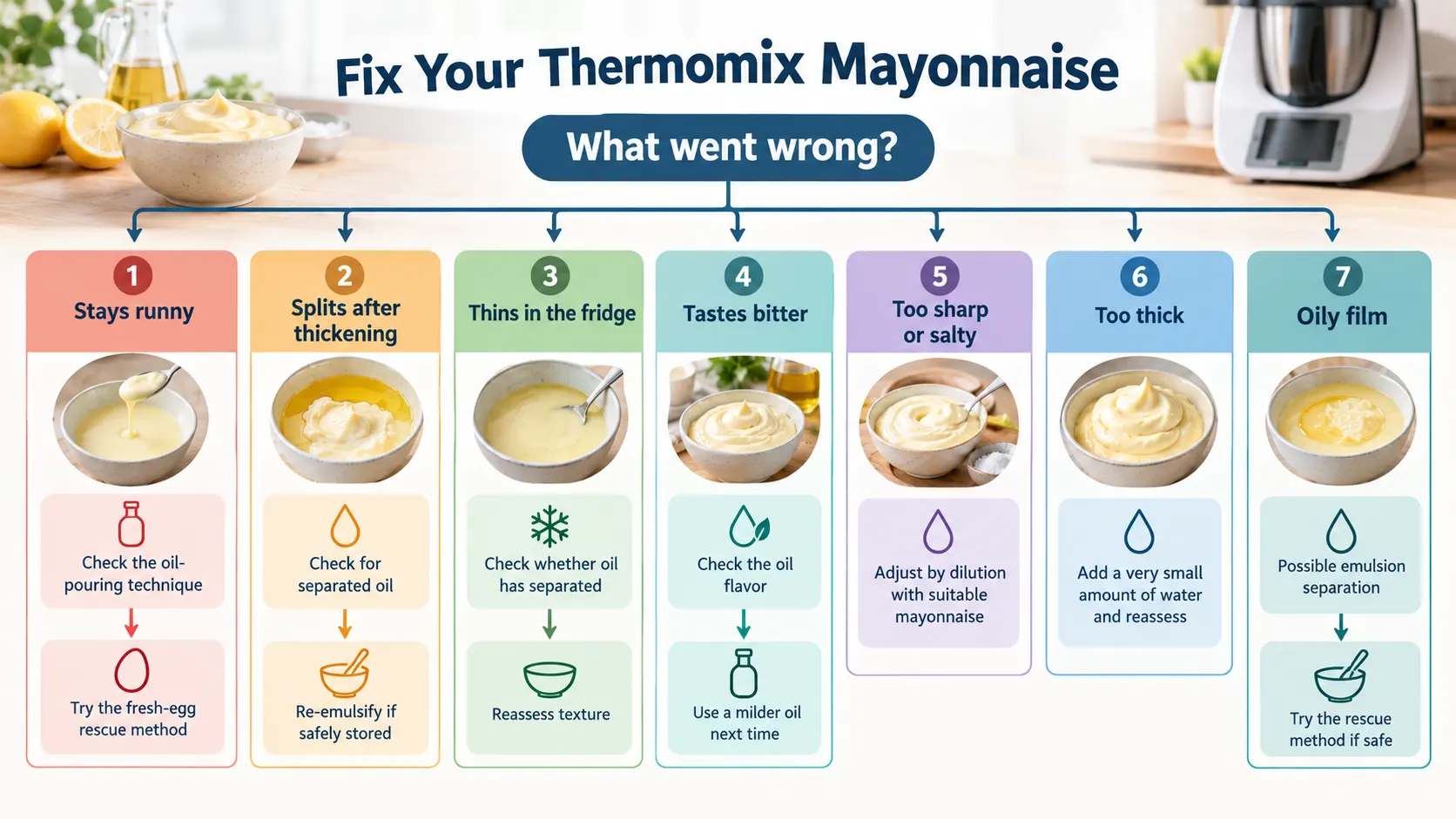
Mayonnaise that never thickens or separates after initially thickening may be recoverable. The standard manufacturer-published rescue method starts a fresh emulsion with another egg, then adds the failed mayonnaise slowly.
| Symptom | Possible explanation | Practical fix | Prevention |
| Stays runny | Oil entered too quickly or the emulsion did not form | Re-emulsify using the rescue method below | Add oil gradually while mixing |
| Splits after thickening | The emulsion became unstable | Start a fresh emulsion and incorporate the split mixture slowly | Follow one consistent, compatible recipe |
| Becomes thinner in the fridge | The texture may have changed or the emulsion may have separated | Check whether there is free oil; re-emulsify if it has split | Refrigerate promptly and avoid changing the formula casually |
| Tastes bitter | The chosen oil may have a strong or bitter flavor | The flavor may not be fully correctable; use a milder oil next time | Taste the oil before preparing a full batch |
| Too sharp or salty | Seasoning balance is too pronounced | Blend with a suitable unsalted, less acidic mayonnaise, or use a small amount in another dish | Add seasonings conservatively |
| Too thick | The emulsion is firmer than desired | Mix in a very small amount of water and reassess consistency | Adjust gradually rather than pouring in extra liquid |
| Oily film forms | Oil may be separating from the emulsion | Re-emulsify if the batch has been handled and stored safely | Maintain a slow oil stream |
These are practical troubleshooting suggestions, not a claim that every fault has been validated in a Kitchen Memo experiment. If food safety is in doubt, discard the batch rather than attempting to rescue it.
Rescue method: re-emulsify a failed batch
- Check that the failed mayonnaise has been handled safely and has not exceeded your intended safe-use window.
- Transfer the failed batch to a separate container.
- Put one fresh egg into a clean Thermomix mixing bowl.
- Mix at speed 4 for 1 minute 30 seconds while slowly pouring the failed mayonnaise onto the lid so it trickles into the bowl. Follow the compatible recipe’s equipment instructions.
- Watch for the mixture to thicken as the failed sauce is incorporated. Stop if the emulsion does not develop as expected rather than assuming more mixing will solve it.
Thermomix Australia publishes this rescue approach in its mayonnaise recipe instructions. The method provides a manufacturer reference, but Kitchen Memo’s planned photograph of a deliberately split and subsequently rescued batch should be taken during the actual B5 test.
For more general technique guidance, browse Kitchen Memo’s Cooking Tips hub.
Variations: Aioli, Mediterranean, Mustard, Chipotle and Egg-Free
Once you have a stable base, flavor additions can change the taste and sometimes the consistency. Introduce liquid additions gradually rather than assuming every variation can use the same proportions without adjustment.
Thermomix aioli vs mayonnaise
| Style | Main distinction | Practical note |
| Traditional aioli | Garlic and oil, with definitions varying by culinary tradition | Often made without egg |
| Garlic mayonnaise | Mayonnaise flavored with garlic | Uses an egg-based emulsion in the method above |
Modern recipes sometimes use “aioli” for garlic-flavored mayonnaise. The name alone does not tell you whether a recipe contains egg, so check the actual ingredient list.
Mediterranean mayonnaise
Use a mild olive oil or a blend of neutral oil and olive oil if you want a Mediterranean flavor. Lemon juice and herbs can add freshness, but the ideal quantities depend on the intended dish. Extra-virgin olive oil can dominate the flavor or taste bitter, so try a small quantity before changing the whole batch.
No B6 tasting notes were supplied, so Kitchen Memo cannot yet identify a tested winning oil blend.
Mayonnaise mixed with mustard
It is usually called mustard mayonnaise or mustard mayo. Dijonaisse is also used as a name in some contexts, but there is no need to imply that every mustard-mayonnaise preparation has one universal culinary name.
Chipotle and other flavor add-ins
Chipotle, garlic, fresh herbs, and similar flavorings are easiest to evaluate after the base mayonnaise has emulsified. Finely chopped ingredients, extra liquid, and acidic additions can change the final consistency. Add a small amount at a time, mix, and check both the flavor and texture before adding more.
Egg-free mayonnaise
Egg-free mayonnaise can be made with alternative emulsifying ingredients, but the method and proportions differ from this egg-based recipe. Aquafaba and some plant-based milk preparations are examples of alternative approaches; neither should be treated as a tested Kitchen Memo substitute here.
Do not simply omit the egg from the recipe above and expect the same texture. Use a tested egg-free formula, and check ingredient labels for allergens.
Dietary note: This ingredient list contains no dairy by default, but it contains egg. Whether a variation is gluten-free depends on the full ingredient list, any packaged condiments, and cross-contact controls.
Is Homemade Mayonnaise Safe? Raw Egg, Storage and Shelf Life
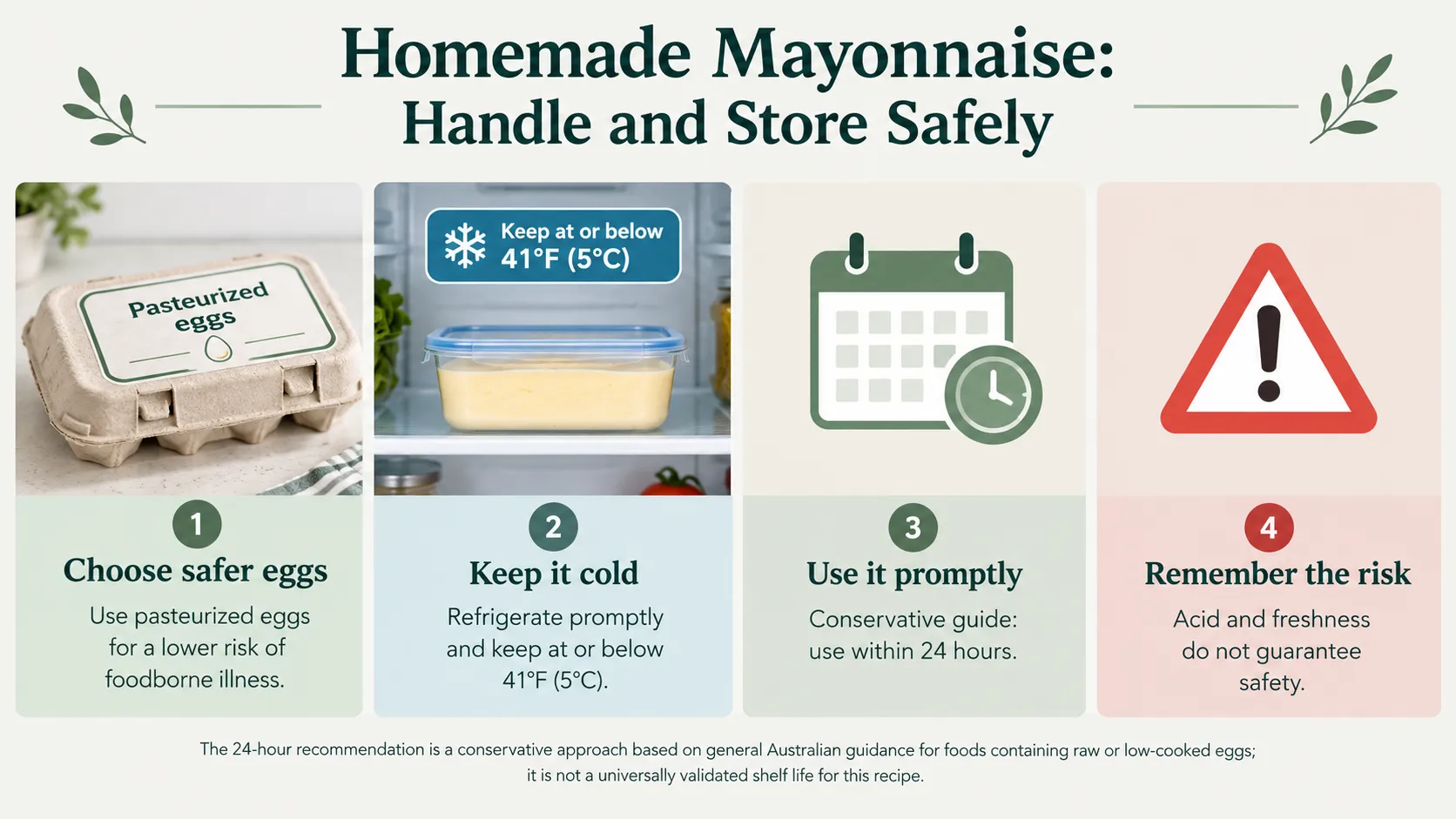
Homemade mayonnaise made with an uncooked shell egg carries a foodborne-illness risk. An egg can appear normal without being free from Salmonella, and adding lemon juice or vinegar does not guarantee that the finished sauce has been made safe.
The University of Minnesota Extension’s egg guidance specifically recommends pasteurized eggs for mayonnaise and other uncooked preparations, and advises keeping these foods cold at 41°F (5°C) during storage and use. This precaution is especially important for pregnant people, young children, older adults, and people with weakened immune systems.
Why risk remains even when people often eat homemade mayonnaise without becoming ill
Not every egg is contaminated, so not every exposure causes illness. That does not establish that a preparation is safe. The amount of acid, the actual pH, the recipe, handling, cross-contamination, and storage temperature all affect risk.
A home recipe that tastes acidic has not necessarily been tested to establish a safe pH. Freshness is useful for ingredient quality but is not a substitute for pasteurization. For uncooked mayonnaise, pasteurized eggs and good temperature control are the safer starting point.
The FoodSafety.gov guidance for people at risk of food poisoning also identifies homemade mayonnaise among foods made with raw or undercooked eggs and recommends pasteurized egg products for recipes that will not be cooked.
Storage guidance
There is no single shelf-life number in the sources reviewed that establishes a universal storage period for every homemade mayonnaise recipe. A three-week claim should not be applied to this raw-egg formulation without validated evidence.
For a conservative household approach, make a small batch, refrigerate it promptly, use pasteurized eggs, and plan to use the mayonnaise within 24 hours. This 24-hour recommendation is a cautious application of the general guidance from Food Standards Australia New Zealand on food containing raw or low-cooked eggs; it is not a claim that a U.S. authority has validated a 24-hour shelf life specifically for this recipe.
| Storage location | Container and conditions | Recommended approach |
| Refrigerator | Clean, sealed container at or below 41°F (5°C) | Refrigerate promptly and, as a conservative approach, use within 24 hours |
| Freezer | Not recommended for this recipe | Freezing may cause the emulsion to separate and damage its texture; no validated Kitchen Memo freezing result is available |
| Counter | Room temperature | Do not leave the mayonnaise out for extended periods. Discard if it has been held outside safe temperature control beyond applicable food-safety guidance |
Discard mayonnaise if you suspect contamination or unsafe storage. Do not rely on smell, taste, or appearance alone to determine whether it is safe. A mayonnaise that looks perfect can still pose a food-safety risk.
Conclusion
Thermomix mayonnaise depends on a stable emulsion, a suitable oil, and gradual oil incorporation. The manufacturer’s reference method provides a practical starting point, and a fresh egg can help rescue a failed batch when it has been handled safely. Use pasteurized eggs, refrigerate the finished mayonnaise promptly, and avoid unsupported shelf-life promises.
The most useful rule is simple: follow a compatible recipe, add oil gradually, and handle the finished mayonnaise as a perishable raw-egg preparation.
Frequently Asked Questions
1. Can a Thermomix make mayonnaise?
Yes. A compatible Thermomix recipe can emulsify egg, oil, acid, and seasonings into thick mayonnaise when the instructions are followed.
2. Why isn’t my Thermomix mayonnaise thickening?
Oil added too quickly is one possible cause. Ingredient ratios, equipment setup, and mixing conditions can also affect emulsion formation.
3. What oil is best for Thermomix mayonnaise?
Grapeseed, safflower, and sunflower oils are useful mild-flavored starting options. Choose based on the flavor you prefer.
4. How long does homemade Thermomix mayo last in the fridge?
No universal shelf-life was established by the sources reviewed. A conservative approach for this raw-egg recipe is to use it within 24 hours.
5. Is homemade mayonnaise safe with raw egg?
Raw-egg mayonnaise carries a Salmonella risk. Use pasteurized eggs, particularly when serving vulnerable people, and keep the finished sauce cold.
6. Can I make Thermomix mayonnaise without eggs?
Egg-free alternatives exist, but their ingredients and method differ. Use a separately tested egg-free recipe rather than omitting the egg.
7. What is mayonnaise mixed with mustard called?
It is commonly called mustard mayonnaise or mustard mayo. The name can vary, so check the recipe ingredients rather than relying on the label alone.