Introduction
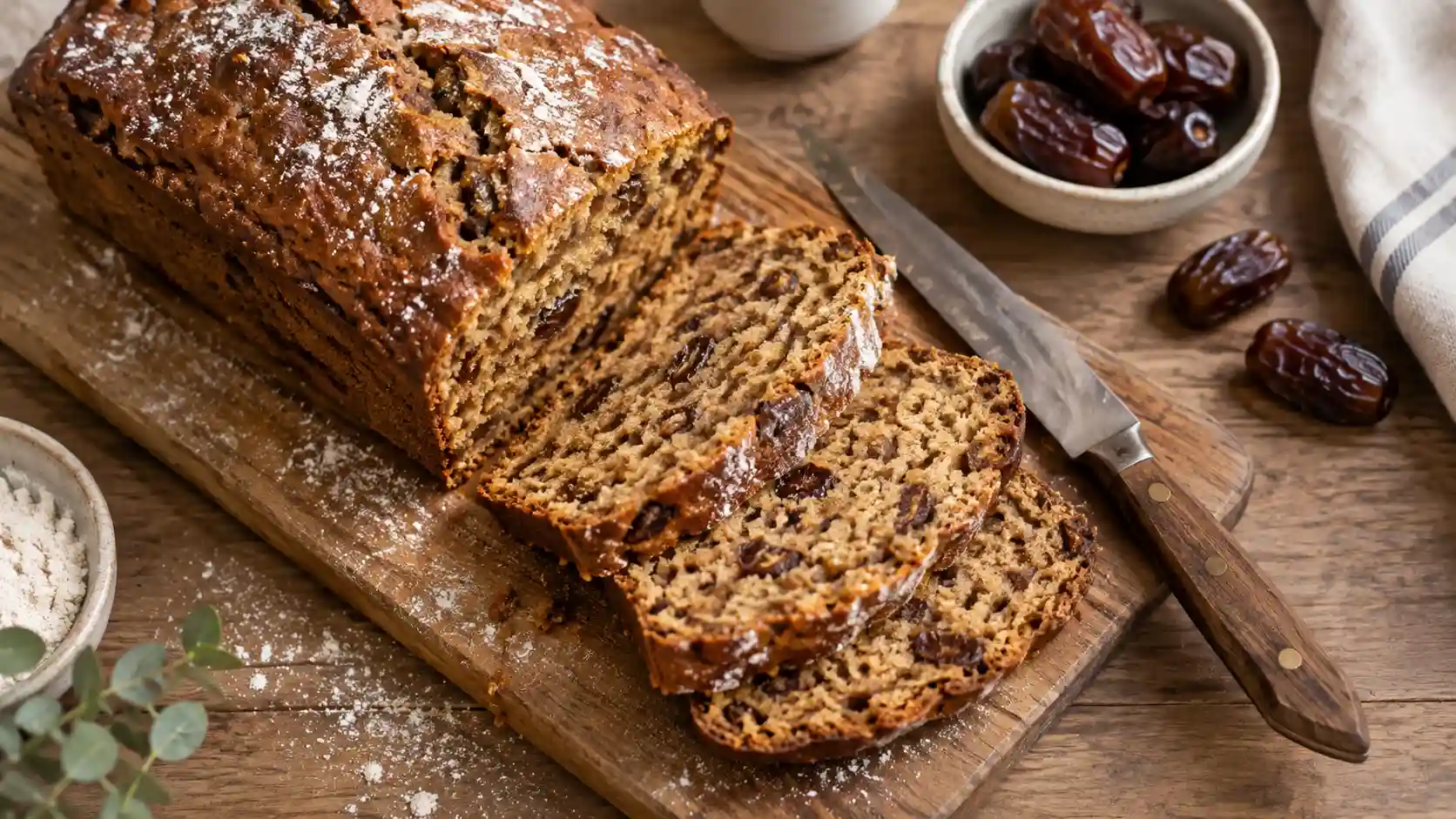
Date loaf is a dense, richly spiced quick bread built around softened dates, a touch of butter or oil, and a simple bicarbonate-of-soda rise. It doesn’t need yeast, kneading, or proving time, which is part of why it has stayed a staple in Australian, New Zealand, and British home baking for generations. A good date loaf is deeply moist, faintly caramelised in flavour, and sturdy enough to slice thin and spread with butter. This guide walks through the ingredients, the method, and the small technical details — like why the water needs to be boiling and why the tin matters — that separate an average date loaf from a genuinely moist one.
Quick Summary
Date loaf is made by soaking chopped dates in boiling water with bicarbonate of soda, then folding that mixture into a simple batter of flour, sugar, egg, and butter or oil before baking low and slow in a loaf tin. The bicarbonate reacts with the hot liquid to soften the dates and provide lift, while the low oven temperature keeps the crumb dense but moist rather than dry or crumbly. The loaf typically bakes for 45–60 minutes and improves in flavour after resting overnight, wrapped, at room temperature.
What Is Date Loaf?
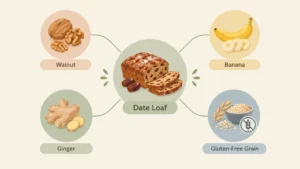
Date loaf sits in the same family as banana bread and date and walnut loaf — a quick bread rather than a yeasted bread, meaning it relies on chemical leavening instead of fermentation. It’s traditionally baked in a rectangular loaf tin, sliced thickly, and served plain or buttered rather than iced. In Australia and New Zealand, it’s closely associated with Country Women’s Association (CWA)-style baking and is often sold pre-sliced in supermarkets, though homemade versions are consistently moister than most packaged options because they use fresh dates rather than a shelf-stable paste.
Key Ingredients and Why They Matter
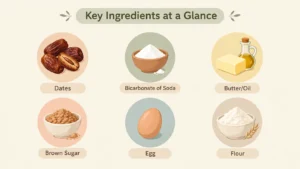
- Dates: Pitted, chopped dates are the base of the loaf. Fresher, plumper dates (such as Medjool) break down into a jammier texture than drier varieties, which affects how moist the finished loaf is.
- Boiling water: Poured over the dates, it softens them until they’re almost spreadable and helps them integrate into the batter rather than sitting as separate chunks.
- Bicarbonate of soda: Added directly to the hot date mixture, not the dry ingredients, so it can react immediately with the liquid and the natural acidity of the dates. This reaction produces the loaf’s lift and contributes to its characteristic soft crumb.
- Butter or oil: Butter gives a richer flavour; oil (commonly used in “super moist” versions) keeps the crumb tender for longer because oil stays liquid at room temperature while butter solidifies, which is why oil-based versions are often described as staying moist for several extra days.
- Brown sugar: Adds moisture and a light caramel note that complements the dates, more so than white sugar would.
- Egg: Binds the batter and adds structure so the loaf holds together when sliced thinly.
- Plain flour: Provides just enough structure to support the dense fruit content without making the loaf cakey or overly light.
Step-by-Step Method
- Chop and soak the dates. Roughly chop pitted dates and place them in a heatproof bowl.
- Add bicarbonate of soda and boiling water. Pour boiling water over the dates, then stir in the bicarbonate of soda immediately. The mixture will foam slightly — this is expected. Set aside for 10–15 minutes to soften and cool slightly.
- Cream the butter and sugar, or whisk the oil and sugar. This builds the base of the batter and helps sugar dissolve evenly.
- Add the egg and vanilla, mixing until combined.
- Fold in the flour in two batches, alternating with the cooled date mixture, mixing only until no dry streaks remain. Overmixing at this stage develops gluten and makes the loaf tougher rather than tender.
- Pour into a lined loaf tin (approximately 21 x 11 cm) and smooth the top.
- Bake at a low temperature, around 160–170°C (fan-forced), for 45–60 minutes, until a skewer inserted into the centre comes out clean or with a few moist crumbs.
- Cool in the tin for 10 minutes before turning out onto a wire rack to cool completely.
Why Boiling Water and Bicarbonate of Soda Matter
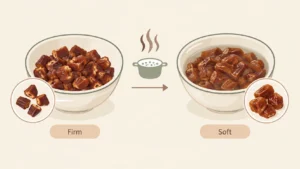
Using boiling water rather than warm or room-temperature water speeds up how quickly the dates soften and helps the bicarbonate of soda dissolve and react fully. Because dates are naturally slightly acidic, the bicarbonate reacts with that acidity as well as the heat, producing carbon dioxide bubbles that lighten the otherwise dense batter. Skipping this step, or using cold water, typically results in a loaf that’s heavier and less evenly risen, with pockets of underdissolved bicarbonate that can leave a faintly bitter, soapy taste.
Variations: Date and Walnut, Banana, Ginger, and Gluten-Free
- Date and walnut loaf: The most common variation, adding roughly ½ cup of chopped walnuts to the batter for texture and a slightly bitter contrast to the sweetness of the dates. This version is closely associated with British home baking, including recipes popularised by writers like Mary Berry and Delia Smith.
- Banana and date loaf: Mashed ripe banana replaces some or all of the boiling water, adding extra moisture and a different fruit flavour, though the bicarbonate-and-date base method stays largely the same.
- Date and ginger loaf: Ground or crystallised ginger is added to the dry ingredients for warmth and spice, often paired with a touch of cinnamon.
- Gluten-free date loaf: A 1:1 gluten-free flour blend can generally replace plain flour, though the loaf may be slightly denser and benefits from an extra egg or a small amount of extra liquid to compensate for the lack of gluten structure.
- Thermomix date loaf: The same ingredients can be processed by chopping the dates and mixing the batter directly in a Thermomix, which speeds up preparation but still requires transferring the batter to a conventional loaf tin for baking, since the appliance itself doesn’t bake.
Storage and Shelf Life
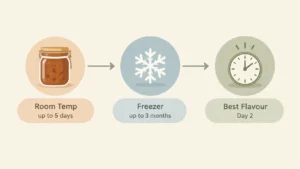
Date loaf keeps well because of its moisture content. Once fully cooled, wrap it tightly in plastic wrap or store it in an airtight container at room temperature for up to 4–5 days. It also freezes well, either whole or pre-sliced, for up to 3 months — slicing before freezing makes it easy to defrost single portions. Many bakers find the flavour and texture actually improve on the second day, once the crumb has had time to fully settle and the spices have had time to distribute.
Common Mistakes and How to Avoid Them
- Using cold water instead of boiling water, which slows down softening the dates and reduces how well the bicarbonate reacts.
- Overmixing the batter after adding the flour, which develops gluten and produces a tougher, less tender crumb.
- Opening the oven door too early, which can cause the loaf to sink in the centre before the structure has set.
- Using a tin that’s too large, which spreads the batter thin and shortens baking time, often leading to a drier result than intended.
- Slicing before the loaf has fully cooled, which can make it seem gummy even when it’s properly baked, since quick breads continue to set as they cool.
Conclusion
Date loaf earns its place as a long-standing favourite because it’s forgiving to make and consistently moist when a few key details are respected: boiling water to soften the dates, bicarbonate added directly to the hot mixture, gentle folding once the flour goes in, and a low, steady oven temperature. Whether baked plain, with walnuts, or adapted to be gluten-free, the core method stays the same — and a well-made loaf only gets better after a day of resting.
FAQ
Why is my date loaf dry instead of moist?
Dry date loaf is usually the result of overbaking, using a tin that’s too large for the batter, or skipping the boiling-water soak, which leaves the dates less fully broken down and less able to release moisture into the crumb.
Can I use oil instead of butter for a moister date loaf?
Yes. Oil stays liquid at room temperature, which keeps the crumb softer for longer than butter-based versions, and is the basis for most “super moist” date loaf recipes.
Do I need to add walnuts to make it a date and walnut loaf?
Yes, walnuts are what distinguish a date and walnut loaf from a plain date loaf; they’re folded into the same base batter rather than requiring a separate recipe.
Can date loaf be made without eggs?
Yes, though the egg helps bind the loaf. A flax egg or extra mashed banana can often be substituted, with a slightly denser resulting texture.
Why do you add bicarbonate of soda to the dates instead of the flour?
Adding it directly to the hot date and water mixture allows it to react immediately with the heat and the dates’ natural acidity, producing better lift than if it were mixed dry into the flour.