Introduction
Vegetable soup thermomix cooking has become one of the most searched comfort-food combinations among home cooks who own the appliance, and for good reason: the Thermomix chops, sautés, cooks, and blends inside a single bowl, cutting a process that normally spans several pots down to one. A well-made vegetable soup thermomix recipe isn’t just about convenience, though — the machine’s precise temperature control and reverse-blade function directly affect how vegetables break down, how flavors concentrate, and whether the final result is silky-smooth or pleasantly chunky. This guide explains what actually happens inside the bowl at each stage, so the result is reliable every time, not just the first time.
Quick Summary
A simple vegetable soup thermomix recipe generally follows four stages: chopping raw vegetables in short pulses, sautéing aromatics at a moderate temperature to build flavor, simmering everything in stock until tender, and finally either leaving the soup chunky or blending it to a creamy consistency. Onion, carrot, celery, and potato form the flavor base in most versions; the potato’s starch is what naturally thickens a creamy vegetable soup thermomix batch without needing cream or flour. Cooking temperature and time depend on vegetable density — root vegetables need longer than leafy or watery ones — and the reverse function protects ingredients from being minced into mush during the simmer stage.
Why the Thermomix Changes How Vegetable Soup Is Made
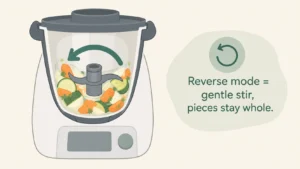
In a conventional pot, chopping, sautéing, simmering, and blending each require separate tools and separate cleanup. The Thermomix combines these because its blade assembly can spin in two directions: forward for chopping and puréeing, and reverse for gentle stirring that keeps larger pieces intact. This matters for vegetable soup specifically, because the same appliance that finely dices an onion in three seconds can also stir a pot of chunky vegetables for thirty minutes without shredding them. Temperature control in one-degree increments (rather than a stove’s low/medium/high guesswork) also means vegetables cook evenly, reducing the risk of some pieces turning to mush while others stay raw.
Core Ingredients and What They Contribute
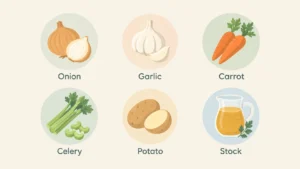
A best vegetable soup thermomix base typically includes:
- Onion and garlic — the aromatic foundation; sautéing them first (rather than adding them raw to the simmer) develops sweetness and removes any harsh, raw bite.
- Carrot and celery — add natural sweetness and a subtle vegetal backbone; their fibrous texture holds up well whether the soup stays chunky or gets blended.
- Potato — the key to a creamy vegetable soup thermomix result without added cream. Its starch breaks down during blending and thickens the liquid naturally.
- Stock (vegetable or chicken) — the primary liquid; using stock instead of water adds depth that plain water can’t replicate, since water dilutes flavor rather than building on it.
- Canned or fresh tomatoes — optional, but common in a chunky vegetable soup thermomix style, adding acidity that balances the sweetness of the root vegetables.
- Seasonal or leftover vegetables — zucchini, pumpkin, green beans, or corn can substitute or supplement depending on what’s on hand; softer vegetables like zucchini need less simmer time than dense ones like pumpkin.
Swapping any one of these changes the outcome: less potato means a thinner, more brothy soup; more tomato shifts the flavor toward tangy rather than earthy; and using water instead of stock produces a noticeably flatter final taste even with identical seasoning.
Step-by-Step Method and Settings Explained
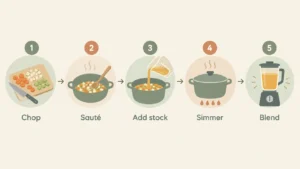
- Chop the aromatics. Onion, garlic, carrot, and celery are added to the bowl and chopped on a low speed for a few seconds. Short pulses avoid over-processing the vegetables into a paste before cooking even begins.
- Sauté to build flavor. With a small amount of oil, the chopped vegetables are cooked at a moderate temperature (around 100°C) on a gentle speed for several minutes. This step is what separates a flat-tasting soup from one with real depth — raw vegetables added directly to liquid never develop the same roasted, savory notes.
- Add remaining vegetables, stock, and seasoning. Potato, additional vegetables, stock, salt, and herbs go in next.
- Simmer using reverse function. Cooking at 100°C in reverse mode, on a low speed, keeps the blades from chopping the vegetables further while they soften — this is what preserves texture for a chunky vegetable soup thermomix result. Simmer time depends on how the vegetables are cut: larger dice need roughly 25–30 minutes, while smaller pieces cook through in less time.
- Blend if a creamy texture is wanted. For a creamy vegetable soup thermomix version, the soup is blended on a higher speed for a short burst once the vegetables are fully tender. Blending too early, before vegetables have softened completely, leaves a gritty rather than silky texture.
- Adjust and serve. A final taste check for salt, pepper, and acidity (a small squeeze of lemon can brighten a heavy, starchy soup) finishes the dish.
Simple vs. Creamy vs. Chunky: Choosing Your Texture
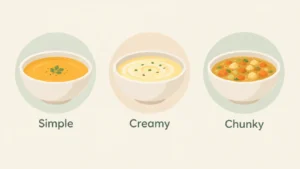
These three styles rely on the same core method with one variable changed:
- Simple vegetable soup thermomix: minimal ingredient list, light seasoning, served either blended or unblended — built for quick weeknight cooking with pantry staples.
- Creamy vegetable soup thermomix: relies on potato (or occasionally a splash of cream or milk) and a full blend cycle for a smooth, spoonable consistency.
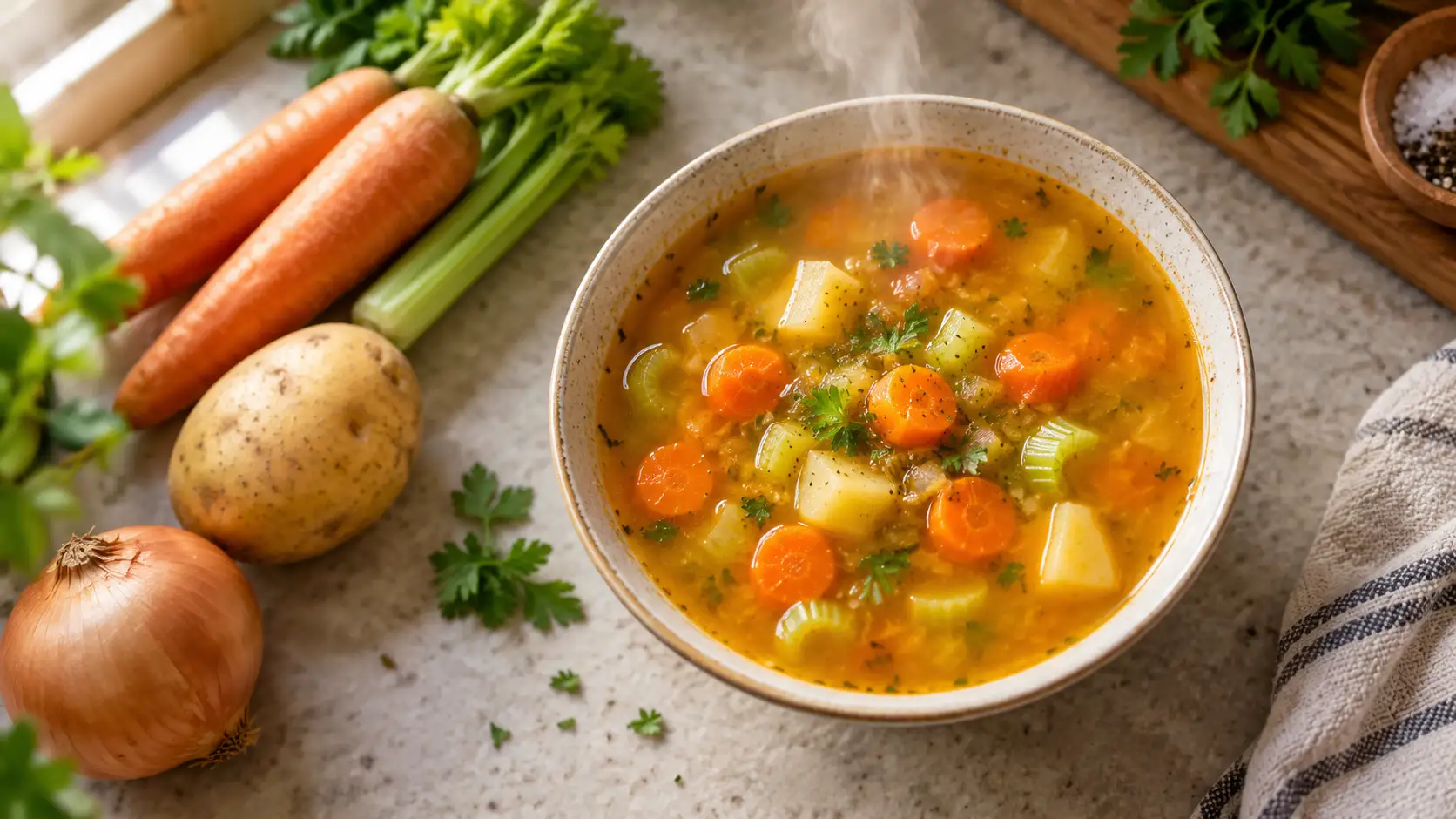
- Chunky vegetable soup thermomix: uses the reverse function throughout the simmer stage so vegetables retain their shape, giving a heartier, more stew-like result.
The texture choice also affects how the soup reheats: blended soups thicken further in the fridge and may need a splash of stock when reheated, while chunky versions hold their consistency better over several days.
Popular Variations
- Chicken and vegetable soup thermomix: shredded cooked chicken (or raw chicken poached directly in the simmering stock) adds protein, turning the soup into a fuller meal. Using bone-in chicken during the simmer also deepens the stock’s flavor.
- Beef and vegetable soup thermomix: diced beef and heartier root vegetables like swede or parsnip suit a longer, lower simmer, since beef benefits from slow, gentle cooking to become tender rather than tough.
- Lentil and vegetable soup thermomix: dried red lentils cook directly in the simmer stage and break down to naturally thicken the soup, similar to potato, while adding plant-based protein and fiber.
- Roast vegetable soup thermomix: vegetables like pumpkin, capsicum, and sweet potato are roasted in the oven first, then blended in the Thermomix with stock — the roasting step adds a caramelized depth that boiling alone can’t produce.
Many home cooks share their own takes on a vegetable soup thermomix recipe community, comparing ingredient ratios and cook times; while these forums are useful for inspiration, the core cooking logic above stays consistent across variations.
Healthy Adjustments Without Losing Flavor
A healthy vegetable soup thermomix version usually means reducing added fat and salt rather than removing flavor-building steps. Using a light spray of oil instead of a heavy pour for the sauté stage still develops the aromatics’ flavor. Low-sodium stock, plus fresh herbs added at the end rather than during cooking, keeps sodium down while preserving a bright, fresh taste — dried herbs added too early can turn bitter over a long simmer. Skipping the cream and letting blended potato or lentils provide the thickness keeps the dish lower in saturated fat without sacrificing the creamy mouthfeel.
Storage, Reheating, and Batch Cooking
Vegetable soup keeps well because vegetables and stock don’t lose much texture over a few days when stored properly. In an airtight container, it holds in the refrigerator for three to four days. For longer storage, it freezes well for up to three months — chunky versions freeze slightly better than fully blended ones, since starchy blended soups can separate slightly on thawing and need a quick re-blend or stir to recombine. Reheating gently on the stove or in short microwave bursts, with a splash of extra stock or water, restores the original consistency.
Common Mistakes and How to Avoid Them
- Skipping the sauté step: adding all ingredients raw and simmering saves a few minutes but produces a noticeably flatter, less developed flavor.
- Overcrowding with too many vegetable types: more isn’t always better — too many competing flavors can muddy the final taste rather than deepen it.
- Blending while vegetables are still firm: this produces a grainy rather than smooth texture, since undercooked starches don’t break down properly.
- Under-seasoning before blending: blending mutes seasoning slightly, so a taste-and-adjust step after blending is essential, not optional.
Conclusion
A vegetable soup thermomix recipe rewards understanding why each step matters rather than just following instructions blindly. Sautéing builds flavor that boiling alone can’t replicate, potato and lentils provide natural thickening without cream, and the reverse function is the difference between a silky purée and a hearty, chunky bowl. Once these principles are understood, adapting the base recipe into chicken, beef, lentil, or roast vegetable versions becomes straightforward, and seasonal or leftover vegetables can be substituted with confidence rather than guesswork.
FAQ
Can I make vegetable soup in the Thermomix without a recipe? Yes — the underlying method (sauté, simmer, optionally blend) works with almost any vegetable combination, as long as denser vegetables are given more simmer time than softer ones.
Why does my Thermomix vegetable soup taste bland? The most common cause is skipping the sauté stage or under-seasoning after blending, since blending can mute salt and spice slightly.
What’s the best way to thicken vegetable soup without cream? Potato or red lentils added during the simmer stage and then blended provide natural thickening without any dairy.
Can chunky and creamy styles be combined? Yes — a common approach is blending half the soup and stirring it back into the unblended half, creating a soup that’s thickened but still has visible vegetable pieces.