Introduction
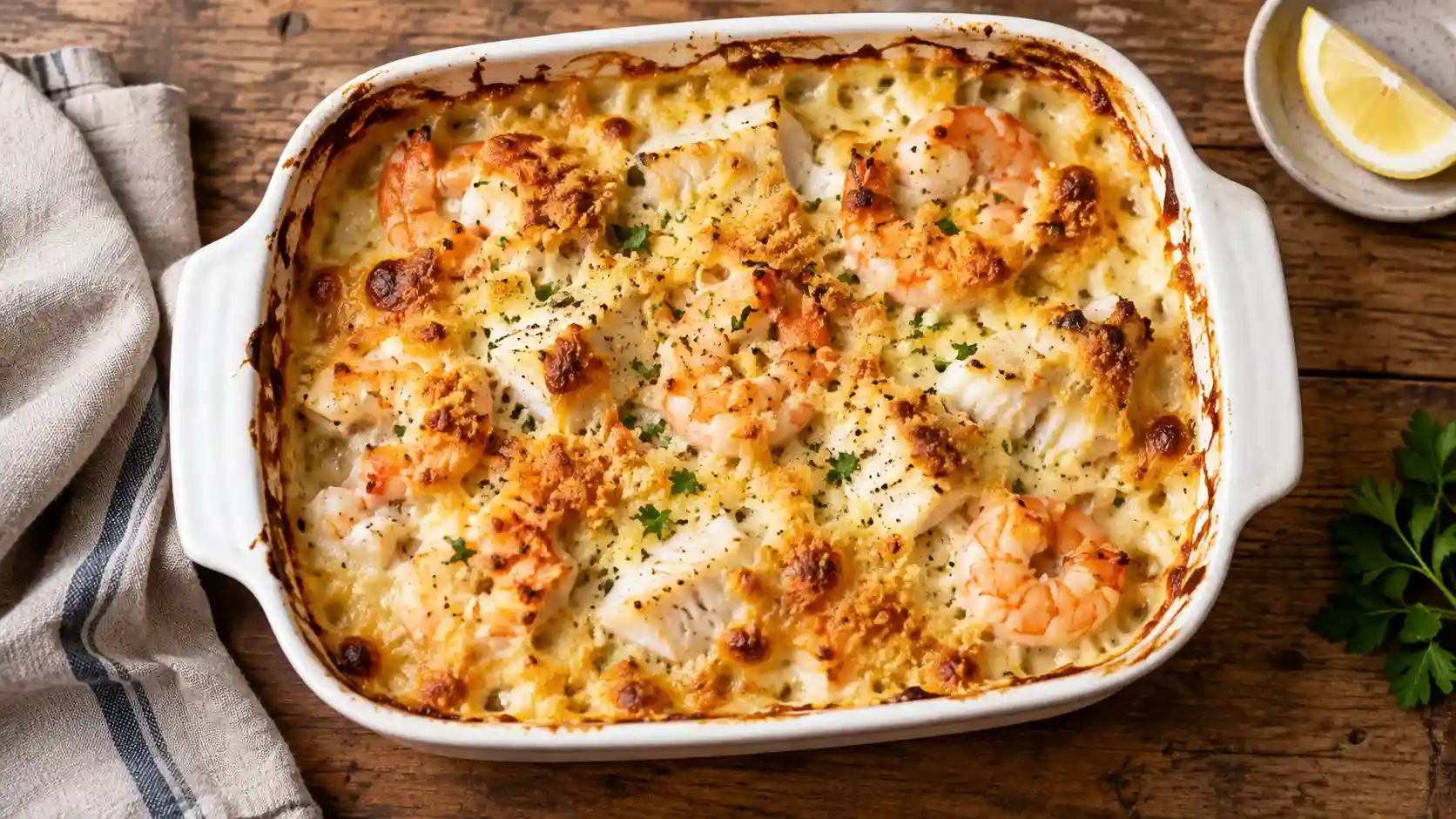
Seafood mornay is a creamy, cheese-baked seafood dish built on one of the oldest techniques in the French kitchen: mornay sauce, a béchamel enriched with cheese. In Australian and New Zealand home cooking, seafood mornay has become a familiar comfort dish, usually made with a mix of white fish, prawns, and sometimes scallops or mussels, folded into a velvety cheese sauce and baked or grilled until golden. It appears on dinner tables as a stand-alone bake, a pie filling, a pasta sauce, and even a crepe filling, which makes “seafood mornay” less a single fixed recipe and more a flexible cooking method with a signature sauce at its center.
Quick Summary
Seafood mornay is a baked seafood dish in a cheese-based béchamel (mornay) sauce, typically made with mixed white fish and shellfish, mozzarella or cheddar, milk, butter, and flour, finished under a grill until bubbling and golden. It can be served on its own with crusty bread, spooned over rice, layered into a pie, or tossed through pasta. It is easy to adapt to what seafood is on hand, freezes well as a sauce, and takes 35–45 minutes from start to table for a simple version.
What Is Seafood Mornay?
Seafood mornay refers to any dish where seafood is combined with mornay sauce and typically baked or grilled. The “mornay” part describes the sauce, not the seafood, which is why recipes vary so widely in the type and amount of seafood used while staying recognizably the same dish. Most versions use a combination of firm white fish fillets (such as ling, cod, snapper, or basa), prawns, and occasionally scallops, crab, or mussels. The seafood is usually poached or lightly cooked first, then folded through the sauce and baked so the top forms a light golden crust, often helped along by a scattering of extra cheese or breadcrumbs.
What Is Mornay Sauce, Exactly?

A mornay sauce is a classic béchamel — milk thickened with a butter-and-flour roux — into which cheese has been melted, most commonly a combination of a sharp cheddar and a milder melting cheese like mozzarella or gruyère. What separates a mornay from a plain cheese sauce is the base technique: building the roux first, cooking out the raw flour taste, then adding milk gradually to avoid lumps, before the cheese goes in off the heat so it melts smoothly rather than splitting. Used correctly, this sequence is what gives seafood mornay its silky, coating texture rather than a grainy or oily one. A seafood mornay sauce differs slightly from a standard mornay in that it’s often built using the poaching liquid from the fish or a seafood stock instead of plain milk, which adds a subtle savoriness that plain béchamel doesn’t have.
Core Ingredients for a Classic Seafood Mornay

A dependable seafood mornay rests on a short, well-balanced ingredient list:
- Mixed seafood – white fish fillets, raw prawns, and optionally scallops or crab meat
- Butter and plain flour – for the roux base of the sauce
- Milk – full cream milk gives the richest texture; some recipes substitute part of the milk with fish stock
- Cheese – a cheddar-mozzarella blend is most common; parmesan is often used on top for browning
- Aromatics – a bay leaf, a little onion or shallot, and sometimes mustard powder or a pinch of nutmeg to round out the sauce
- Breadcrumbs or extra cheese – for the finishing crust under the grill
This structure explains why store-bought options, such as a jarred or refrigerated seafood mornay sauce, work as a shortcut: they replicate the roux-and-cheese base so the cook only needs to add and bake the seafood.
How to Make Seafood Mornay (Step by Step)

- Prepare the seafood. Cut fish into bite-sized pieces; peel and halve prawns if large. Poach gently in milk or stock for 2–3 minutes until just opaque, then remove and reserve the liquid.
- Build the roux. Melt butter in a saucepan, stir in flour, and cook for a minute to remove the raw taste — skipping this step is the main reason mornay sauces taste floury.
- Add the liquid gradually. Whisk in the reserved poaching liquid (or milk) a little at a time, letting the sauce thicken between additions to prevent lumps.
- Melt in the cheese. Take the sauce off the heat before stirring through cheese, which keeps the sauce smooth instead of stringy or split.
- Combine and bake. Fold the seafood through the sauce, transfer to a baking dish, top with extra cheese or breadcrumbs, and grill or bake at a high heat for 10–15 minutes until golden.
Easy and Simple Variations for Weeknight Cooking
For a genuinely simple seafood mornay, many home cooks use a shortcut sauce — either a pre-made mornay or white sauce — and stir through pre-cooked or frozen seafood mix rather than poaching everything from scratch. This cuts the recipe down to essentially warming the sauce, adding the seafood, topping with cheese, and grilling for a few minutes, which is enough to make a fast midweek dinner without sacrificing the dish’s core texture and flavor.
Seafood Mornay Pie

Turning seafood mornay into a pie is one of the most popular adaptations. The same sauce-and-seafood filling is spooned into a pastry case or topped with mashed potato or puff pastry and baked until the top is crisp and golden. A potato-topped version behaves more like a fish pie, while a puff pastry lid gives a flakier, more traditional pie texture. Either way, the mornay sauce acts as the binding element that keeps the filling moist through baking.
Seafood Mornay with Pasta (Fettuccine and Casarecce)
Because mornay sauce is essentially a cheese-based white sauce, it works naturally as a pasta sauce. Tossing seafood mornay through fettuccine or casarecce turns the bake into a stovetop meal: the pasta is cooked separately, then combined directly with the warm sauce and seafood rather than baked, which keeps the pasta from overcooking and the sauce from splitting under prolonged oven heat.
Seafood Mornay with Rice
Served over steamed rice, seafood mornay works in the same way a curry or stew would — the rice absorbs the sauce and balances its richness. This pairing is especially popular for using up leftover mornay, since reheating the sauce gently on the stovetop and spooning it over freshly cooked rice avoids the sauce drying out the way it can when reheated in the oven.
What to Serve with Seafood Mornay
Because the dish itself is rich and creamy, side dishes tend to lean simple and fresh:
- Steamed rice or mashed potato to soak up the sauce
- Crusty bread for mopping the dish
- A green salad or steamed green vegetables (broccoli, beans, or asparagus) to cut through the richness
- Lemon wedges, to brighten the cheese sauce with acidity
Regional Takes: Australia, New Zealand, and Popular Recipe Sources
Seafood mornay is especially popular in Australian and New Zealand home cooking, where it’s a staple of casual entertaining and family dinners. Several well-known versions circulate online, including takes attributed to celebrity chefs and home-cook personalities, alongside supermarket-branded sauce shortcuts that let cooks skip making the béchamel from scratch. Recipe blogs and food sites frequently publish their own versions, varying mainly in the seafood mix used, whether stock or milk forms the sauce base, and how much cheese goes on top for browning. Despite these differences, the fundamental technique — a roux-based cheese sauce enveloping cooked seafood, baked until golden — stays consistent across nearly all versions.
Storage, Reheating, and Make-Ahead Tips
Seafood mornay keeps well in the fridge for up to two days in an airtight container. Reheat gently on the stovetop or in short bursts in the microwave, stirring in a splash of milk if the sauce has thickened too much. The sauce component freezes well on its own for up to two months, though previously frozen seafood should not be refrozen once cooked into the sauce — for best texture, make the sauce ahead and add freshly cooked seafood when reheating.
Conclusion
Seafood mornay endures because the underlying technique is so adaptable: once the mornay sauce is mastered, the same base can become a baked gratin, a pie filling, a pasta sauce, or a topping for rice, with the seafood mix adjusted to whatever is fresh, frozen, or on special. Getting the roux right — cooked out before the liquid goes in, cheese melted off the heat — is what separates a smooth, restaurant-style mornay from a gluey or split one, and it’s the one step worth taking slowly no matter which variation is being made.
FAQ
What is mornay sauce? Mornay sauce is a béchamel (a butter, flour, and milk sauce) with cheese melted through it, most often cheddar, gruyère, or mozzarella.
What is the difference between mornay sauce and a regular cheese sauce? The difference is mainly technical: a mornay follows the classical roux-then-milk-then-cheese sequence, while a “cheese sauce” can be made more loosely. In practice, the results are very similar.
What seafood is best for seafood mornay? A mix of firm white fish and prawns is the most common base, with scallops, crab, or mussels added for extra variety.
Can seafood mornay be made ahead of time? Yes. The sauce can be made up to two days ahead and refrigerated, or frozen for up to two months, with the seafood added closer to serving.
What can I serve with seafood mornay besides rice? Mashed potato, crusty bread, or a simple green salad all work well alongside the dish.
Can I use a store-bought mornay sauce? Yes — pre-made mornay or white sauce is a common shortcut that still delivers the dish’s characteristic creamy, cheesy texture with much less prep time.