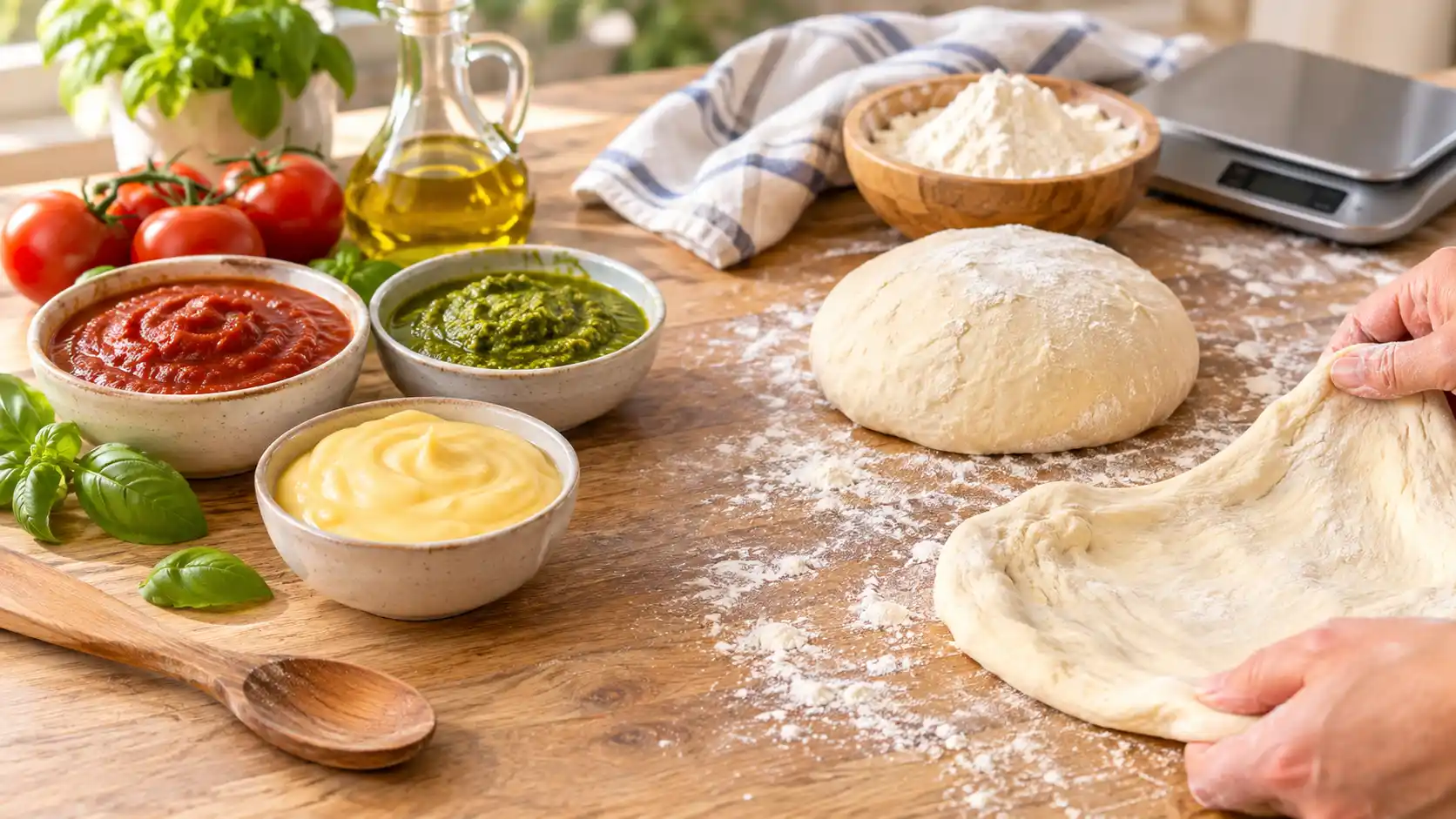
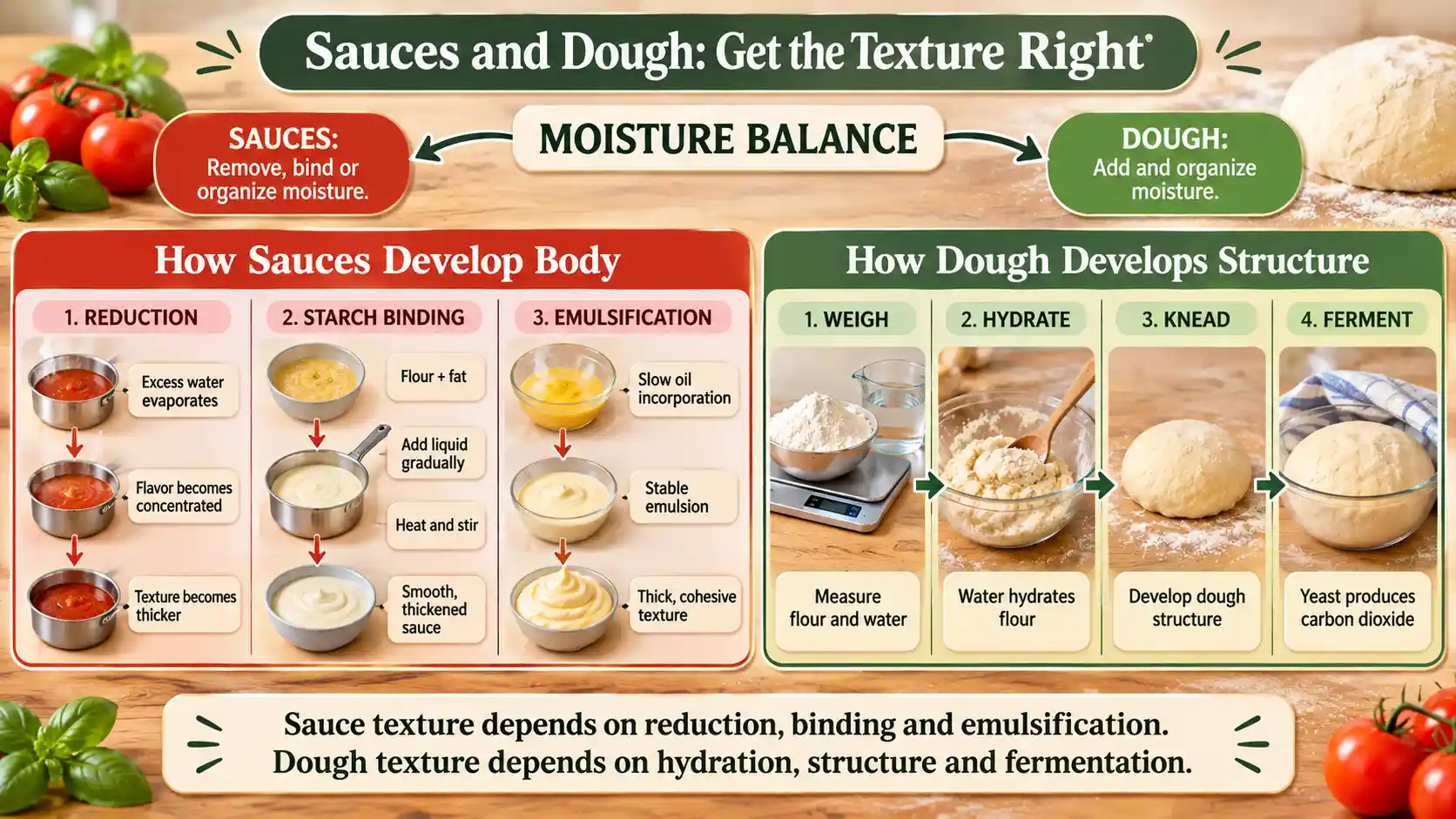
Sauces and dough have one important thing in common: getting their texture right depends on controlling moisture. A sauce is a flavored liquid, purée or emulsion that develops body through reduction, starch or emulsification. Dough combines flour and water to create structure through hydration, kneading and fermentation. When a sauce becomes watery or splits, or dough turns sticky, dense or refuses to rise, the problem often starts with moisture balance, heat, mixing or time. Understanding how these factors work makes it easier to choose the right method, recognize the correct texture and fix problems without blindly adding more flour, liquid or cooking time.
Quick Summary
- Sauces develop body by reducing water, binding liquid with starch or creating stable emulsions. Dough develops structure by hydrating flour and organizing it through mixing, kneading and fermentation.
- Reduce suitable cooked sauces with a vented lid until they cling to a spoon. Pizza sauce should be thick enough to spread without soaking the base.
- Weigh flour and water rather than relying on cups. Dough hydration is the percentage of water relative to flour weight, expressed using baker’s percentage.
- Cool cooked sauces promptly, refrigerate them safely and freeze suitable portions. Pesto and raw-egg mayonnaise need more specific storage precautions than ordinary cooked sauces.
What Are You Making, and What Usually Goes Wrong?
Most sauce and dough problems come from one or more of four things: moisture balance, temperature, ingredient order or time.
A sauce may remain watery because too much liquid is trapped during cooking. Mayonnaise can split when oil is incorporated too quickly. Pesto can lose its bright appearance after excessive processing or prolonged air exposure.
Dough behaves differently. Too much water relative to flour can make it difficult to handle, while insufficient hydration can produce a stiff mixture. Inactive yeast, insufficient kneading and incorrect proofing can also prevent dough from developing the structure you expect.
The following routing table helps you find the right starting point.
| I want to… | Go to | Kitchen Memo guide |
| Make thicker pizza sauce | Sauce reduction | Thermomix Pizza Sauce |
| Make chunky bolognese | Meat sauce texture | Thermomix Bolognese Sauce |
| Keep pesto fresh and bright | Herb-and-oil sauce | Thermomix Pesto |
| Make mayonnaise that holds | Emulsification | Thermomix Mayonnaise |
| Make stretchy pizza dough | Hydration and gluten | Thermomix Pizza Dough |
| Make reliable bread dough | Kneading and proofing | Thermomix Bread Dough Basics |
Your Options: Sauce Families and Dough Types
There is no single technique for every sauce or dough. The ingredients determine which method develops the right texture.
Sauce families compared
| Sauce family | What gives it body | Typical failure | Related guide |
| Tomato-based: tomato sauce, pizza sauce and bolognese | Evaporation, tomato solids and cooked ingredients | Watery or bitter sauce | Pizza sauce, tomato sauce and bolognese |
| Herb-and-oil: pesto | Finely processed herbs, nuts, cheese and oil | Brown, dull or oily pesto | Thermomix pesto |
| Cold emulsions: mayonnaise and aioli | Small oil droplets dispersed through a water-based mixture with an emulsifier | Split or runny mayonnaise | Thermomix mayonnaise |
| Roux-based and white sauces: béchamel and cheese sauce | Starch from flour, combined with liquid and fat | Lumps, excessive thickness or splitting | A dedicated Kitchen Memo guide is planned |
Tomato sauces need sufficient evaporation to remove excess liquid. Pesto depends on the balance between ground ingredients and oil, while mayonnaise relies on a stable emulsion.
Béchamel and cheese sauces require a different approach because their thickness comes primarily from starch. These are also useful starting points when learning about traditional mother sauces and their adaptations.
Dough types compared
Different doughs require different hydration, mixing and fermentation approaches.
| Dough type | Hydration | Kneading or mixing | Rise | Best for |
| Thin-crust pizza | Lower-water formula relative to softer crust styles; no universal Kitchen Memo percentage established | Develop enough structure to roll or stretch thinly | Usually a shorter proof | Crisp, thin bases |
| Neapolitan-style pizza | Requires a dedicated tested formula; no Kitchen Memo-validated percentage established | Develop stretch without making the dough difficult to handle | Often uses longer fermentation | Soft, airy edges |
| Everyday bread | Depends on flour and recipe; no standardized Kitchen Memo formula established | Knead until cohesive and elastic | Until sufficiently expanded | Sandwich loaves and everyday bread |
| No-yeast dough | Recipe-dependent | Mix until the ingredients form a workable dough | Usually no yeast fermentation | Quick pizza and flatbread |
| Gluten-free dough | Requires a separate formulation; conventional wheat hydration cannot be transferred directly | Mix according to the flour blend and binder requirements | Depends on the leavening system | Gluten-free baking |
The current Kitchen Memo pizza dough formula provides a useful starting point: 300 g water with 500 g flour, giving 60% hydration.
That figure should not automatically be applied to every bread, pizza or gluten-free dough.
Cooked vs raw tomato sauce
A cooked tomato sauce loses moisture through evaporation, which helps concentrate its texture and flavor. A raw tomato sauce retains more of the fresh ingredient’s character and does not rely on simmering for its texture.
For pizza, a short cooking period can be sufficient when the goal is a thick, spreadable sauce. A longer-cooked tomato sauce may be more suitable when preparing a pasta or general-purpose sauce.
Fresh vs canned tomatoes
Fresh tomatoes can vary considerably in water content, ripeness and sweetness. Canned tomatoes offer a more consistent starting point, although brands and processing styles still differ.
Choose based on the intended sauce. Very juicy fresh tomatoes may need additional reduction, while canned tomatoes may require less adjustment depending on their consistency.
Same-day vs cold-fermented dough
Same-day dough is convenient when you need a pizza base quickly. It relies on a shorter fermentation and is generally easier to schedule around an immediate meal.
Cold fermentation slows yeast activity by keeping the dough refrigerated. It provides a different fermentation schedule and can develop additional flavor, but it requires more planning.
Neither approach automatically guarantees better dough. Flour, yeast quantity, temperature and total fermentation time all influence the result.
Why Results Differ: Water, Heat and Time
Understanding what changes texture makes troubleshooting much easier.
How sauces thicken, bind or split
There are three main ways to give a sauce body.
- Reduction
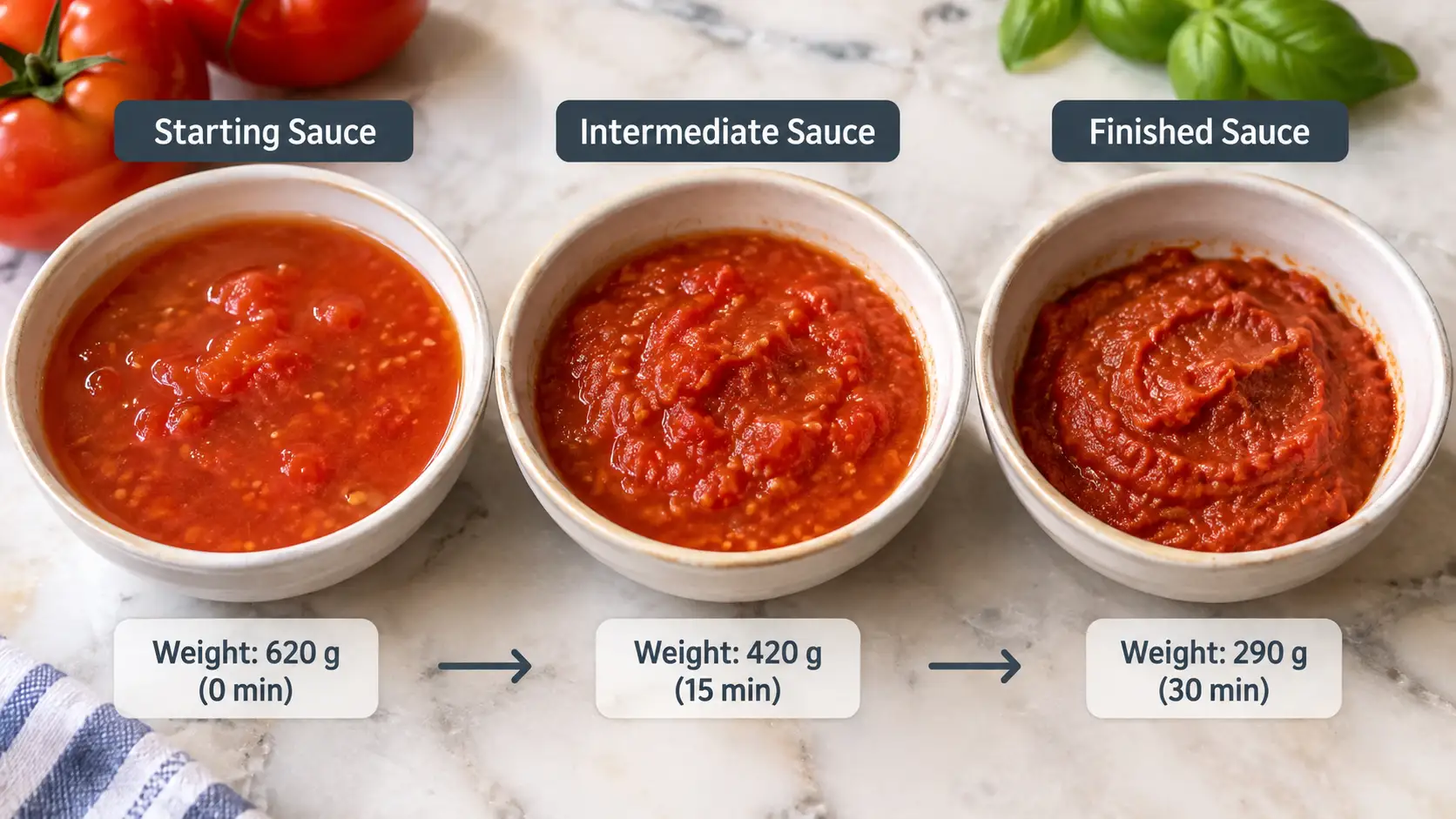
Reduction removes water through evaporation. As liquid evaporates, the remaining ingredients become more concentrated.
This is useful for tomato sauce, pizza sauce and bolognese. Leaving the lid appropriately vented allows steam to escape, helping the sauce become thicker.
Kitchen Memo’s pizza sauce recipe uses an initial 8-minute cooking period at 100°C, with additional cooking when necessary. The general tomato sauce recipe uses approximately 15–25 minutes of cooking.
These timings serve different sauce styles and starting conditions. They are not a controlled comparison, and the longer period should not automatically be applied to every pizza sauce.
The finished texture matters more than the clock: a spoon should carry a coating of sauce rather than leave a watery trail.
A reduction table comparing starting weight, finished weight and cooking time would be useful for more precise guidance. However, matched batch measurements are not currently available, so exact reduction percentages should not be presented as established results.
- Starch thickening
Starch absorbs water and thickens a sauce when properly dispersed and heated.
Béchamel is a classic example. A roux combines flour and fat before liquid is added, helping produce a smoother starting mixture.
For a white sauce:
- Cook the flour and fat together.
- Add the liquid gradually while whisking.
- Heat gently while stirring.
- Allow the sauce to thicken before adjusting its consistency.
Adding dry flour directly to an already thick sauce can produce lumps.
Cheese sauces also need temperature control. Excessive heat can destabilize their texture and cause the fat and liquid to separate.
- Emulsification
An emulsion disperses tiny droplets of one liquid through another liquid that would not normally mix with it.
Mayonnaise is a familiar example: oil is incorporated into an egg-based mixture to produce a thick, cohesive sauce.
The main control is gradual oil incorporation. Adding too much oil too quickly can overwhelm the developing emulsion.
Pesto is different. It is primarily a mixture of ground ingredients and oil rather than a mayonnaise-style egg emulsion.
Long or aggressive processing can introduce heat and increase exposure to air, which may dull the appearance of fresh herbs.
For more specific methods, see the Thermomix mayonnaise guide and Thermomix pesto recipe.
How dough builds structure
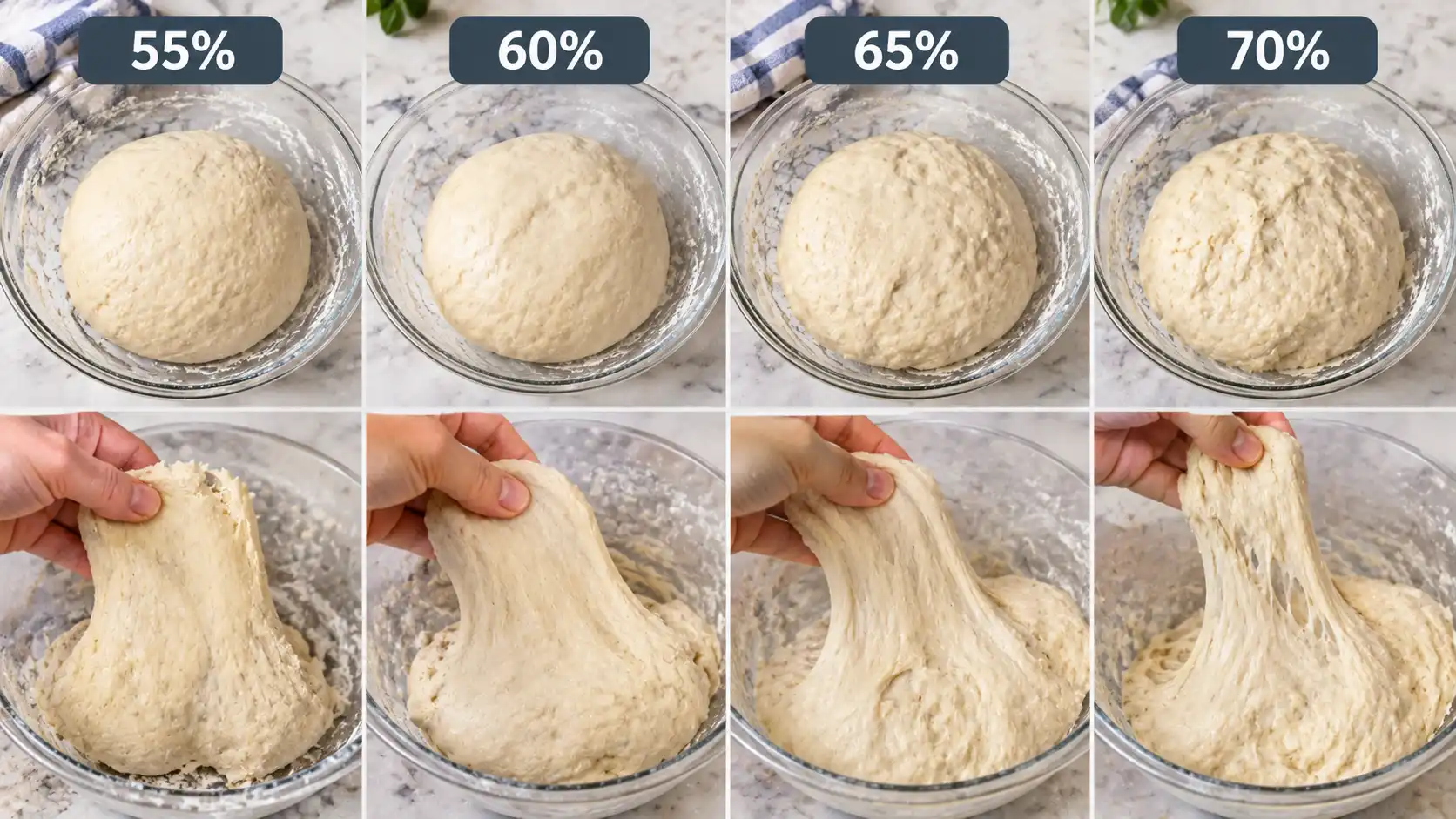
Dough structure depends on hydration, gluten development, fermentation and ingredient balance.
Hydration describes the amount of water relative to flour. It influences whether dough feels stiff, firm, soft, elastic or sticky.
Baker’s percentage makes hydration easier to calculate:
Hydration (%) = (Water weight ÷ Flour weight) × 100
For example:
- Flour: 500 g
- Water: 300 g
- Hydration: 60%
The calculation is:
(300 ÷ 500) × 100 = 60%
Flour is always treated as 100% in baker’s mathematics. Salt, yeast, oil and other ingredients are calculated relative to its weight. King Arthur Baking’s baker’s percentage reference explains this system and how it helps bakers scale recipes accurately.
Kneading develops the dough’s structure. It distributes moisture and helps gluten-forming proteins create a network that can hold fermentation gases.
Fermentation happens when yeast produces carbon dioxide, which becomes trapped within the dough structure. This creates expansion and contributes to the final crumb.
Salt contributes flavor and influences yeast activity. Too much salt or an unsuitable fermentation temperature can affect how quickly dough rises.
For Thermomix users, Cookidoo’s official Dough Mode guidance explains that 2 minutes of Dough mode is equivalent to approximately 10 minutes of hand kneading. It also recommends a draft-free proving environment around 24–27°C.
These are useful reference conditions, not a guarantee that every dough will be ready after a fixed period.
Matching Sauce to Dough: Why Pizza Goes Soggy
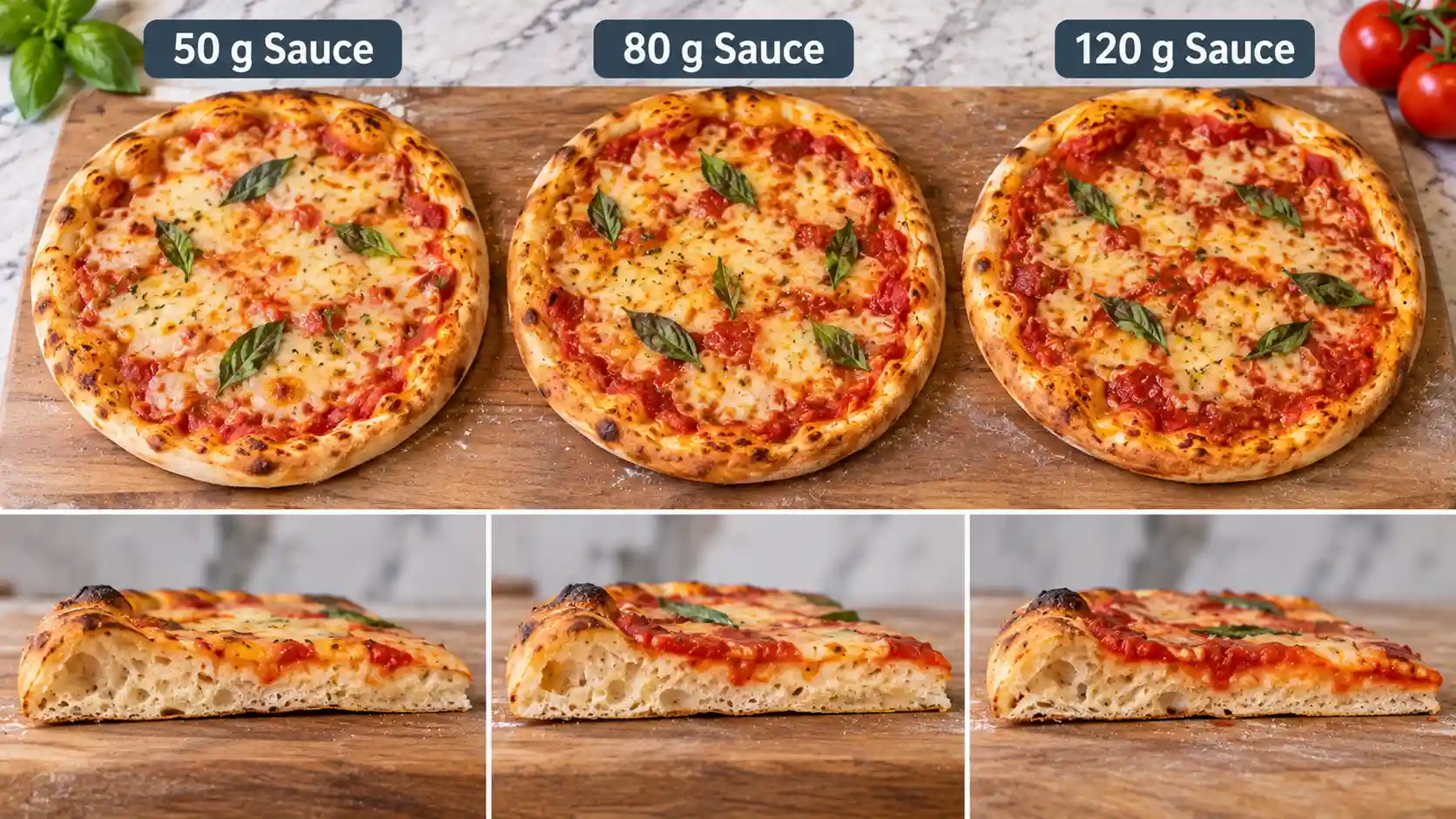
A soggy pizza center often means the moisture entering the base is greater than the moisture that can escape during baking.
Sauce quantity and thickness are two important variables you can control.
Pizza sauce should be spread in a thin, even layer. It should not pool in the center or run freely when spread across the base.
The Kitchen Memo pizza sauce recipe uses a short cooking period to create a thicker consistency than a general pasta sauce. This distinction matters because pizza sauce continues to heat after it is spread over the dough and placed in the oven.
How to match sauce and dough
| Component | What to look for | Why it matters |
| Sauce | Thick, spreadable consistency | Reduces excess liquid on the base |
| Dough | Consistent hydration | Supports shaping and structural development |
| Sauce quantity | Thin, even coverage | Avoids pooling in the center |
| Toppings | Controlled moisture | Wet vegetables and other ingredients can contribute additional liquid |
| Baking surface | Properly preheated surface | Helps the base begin cooking efficiently |
The sauce-quantity question
A useful Kitchen Memo test would compare 50 g, 80 g and 120 g of sauce on the same 12-inch pizza.
However, those are proposed test quantities, not established recommendations.
To obtain reliable results, prepare identical dough portions, use the same sauce batch, keep the oven and toppings consistent, and weigh each sauce portion.
Compare the finished pizzas at 5 and 15 minutes after baking. Record center crispness, moisture, bottom browning and how well the crust holds its shape.
Until those tests are completed, there is no verified Kitchen Memo recommendation for the ideal number of grams of pizza sauce.
Raw, quick-cooked or paste-style sauce?
These approaches should be compared using the same dough and baking conditions.
Raw tomato sauce, briefly cooked sauce and thicker paste-style sauce contain different amounts of available moisture. The finished pizza should be evaluated for center crispness rather than assuming that a thicker sauce always produces the best result.
Cold ferment vs same-day dough
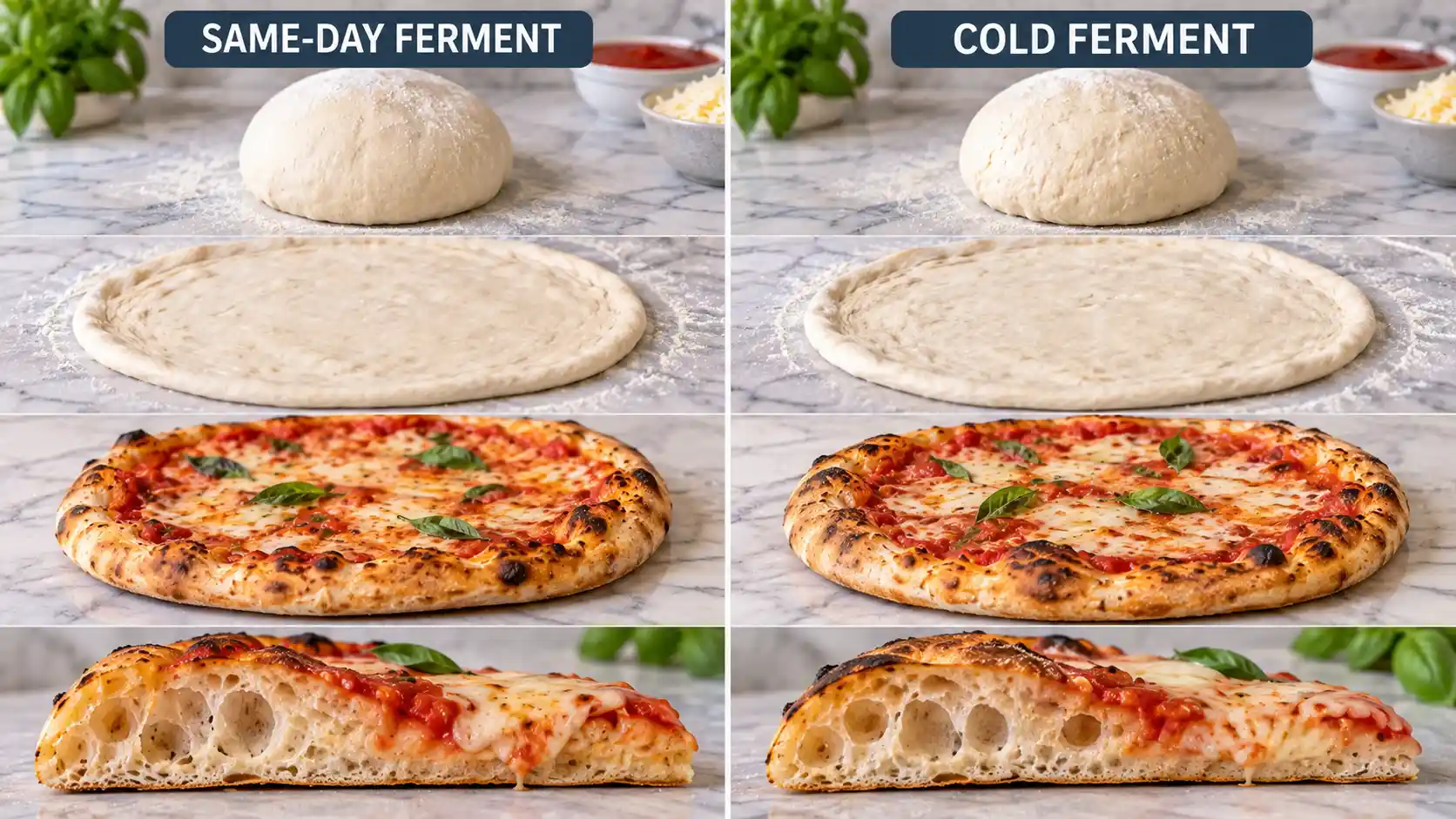
A further comparison should record crumb structure, crust color, stretching behavior and the finished texture.
Cold-fermented dough can be useful for advance preparation, but the result depends on the formula and fermentation conditions. Kitchen Memo has not yet supplied matched cold-ferment and same-day test photographs or measurements, so a winning method should not be claimed here.
Flour type and baking surface should also be tested separately. Bread flour, all-purpose flour and 00 flour do not necessarily behave identically, and a baking stone, steel and sheet pan can produce different results.
The Recommended Method: One Formula for Sauces, One for Dough
A repeatable approach is more useful than adding ingredients randomly whenever something goes wrong.
Sauce formula card
Use this framework for suitable cooked sauces. It is a starting method rather than a universal recipe.
| Component | Purpose | What to consider |
| Base | Provides the main identity | Tomatoes, vegetables, dairy or another liquid base |
| Aromatics | Build flavor | Onion, garlic, herbs and spices |
| Fat | Carries flavor and improves mouthfeel | Olive oil, butter or another suitable fat |
| Acid, sugar and salt | Balance the finished flavor | Adjust after the sauce has developed |
| Body method | Determines thickness | Reduction, starch or emulsification |
| Finish | Improves the final texture | Fresh herbs, cheese, butter or seasoning where appropriate |
Five steps for better sauce texture
- Prepare the base. Chop ingredients to a consistent size. For an onion-based cooked sauce, soften the onion until translucent rather than browning it unnecessarily.
- Build the flavor. Add garlic and other aromatics according to their cooking requirements. Avoid allowing them to scorch.
- Choose the correct thickening method. Use evaporation for suitable tomato sauces, starch for roux-based sauces and controlled oil incorporation for mayonnaise.
- Check the consistency. Look at how the sauce moves, coats a spoon and spreads. Adjust the method according to the intended dish.
- Finish and season. Balance salt and acidity after the sauce has developed its body. Add fresh herbs or other delicate ingredients when appropriate.
Important exceptions:
- Mayonnaise and other uncooked emulsions should not be treated like cooked tomato sauces.
- Pesto benefits from controlled processing rather than prolonged cooking.
- Béchamel and cheese sauces require their own starch and temperature management.
- Bolognese needs enough liquid reduction while preserving the intended texture of its other ingredients.
Dough formula card
The current Kitchen Memo pizza dough formula provides a useful numerical example:
| Ingredient | Weight | Baker’s percentage |
| Flour | 500 g | 100% |
| Water | 300 g | 60% |
| Salt | 10 g | 2% |
| Olive oil | 20 g | 4% |
| Fresh yeast | 7 g | 1.4% |
| Total | 837 g | 167.4% |
The water quantity is approximately 300 ml, and the flour is about 4 cups depending on how it is measured. Weighing remains considerably more reliable than measuring flour by volume.
Important yeast correction: The existing pizza dough article lists 7 g fresh yeast or 4 g instant yeast. Those two quantities should not be presented as equivalent without correction. King Arthur Baking’s general conversion guidance calculates instant yeast at approximately 0.33 times the fresh yeast weight. Therefore, 7 g fresh yeast converts to approximately 2.3 g instant yeast under that general guide. This is a conversion reference, not a substitute for a model-specific or manufacturer-tested recipe.
For consistency, validate and standardize the yeast quantity before publishing the dough formula as a universal recipe.
The recommended dough process
- Weigh the flour, water, salt, oil and selected yeast.
- Dissolve fresh yeast in the liquid according to the recipe. Instant yeast can generally be incorporated without prior dissolving; follow the manufacturer’s instructions.
- Add the flour and remaining ingredients.
- Knead for approximately 2 minutes using the appropriate Thermomix Dough function or equivalent model-specific setting.
- Transfer to a lightly oiled bowl and cover.
- Allow the dough to rise for approximately 45–60 minutes as a starting point, checking its expansion rather than relying exclusively on the clock.
- Divide the dough and allow it to rest for approximately 15 minutes before stretching.
A particularly common mistake is adding more flour whenever dough feels sticky.
Before doing that, check the actual flour and water weights. A dough may initially feel sticky before the flour has fully absorbed its water. Giving it time to rest can improve handling without changing the formula.
Diagnose and Fix
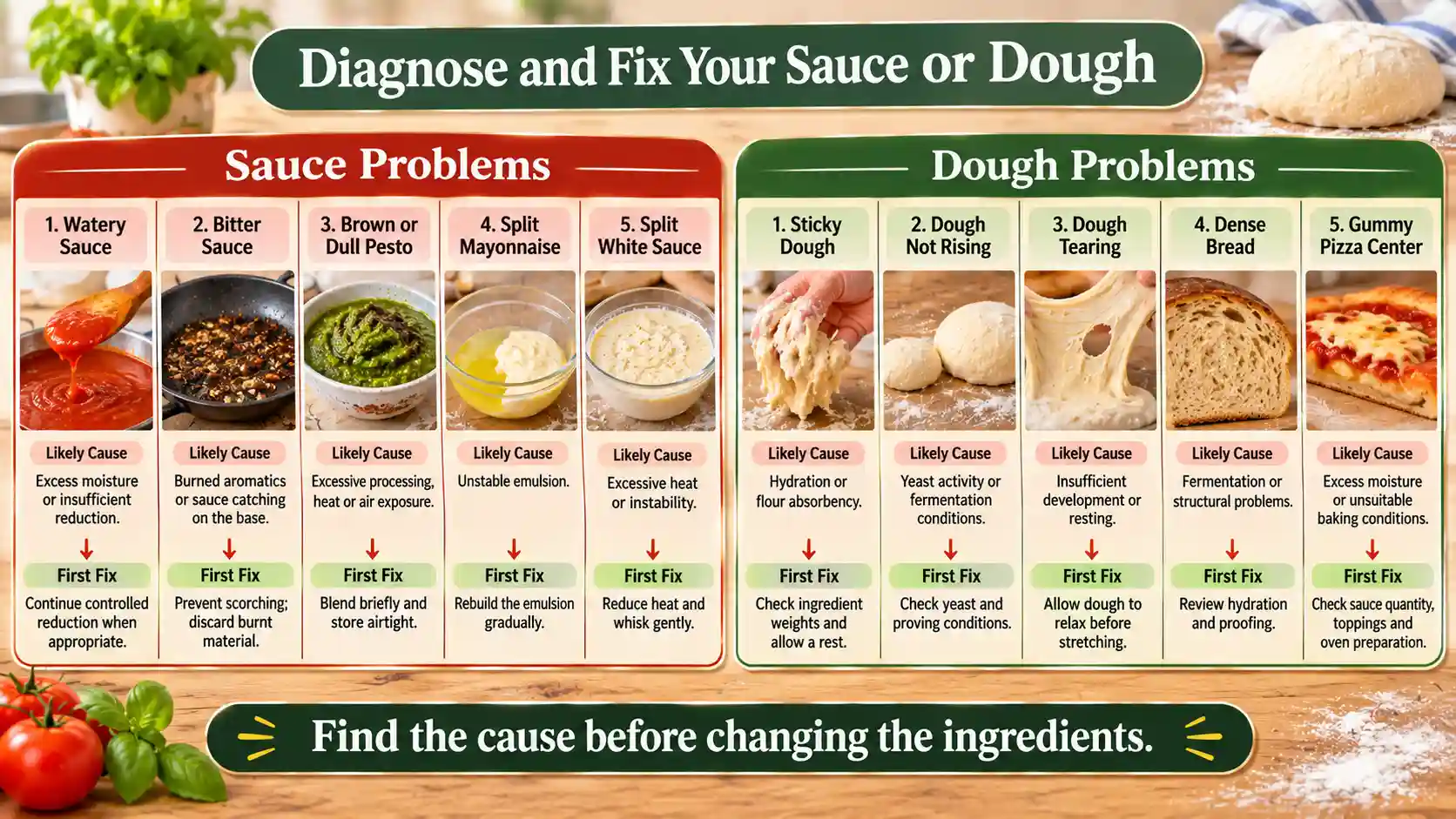
The quickest way to fix texture problems is to identify their cause before changing the ingredients.
Sauce troubleshooting table
| Symptom | Why it happens | Fix | Prevention | What not to do |
| Watery tomato or bolognese | Excess liquid, insufficient reduction or inadequate steam release | Continue a controlled reduction using the appropriate vented arrangement | Check consistency during cooking | Add large amounts of flour |
| Bitter sauce | Burned aromatics or sauce catching on the base | Transfer the unaffected sauce without scraping burnt material into it; reassess seasoning | Keep aromatics from browning excessively | Continue cooking a scorched sauce |
| Pesto turns dull or brown | Excessive processing, heat or air exposure | Prepare a fresh batch where necessary and reduce blending time | Process briefly and store in an airtight container | Blend for unnecessarily long periods |
| Mayonnaise splits | Oil incorporated too quickly or an unstable emulsion | Start a fresh emulsion and gradually incorporate the failed mixture | Add oil gradually | Pour in all the oil at once |
| Sauce splits during reheating | Excessive or uneven heat | Reheat gently and stir or whisk as appropriate | Use controlled heat and avoid rapid reheating | Bring delicate dairy sauces to a vigorous boil |
Dough troubleshooting table
| Symptom | Why it happens | Fix | Prevention | What not to do |
| Dough is sticky | Hydration, flour absorbency or inaccurate measurements | Allow a short rest and assess the dough again | Weigh ingredients accurately | Keep adding handfuls of flour |
| Dough will not rise | Inactive yeast, unsuitable liquid temperature or a cold proving environment | Check yeast activity and provide suitable proving conditions | Store yeast correctly and follow the recipe | Assume more kneading will fix inactive yeast |
| Dough tears while stretching | Insufficient gluten development or inadequate resting | Rest the dough and allow it to relax before stretching | Knead appropriately and include a resting stage | Force the dough into shape |
| Crust is pale and the middle gummy | Possible underheating or excessive moisture from sauce and toppings | Review oven preheating, sauce thickness and topping moisture | Keep preparation and baking variables consistent | Increase sauce quantity to compensate for pale crust |
| Bread is dense | Insufficient fermentation, unsuitable hydration or inadequate structure | Reassess the formula and proofing stage | Check expansion and dough development | Treat a fixed proofing time as a guarantee |
Keep a mistake log
A useful Kitchen Memo mistake log should record the actual batch, ingredient weights, machine settings, room conditions, observed texture, suspected cause and the adjustment that changed the result.
No first-hand failure log or controlled test records have been supplied for this article. Personal cooking failures should therefore be added only after they have been documented, rather than presented as invented author experiences.
Getting It Right Every Time: Storing, Freezing and Make-Ahead
Storage is another form of moisture and temperature control. A sauce or dough that has the correct texture when freshly prepared may change after refrigeration or freezing.
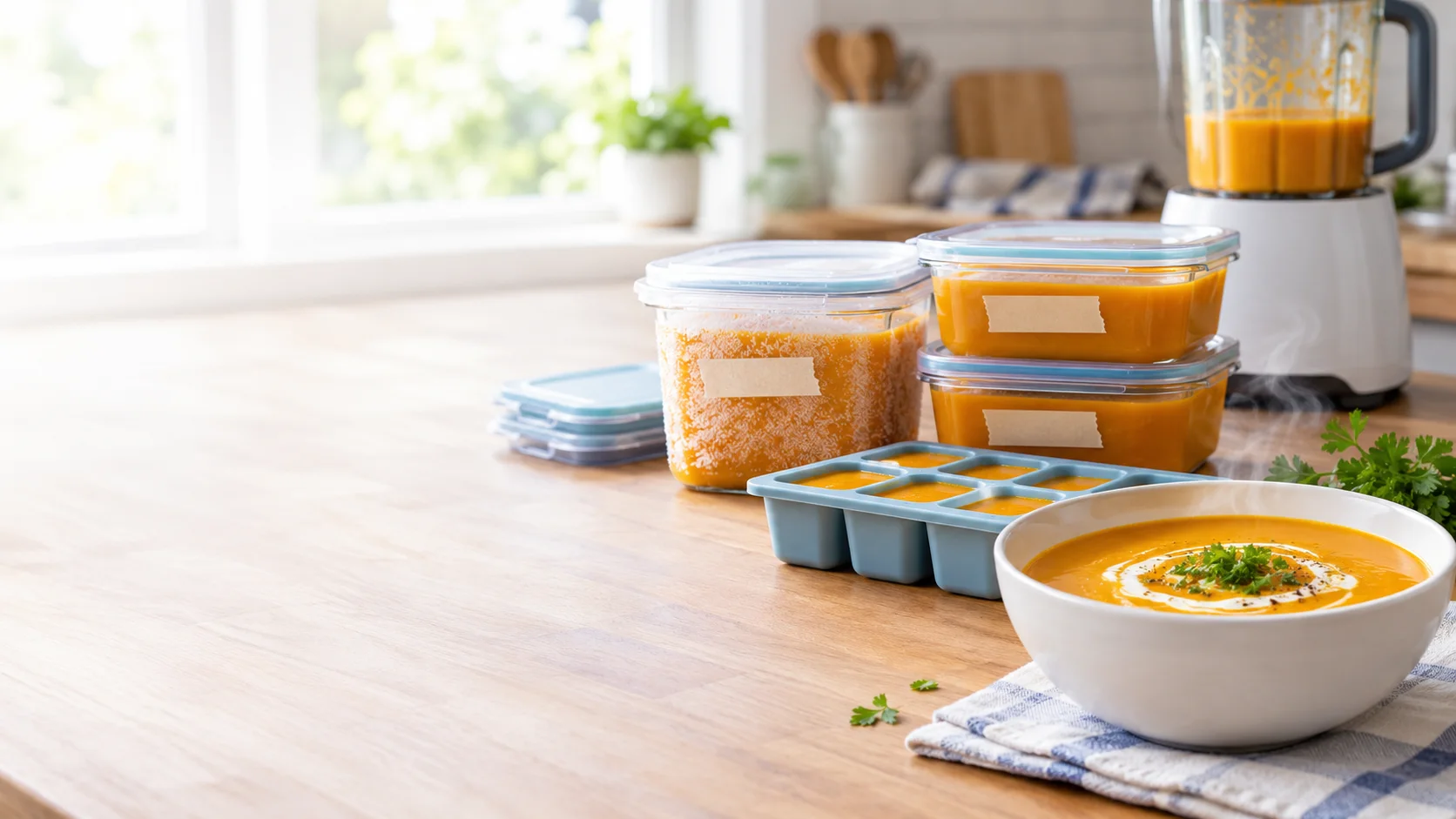
For cooked sauces, USDA guidance recommends refrigerating leftovers within 2 hours, or 1 hour when the surrounding temperature is above 90°F (32°C). Divide large batches into shallow containers to cool more quickly.
Keep refrigerated food at or below 40°F (4°C), and use the general 3–4-day leftover guideline for suitable cooked sauces. Freeze food promptly for longer storage.
| Item | Refrigerator | Freezer | Container | What to watch for |
| Tomato or pizza sauce | 3–4 days as a conservative general cooked-leftover guideline | Freeze in portions; sauce-specific quality duration needs testing | Airtight, freezer-safe container | Excess liquid may separate after thawing |
| Bolognese | 3–4 days | Freeze promptly in meal-sized portions | Shallow airtight containers | Cool promptly because it contains cooked meat |
| Pesto | Up to 4 days | Freeze for longer storage | Small airtight containers or ice-cube trays | Fresh garlic and herbs in oil require particular food-safety care |
| Homemade mayonnaise | Use within 24 hours as a conservative raw-egg approach | Freezing is not recommended for the tested emulsion | Clean, sealed container | Use pasteurized eggs and maintain refrigeration at or below 41°F (5°C) |
| Pizza dough | Follow the specific recipe; the Kitchen Memo pizza dough guide gives up to 48 hours after the first rise | For best quality, a conservative reference is around 1 month | Tightly wrapped individual dough portions | Yeast performance can decline during extended freezing |
| Bread dough | Follow the tested recipe and fermentation instructions | Freeze suitable portions according to the formula | Airtight freezer wrapping | Thawing can change handling and fermentation behavior |
Important storage distinctions
The pizza sauce and tomato sauce child articles currently give different refrigerator periods. This pillar uses a more conservative general 3–4-day leftover approach rather than carrying forward the longer claims.
Pesto needs special attention. Oregon State University Extension identifies homemade pesto and other herb-and-vegetable mixtures in oil as foods that must be refrigerated and used within 4 days or frozen. This is a food-safety consideration, not merely a color or freshness preference.
Homemade mayonnaise made with raw egg also needs different treatment. Use pasteurized eggs, refrigerate promptly and adopt the conservative 24-hour approach described in the Kitchen Memo mayonnaise guide. The Australian raw-egg guidelines specify refrigeration at or below 5°C and a maximum 24-hour period for acidified raw-egg products. Their guidance is particularly relevant when applying conservative handling principles to homemade mayonnaise.
For cooked leftovers, reheat thoroughly to 165°F (74°C). USDA also recommends bringing sauces, soups and gravies to a boil when reheating.
Frozen storage recommendations are generally quality guidelines rather than a universal safety expiration date. Keep the freezer at 0°F (-18°C) or below and label each portion with its preparation date.
Equipment, Scaling and Beginner Mistakes
Different equipment changes how sauce and dough behave.
| Equipment | Sauces | Dough |
| Thermomix (TM31, TM5, TM6 and TM7) | Chopping, mixing and controlled cooking in one bowl | Mixes and kneads using model-appropriate functions |
| Stovetop or oven | Excellent control over evaporation and direct heat | Suitable for baking and other dough-related cooking |
| Stand mixer | Limited sauce applications | Useful for mixing and developing larger dough batches |
| Blender or food processor | Useful for pesto, purées and emulsions | Not a replacement for a dedicated kneading process in most yeast dough recipes |
Scaling dough safely
The example pizza dough batch weighs approximately 837 g:
500 + 300 + 10 + 20 + 7 = 837 g.
Doubling it produces approximately 1,674 g of dough.
Cookidoo’s Dough Mode guidance states a maximum of 1 kg of dough for the relevant guided Dough Mode instructions. A doubled batch of this size would therefore exceed that stated limit.
This should not be interpreted as a universal maximum for every Thermomix generation. TM31, TM5, TM6 and TM7 have different operating instructions and functions. Check the manual and approved recipe quantities for the specific model before increasing a batch.
The current bread dough guide also distinguishes the model-specific capacity guidance from the bowl’s liquid capacity. The amount of liquid a bowl can hold does not determine how much dough it can safely knead.
Scaling sauces
Doubling a sauce does not necessarily mean doubling its cooking time.
A larger batch contains more liquid, and the evaporation rate depends on the cooking vessel, surface area, temperature and ingredient composition.
Use the finished consistency rather than a simple multiplication of the original cooking time.
Four beginner mistakes to avoid
- Measuring flour by volume without considering variation. Different packing methods can change the actual weight. Use grams whenever possible.
- Adding flour to sticky dough immediately. Check hydration and allow the dough time to absorb moisture before making adjustments.
- Using the same cooking approach for every sauce. Reduction, starch thickening and emulsification require different treatment.
- Judging fermentation only by the clock. Room temperature, yeast activity, flour and dough composition all affect proofing.
Environmental factors that change results
Flour absorbency varies with flour type and storage conditions. Humidity can also affect how ingredients behave during preparation.
Altitude changes the conditions under which yeast dough ferments and bakes. Very warm kitchens can accelerate fermentation, while cooler rooms can slow it.
Tomatoes also change with ripeness and season. A very juicy tomato batch may require more evaporation than a thicker canned product.
When adjusting a formula, change one factor at a time and record what happens. This makes it much easier to identify the reason a batch behaves differently.
Conclusion
Getting sauces and dough right is largely about understanding how water behaves. Sauces need moisture reduced, bound or emulsified, while dough needs water measured and organized through hydration, kneading and fermentation. Weigh ingredients, use the appropriate method, check texture rather than relying only on time, and store each preparation safely. Once you understand these fundamentals, watery sauces, split emulsions, sticky dough and dense crusts become easier to diagnose and correct.
Frequently Asked Questions
What’s the difference between pizza sauce and pasta sauce?
Pizza sauce is generally thicker and more concentrated to avoid soaking the base. Pasta sauce can be looser because it coats cooked pasta.
How thick should pizza sauce be, and how much goes on a pizza?
It should spread easily without running or pooling. The ideal quantity depends on diameter and crust style; Kitchen Memo’s matched quantity test is pending.
How do I thicken a watery sauce without flour?
Continue reducing suitable cooked sauces with controlled steam release. You can also purée suitable vegetables or incorporate concentrated tomato paste.
What is dough hydration, and what’s right for pizza?
Hydration is water weight divided by flour weight. Kitchen Memo’s current baseline pizza dough uses 300 g water per 500 g flour, or 60%.
Is cold fermenting dough worth it?
It can improve scheduling and develop additional flavor through slower fermentation. However, the best duration depends on the recipe, yeast quantity and refrigerator temperature.
How long do homemade sauces and dough keep, and can I freeze them?
Cooked sauces generally follow a 3–4-day refrigerated leftover guideline. Pesto needs a 4-day maximum, raw-egg mayonnaise a conservative 24-hour approach, and suitable doughs can be frozen.
Why did my mayonnaise or white sauce split, and can I fix it?
Mayonnaise may split when oil is added too quickly. White sauce can split from excessive heat. Gradually rebuilding the emulsion or whisking gently over lower heat may help.
Can I swap fresh yeast for instant yeast?
Yes, but the quantities differ. Follow the yeast manufacturer’s conversion guidance; King Arthur Baking uses approximately one-third as much instant yeast as fresh yeast.