You are halfway through preparing dinner when you notice that the recipe calls for curry paste, but your cupboard only has curry powder. Can you use one instead of the other? The difference between curry paste vs curry powder is more than their consistency. Curry paste is a moist blend of spices and aromatics, while curry powder is a dry mixture of ground spices. Neither is a universal replacement for the other. However, you can adapt some soups, stews and everyday curries by adjusting the fat, liquid and fresh aromatics. The best choice depends on the dish, its intended flavor and how its ingredients are cooked.
Quick Summary
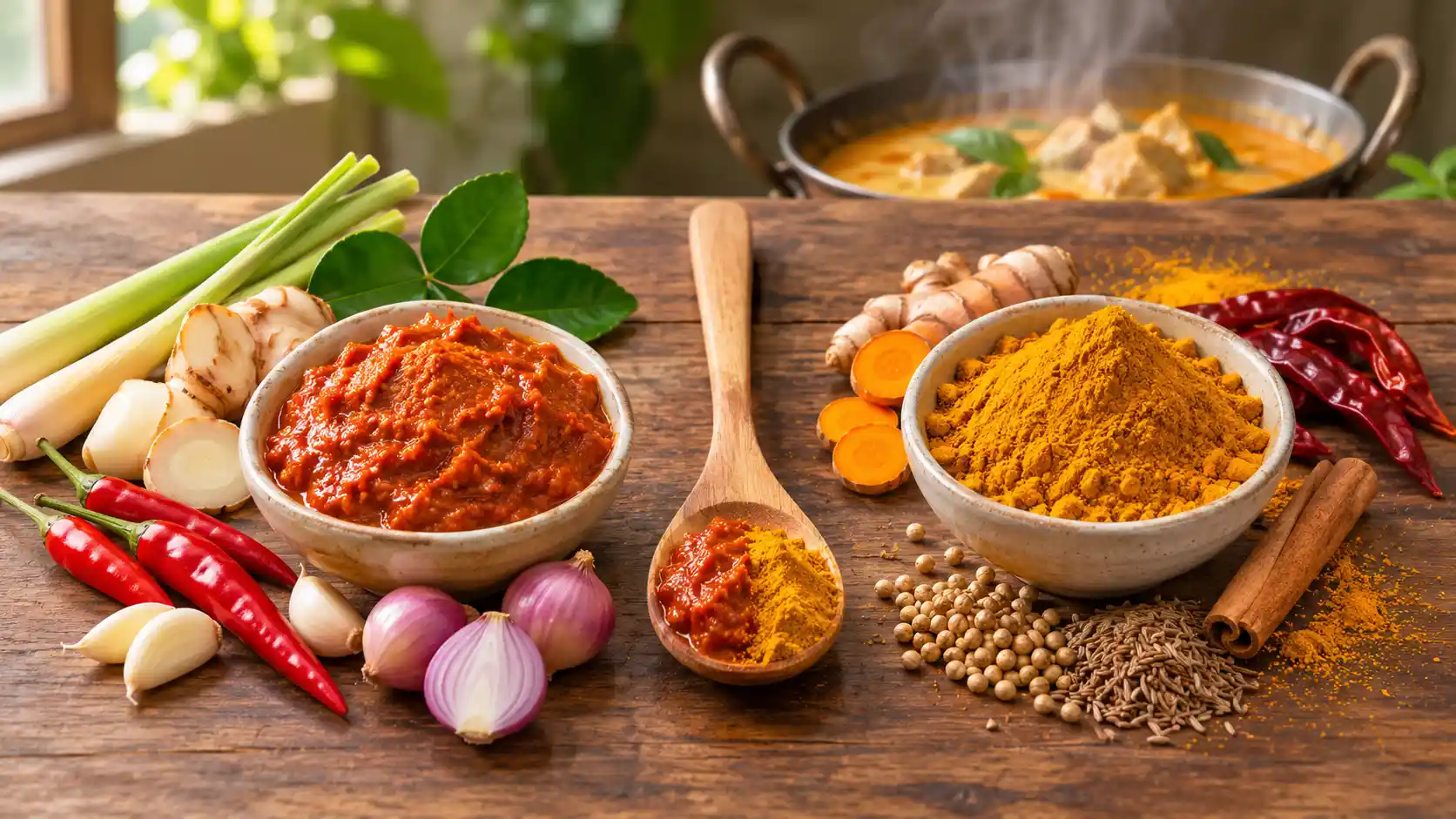
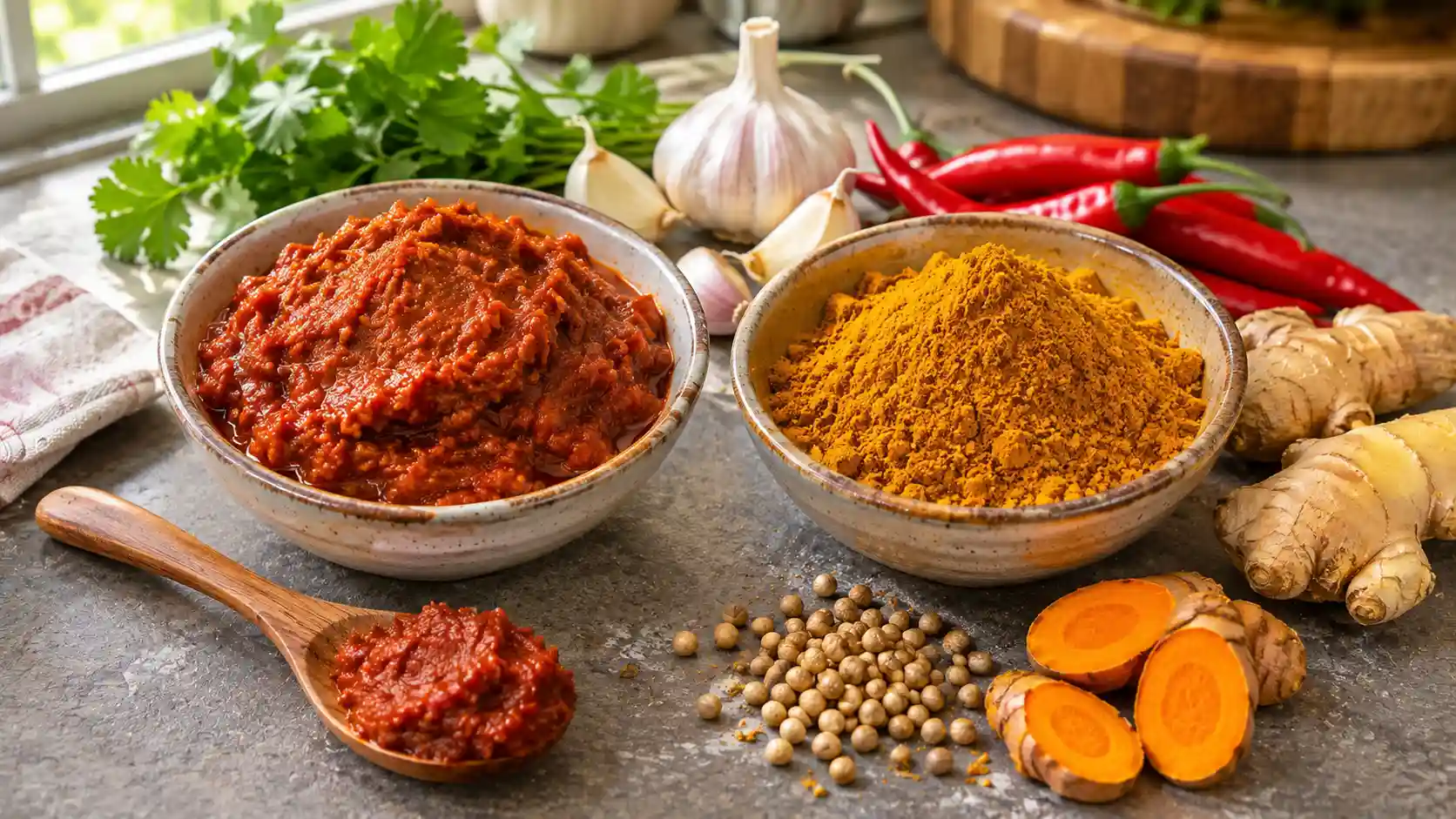
- Curry paste: A moist seasoning base made from ground spices, chilies and aromatics. Some varieties contain shrimp paste, fish sauce, salt or oil.
- Curry powder: A dry mixture of ground spices, commonly including turmeric, coriander, cumin, fenugreek and chili.
- Can you substitute them? Sometimes, particularly in adaptable soups and stews, but the flavor and consistency will change.
- Best cooking technique: Bloom curry powder briefly in oil or ghee. Fry curry paste until fragrant before adding the remaining ingredients.
- Best rule: Follow the product and cooking style intended by the recipe rather than assuming the two are interchangeable.
- Conversion ratio: There is no universal spoon-for-spoon conversion because pastes and powders vary in ingredients, concentration, moisture and salt.
Are Curry Paste and Curry Powder Interchangeable?
Curry paste and curry powder can sometimes replace one another, but they are not directly interchangeable in equal quantities.
The main difference is their composition. Curry paste contains moisture and aromatic ingredients that contribute flavor and texture. Curry powder contains dried, ground seasonings that need fat and moisture from the recipe to develop into a sauce.
For example, replacing Thai green curry paste with ordinary curry powder will not produce the same herbal, citrusy flavor. Similarly, replacing a dry curry seasoning with wet paste changes the amount of moisture and potentially salt in the recipe.
The substitution is more practical in flexible soups and stews, where you can adjust the liquid, aromatics and seasoning.
The final flavor also depends on the particular products being used. A mild commercial curry powder and a strongly seasoned curry paste can behave quite differently, so adjust gradually rather than relying on a fixed conversion.
What’s Actually in Each? (Entity Breakdown)
| Feature | Curry Paste | Curry Powder |
| Form | Moist, thick mixture | Dry, finely ground mixture |
| Typical ingredients | Chilies, garlic, shallots, lemongrass, galangal and spices | Coriander, cumin, turmeric, fenugreek and other dried spices |
| Flavor | Aromatic, often fresh and concentrated | Warm, earthy and spice-forward |
| Heat source | Fresh or dried chilies | Ground chili or pepper |
| Liquid | Contains moisture | Contains little or no added moisture |
| Cooking | Usually fried in fat before adding liquid | Often bloomed in oil or ghee |
| Common uses | Curries, marinades and stir-fries | Curries, soups, stews, dry seasoning and marinades |
| Storage | Follow the manufacturer’s instructions | Keep sealed in a cool, dry place |
Is It Just “Thai = Paste, Indian = Powder”?
No. That comparison oversimplifies both cuisines.
Thai cooking frequently uses freshly prepared or commercially available curry pastes, but Indian cooking also uses wet spice mixtures, ginger-garlic pastes and regional masalas.
In Indian cooking, spice blends can be prepared as whole-spice mixtures, ground powders or wet pastes. For example, Chettinad masala is one type of wet-ground spice preparation. The Oregon State University Extension guide to Indian spices explains how dry and wet spice mixtures serve different purposes in Indian cooking.
Likewise, curry paste is not exclusively Thai. Malaysian cuisine uses rempah, a wet spice paste made with ingredients such as chilies, garlic, ginger and lemongrass. It provides the base for dishes including curries and rendang, as explained in SBS Food’s guide to Malaysian rempah.
You can also find Jamaican curry seasoning products that combine curry spices with wet aromatics and other ingredients, such as the Jamaican curry seasoning from Spur Tree Spices.
The important distinction is the actual ingredients and preparation method, not simply the country associated with the product.
Paste Types at a Glance
- Thai red curry paste: Commonly includes dried red chilies, garlic, shallots, lemongrass, galangal and other aromatics. It creates a concentrated, chili-forward cooking base.
- Thai green curry paste: Uses green chilies with herbs and aromatics, producing a distinctive fresh flavor.
- Thai yellow curry paste: Commonly contains turmeric alongside other spices and aromatics, giving it a golden color and warm flavor.
- Madras curry paste: A commercially available Indian-style cooking paste. For example, Pasco Madras Curry Paste combines spices, chilies, oil and other ingredients.
- Tandoori paste: Used mainly as a marinade for foods that will be grilled or baked. Patak’s Tandoori Marinade Paste is one example.
Thai curry pastes also include Massaman and Panang varieties. The National Council for Hotel Management and Catering Technology’s introduction to Thai cuisine, published by India’s Ministry of Tourism’s autonomous hospitality education body, describes these different preparations and their ingredients.
Different manufacturers use different proportions, so the color or name alone does not establish the exact flavor or heat level.
Curry Powder vs Similar Products (Comparison Blocks)
Several products look similar or are sold in similar sections of supermarkets, but they perform different jobs.
| Product | Wet or Dry | Main Flavor Role | Can It Replace Curry Paste? |
| Curry powder | Dry | General warm spice seasoning | Sometimes, with adjustments |
| Garam masala | Dry | Aromatic warming spice blend | Not directly |
| Curry paste | Wet | Concentrated spice and aromatic base | Not a direct substitute for powder |
| Curry sauce | Usually wet | Ready-made sauce | Not generally |
| Red curry powder | Dry | Usually a chili-forward spice blend | Not equivalent to Thai red curry paste |
Curry powder vs garam masala: Curry powder and garam masala are different spice blends. Curry powder commonly includes turmeric and coriander, while garam masala often emphasizes aromatic spices such as cinnamon, cardamom, cloves and pepper. Its ingredients vary between households and regions.
Garam masala may be added during cooking or near the end, depending on the recipe. It should not automatically be treated as a replacement for curry powder. The Oregon State University Extension spice guide explains the differences between these Indian spice blends and their uses.
Curry paste vs curry sauce: Curry paste is a concentrated cooking ingredient used to establish a dish’s flavor. Curry sauce is generally a more complete preparation that can be heated and served with other ingredients.
Curry powder vs red curry powder: A red-colored dry curry blend is not automatically Thai red curry paste. The term can describe different chili-forward dry seasonings. Read the ingredient list to understand what provides the color and heat.
Why They Taste and Behave Differently (Diagnosis)
The difference comes from the ingredients and how their flavors develop during cooking.
Curry paste combines spices with aromatic ingredients such as garlic, lemongrass, shallots and chilies. These ingredients contribute moisture, texture and flavors that dried spices alone cannot reproduce.
Curry powder contains dried ground spices. Cooking them briefly in fat helps release and distribute their aromas. This process is commonly called blooming.
The Oregon State University Extension explanation of blooming spices recommends cooking ground spices briefly in oil or ghee before adding liquid, while watching carefully to prevent burning.
Another difference is sauce consistency. Paste introduces additional moisture and plant material. Powder does not provide the same contribution, so the recipe’s liquid balance may need adjustment.
Fresh aromatics also matter. In the Michelin Guide’s Thai red curry paste preparation, Bangkok chef Panee Kanidthanaka of Ruean Panya emphasizes that fresh ingredients are central to the character of Thai curry paste.
This explains why replacing a fragrant paste with an ordinary dry spice mixture changes the character of the dish, even when both products contain similar spices.
Which Is Better? It Depends on the Dish (Recommendation)
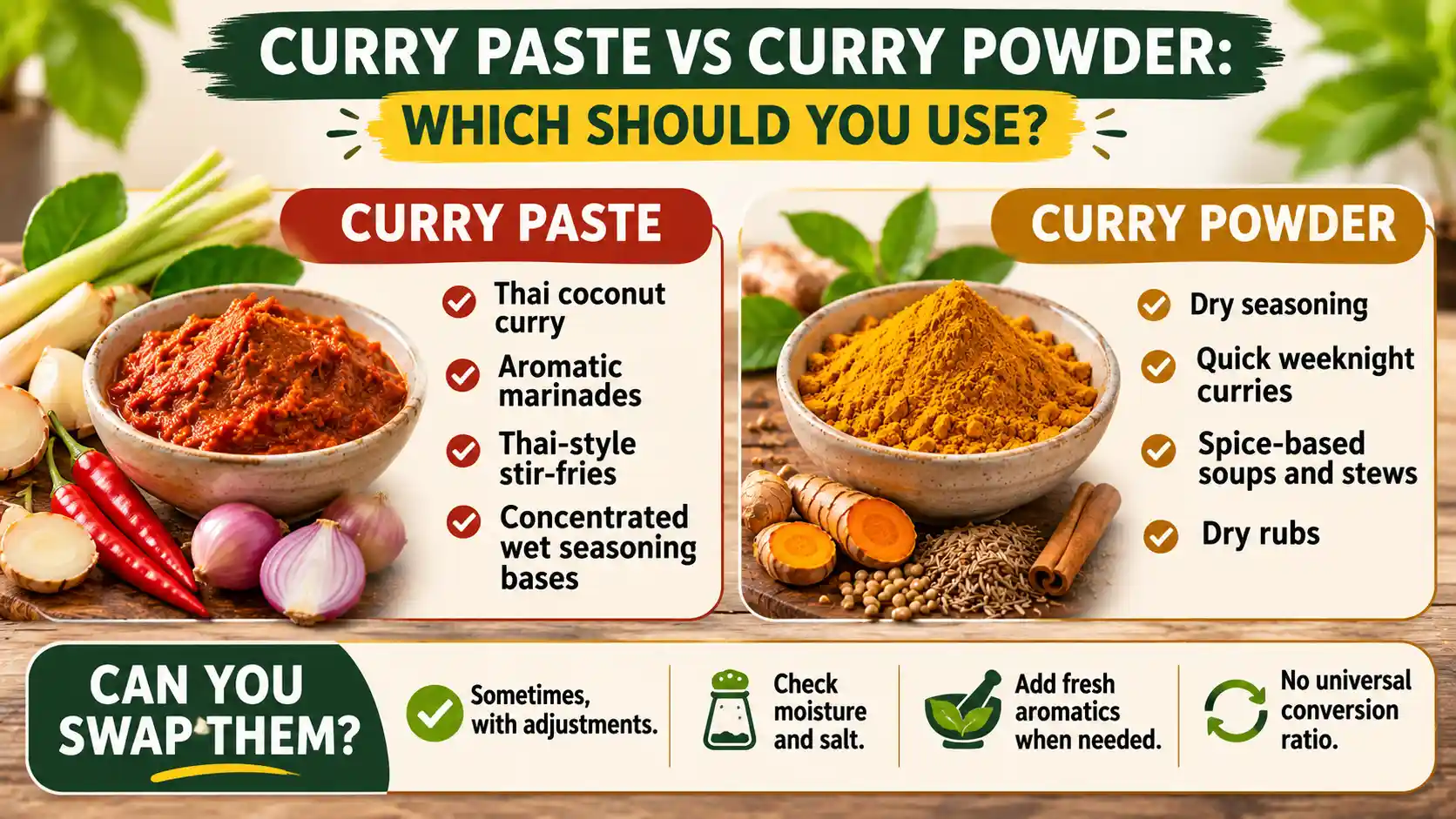
Neither product is universally better. Choose according to the dish you are preparing.
| Dish | Best Choice | Can You Swap? | What to Adjust |
| Thai coconut curry | Matching Thai curry paste | Not closely | Rebuild the aromatic flavor if using powder |
| Indian-style gravy | Recipe-specific masala, spices or paste | Sometimes | Adjust aromatics, fat and liquid |
| Dry rub | Curry powder | Generally not directly | Turn wet paste into a marinade instead |
| Soup or stew | Either, depending on style | Often possible | Control liquid and seasoning |
| Stir-fry | Suitable curry paste or dry spices | Sometimes | Adjust fat and moisture |
| Marinade | Matching paste or dry spice blend | Yes, with changes | Adjust yogurt, oil and acidity |
| Egg or potato salad | Curry powder | Sometimes | Use paste sparingly and account for added moisture and salt |
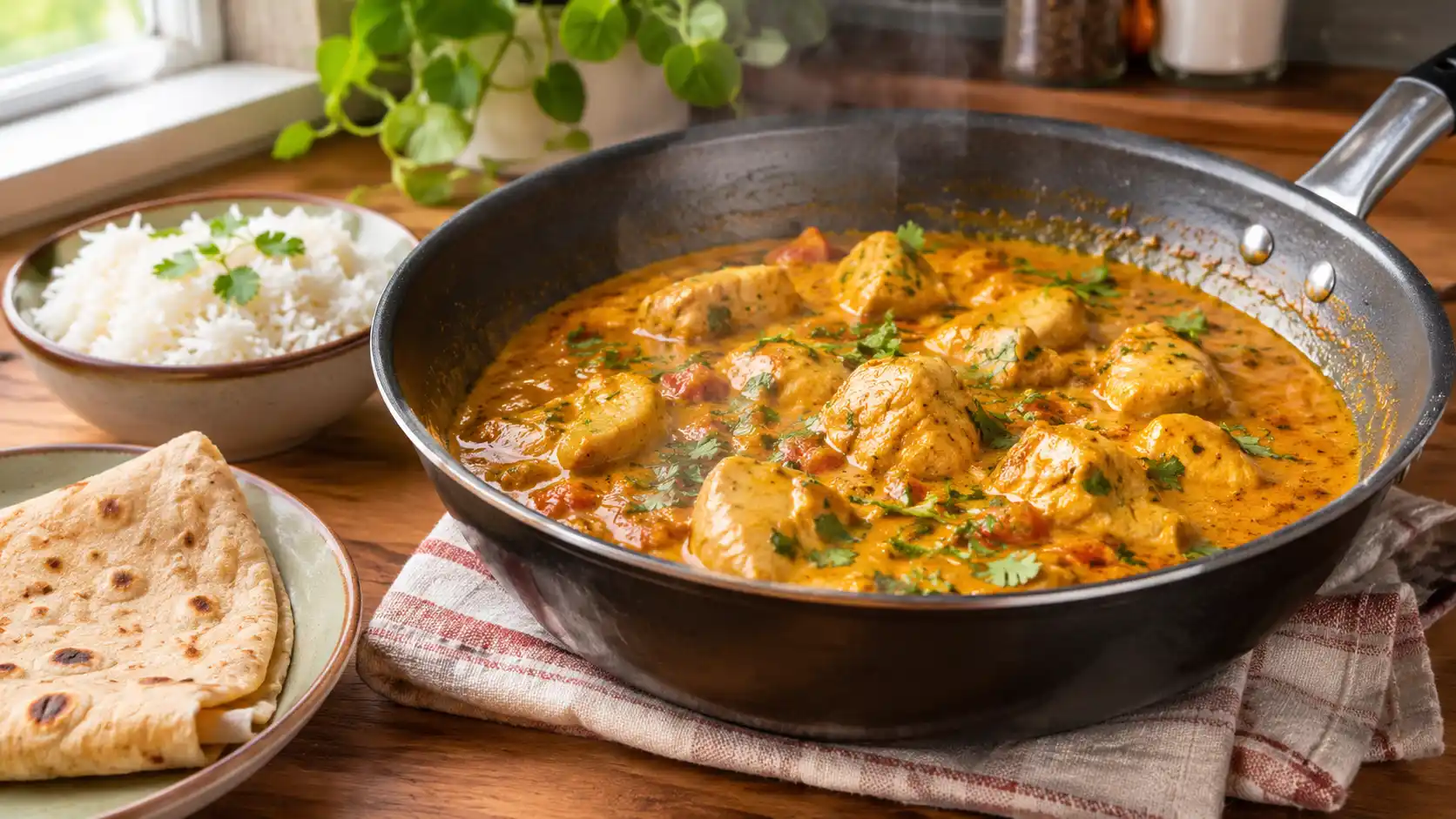
For a simple weeknight example, Kitchen Memo’s Easy Chicken Curry for Beginners demonstrates how curry powder can create a convenient, mild curry base.
For a vegetable-based example, Eggplant and Chickpea Curry uses ground spices to flavor a tomato and coconut-based sauce. You can also explore the guide to choosing vegetables for curry when adapting a dish to the ingredients you have available.
When NOT to swap
Avoid assuming ordinary curry powder will reproduce the taste of Thai green curry paste. Likewise, wet curry paste is not a direct replacement for a dry rub because its moisture changes how the seasoning adheres to the food.
How to Substitute Each One (Solution)
There is no reliable universal conversion between curry paste and curry powder.
A useful substitution must account for the differences in concentration, moisture, salt and aromatic ingredients.
Using Powder in Place of Paste
When a recipe needs curry paste but you only have curry powder, you can build a more flavorful substitute.
Consider adding:
- Curry powder for the dried spice base.
- Garlic and ginger for additional aromatics.
- Fresh chili for adjustable heat.
- Lemongrass and lime zest when suitable for the intended flavor.
- A small amount of cooking oil to help distribute the spices.
Cook the mixture in fat before adding the remaining ingredients.
Do not automatically add extra water to compensate for the missing paste. Adjust the recipe’s liquid according to the consistency you need.
The amount of curry powder required depends on its strength and the type of paste being replaced. Start with a modest quantity, taste the developing dish and increase the seasoning gradually.
Using Paste in Place of Powder
Using curry paste instead of curry powder requires a different approach.
Start with a smaller amount than you think the dish needs, then taste and adjust. Reduce additional liquid where appropriate because paste introduces moisture. Check the salt content before adding more salt.
Paste works best in recipes where the mixture can be cooked into a sauce or marinade.
It is less suitable for dry rubs and baking recipes that depend on a dry seasoning mixture. When making a substitution, consider the paste’s chili content, saltiness and moisture before changing the other ingredients.
Substitution Cheat Sheet
| Scenario | Starting Approach | Adjustment | Expected Flavor Change |
| Powder instead of Thai paste | Bloom powder in oil | Add appropriate fresh aromatics | Less herbal and citrusy |
| Powder instead of Indian-style paste | Combine powder with aromatics | Adjust fat and liquid | Different spice balance |
| Paste instead of powder | Add paste cautiously | Reduce liquid and check salt | More concentrated and moist |
| Paste in a dry rub | Convert to a suitable marinade | Adjust moisture and cooking method | Changes from dry coating to wet seasoning |
How to Cook Each One Properly (Prevention / Technique)
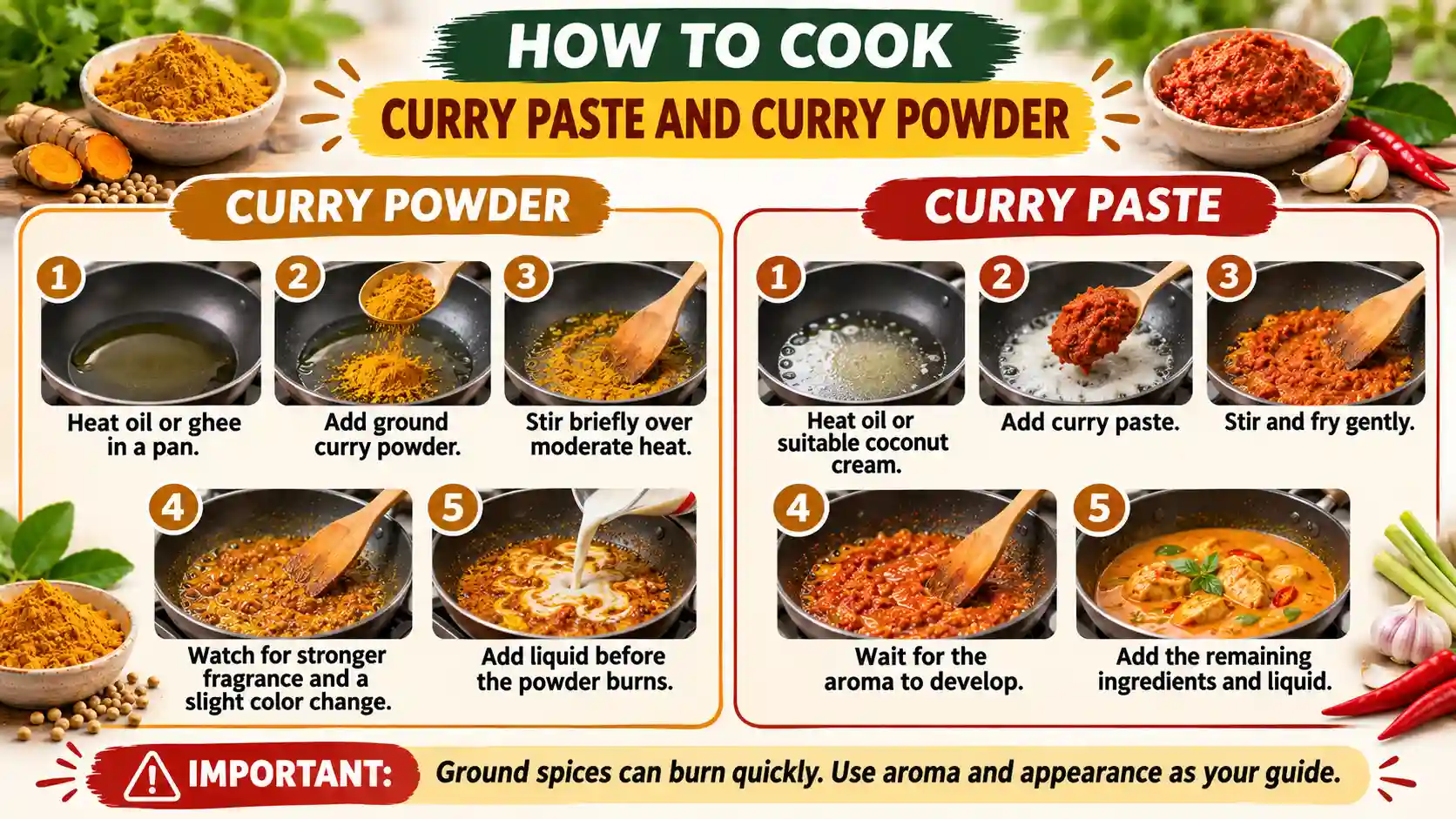
The cooking technique makes a considerable difference to the finished flavor.
Cooking curry powder
- Heat a suitable amount of oil or ghee over medium heat.
- Add the curry powder to the fat, often alongside softened aromatics.
- Stir continuously for about 1–2 minutes as a general starting guide.
- Watch for a stronger fragrance and a slight change in color.
- Add the next liquid ingredient before the powder begins to scorch.
The exact time depends on the pan, heat and quantity. Ground spices can burn quickly, producing bitterness.
Cooking curry paste
- Heat oil in a suitable pan, or use the thick coconut cream layer when the recipe calls for it.
- Add the curry paste.
- Stir and fry until its aroma becomes more pronounced.
- Add the remaining ingredients and liquid according to the recipe.
Some traditional preparations show oil separating from the paste or coconut cream. However, this is not a requirement for every commercial paste. Judge the result according to the recipe and the product’s composition.
Make a Stand-In at Home
You can create a convenient wet spice mixture from curry powder when you do not have curry paste.
It is a stand-in, not a true Thai curry paste.
Ingredients to include:
| Ingredient | Purpose |
| Curry powder | Main dry spice mixture |
| Garlic | Savory aromatic flavor |
| Fresh ginger | Warm aromatic flavor |
| Fresh chili | Additional heat |
| Lemongrass or lime zest | A fresher citrus note |
| Cooking oil | Helps combine and distribute the mixture |
| A little water | Adjusts the consistency |
The proportions depend on the strength of your curry powder and the amount of fresh aromatics you prefer. Add the oil and water gradually until the ingredients form a thick, spoonable mixture rather than a loose sauce.
Preparation
- Place the curry powder in a small bowl.
- Mix in minced garlic, grated ginger and chopped chili.
- Add lemongrass or lime zest if appropriate for the dish.
- Mix in a small amount of oil.
- Add water gradually until you have a thick, spoonable mixture.
Use this mixture as a flavored cooking base. It will not reproduce the precise flavor of Thai curry paste because it lacks the complete combination of traditional ingredients, such as galangal and makrut lime.
For a more complete Thai paste preparation, use a recipe specifically developed for that style rather than relying on a powder-based shortcut.
Heat Level, Storage and Dietary Flags
Heat Level
The color of a curry paste or powder does not reliably tell you how hot it will be.
Heat depends on the variety and quantity of chili, the manufacturer’s formula and the individual product.
Red, green and yellow pastes can all vary considerably between brands. Taste a small amount when appropriate and adjust the quantity gradually.
Storage Guide
| Product | Where to Store | How Long | What to Check |
| Unopened jarred paste | As stated on packaging | Until the printed date, subject to storage instructions | Swelling, leakage or damaged seals |
| Opened jarred paste | Refrigerate when instructed | Follow manufacturer’s after-opening instructions | Mold, unusual appearance or off-odors |
| Homemade fresh paste | Refrigerate promptly | Depends on recipe and ingredients | Storage history and signs of spoilage |
| Garlic or herb mixture in oil | Refrigerate promptly | Use within 3 days, freeze or discard | Safe preparation and storage |
| Ground curry powder | Sealed, cool and dry cupboard | Follow package quality guidance | Faded aroma, moisture and clumping |
There is no single refrigerated shelf-life that applies to every commercial curry paste. Salt, acidity, moisture, preservatives and packaging differ, so follow the manufacturer’s after-opening instructions.
Homemade mixtures containing fresh garlic or herbs in oil require particular care. Penn State Extension’s guidance on vegetables and herbs stored in oil explains why these mixtures should be prepared fresh, refrigerated and used within three days, frozen or discarded because of the risk of botulism.
For perishable homemade preparations, keep the refrigerator at 40°F (4.4°C) or below and avoid leaving them at room temperature for more than two hours. The USDA’s food safety guidance on the two-hour rule provides additional information about safe handling.
Dietary Flags
Always check the ingredient list before purchasing or substituting curry products.
- Shrimp paste: Some Thai curry pastes contain shrimp paste, which is unsuitable for people avoiding shellfish.
- Fish sauce: Some products contain fish-derived ingredients.
- Vegan: Curry paste and curry powder are not automatically vegan. Check for animal-derived seasonings.
- Gluten-free: Commercial blends can contain added ingredients or be subject to cross-contact. Check the packaging.
- Sodium: Curry pastes may contain substantial salt or salty ingredients. Check the nutrition label before adding extra salt.
Common Problems and Fixes (Problem-Solution)
| Problem | Why It Happens | Fix | Prevention |
| Raw or dusty spice taste | Powder was not cooked sufficiently | Cook the spices briefly in fat where suitable | Bloom before adding liquid |
| Bitter or burnt flavor | Ground spices were exposed to excessive heat | Reduce heat; burnt spices may require starting the spice base again | Stir continuously and watch closely |
| Thin or watery sauce | Too much liquid or an unsuitable substitution | Reduce gently or adjust the sauce ingredients | Account for the moisture in the product |
| Flat or bland flavor | Insufficient aromatics, acid or seasoning | Adjust garlic, ginger, citrus and salt as appropriate | Balance the flavor gradually |
| Too hot or too salty | Paste or powder is more concentrated than expected | Dilute with suitable unsalted ingredients | Start with a smaller amount |
| Greasy or separated sauce | Excess fat or unsuitable heat management | Adjust the liquid and fat balance | Follow the intended cooking method |
One important distinction: visible oil separation is not always a problem. Some curry preparations deliberately fry paste until the oil separates. Judge the sauce according to its intended style rather than assuming every separation means the dish has failed.
The right correction depends on the product and the recipe. For example, adding liquid may help a dry mixture blend into a sauce, but it will not correct burnt spices or restore the fresh aromatic flavor missing from an unsuitable substitution.
Conclusion
The difference between curry paste vs curry powder comes down to their ingredients, moisture, flavor and cooking behavior.
Curry paste provides a concentrated blend of spices and aromatics, while curry powder offers a convenient dry seasoning mixture. Neither is better in every situation.
Choose paste when a recipe depends on fresh aromatic ingredients and a concentrated cooking base. Choose powder when the dish needs dry seasoning and a simple way to introduce warm spice flavors.
When substituting, adjust the fat, moisture, salt and aromatics rather than following an assumed one-to-one ratio. Most importantly, cook each product properly before adding the remaining liquid.
The easiest way to decide is to use the dish-specific decision guide above and follow the flavor profile the recipe is designed to create. For more practical ingredient comparisons and kitchen advice, explore Kitchen Memo’s Kitchen Guides.
FAQs
1. Can I use curry powder instead of curry paste in a Thai curry?
You can use curry powder as an alternative seasoning, but it will not reproduce the same flavor as Thai curry paste. Add suitable fresh aromatics, such as lemongrass, garlic, ginger and chili, and adjust the sauce carefully.
2. How much curry powder equals 1 tablespoon of curry paste?
There is no verified universal conversion. The amount depends on the strength of the curry powder, the ingredients in the paste and the flavor you want in the finished dish. Start with a small quantity, taste and adjust rather than assuming one tablespoon of paste equals a fixed amount of powder.
3. Can I use curry paste instead of curry powder in dry rubs or baking?
Generally, not directly. Curry paste contains moisture and other ingredients that change the texture and behavior of a dry seasoning mixture. You may be able to turn a dry rub into a suitable marinade, but that is a different preparation.
4. Is curry paste vegan?
Not always. Some curry pastes contain shrimp paste or fish sauce. Check the ingredients and allergen information on the packaging before purchasing.
5. How long does opened curry paste last?
There is no universal storage period for every brand. Refrigerate it according to the manufacturer’s instructions and follow any stated after-opening period. Homemade garlic or herb mixtures in oil require particular care.
6. Can I make curry paste from curry powder?
Yes. You can combine curry powder with garlic, ginger, chili, oil and other suitable aromatics to make a moist seasoning base. However, this is a shortcut rather than an exact replacement for traditional Thai curry paste.